Jesus Actively Helps Me

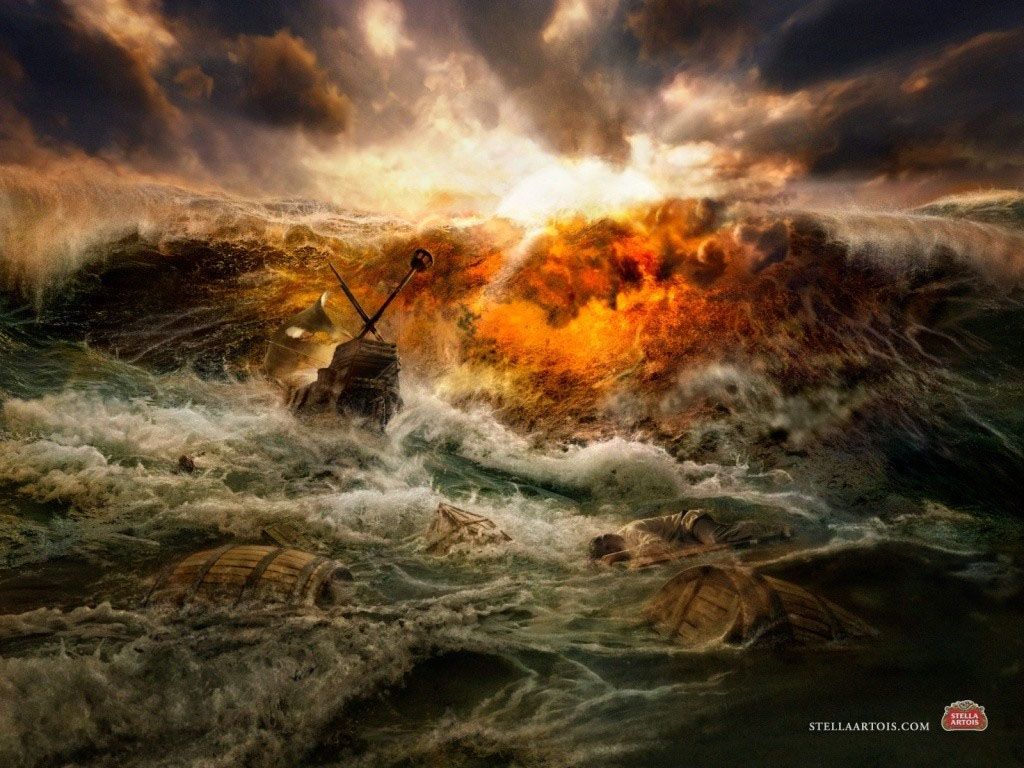
shipwreck

“So then, since we have a great High Priest who has entered heaven, Jesus the Son of God, let us hold firmly to what we believe. This High Priest of ours understands our weaknesses, for he faced all of the same testings we do, yet he did not sin. So let us come boldly to the throne of our gracious God. There we will receive his mercy, and we will find grace to help us when we need it most.

Hebrews 4:14-16

These two verses out of Hebrews 4 establish three things.
  • We are “criminals” and in need of representation.
  • Jesus Christ stands ready, and able to help us before both this world and to the one to come.
  • Jesus still has a present day ministry as our priest and provider.

And he is busy! He did not ascend to heaven to wait around for his second coming. He is active, and we are being acted upon.

Saving you, and watching over you, is the present work of heaven.

But there is more, let’s look at the story of Paul’s voyage to Rome in Acts 27. He is a prisoner being escorted to stand before Caesar. He has a guard who is watching him as he travels by ship across much of the Mediterranean.

Because of the time of the year, the trip will be hard. The weather is very iffy, and awful storms could pummel a ship at times. No matter what, it will be a hard journey. Sometimes that happens.

 “When a light wind began blowing from the south, the sailors thought they could make it. So they pulled up anchor and sailed close to the shore of Crete. 14 But the weather changed abruptly, and a wind of typhoon strength (called a “northeaster”) burst across the island and blew us out to sea. 15 The sailors couldn’t turn the ship into the wind, so they gave up and let it run before the gale.”
16 “We sailed along the sheltered side of a small island named Cauda, where with great difficulty we hoisted aboard the lifeboat being towed behind us. 17 Then the sailors bound ropes around the hull of the ship to strengthen it. They were afraid of being driven across to the sandbars of Syrtis off the African coast, so they lowered the sea anchor to slow the ship and were driven before the wind.”

Acts 27:13-17, NLT

The storm is probably a once in a lifetime experience. It seems everyone is problem-solving trying to keep the ship from “breaking up.” They are fighting for their lives. After tossing over the cargo, and the ships tackle, they would have cut down the mast. Leaving it up would only weaken the ship’s hull, which reduces their chances.

They then did something called “frapping.”

It involved wrapping ropes or cables around the hull in a criss-cross manner. This outside strengthening would have been “levered” to increase tightness. It could be an effective way of surviving the unsurvivable.

There is a specific Greek word to describe this frapping. It is used in only one other place in the entire Bible. In Hebrews 4:16 we read–

“So let us come boldly to the throne of our gracious God. There we will receive his mercy, and we will find grace to help us when we need it most.

Can you see the connection? In these desperate times when the storm is ripping up everything, attempting to destroy us– our families, our friends and neighbors. Just survival seems a long stretch. It is then that Jesus fraps (or wraps) us tightly.

But many of us go through typhoons with the cables coiled up on deck. We seem oblivious and ignorant of its availability. We really don’t see the “present tense’ ministry of Jesus standing to intercede. We merit nothing– but He promises us everything. We are on the knife’s edge of falling apart, but perhaps it’s our own fault?

I believe this message has not come to you by accident. You are either in the storm, or know someone who is there. The name of this post is, “Jesus Actively Helps Me.” I hope you will see it, you will need it.

Jesus Christ carries on intercession for us in heaven; the Holy Ghost carries on intercession in us on earth; and we the saints have to carry on intercession for all men.”

     Oswald Chambers

ybic, Bryan

I’m More or Less Oblivious

Inspector Clouseau, (Upon discovering stolen artifacts) in The Pink Panther 2

“Ah yes, the Shroud of Turin! We will have to dry clean it before we return it.”

______________________

I honestly think that our bumbling attempts to follow Jesus are entertaining angels who watch our efforts and shake their heads in astonishment. “Did you see what Bryan just did?”

I’m the “Inspector Clouseau” of the spiritual realm.   😁  

Maybe you can relate?

Clumsy and very much oblivious, I bungle my way down the path of discipleship, without a clue. It seems when something right happens, I still end up butchering it. The Holy Spirit has His hands full. Scripture tells me He has no regrets.

We have experienced so much, and been given so much light.

And yet we consistently choose to trade it for a lie. For the most part, I don’t sin automatically, I sometimes choose it deliberately.  People don’t sin because they feel they have to. We sin because we like the pleasure it brings. We sin because it feels nice. It’s often a mask to cover the pain.

It’s a patch for the pain of my twisted up life.

We sin because it brings a thrill to our bodies, and excitement to the boredom of our everyday lives.  We sin because we believe the lie that the pleasure it brings, though passing (Heb. 11:25).

Sin happens when I look at anything or anyone other than God.

The issues I have are both spiritual and medical.  I survived a brain tumor and I need to walk with a cane. I have constant vertigo. My right arm is paralyzed. I struggle hard sometimes. I have some struggles with social anxiety. But God gives me buckets of His grace.  I know first-hand his agape love for me.

But He will not bless my disobedience and rebellion. 

When we announce to the world that “Jesus is Lord” we can expect God will hold our feet to the fire over this.  The Holy Spirit will not negotiate when we suddenly decide we are hungry for sin.  Apprehended by grace, we must fully surrender all claims we have to sample sin’s delights.

Who do we find joy in? It really does matter.

In the middle of my battles to be a believer, I must remember joy.  I cannot imagine being without it.  I’ve been clinically depressed pushed to the point of suicide.  But God gives me joy in my darkness.

“The joy of the Lord is your strength.”

Nehemiah 8:10

“For the Lord takes pleasure in his people; he adorns the humble with salvation.”

Psalm 149:4

1brobry-sig4 (2)

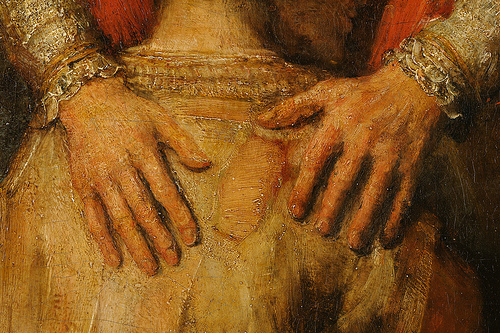
Rembrandt’s Prodigal Son

Rembrandt-The_return_of_the_prodigal_son
Rembrandt, “The Return of the Prodigal Son,” c. 1661

17 “But when he came to himself, he said, ‘How many of my father’s hired servants have more than enough bread, but I perish here with hunger! 18 I will arise and go to my father, and I will say to him, “Father, I have sinned against heaven and before you. 19 I am no longer worthy to be called your son. Treat me as one of your hired servants.”’ 20 And he arose and came to his father. But while he was still a long way off, his father saw him and felt compassion, and ran and embraced him and kissed him. 21 And the son said to him, ‘Father, I have sinned against heaven and before you. I am no longer worthy to be called your son.’ 22 But the father said to his servants, ‘Bring quickly the best robe, and put it on him, and put a ring on his hand, and shoes on his feet. 23 And bring the fattened calf and kill it, and let us eat and celebrate. 24 For this my son was dead, and is alive again; he was lost, and is found.’ And they began to celebrate.

Luke 15:17-24, ESV

Two hundred and eighty-nine words– these describe the life of every man, woman, and child who has ever lived. These 289 words reveal to us a God who loves far too much, way too easy. Perhaps we sort of expect that he will ‘appropriately’ punish his son– at least put him on probation at least. It only makes sense. But we find that is legalism talking.

“Every saint has a past, and every sinner has a future.” 

Many of us have lived as prodigals, and we have spent our inheritance like ‘drunken sailors.’ We really have nothing at all to show for it. The prodigal, completely destitute, takes the only work he can find. (Imagine a good Jewish boy feeding hogs.)

He is so far gone that he starts inspecting the filthy slop buckets for something to eat.

Many of us will understand his despair. Often there comes to us a crystalline moment of simple awareness. The prodigal, sin-crusted and impoverished, still has a lingering memory of the Father’s house.

The servants there had far more than him right now. Sometimes I wonder if in our captivity, we instinctively want to go home, if only in our minds, to be a servant there.

The Father has dreamed of this precise moment.

The parable says, “He saw him–felt compassion–ran out to him–embraced him–and kissed him.” The Father is a whirlwind of agape love. I’ve read the Parable of the Prodigal Son a hundred times or more. It never loses its punch. I simply want to bring some observations: 

  • We see that his father receives him with a tender gesture. His hands seem to suggest mothering and fathering at once; the left appears larger and more masculine, set on the son’s shoulder, while the right is softer and more receptive in gesture.
  • The son’s head is downy, almost like a newborn’s. We must enter the kingdom like little children. 
  • The Prodigal Son seems to be protected by his father. He snuggles near the Father’s breast. It’s love that holds him there.
  • Consider his sandals. It has taken a long time for him to come home. 
  • Standing at the right is the prodigal son’s older brother, who crosses his hands in stoic judgment; we read in the parable that he objects to the father’s compassion for his brother.
  • We see his mother in the background in the painting, and a seated steward or counselor. One stands in profound joy, the other in sits in stunned perplexity.

But Rembrandt had painted the Prodigal once before, when he was considerably younger. And it is a very good painting. The prodigal is happy and gay; there is absolutely no indication of the consequences of sin.

The Prodigal Son in the Brothel, 1635

He’s a charming young man at the height of his popularity, and we see him at a happy party. He is spending the inheritance of his father.

But Rembrandt chooses at the very end of his life to re-paint it to reflect reality.

This is one of the last paintings he will do, and it is the Prodigal Son–destitute and repenting. I can only imagine; the years have taken a toll and he doesn’t really feel his first painting is enough. He wants to paint what is true.

He now is painting our spiritual condition.

We are given a work that some critics call as the greatest painting ever completed. The painting is now in St. Petersburg, Russia. It is seldom seen by visitors. It is a clear echo of the grace of God for fallen men and women. Like the father in the painting, He’s ready to forgive every sin saturated son and daughter.

The Father’s Prodigal

bry-signat (1)


Oh God, Why is This Happening to Me?

book_of_Job-570x377
“Why have you made me your target?…Why do you hide your face?…Why should I struggle in vain?…Why does the Almighty not set times for judgment?…Why then did you bring me out of the womb?”

Job 7:20, 13:24, 9:29, 24:1, 10:18

Didn’t Job get “hammered?” His monumental suffering is unparalleled in history. He is essentially a godly man who loses everything (except his faith). Job must pick up the pieces after “catastrophic ” sudden pain and total loss.

Job is being tested with the ultimate horrors. Will he “curse God and die” as his wife suggests? Will he cave in to the final four (his friends) and agree to their twisted theology? (You have to read chapters 38-39 to find out).

The Book of Job has been regarded as inaccessible and archaic by many.

Unfortunately many believe this assessment and look elsewhere for comfort. I would agree that Job is a challenging book, but so is Macbeth or Plato. (I guess you should find an easier translation).

Job is less an explanation and more a revelation of suffering. “Why” questions go unanswered. “Who” questions matter. I suppose this seems unfair. It certainly seems so, but straight answers in a fallen world won’t get any mileage at all.

One more thing. The Book of Job is about “twisted” theology. Job’s friends “toe-the-party-line” of theology that is logical. But don’t be mislead by their pronouncements, for they seem reasonable but they are flawed. It is a doctrine without love.

“If I have the gift of prophecy and can fathom all mysteries and all knowledge, and if I have a faith that can move mountains, but do not have love, I am nothing.”

1 Cor. 13:2

You can’t split your theology from love and get away with it.

When you read “Job’s friends” you must remember that. These are lessons it takes a long time to learn.

The broken believer, hobbled by chronic illness, has much to learn from Job. He is like “the poster child” for those afflicted. My mental illness is an issue (of course) but God is fully in control. He brings beauty out of the ashes.

“To bestow on them a crown of beauty
    instead of ashes,
the oil of joy
    instead of mourning,
and a garment of praise
    instead of a spirit of despair.
They will be called oaks of righteousness,
    a planting of the Lord
    for the display of his splendor.”

Isaiah 61:3