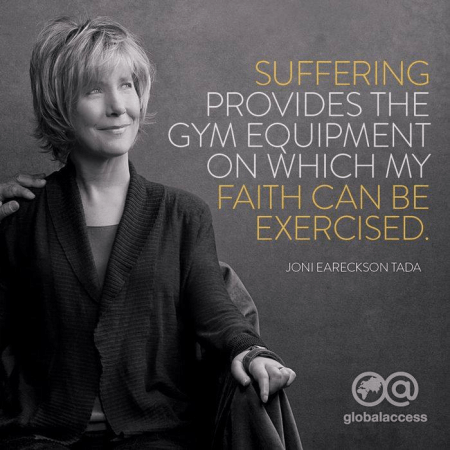
How Well Do You Suffer?

John Newton, Exodus 3:2

It seems that pain is the best teacher. We learn the hard way to come under God’s direction, and we finally learn to love others. Maybe it’s our pain that communicates His grace–is this how God changes us?

After all, the crushed grapes make the wine.

C.S. Lewis once made the comment, (and it’s worth thinking about), that “experience is the most brutal of teachers. But you learn, my God do you learn.” We face many obstacles, run into quite a few dead ends, and along the way we learn that when we really hurt, we start to teach something that the Church desperately needs.

My discipleship has been chock full of challenges. I’ve lost the use of my right arm, I have struggled with depression. I had a brain tumor removed, and must walk with a cane. I struggle with intense fatigue. I now have severe issues with pain. (I no longer pastor a church or teach in a Bible college.)

In November 1999, my wife and I lost a child.

I have prayed earnestly for a complete healing and had others pray for me. It’s funny, but all of this has happened after I became a Christian disciple! I often ask myself why? Why did God allow this to happen?

What did I do to deserve all of this?

Paul and Barnabas came into an interesting place (we can read about it in Acts 14.)

“Strengthening the souls of the disciples, encouraging them to continue in the faith, and saying that through many tribulations we must enter the kingdom of God.”

Acts 14:22, ESV

Some Bible teachers we listen to on the internet choose to minimize suffering, and of course we adopt a lot of our own theology to factor out pain and difficulty. But is this what the Bible teaches? If we read Hebrews 11, we find that life could be pretty grim for those with faith in God.

“Women received back their dead, raised to life again. There were others who were tortured, refusing to be released so that they might gain an even better resurrection. 36 Some faced jeers and flogging, and even chains and imprisonment. 

37 They were put to death by stoning; they were sawed in two; they were killed by the sword. They went about in sheepskins and goatskins, destitute, persecuted and mistreated— 38 the world was not worthy of them. They wandered in deserts and mountains, living in caves and in holes in the ground.”

Why does it have to be so hard for us as believers in Jesus?

Common sense suggests that things should get easier for those who believe. We somehow think that God rewards faith with instant glory. But I painfully discovered that my discipleship, my faith, doesn’t mean some wonderful existence on this planet. It seems that pain becomes the way we grow up and mature in Him.

I honestly believe, after over 40 years of following Jesus, that suffering is part of God’s plan for me.

It has never been easy. It never was. And I wish it was different.

My God, I wish it was different.

No matter what you are going through, remember that God always loves you. He has chosen us to navigate us through much difficulty. We must however, convert these painful things by our faith in Him. And only our faith does this.

And we know that in all things God works for the good of those who love him, who have been called according to his purpose.”

Romans 8:28

We must learn to regard people less in light of what they do or omit to do, and more in the light of what they suffer.

Dietrich Bonhoeffer

That Spectacular Sparkle

Trials are hard, and at times they seem to suffocate us and weaken our walk with God. David shares with us his own difficulty in these six verses.

A Very Brief Commentary of Psalm 13

For the choir director: A psalm of David.

Lord, how long will you forget me? Forever?
    How long will you look the other way?
How long must I struggle with anguish in my soul,
    with sorrow in my heart every day?
    How long will my enemy have the upper hand?

V. 1-2, David believes that he has been forgotten. A phrase is repeated an astounding four times, “How long?”  It seems that impatience is a significant issue for him. It makes David ‘human,’ he’s not a marble statue in a museum!

Often when it gets this outrageous, we desperately look around to find anything to fill the gap. Anything. 

Something else struck me. Within these two verses, you’ll find five hard questions. Whenever you find a question in the psalms especially, you must stop reading and take a closer look–why is he asking this?

V. 2, “Anguish…sorrow, every day.” Somehow David is alert enough to recognize (and admit) that his life is saturated with real difficulty. It seems it comes and when it comes there’s  no relief– it’s a constant, gnawing, challenging pain which can be physical, emotional, spiritual (or all three at once).

Turn and answer me, O Lord my God!
    Restore the sparkle to my eyes, or I will die.
Don’t let my enemies gloat, saying, “We have     defeated him!” Don’t let them rejoice at my downfall.

V. 3,  Turn and answer me, O Lord my God! Restore the sparkle to my eyes, or I will die.” (I love this version–“sparkle). David knew that life could be exceptional, it was meant to gleam and shine. There is much more than just breathing to life. He instead speaks of being restored. 

V. 4, Also, he is quite aware that his life is being threatened. The word, “gloat” is an interesting translation. It has the idea of “relishing someone else’s failure.” The dark prince savors your defeat. He has been looking forward to this desperate moment. The enemy rejoices at each of your failures.

But I trust in your unfailing love.
    I will rejoice because you have rescued me.
I will sing to the Lord
    because he is good to me.

V. 5,  But I trust in your unfailing love. I will rejoice because you have rescued me.” The Lord has covered David with His hand. His life has been saved by a love that never falters, weakens. or hesitates. He knows that no matter what happens, God has rescued him.

Notice how David responds to the great trial of his faith and the wonderful goodness of God:

  • I trust. 
  • I rejoice.
  • I sing.

V. 6,  Tremendous. When we finally get to this last verse, we see that we have truly traveled with David. And we have learned how to sing, even if we’ve lost everything and we live in constant pain. It doesn’t really matter any more. What a good teacher David is.

Jewelers display their gems on a black background. The darkness intensifies the brightness of the jewels. They become even more beautiful to look at. David is singing and praising the Lord for His nearness.

The darkness has only strengthened his faith.

Bryan Lowe

Wolves Clothed As Sheep

wolf-sheeps-clothing1

“Watch out for false prophets. They come to you in sheep’s clothing, but inwardly they are ferocious wolves.” 

 Matthew  7:15, NIV

My channel changer flips through the enormous darkness that exists in the world.  I’m reminded that Jesus clearly warns His flock of the cold, hard realities of deception and deceitfulness they face. 

Trickery abounds and things simply are not what they seem to be.

Darkness has a dark grasp on so many. The devil’s cunning is his ability to adapt to each person’s weakness. Deception has worked well for him for thousands of years. But understand: Lucifer is alive and well and he is prowling planet Earth.

An alert has been sounded by Jesus.

The reality of deception is now made obvious. Sometimes, some sheep will not really be sheep. Our senses are not always trained to look for counterfeit Christians.  We get confused by the outside (“it looks like wool to me”).  But it’s a lie.  The wolf has deliberately taken on the attire of a believer.

Jesus explains what really is taking place around us.

(Oh my, how He wants us to discern!)  I think every believer should have a holy skepticism of outward displays of faith.  This is not cynicism or negativity; rather it is a cautious faith– one in which we can discern the realities of a world that routinely destroys people. The first-generation Church understood the reality of evil and what it would do when it’s unleashed.

“The first step on the way to victory is to recognize the enemy.” 

Corrie Ten Boom

Ferocious” in verse 15 is a sobering word.  When I read it, I think of my home in Alaska with its wilderness and its wolves and brown bears; or maybe the grasslands of the ‘Serengeti’ with its lions or leopards.   A dangerous carnivore is often hidden by its camouflage.

Ferocity is a ‘predator’ word, a word that intensifies danger. Satan can patiently stalk for days, and maybe even months, and then he springs his trap and ambushes its victims.

wolf-sheeps-clothing

“I know that as soon as I’m gone, vicious wolves are going to show up and rip into this flock, men from your very own ranks twisting words so as to seduce disciples into following them instead of Jesus. So stay awake and keep up your guard.”

Acts 20:29, MSG

The Bible tells us that we must understand two critical things: 

1) Deception is quite possible for the real believer, that in 2000 years the darkness is still potent. Satan is alive and well on planet Earth.

2) Living in close proximity to Jesus will protect us in the dark. The true Shepherd keeps His flock. He is our complete protection and safe place against evil things we don’t quite see.

When we’re alerted that the enemy is close to us, the best thing we can do is to move closer to our Shepherd. The battle is His, we are His.

“The devil is nimble; he can run apace; he is light of foot; he hath overtaken many. They that would have heaven must run for it.”

     John Bunyan


*

Understanding Your Pastor

PASTORING

I think that most of us in the Church fail to get a real grip on what pastoring is all about. And that is sad and bad. Not only do we stunt our pastor’s growth, but we cripple ourselves, and flunk some important spiritual lessons.

Three things (there are more, believe me)–

1) Our pastors are sinners.

Surprise! They are just like you and me– definitely not superheroes and certainly not always saintly. They will have their moments and struggles. We really need to understand this to fully receive from their giftings. Just knowing this about them, prepares us to receive deeply and sincerely from their ministries. It seems that their own battles work a brokenness and humility within.

2) Our pastors need to be prayed for.

What they do is probably one of the hardest, most challenging work on planet Earth. The good pastors know this. But they still wade courageously into the thick of things. Our real prayers can buttress and stabilize their lives. They substantially encounter the darkness and do warfare for us. Most have a family to pray for, but they also have a Church they must cover too. A local pastor must have active intercessors, or they will certainly stumble and fall.

Read the story of Moses and his intercessors.

3) Our pastors must be empowered by the Holy Spirit.

God’s work must be done His way. And He repeatedly insists they be filled with the Spirit. They receive power right from the true source. Again, Jesus, the True Shepherd gives power and wisdom and grace for each singular moment. A good pastor over time and much prayer– develops discernment and an awareness for his flock. He learns to love them as he watches over them.

Much, much more could be written. There are so many facets to ponder. I only want to encourage you to love and honor your pastor. When you do this, it will probably activate the gift, and fresh ministry will become available. Real work will be done, inside of you and inside your pastor.

“Then I will appoint responsible shepherds who will care for them, and they will never be afraid again. Not a single one will be lost or missing. I, the Lord, have spoken!”

Jeremiah 23:4, NLT

ybic, Bryan

5

My Pastor, David and Karen Taylor, CCC, Homer Alaska