Clinging to God’s Assurance

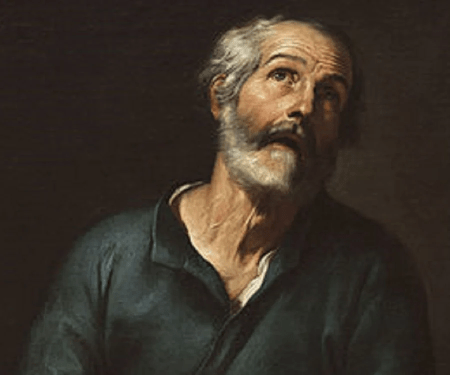
John, the Apostle

My favorite of all the apostles is John, “the disciple whom Jesus loved.”

Some people give him a bad rap for calling himself that, saying it’s arrogant. I disagree. I don’t believe this title for himself is any indication he thought he was the only one. Rather, I believe it reveals how certain he was that Jesus loved him and everyone else, including you.

I love John’s Gospel, his three epistles, and Revelation.

One of my favorite passages is from 1 John 4:7-21. It’s all about God’s love for all of His children and how we should love each other in the same way. There’s not a hint of arrogance here.

There are a number of things I love about John’s writings:

  1. He reminds his readers that he was an eye witness to the life, death, and resurrection of Jesus. That means he writes with truth and authority of what he knows to be true.
  2. He clearly sets out the evidence for Jesus’ divinity. Especially in the Gospel, where we see the “I am” statements of Jesus.
  3. He focuses, particularly in the epistles, on the love of God. In fact, he says “God is love” twice in 1 John 4.
  4. He reveals the power and purpose of the Holy Spirit in the lives of believers. It is by the Spirit that we overcome sin and know we are God’s children.
  5. He provides believers with an assurance of salvation.

It is this last point that I’m focusing on today. Early in the history of the Christian faith, deceivers had come into the church who taught that one had to achieve sinless perfection to be saved. John wrote his first epistle to combat this heresy. The same type of heresy has crept into many legalistic denominations even today. By outwardly following the rules, such people claim to be without sin. But as John writes:

“If we claim to be without sin, we deceive ourselves and the truth is not in us. If we confess our sins, he is faithful and just and will forgive us our sins and purify us from all unrighteousness. If we claim we have not sinned, we make him out to be a liar and his word is not in us.”

1 John 1:8-10 (NIV).

John here provides assurance that the fact that the believer sometimes sins does not negate their salvation, because Jesus is faithful and forgives our sin. One dictionary definition of assurance is “full confidence; freedom from doubt; certainty.” Throughout this epistle, John provides further assurance that those who trust in Jesus can be certain of their salvation even though they are not sinless and perfect.

The word know appears 42 times in this short epistle.

John wants to make sure believers know that God loves them and that they can rely on His promise of salvation. In each of the chapters of the epistle, John includes his assurance:

“Dear friends, if our hearts do not condemn us, we have confidence before God and receive from him anything we ask, because we keep his commands and do what pleases him. And this is his command: to believe in the name of his Son, Jesus Christ, and to love one another as he commanded us. The one who keeps God’s commands lives in him, and he in them. And this is how we know that he lives in us: We know it by the Spirit he gave us.”

1 John 3:21-24 (NIV).

“If anyone acknowledges that Jesus is the Son of God, God lives in them and they in God. And so we know and rely on the love God has for us.”

1 John 4:15-16 (NIV).

“I write these things to you who believe in the name of the Son of God so that you may know that you have eternal life. This is the confidence we have in approaching God: that if we ask anything according to his will, he hears us.”

1 John 5:13-14 (NIV).

None of us is perfect and completely sinless. If we were, we would not need a savior. But we do need Him, and we thrive best knowing that He is faithful in His promise of salvation for those who believe.

Now don’t get me wrong. John does not advocate living a life in which we sin willy-nilly simply because we know we can be forgiven. Those who truly believe in Jesus, and trust in Him for salvation, will desire to keep God’s commands. His Spirit living in our hearts will help us to overcome the temptations of the world and to love as He has commanded.

Are you struggling today with worries that you are not good enough, that you’ve sinned too much, or that God will give up on you and you will lose your salvation? Meditate on John’s words, inspired by God, and know that these worries are unfounded. It is the struggle itself that proves you are alive in Christ.

Remember, God is faithful in His promises. He has promised eternal life to all who believe in Jesus and allow His love to live in them. He has not hidden the truth from us, but has made Himself known through His Son and the witness of the apostles so that we can be assured of our place in His Kingdom.

Linda L. Kruschke is the author of My Name Is Beloved, winner of the Unpublished Memoir category of the Oregon Christian Writers Cascade Writing Contest, as well as self-published author of two poetry books. She is a wife, mother, active member of her church, and former Bible Study Fellowship leader. After struggling through years of major clinical depression and finding God’s healing grace, she is now a fearless follower of Christ, living in the assurance of her salvation and God’s love. She is an overseer of this blog–brokenbelievers.com.

She also blogs at Another Fearless Year (http://AnotherFearlessYear.net).

Especially Peter

Peter Running to the Empty Tomb, Burnard, c. 1898

And now go and tell his disciples, and especially Peter, that he will go ahead of you to Galilee. You will see him there, just as he told you.”

Mark 16:7, CEV

Poor Peter. Despairing over his personal darkness he has become completely undone.  His wound is beyond any human remedy.  No one can help him at this point. We do well to mark the fall of the ‘Rock.’ Peter is now how we understand our Father’s love.

Jesus had called him, the ‘Rock.’  This would become a bestowed nickname of a future transformation.  We use granite and marble when we want something to last for ages.  It is as permanent as we can make it. Peter is definitely a work-in-progress. His character is sand. He really doesn’t measure up.

Visiting a working quarry, you’ll find large machinery.  Men scale the walls with heavy drills.  At just the right spot they begin to bore a hole.  It is hard and intense work, but they are persistent.  The rock is unyielding, but they work relentlessly.

Soon they take the hole to the proper depth.  Explosives are hauled up, and the hole is carefully packed with dynamite.  The word used in the New Testament is the word “dunamis.”  It is translated from Greek into English as “power.”  Our word for “dynamite” is also a translation of that word.

Peter needs the dynamite power of the Holy Spirit. It is explosive. 

“But you will receive dynamite when the Holy Spirit has come upon you; and you shall be My witnesses both in Jerusalem, and in all Judea and Samaria, and even to the remotest part of the earth.”
Acts 1:8

Jesus looks after each disciple before his resurrection.  He kindly gazes at Peter. Especially Peter.  He will need this new power to overcome his weaknesses. The dynamite of the Spirit will explode all over the Upper Room. Shifty Peter us about to become a rock.

His disciples, in just 50 days are going to meet the Holy Spirit. 

Peter was so transformed on Pentecost he would preach and 3,000 would believe and be baptized. He went from cowardly denier to bold preacher. The dunamis of God changed him that day (Acts 2).

As a broken believer, I see the image of Peter morphing into my own face. I have denied Him before others. I am ashamed of what I have done. My depression flares up and my heart goes down in a downward spiral. I must have the Holy Spirit’s authority to be free.

Bryan

Are You Suffering Intelligently?

“Dear brothers and sisters, when troubles of any kind come your way, consider it an opportunity for great joy.”

“For you know that when your faith is tested, your endurance has a chance to grow. So let it grow, for when your endurance is fully developed, you will be perfect and complete, needing nothing.”

James 1:2-4, NLT

There are many different points where our Lord connects to us through our desperation. Our sorrow and confusion can be how God ‘wires us’ for additional contact— in some kind of weird and cosmic way, my pain becomes His ‘copper wire.’ Often is how He touches my heart as He flows through it.

I think it’s helpful to see our issues in this way. 

There is a current that must work through us, making contact and ultimately creating a circuit. What I mean by this is that it seems we have to experience pain, in order to know His presence.  Only if you know that a brother has struggled, do you become aware that a pearl of tremendous wisdom (and love) is now accompanying him. Usually.

We must be aware that our distress allows us access to His ‘careful’ grace. Our trials, properly received, endow us with special and supplemental power.

When it gets dark, light becomes exceptional.  In a book by Stephen Lawhead, (I think it was “the Silver Hand.”) we see a man, the hero take up stones that have been infused with the creative power of the universe.  Standing on the walls of a besieged stronghold, the desperate hero throws the stones down on the attackers.  And as each stone smashes into the ground it releases a part of a song, which destroys the enemy and defeats those strong in the darkness. (Silly story.)

I know that His Spirit infuses Himself into our hearts. 

He has imparted something in us that is both precious and powerful.  He works through the pain and struggles that we encounter.  These are terribly ugly, no question.  But it is through these we plug into something real and eternal.

I suppose when the tragedy finally brings real life it’s a most precious thing. We treasure all this for it comes at such an exorbitant price.

Pain indeed has a purpose, but oh, so many times it seems to only hurt. But that’s the way it works.

But yet, that is our calling. I certainly know that life is seldom easy and our choices are even harder. I recently read that Queen Victoria, as just a teen fiercely opposed her future coronation as the sovereign of England. She grew sullen, and rebellious and would continually frustrate her teachers.

Once when Victoria was shown a lineage that showed her and revealed her place in England’s future as queen.  She became uncharacteristically quiet and she responded with an astonishing simple awareness, “I will be good.” From that moment everything changed for her.

flourish12 (1)

We want to avoid suffering, death, sin, ashes. But we live in a world crushed and broken and torn, a world God Himself visited to redeem. We receive his poured-out life, and being allowed the high privilege of suffering with Him, may then pour ourselves out for others.

Elizabeth Elliot

bry-signat (1)

Becoming Obscure

servant-king

“But it is not this way among you, but whoever wishes to become great among you shall be your servant.”

Mark 10:44

I’m processing something right now.

I suppose its implications could turn everything upside down,’ at least for me anyway. Some scientists have postulated that our planet is due for a complete magnetic switchover. This is when the north becomes south and vice versa. My issues at this moment are not quite that cosmic.

At this moment there are over 7,000,000,000 people living on planet earth.

(That’s seven billion.)

Sometimes I wonder if many of my issues come from not seeing this. I’m merely one drop in a vast sea of people. It also seems that there’s an intoxication of success when we become increasingly confused over ‘who’ we really are.

We think it’s about our efforts, maybe our giftedness. Perhaps it’s pride that drives us, even among mature Christian believers. But this is not the way of our Master. It’s unbecoming of a disciple.

3 “Don’t be selfish; don’t try to impress others. Be humble, thinking of others as better than yourselves. Don’t look out only for your own interests, but take an interest in others, too. You must have the same attitude that Christ Jesus had.”

Philippians 2:3-5

Jesus wasn’t driven like we seem to be.

We think we need to be more assertive, at least the Christian version of it, and push our way to the front. However, Jesus’ message and teaching were all about emptying Himself of being God and becoming a servant of servants. This is the arresting fact we fail to consider–

Jesus did all of this while wearing a towel, not a crown.

“Jesus, knowing that the Father had given all things into His hands, and that He had come from God and was going to God, rose from supper and laid aside His garments, took a towel and girded Himself. After that, He poured water into a basin and began to wash the disciples’ feet.”  

John 13:3-5

He could have just done a ‘teaching’ on servanthood and I’m reasonably certain it would have been more than sufficient. But instead, Jesus put ‘skin on His words’ and actually got down on His knees to wash dirty feet. His disciples freaked out when they saw him do this.

It was something they could never forget.

Philippians 2:5-8

How can we not do this? This is a hard question to ask, but to be perfectly honest, does our discipleship include emptying ourselves daily? Can we find peace and fulfillment by becoming an unknown believer? An unknown, but only to God? Is this what we’re missing in becoming Christlike? These are very hard questions.

“Humility is perfect quietness of heart, It is to expect nothing, to wonder at nothing that is done to me, to feel nothing done against me. It is to be at rest when nobody praises me, and when I am blamed or despised.”

It is to have a blessed home in the Lord, where I can go in and shut the door, and kneel to my Father in secret, and am at peace as in a deep sea of calmness, when all around and above is trouble.”   

Andrew Murray

Our discipleship short-circuits itself in the presence of pride.