Hiding Our Wounds

Brennan Manning Quote
“You are the light of the world. A city set on a hill cannot be hidden. 15 Nor do people light a lamp and put it under a basket, but on a stand, and it gives light to all in the house.”

Matthew 5:14-15, ESV

Overall, I think this Manning quote is a great observation. We, the torn and wounded, often try to hide, secluding ourselves in the “Island of Misfit Toys.” (Got to love those 60s Christmas cartoons.) We pretty much accept our lot as damaged merchandise.

Maybe we choose to isolate ourselves more than we want to admit. Could that be what we do? Are we still embarrassed and ashamed by all that we’ve done? That’s quite possible.

This may come as a shock, but the Church doesn’t need any more gifted people.

But it does need broken people who understand ‘the giftedness of the flawed.” When we conceal, we diminish the Church by our absence. We can ostracize ourselves, through a self imposed shame— but the Church will suffer. We need to show them that everyone can be healed, even screwy ‘fruit-cakes’ like us.

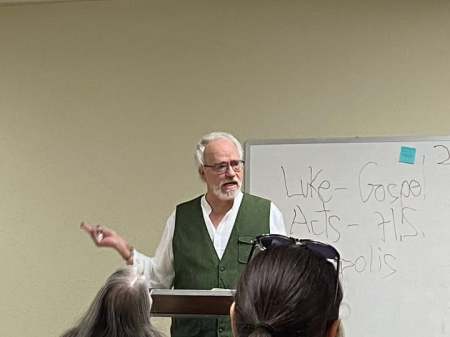
I recently had the privilege of speaking to a class of young Bible college students.

My subject was decidedly not on being successful, but on being a failure. Whole courses are geared toward ministerial success– but where are the ones for failure? I think that it just might be even more important, in the long run.

No human effort is going to erase your past.

I have tried and it can’t be done. I have blitzed my brains on drugs and booze, but I still remember the people I’ve hurt. (And I pray for them.) There really isn’t a cure for the evil we have done. I believe in forgiveness. And I hold to the idea that are sins are never to be a subject of  guilty accusation–

“He will again have compassion on us;
    he will tread our iniquities underfoot.
You will cast all our sins
    into the depths of the sea.”

Micah 7:19

Our dark iniquity is put in a very deep place. But there are the memories of an unkind word, or a sad and dark foolishness that we must learn to live with. There will be many regrets, and we face the terrible consequences of our sins, but it’s enough to know that all is under the blood of Jesus.

We are indeed forgiven. Completely.

We are now to live as forgiven sinners, yet precious in God’s eyes. We discover that although the Father has no favorites among His children, but He does have intimates. We are to live the rest of our lives for His glory, exploring that intimacy.

“Leave the broken, irreversible past in God’s hands, and step out into the invincible future with Him.”
  Oswald Chambers

He Despises Our Hypocrisy


“This people honors me with their lips, but their heart is far from me.”

Matthew 15:8, NASB

“Of all bad men, religious bad men are the worst.”  C.S. Lewis

This singular verse is set in a series of other verses– it certainly does not stand alone.  When these come together, we realize how much the Holy Spirit despises hypocrisy. He hates it, I suppose, because of the destructiveness wreaked on our spirits.

A father or mother may feel a hatred at the dealers who sell the drugs to their child. It’s not that they have any special animosity toward the pusher, but rather, they love their son so much. They will do whatever it takes to protect him.

I really think this is what Jesus feels when it comes to the purveyors of religious legalism, or hypocrisy. He burns with a holy hatred against this particular form of darkness. His vehemence seems reserved, not for sin so much as these lies of “religious pretending”. His repeated “roughness” has to be considered– why?

This should jar us into what is real, and all that is not. The word for hypocrite is “two-faced”. It was used in the Greek theaters for the masks worn by the actors. They would wear whatever the script called for. The audience never knew what was real, and what was only theatrical props.

With our lips (speech) we will honor God. We’ll only speak good things, and words (and actions) become an issue of being appropriate. We put on the particular mask of the moment, and enter the theater. Our hearts are hardly touched, and the deepest part of us becomes inoculated to the real presence of God.

The deep hatred Jesus has is due to the enormity of this sin. It is spirituality gone bad. Twisted and confused, with the shallow veneer of “respectability”. It seems to work for many of us. When our discipleship gets used to wearing masks, things can get very religious.

“Beware of no man more than of yourself; we carry our worst enemies within us.”

Charles Spurgeon


Are You Sick and Tired Yet?

Matthew 11:28-30, ESV

Weariness and burdens are our common plight. We all have them. They are shared as sort of common identity, like eye color or hair color. We all have them, and wish we didn’t. Sometimes we feel like shutting down, it seems too much to endure.

Weariness, that bone-tiredness that sleep doesn’t seem to help.

We seem to be chronically fatigued by life and what it brings us. We have heavy burdens, we carry a load that only gets heavier (and never lighter.) I suppose we adapt, and simply learn to carry it. But that wears thin, and weariness always breaks through.

Money problems, bills that are past due, marriages, straying children, cars that need fixing, family problems, job hassles, health problems… the list goes on ad nauseam. There are far too many issues, too many problems. Perhaps boredom and tedium are added to the list. They only intensify the hopelessness. (Its own special kind of suffering.)

Some will choose to ‘self medicate’ with alcohol or drugs.

They want something more, and find they only create more burdens (not less). Some will become hopelessly addicted, never finding relief from their burdens, but only increasing them. Suicide very often is seen as the only way out. It seems that it’s an option.

But Jesus will never condemn (leave that to the Pharisees) but instead offers a sort of amnesty to the burnt-out and the burdened. “Come to me, all of you who are weary and carry heavy burdens, and I will give you rest.” Jesus did not say, “Get away from me, I am holy and you are not.” Rather, He makes himself to be the solution to all those whose life has overwhelmed.

He desperately wants our burdens and absorbs all our weariness. He wants us. He wants to give us peace and rest. Often Jesus offers but we’ll refuse.

An easy trade, especially since we are so desperate. Some have evaluated Jesus’ offer and made the transaction–piling up our burdens at His feet. We might be a little hesitant about the “my yoke” part, but will quickly find that discipleship can’t be compared to the weight we once carried for so long.

Biblical discipleship is relatively easy. It only asks that we surrender–“For my yoke is easy to bear, and the burden I give you is light.” Following Jesus becomes the best way to live. We seem to understand, but unless we commit we will just carry our weight. (But it only gets heavier.)

Here’s a few verses from Isaiah that might help you sort this out:

29 He gives power to the weak
    and strength to the powerless.
30 Even youths will become weak and tired,
    and young men will fall in exhaustion.
31 But those who trust in the Lord will find new strength.
    They will soar high on wings like eagles.
They will run and not grow weary.
    They will walk and not faint.

Isaiah 40:29-31

But you need to deliberately choose. You must decide for yourself–what will you commit to? Will you continue to carry your burden, or will you turn to Jesus?

Don’t Waste Your Sorrows

“You have given me many troubles and bad times, but you will give me life again. When I am almost dead, You will keep me alive.”

Psalm 71:20, NCV

“He was despised and rejected by men,
    a man of sorrows and acquainted with grief;”

Isaiah 53:3, ESV

Everyone hurts sometimes. We all will face our special sorrows. But there are times when our pain pounds us intensely, and it can get really bad. The darkness rolls in on our souls like a caustic fog. We might devastatingly discover that there are things that are worse than terrible.

I have never spoken out like this, but my wife and I had a daughter who died— she was stillborn. She was doing great, up to a week before her due date. We knew that in seven days, we would be able to see her– face-to-face.

Elizabeth Grace Lowe died shortly after birth from strangulation. It was a sudden and unexpected tragedy that left us devastated.

We were completely undone. 

“For the Lord will not reject forever,
For if He causes grief,
Then He will have compassion
According to His abundant lovingkindness.
For He does not afflict willingly
Or grieve the sons of men.”

Lamentations 3:32-33, NASB

There is pain, but there are also promises.

There can be brutal sadness, but there are also Psalms. There is a blessing for all those who grieve. This topic deserves far more attention than this simple post. (If you’re in the thick of things, I’m trusting the Holy Spirit will help you to your next step.)

There can be such sorrow in this life.

Much more than the human heart can possibly contain. But our Savior has a title (one of many.) He is the “Man of Sorrows.” He is the one who is “on point.” He leads us through such intense hostility. He is there when the switch is flipped and it becomes instantly dark. We can’t, won’t, and will not leave you to face your pain alone.

There are a few things that I want to communicate to you.

These have come out of great darkness. I have tried awfully hard to be a disciple, even through the worst of it. They may be right, wrong or just okay, I don’t really know…

  1. God takes the full blame for our pain and sorrow. He doesn’t shift the blame or deny His presence in our sufferings. Sometimes you need to adjust your theology. Maybe it’s hard to trust Him right now–that’s more than understandable. In eternity, I believe, it’ll make perfect sense.
  2. Jesus has fully shared our sorrow. All that you are feeling right now, He feels. If you feel you are at a minus 10, then He does as well. As you suffer, He is your shadow. He knows.
  3. Nothing is ever wasted. We really shouldn’t treat these moments of sorrow as a waste. Have you ever wondered at Jesus’ ‘economy’ after the 5000 were fed?  He assigns value to the leftovers. The disciples pick up their baskets and collect everything again. Nothing will go to waste. Nothing.
  4. This pain, this sorrow is the intensive crash course in becoming a person of mercy. You now will always walk with a limp. At times the scars will be quite visible to those who can really see. This will become forever a healed wound (but a wound nevertheless.) It helps to seek out others who have walked this same path. I don’t think I will ever fully trust a person who doesn’t walk with some kind of limp.
  5. You will need (but maybe not accept) the transformation of your suffering into glory. This will take some time, and it almost feels like your not progressing at all. I encourage you to re-think each of these simple points. The Holy Spirit may be working, perhaps behind the scenes.
  6. Finally remember this: God is not a monster, stomping on us like a boy crushes ants. He has carried all of our pain and illness. He clearly comes alongside every suffering believer.

It is Satan who would suggest to you that God is a Celestial Menace, not worthy of our love. I will be very blunt with you, that idea has to be implicitly rejected. Its origins are satanic.

“The moment an ill can be patiently handled, it is disarmed of its poison, though not of its pain.”

    Henry Ward Beecher

“The LORD is close to the brokenhearted; he rescues those whose spirits are crushed.”

Psalm 147:3, NLT