Many voices tell me that there must be distinct lines between sinners (like, me) and Church people. These borders keep order and provide security to those on the ‘inside’ of our Faith. This seems more from a reaction to control than actual sin.
But there are so many people with mental illness: Depression, anxiety, bipolar disorder, schizophrenia, addictions, PTSD, and many others. We are truly an afflicted people.
Fitting in isn’t always easy
“Most of the verses written about praise in God’s Word were voiced by people faced with crushing heartaches, injustice, treachery, slander, and scores of other difficult situations.”
–Joni Eareckson Tada
There needs to be an adjustment to the status quo. Room must be made for the ‘losers’ and the misfits. These are people for whom Christ died. They are special to God.
According to federal law, buildings must be accessible to the handicapped. Special signs are placed in the parking lots, for special parking and wheelchair ramps need to be installed. This is well and good. But let’s extend this ‘deliberateness’ to those with other needs as well.
“The power of the Church is not a parade of flawless people, but of a flawless Christ who embraces our flaws. The Church is not made up of whole people, rather of the broken people who find wholeness in a Christ who was broken for us.”
–Mike Yaconelli
I encourage you to become proactive when it comes to “opening up” the Church to include ‘the brokenness of the other.’ Even a smile can make the difference to the down-trodden soul.
“You are the light of the world. A city set on a hill cannot be hidden. 15 Nor do people light a lamp and put it under a basket, but on a stand, and it gives light to all in the house.”
Matthew 5:14-15, ESV
Overall, I think this Manning quote is a great observation. We, the torn and wounded, often try to hide, secluding ourselves in the “Island of Misfit Toys.” (Got to love those 60s Christmas cartoons.) We pretty much accept our lot as damaged merchandise.
Maybe we choose to isolate ourselves more than we want to admit. Could that be what we do? Are we still embarrassed and ashamed by all that we’ve done? That’s quite possible.
This may come as a shock, but the Church doesn’t need any more gifted people.
But it does need broken people who understand ‘the giftedness of the flawed.” When we conceal, we diminish the Church by our absence. We can ostracize ourselves, through a self imposed shame— but the Church will suffer. We need to show them that everyone can be healed, even screwy ‘fruit-cakes’ like us.
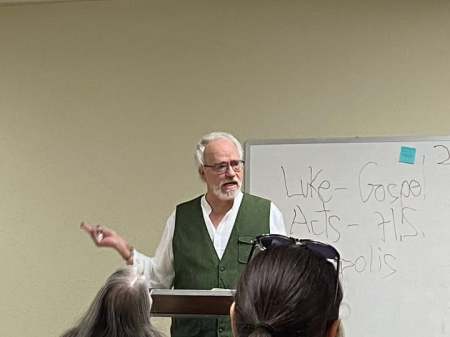
I recently had the privilege of speaking to a class of young Bible college students.
My subject was decidedly not on being successful, but on being a failure. Whole courses are geared toward ministerial success– but where are the ones for failure? I think that it just might be even more important, in the long run.
No human effort is going to erase your past.
I have tried and it can’t be done. I have blitzed my brains on drugs and booze, but I still remember the people I’ve hurt. (And I pray for them.) There really isn’t a cure for the evil we have done. I believe in forgiveness. And I hold to the idea that are sins are never to be a subject of guilty accusation–
“He will again have compassion on us; he will tread our iniquities underfoot. You will cast all our sins into the depths of the sea.”
Micah 7:19
Our dark iniquity is put in a very deep place. But there are the memories of an unkind word, or a sad and dark foolishness that we must learn to live with. There will be many regrets, and we face the terrible consequences of our sins, but it’s enough to know that all is under the blood of Jesus.
We are indeed forgiven. Completely.
We are now to live as forgiven sinners, yet precious in God’s eyes. We discover that although the Father has no favorites among His children, but He does have intimates. We are to live the rest of our lives for His glory, exploring that intimacy.
“Leave the broken, irreversible past in God’s hands, and step out into the invincible future with Him.”
When I was in the sixth grade, a friend invited me to her church. My parents didn’t go to church, but said I could go with Clarissa if I wanted to. Before long, I was spending at least three days a week with my church friends. I learned who Jesus was and that if I believed in Him I would be saved.
I believed, though I didn’t fully understand my need for a Savior.
It would be many years and much wayward living later before I would realize the importance of the Apostle Paul’s words to the church in Rome. “For I am not ashamed of the gospel, for it is the power of God for salvation to everyone who believes, to the Jew first and also to the Greek. For in it the righteousness of God is revealed from faith to faith; as it is written, ‘But the righteous man shall live by faith.’” (Romans 1:16–17 NASB).
It’s easy to think “of course I’m not ashamed of the gospel.” Why would anyone be ashamed of the good news that Jesus died for our sins so that we might be reconciled to Him?
But at its core, faith in the gospel requires the believer to say “I can’t do this myself.”
Well, let me tell you a little secret that believers and nonbelievers often forget. We humans, with all our self-importance, like to think we’re the kings and queens of the universe. We strut around like peacocks, patting ourselves on the back for our so-called brilliance. And you know what? We even pass that audacity onto our poor children, encouraging them to be little independent dynamos. But hey, who needs divine intervention when we’ve got our fabulous human ego, right? wink
I remember a time when my son was in high school and because of a snow day his class schedule was changed. As a result, he took the wrong books. He called to ask me to bring the right books to the school office on my way to work, which I happily agreed to do. When I got to the office to drop them off, the school secretary chided me for bailing him out. “These kids need to learn to be responsible or suffer the consequences,” she said.
I’ve thought of that encounter often, being thankful that Jesus didn’t say the same to the Father when the plan of salvation was put into place. What if Jesus had said, “You know Dad, these humans need to be more responsible or suffer the consequences.” We’d all be doomed.
In a world where DIY is all the rage and dependence on anyone else is frowned upon, Paul’s message is all the more important. We cannot be ashamed to admit that we’re unable to perfectly do the right thing always.
And so, although it requires me to admit I can’t do it alone, I choose to live by faith in the One who gives me His righteousness.
For the broken believer (which is all of us, if we’re honest), it is all the more important to be okay with something less than full independence. We were created to be dependent on God and on one another. We were created to live in community and relationship with others.
Note: A version of this article was originally published in the January 2020 issue of The Christian Journal, a publication I highly recommend, and not just because they publish some of my writing.
I’ve been exposed to a lot of winds blowing through, and moving on. You learn to separate the chaff from the grain. Much of my life has been spent winnowing out to get to the good stuff. God, through his word describes a coming “trial by fire” over each person’s works. Romans 14:12 says,
“Yes, each of us will give a personal account to God.”
One time I walked as a backslidden Christian. I remember once waking up from a drunken stupor with my t-shirt soaked in blood. That blood was someone elses. I sobered up really quick. I had this shadowy awareness of beating someone almost to death. I still catch myself wondering what exactly happened. There is so much stuff that will be revealed, and I have done many despicable things.
The judgment seat of Christ, therefore, involves believers giving an account of their lives to Christ. The judgment seat of Christ does not determine salvation; that was determined by Christ’s sacrifice on our behalf and our faith in Him. All of our sins are forgiven, and we will never be condemned for them.
We should not look at the judgment seat of Christ not as condemnation but as love, but rather as the Lord speaking into our lives. Yes, as the Bible says, we will have to give an account of ourselves. Part of this is surely answering for the sins we committed.
But the One who will judge me is also my Savior. That comforts me.
The Greek word for the judgement of Christians is “bema seat.” It was where the judge sat during athletic contests. Think of the high chair on which a court official sits during a tennis match.
The issue will not be our salvation, but our faithfulness.
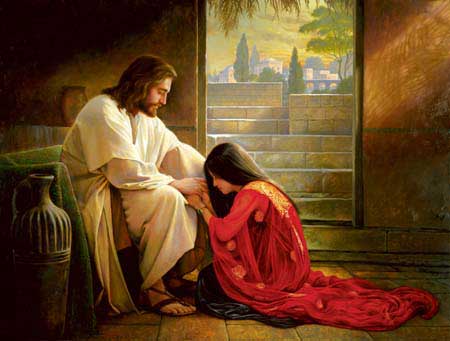
Loving Jesus must become your critical objective for the rest of your days, 1 Peter 4:8, “Love covers a multitude of sins.” We also read of the sinful woman who washed Jesus feet, “therefore I tell you, her sins, which are many, are forgiven—for she loved much. But he who is forgiven little, loves little.” (Luke 7:47)
Dear one, practice loving him– starting today. Many are the doers, few be the lovers. The demanding weight of evangelism and world missions has quadrupled in the last 10 years. Now is our time! We love much! Time is getting very short.