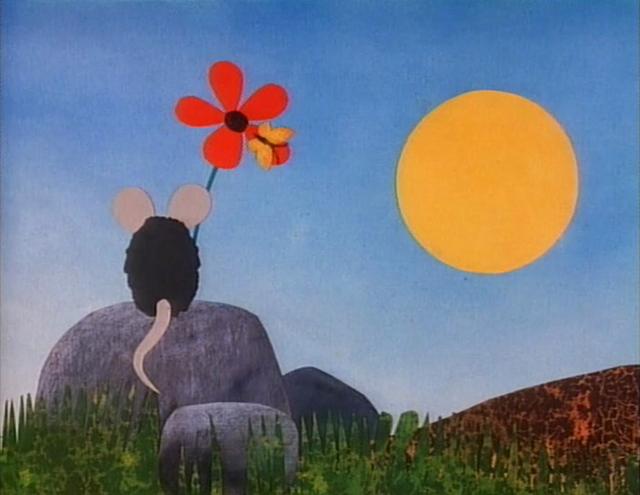
Frederick, [Handling Giftedness]

Fredrick-big
Frederick, the ‘prophetic’ mouse

I have always loved to read. I was given books by my mother, and these books were like gold. I had been a avid patron of the library, but terrible at returning books. I had pretty much been branded as “persona non grata” by the librarians of my hometown library at the ripe old age of 12.

I have fond memories of some fine books. But perhaps the most influential of them all was a title called, “Frederick” by Leo Lionni.  It won the ’68 Caldecott ‘back in the olden days.’ It very well could be one of best children’s books ever written. ( I realize now that many of these books that shaped me were prophetic in their own way.)

We see Frederick, who is a young field mouse, off on excursion to find food with his four brothers. They must fill their pantry for the cold winter that’s coming. They are quite successful (it appears) and all seems well.

However, there is a bit of a problem with Frederick. While the other mice are ‘busting their mouse-butts’ he sits quietly thinking. They question him repeatedly, trying to motivate him (or shame him perhaps?)  There seems to be a general consensus against him, which is verging on open warfare.

But Frederick insists that he is needed to do this. He says that he is ‘working’. He is collecting sunlight, absorbing it until it’s needed.  He takes in colors, and then words. He just seems soak up these really wonderful experiences, and he seems a bit “clueless” (that’s not the right word), maybe a bit “preoccupied.”
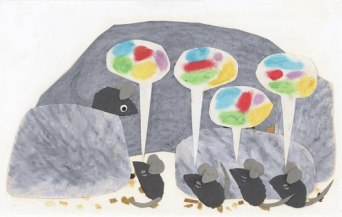
FrederickFinally in the dead of winter, sheltered deep underground, their supplies are running low. One of the mice turns to Frederick, and asks him to share what he has collected. And he does precisely that. They sit in a circle and Frederick shares the sunlight, and the rich colors and the beautiful words he has stored up for them. Their little ‘mouse-hearts’ are deeply touched by Frederick’s contribution.

In so many ways, this has become a parable, or metaphor of my life. As a eight year old, I could hardly have foreseen how my life would unfold. I do however had a deep sense of being different, even then. My mental illness, mixed with being “gifted”, and then combined with being isolated and dirt-poor, worked in me.

Essentially, we all are products of our personal history.  What we have experienced good or bad develops us.  It did me.  I think what “Frederick” wants to do for us is to process uniqueness, gifting and steadfastness.  One of the things that the Holy Spirit has been speaking to me for the last few years is this, “Bryan, can you receive from the giftedness of other believers?”

We really must make room for “Fredericks” and what they can bring to us.  We will be drastically weakened if we won’t– or can’t.  Jesus faced a ton of resistance as He began to minister.  There is nothing new about that.  But it didn’t touch His spirit.

“Now Joseph had a dream, and when he told it to his brothers they hated him even more.”

Genesis 37:5

bry-signat (1)

cropped-christiangraffiti1.jpg

&

fredrick-small

Working in the Time of Grace

ii9508101a

 “These men who were hired last worked only one hour,’ they said, ‘and you have made them equal to us who have borne the burden of the work and the heat of the day.”

Matt. 20:12, NIV

Matthew 20 irritates me.  People are working the entire day, and along comes people who have only worked for one hour.  This discrepancy drives the believer nuts.  How in the world could such a thing take place?  It is foolishness to us who insist on a ‘grace of appropriateness.’  We want grace to be fair, recognizing the person who has worked very hard.

The problem is that God is outrageous with His grace and love.  He completely expands us to a point where we must embrace a grace that is completely beyond us.  We have to break down and accept what is available to us.  Grace completely dumps us upside down.

We can only proceed if we accept His definition of Grace.

Those who have labored the least are made equal to those who work the hardest.  This seems incredibly unfair and we revolt against such extravagance.  It strikes us as outrageously unfair.  How can those who worked only an hour receive the exact same amount as those who have labored a full eight?

The miracle of  this shockingly outrageous grace is that we are confronted by a profound freedom.  We basically get brought to the point where we get stripped of these illusions and need to walk out the scripture.  It has the tendency to eliminate the issues that could block us and bring us to a most receptive position.

“But he replied to one of them, ‘My friend, I’m not being unjust to you. Wasn’t our agreement for a silver coin a day? Take your money and go home. It is my wish to give the latecomers as much as I give you. May I not do what I like with what belongs to me? Must you be jealous because I am generous?’

16 “So, many who are the last now will be the first then and the first last.”

Matthew 20:13-16

We must admit that God’s grace reaches out to everyone. 

That He has the deep, deep desire to see that each of us connect with His love.  This is indeed the radicalness of the gospel.  It is outrageous and astonishing.  That He would love us who have hated Him.  Our sense of equity is completely undone.  His grace completely turns us upside down. I think that is a good thing.

bry-signat (1)

cropped-christiangraffiti1.jpg


“Without Your Wound, Where Would Your Power Be?”

The subject of “the pool at Bethesda” alludes to the following excerpt from the Thorton Wilder play “The Angel that Troubled the Waters”. The play is based on the biblical verses of John 5:1-4, but it changes the end of the parable.

I first encountered this excerpt within the book “Abba’s Child: The Cry of the Heart for Intimate Belonging“, by Brennan Manning.

The play tells of a physician who comes periodically to the pool of Bethesda, hoping to be the first in the water and healed of his melancholy when the angel appears and troubles the water. Everybody at the pool also hopes to be the first in the water and thereby healed of his malady. The angel appears but blocks the physician at the moment he is ready to step into the pool and be healed.

Angel: “Draw back, physician, this moment is not for you.”

Physician: “Angelic visitor, I pray thee, listen to my prayer.

Angel: “Healing is not for you.”

Physician: “Surely, surely, the angels are wise. Surely, O Prince, you are not deceived by my apparent wholeness. Your eyes can see the nets in which my wings are caught; the sin into which all my endeavors sink half-performed cannot be concealed from you.”

Angel: “I know.”

……………… A long pause

Physician: “Oh, in such an hour was I born, and doubly fearful to me is the flaw in my heart. Must I drag my shame, Prince and Singer, all my days more bowed than my neighbor?”

Angel: “Without your wound where would your power be? It is your very sadness that makes your low voice tremble into the hearts of men. The very angels themselves cannot persuade the wretched and blundering children on earth as can one human being broken on the wheels of living. In Love’s service only the wounded soldiers can serve. Draw back.”

Later, the person who enters the pool first and was healed rejoices in his good fortune then turns to the physician before leaving and said:

“But come with me first, an hour only, to my home. My son is lost in dark thoughts. I — I do not understand him, and only you have ever lifted his mood. Only an hour . . . my daughter, since her child has died, sits in the shadow. She will not listen to us but she will listen to you.”

………………………………………

For me, this story is quite exceptional, probably because the message of this excerpt—“Without your wound where would your power be?“—carries so much meaning for me, as this has taught me that through my weakness I can see others.  I believe that for us,  it should be our whole philosophy of ministry.

The depressed physician ministered out of his brokenness.  He parallels the way the Apostle Paul did his work “out of much suffering.”  Just something to think about.

This is a Broken Believers classic post.  It is shared again with the steady hope that it will encourage you and strengthen you in your walk with Him.

*******

ybic, Bryan

cropped-christiangraffiti1 (1)


The Hallesby 23—All About Prayer

Prayer

I really want to bless you today on the subject of simple prayer. I recall reading O. Hallesby way back in my Bible school days. Back then, it was assigned reading for a class, but today it is a close treasure. Here are 23 quotes I put together. 

flourishx

  1. Helplessness is the real secret and the impelling power of prayer.

  2. Helplessness becomes prayer the moment that you go to Jesus and speak candidly and confidently with him about your needs. This is to believe.

  3. A humble and contrite heart knows that it can merit nothing before God, and that all that is necessary is to be reconciled to one’s helplessness and let our holy and almighty God care for us, just as an infant surrenders himself to his mother’s care.

  4. Listen, my friend! Your helplessness is your best prayer. It calls from your heart to the heart of God with greater effect than all your uttered pleas. He hears it from the very moment that you are seized with helplessness, and He becomes actively engaged at once in hearing and answering the prayer of your helplessness.

  5. When we go to our meeting with God, we should go like a patient to his doctor, first to be thoroughly examined and afterwards to be treated for our ailment. Then something will happen when you pray.

  6. When you enter your secret chamber, take plenty of time before you begin to speak. Let quietude wield its influence upon you. Let the fact that you are alone assert itself. Give your soul time to get released from the many outward things. Give God time to play the prelude to prayer for the benefit of your distracted soul.

  7. Jesus is moved to happiness every time He sees that you appreciate what He has done for you. Grip His pierced hand and say to Him, “I thank Thee, Saviour, because Thou has died for me.” Thank Him likewise for all the other blessings He has showered upon you from day to day. It brings joy to Jesus.

  8. Jesus wills of His own accord to come into us and, in His own power, to deal with our needs. It is not necessary for us to constrain Him by our prayers to take an interest in us.

  9. There come times when I have nothing more to tell God. If I were to continue to pray in words, I would have to repeat what I have already said. At such times it is wonderful to say to God, “May I be in Thy presence, Lord? I have nothing more to say to Thee, but I do love to be in Thy presence.”

  10. When prayer is a struggle, do not worry about the prayers that you cannot pray. You yourself are a prayer to God at that moment. All that is within you cries out to Him. And He hears all the pleas that your suffering soul and body are making to Him with groanings which cannot be uttered.

  11. If God does not give you something you ask for, wait on Him. He will speak with you tenderly and sympathetically about the matter until you yourself understand that He cannot grant your prayer.

  12. As impossible as it is for us to take a breath in the morning large enough to last us until noon, so impossible is it to pray in the morning in such a way as to last us until noon. Let your prayers ascend to Him constantly, audibly or silently, as circumstances throughout the day permit.

  13. By prayer we couple the powers of heaven to our helplessness, the powers which can capture strongholds and make the impossible possible.

  14. My praying friend, continue to make known your desires to God in all things. … Let Him decide whether you are to receive what you ask for or not.

  15. Notice carefully every word here. It is not our prayer which draws Jesus into our hearts. Nor is it our prayer which moves Jesus to come in to us. All He needs is access. He enters in of His own accord, because He desires to come in. To pray is nothing more involved than to let Jesus into our needs, and permitting Him to exercise His own power in dealing with them. And that requires no strength. It is only a question of our wills. Will we give Jesus access to our needs?

  16. The air which our body requires envelops us on every hand. The air which our souls need also envelops all of us at all times and on all sides. God is round about us in Christ on every hand, with his many sided and all-sufficient grace. All we need to do is to open our hearts.

  17. You can use your time to no better advantage than to pray whenever you have a moment, either alone, or with others, while at work, at rest, or walking down the street! Anywhere!!

  18. As white snow flakes fall quietly and thickly on a winter day, answers to prayer will settle down upon you at every step you take, even to your dying day. The story of your life will be the story of prayer and answers to prayer.

  19. Pray a little each day in a childlike way for the Spirit of prayer. If you feel that you know, as yet, very little concerning the deep things of prayer and what prayer really is, then pray for the Spirit of prayer. There is nothing He would rather do than unveil to you the grace of prayer.

  20. Prayer is a fine, delicate instrument. To use it right is a great art, a holy art. There is perhaps no greater art than the art of prayer. Yet the least gifted, the uneducated and the poor can cultivate the holy art of prayer.

  21. Our prayer life will become restful when it really dawns upon us that we have done all we are supposed to do when we have spoken to Him about it. From the moment we have left it with Him, it is His responsibility.

  22. We should say to God as we mingle with our dear ones each day, “God, give them each Thy blessing. They need it, because they live with me, and I am very selfish and unwilling to sacrifice very much for them, although I do love them.”

  23. Prayer can assume very different forms, from quiet, blessed contemplation of God, in which eye meets eye in restful meditation, to deep sighs or sudden exclamations of wonder, joy, gratitude or adoration.

_____________

hallesby-picOle Hallesby
1879-1961

Ole Kristian O. Hallesby was a Lutheran pastor who taught at the Free Faculty of Theology from 1909 to 1952.

He was an outspoken opponent of the Nazi occupation of Norway and was for a time detained at a concentration camp.

Hallesby wrote over 60 books, mostly on theology and ethics, but is known for his devotional writings. His book on prayer is one of the best written on the subject.

*