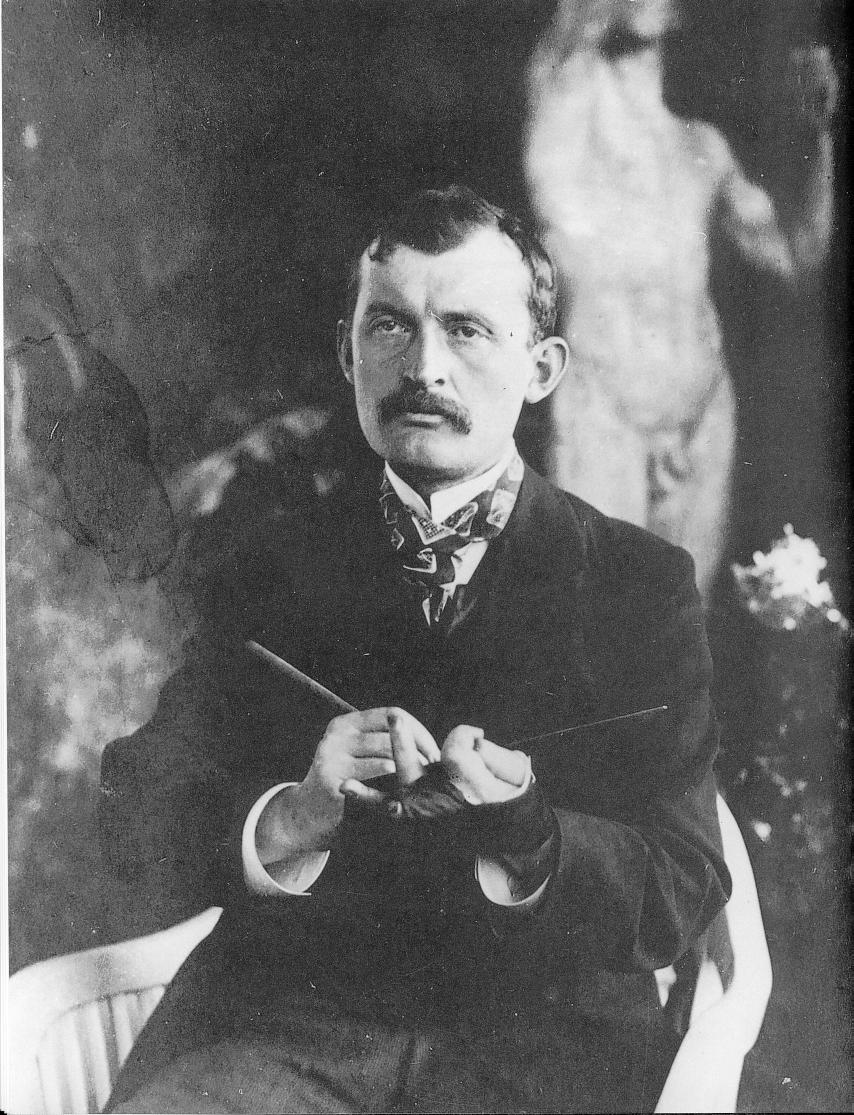
The Melancholy of Edvard Munch

munchDecember 2, 1863 – January 23, 1944, he was a Norwegian painter. He is regarded as a Symbolist and a forerunner of expressionism. He focused on themes of fear, anxiety, melancholy, and death. He did not believe in heaven, or other Christian themes or doctrines, as far as I know.

My intention is to reintroduce you to an artist that I highly esteem.  The challenge I suppose is to understand the issues that Munch discovers in his work. He clearly taps into the ‘angst’ of the modern man, and what he does perpetuates a mindset for our generation.

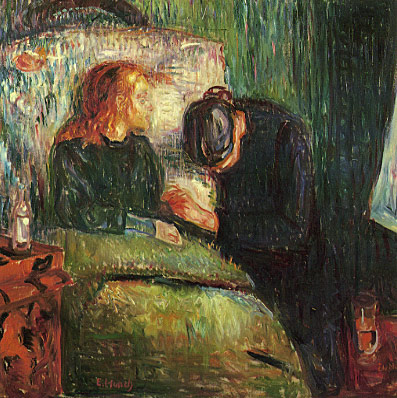
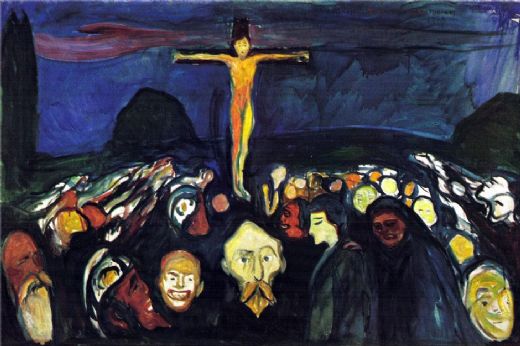
Obviously these paintings are just an introduction, and I understand that they are selective. I have refrained from any kind of interpretation, other than laying down a general principle–  to Munch, color is everything.

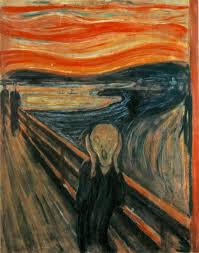
Munch was probably not a cheery person. He essentially was driven by anxiety through his whole life. It seems that he could be very ambitious. His classic work was “The Scream” which he made several versions to sell. He used different mediums to do this– tempera, lithograph and pastel. Interestingly, “The Scream” is a favorite target for art thefts. It captures the minds of every modern thinker.

Within our culture, “The Scream” is iconic. Warhol, Gary Larson, Dr. Who and even “The Simpsons” have cashed in on a parody of it.

Quotes

“I painted the picture, and in the colors the rhythm of the music quivers. I painted the colors I saw.”

“Painting picture by picture, I followed the impressions my eye took in at heightened moments. I painted only memories, adding nothing, no details that I did not see. Hence the simplicity of the paintings, their emptiness.”

“For as long as I can remember I have suffered from a deep feeling of anxiety which I have tried to express in my art.”

“Disease, insanity, and death were the angels that attended my cradle, and since then have followed me throughout my life.”

munch-thescream
The Scream, 1893
Munch’s best known painting ^


The Sick Child (1885)
Melancholy, 1894
Melancholy, 1894
Golgotha, 1900
Golgotha

My Favorite Psalm

psalms_2

Probably the best known Psalm in the Bible is Psalm 23:The Lord is my shepherd, I shall not be in want . . .” And I do like this Psalm. I particularly like the part that says “Even though I walk through the valley of the shadow of death, you are with me.” I like this part because of the preposition “through,” which indicates the valley of the shadow of death is not a permanent dwelling place, but rather a place we travel through to get somewhere else. But this is not my favorite Psalm.

Psalm 22 is also another popular one, especially since Jesus quoted it on the cross when he said, “My God, my God, why have you forsaken me?” I like this Psalm because of it’s prophetic nature. Looked at closely you can find many of the things that would later happen to Jesus talked about by David in this Psalm even though David did not know that is what he was doing. But this is not my favorite Psalm either.

Psalm 27 is another favorite of many because it gives courage when it says, “ The Lord is my light and my salvation; whom shall I fear? The Lord is the stronghold of my life; of whom shall I be afraid?” In a sometimes terrifying and wearying world, this Psalm provides great comfort to those enduring trials. But this is not my favorite either.

If you ask most Christians (and even some non-Christians), they will have a favorite Psalm, and I am no different. My favorite is Psalm 116. This Psalm starts in verse 1 with: “I love the LORD, for he heard my voice; he heard my cry for mercy.” This is a Psalm of David when he was in great anguish and danger. The verses that speak to me the most are 3-4 and 8-9.

3 The cords of death entangled me,
       the anguish of the grave came upon me;
       I was overcome by trouble and sorrow.

 4 Then I called on the name of the LORD :
       “O LORD, save me!”

8For you, O LORD, have delivered my soul from death,
       my eyes from tears,
       my feet from stumbling,

 9 that I may walk before the LORD
       in the land of the living.

Reading this Psalm reminds me of my journey through major depression and how God was with me in it all. It reminds me why I trust in Him – because He has proven Himself faithful to me in the past and has heard my cries for mercy. I supposed Psalms 23, 22, or 27 could serve the same purpose, but the language of Psalm 116 more closely fits the trouble and sorrow I went through, especially the part about delivering my eyes from tears. If you have ever experienced major depression, or known someone who has, you know that tears are an almost constant companion, and yet there is no understanding of why they are there.

I still have times of melancholy, and I certainly cry from time to time. But now I can identify what is making me blue and my tears have a reason and purpose when they come. And my God is always there to hear my cries of mercy.

So this is my favorite Psalm. What’s yours?

ysic, Linda K.

flourish15


Promises that Give Me a Workout

a-cheerful-heart-is-good-medicine-christian-message-card-copy What a difficult struggle the last several days have been.  I have tried to function but have been broadsided by several things at once.  I have asked God to draw near, He has made me a promise that He would never leave me, or forsake me.  I hold on to this and will not let go.  Where would I be without them?

The Bible is full of God’s promises, especially the Psalms. I believe the Psalms have a special meaning for those who struggle with issues (like a mental illness.)  Many times when troubles have been abundant, I have opened my Bible and found a precious promise waiting for me that has proven to be a great comfort.

But we don’t have to go through troubled times to appreciate God’s promises. His blessings are new every morning. Thank God! The Lord has promised us freedom from anxiety, along with His peace that passes all understanding. Here are the ‘top five’:

  1. If we simply trust Him with everything (Philippians 4:6-7).
  2. He promised to supply all our needs (Philippians 4:19),
  3. With supernatural joy to His followers (John 15:11),
  4.  an abundant life (John 10:10)
  5. answered prayers (John 14:14)

“How I relate to the promises in the Word often we will determine the dimensions of my depression.” 

Its length, and depth, and width are determined by my action with the promises.  By squeezing out His promises I can find hope to continue on with life. For me, the Word is more important than life.

Some have described depression as the ‘common cold’ of the mental illness world.  If that is true, then God’s Word is the Vitamin C.  I can’t prevent a cold, but I sure can reduce its impact.  How severe will it get this time?

I woke up this morning, and before I even opened my eyes I could feel the oppression of depression.  I want to die, why did I wake up?  Maybe if I close my eyes I will be able to go back to sleep, and not wake-up. To the depressed, sleep (death’s cousin) is easiest way to escape. It provides a profound release from the anguish of depression. But there isn’t a 24 hour sleeping pill yet.

I find I want to deal with my depression in two ways: Escape or deny.  Both avoid the real world.  And both have a tremendous impact on the way I function.  God’s promises to help you are real and profound.  Properly administered, they offer hope and life beyond taking an anti-depressant.  Consider them to be the medicine your soul needs!   aabryscript

Sin Boldly, But Believe in God More Boldly Still

Sinners-Wanted-1024x682

“If you are a preacher of mercy, do not preach an imaginary but the true mercy. If the mercy is true, you must therefore bear the true, not an imaginary sin. God does not save those who are only imaginary sinners. Be a sinner, and let your sins be strong, but let your trust in Christ be stronger, and rejoice in Christ who is the victor over sin, death, and the world. We will commit sins while we are here, for this life is not a place where justice resides.”

Martin Luther, From the Melanchthon Letter no. 99, 1 August 1521

 flourish1

Luther is essentially communicating the things that are real to us.  He takes it down to bare wood.  We are given an understanding of this World, an a sense of what we can expect from the hearts of all those who surround us.  Sin is the issue, and we need to accept that from our brothers and sisters.  We should not be surprised when someone we love intentionally blindsides us with their disobedience to God.

Dramatic words, ‘sin boldly’.  We instantly see this as a way to sin, without restraint.  And let’s face it, sinning is fun.  At times perhaps, even a whole lot more pleasure than walking out godliness.  Luther recognized the inevitably of sin.  As fallen people we should accept that fallenness.  We sin, it’s what we do, and we do that very well. And the Lord knows that.

“If we say we have no sin, we deceive ourselves, and the truth is not in us.”

1 John 1:8

Our ‘religious’ hearts often go into this ‘deception mode.’  We endeavor not give in to the viciousness of sin.  “We will overcome!” And yet we are so infected with sin, and rebellion that we try to minimize the problem.  If the truth be known, we are sick, infested and condemned.  There are no ‘quick fixes’ for us.  Evil runs rampant.  It is the ultimate epidemic.

picture-17
Looking at our salvation

“Let your trust in Christ be more boldly still.’  The Lord Jesus has decisively interrupted our lives.  He has wholesale entered into our darkness and sin.  In a way it’s like a ‘roadside’ bomb, and needs a direct intervention of a specialist to disarm it.  As people who are completely saturated with sin, we need a third party to step-in and to save us from all the embedded darkness.

Often there is a sense of boldness when we completely understand our depravity.  We ‘know’ our sin.  For the most part can grasp its deadliness, and its infectiousness.  The Holy Spirit’s ministry is to bring us to this transparent moment when we can see the darkness and harm we’ve caused.  The fact is, that we are to accept this, it’s all true.  We have been this evil and awful to those around us. Most believers would curiously admit that ‘they have sinned more as a believer’ than before they were first saved.

Luther declares a significant point when he tells us ‘to believe in Christ more boldly still’. Simply, our ‘sin’ awareness must never exceed our Christ awareness.  We must have a stronger sense of Jesus’ victory then our sinfulness.  Our confidence, which has taken a hit on our sinfulness, now shouts ‘hallelujah’ at His victory.

“If we claim we have no sin, we are only fooling ourselves and not living in the truth. But if we confess our sins to him, he is faithful and just to forgive us our sins and to cleanse us from all wickedness. 10 If we claim we have not sinned, we are calling God a liar and showing that his word has no place in our hearts.”

1 John 1:8-10, NLT

“You need not fear because sin still plagues you – instead rejoice that by God’s grace you are on a journey toward eternal life and sin will finally fade into the distant past.”

Luther

“May it be the real me, that seeks and finds the real You.”

aabryscript

Further info, and source:  http://www.scrollpublishing.com/store/Luther-Sin-Boldly.html

http://www.lectionarysermons.com/june_30_02.htm

http://www.internetmonk.com/archive/a-luther-quote-to-wake-up-the-sleepers