Jesus is My Apple Tree

apple-tree

“Like the finest apple tree in the orchard
    is my lover among other young men.
I sit in his delightful shade
    and taste his delicious fruit.”

Song of Solomon 2:3, NLT

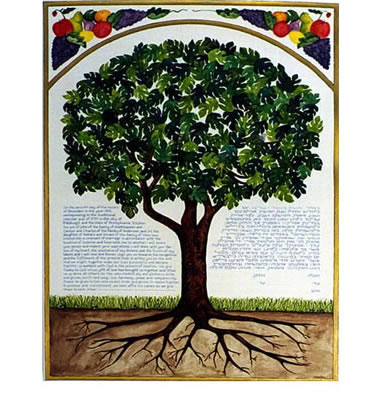
Jesus is my apple tree. He keeps my dying soul alive.

He is the subject of many different metaphors. We know Him as a shepherd, a door, and bread. There are many other ‘pictures’ in Scripture that speak of his ministry and life. There is one that strikes me today, that of Jesus Christ as a life-giving tree– an apple tree. Song of Solomon 2:3 and Revelation 22:1 are the ‘roots’ of this wondrous thought.

“On each side of the river grew a tree of life, bearing twelve crops of fruit, with a fresh crop each month. The leaves were used for medicine to heal the nations.”

Rev. 22:2

To think of Jesus as ‘the tree of life’ or an apple tree is both an honor to Him and a strength for us. We can swirl metaphors around all day and never exhaust their truths. Jesus, “the apple tree,” is seen imparting life and healing through His fruit. He is the source of everything good and grand in our lives. Eating His fruit is not only significant but encouraged. 

The young maiden in Song of Solomon has given us her take on Jesus– her shepherd, lover, and king. She sees him as the finest in the forest. He provides shade to her, as she eats the fruit of his branches.

Oh, what a worthy picture of Jesus our Savior.

We can look at this all day. As we come to Him we can see the One who is gifting each of us his blessings. We do well to consider him this way.  It honors Him.

There is a song, based on an anonymous poem, first appeared in a New England hymn collection by a New Hampshire preacher in 1784, so it has a history. Many people sing this as a Christmas carol, although there is nothing in the words that refer to Christmas. Go through each stanza. See if it fits you. Perhaps it will cause you to see Jesus in a new way.

Here is the poem in its entirety:

Jesus Christ, the Apple Tree

The tree of life my soul hath seen,
Laden with fruit and always green:
The tree of life my soul hath seen,
Laden with fruit and always green:
The trees of nature fruitless be
Compared with Christ the apple tree.

His beauty doth all things excel:
By faith I know, but ne’er can tell,
His beauty doth all things excel:
By faith I know, but ne’er can tell,
The glory which I now can see
In Jesus Christ the apple tree.

For happiness I long have sought,
And pleasure dearly I have bought:
For happiness I long have sought,
And pleasure dearly I have bought:
I missed of all; but now I see
‘Tis found in Christ the apple tree.

This fruit doth make my soul to thrive,
It keeps my dying faith alive;
This fruit doth make my soul to thrive,
It keeps my dying faith alive;
Which makes my soul in haste to be
With Jesus Christ the apple tree.

“Consider Jesus. Know Jesus. Learn what kind of Person it is you say you trust and love and worship. Soak in the shadow of Jesus. Saturate your soul with the ways of Jesus. Watch Him. Listen to Him. Stand in awe of Him. Let Him overwhelm you with the way He is.”   

John Piper


Nothing But Leaves

“Seeing at a distance a fig tree in leaf, He went to see if perhaps He would find anything on it; and when He came to it, He found nothing but leaves, for it was not the season for figs.”

Mark 11:13, NASB

Perplexing isn’t it?  I personally have had a certain amount of ambiguity with this passage.  I have questions that I’ve swept under the rug.  Why did that poor tree get cursed?  It wasn’t the trees fault, after all.  And didn’t Jesus realize this?  So why go through the theatrics?

I don’t know if this is the case with anyone else. 

I hesitate to ask around.  But recently have come to a better place about this entire event.  The traditional view is that it comes immediately after “the cleansing of the temple” and that explains a lot.  The fig tree is always emblematic of Israel.  (The Old Testament is well populated with these references.) The disciple Mark adroitly organized his Gospel in order to connect both events.

I assure you, Jesus has no issues or vendettas against trees.  😁

But He does take an issue with things that claim fruit, but really have nothing.  There’s nothing but leaves. I’ve been told that the figs do grow, almost as fast as leaves.  The lush greenness is the prime indicator of the succulent fruit. At least, in theory, it has the potential.

Luke 12:7-9,

Look, for three years now I have come seeking fruit on this fig tree, and I find none. Cut it down. Why should it use up the ground?’ And he answered him, ‘Sir, let it alone this year also, until I dig around it and put on manure. Then if it should bear fruit next year, well and good; but if not, you can cut it down.’”


The beautiful leaves declare its fruitfulness.  This tree was loaded, but had nothing to show but leaves.  Within God’s plan for Israel was for fruit.  Enough to feed the nations that would stream to Jerusalem.  Instead, it was worthless.  There was nothing to be had.  Loads of leaves, and the promise of an incredible harvest, but zilch, zero, nothing.

Hypocrisy is a deadening experience, with a definite sterility.

Israel was finding this out, and Jesus is now declaring it to the nation.  A corrupt temple, and a fruitless tree; this were all indicators of hypocrisy and showiness.  The luxuriant leaves loaded the tree, but ‘where’s the fruit?!’

Sometimes we declare that we are fruitful, on the mere basis of our lovely leaves. 

At times maybe even green?  Leaves are pretty much all we can do.  And we do it quite well. But the fruit is from the Holy Spirit, (Galatians 5:22.)

Israel failed God.  They became religious and neglected mercy, and justice.  Humility and graciousness.  The widow and the orphan were not part of their personal equation.  They produced leaves by the wheelbarrow load, but were missing out on the authenticity to what was true, and what really mattered.

Pharisees will do this all the time.

They turn into hypocrites who do not possess what they profess. A hypocrite values true godliness, but he personally falls short of all those things he admires. But he will never, ever admit it to anyone.  And even we who struggle so, must continually admit that we stumble and falter as we try to follow.

The terrible temptation of this time is to look good without being good.

It’s the awful curse of legalistic religion, and it runs rampant in our nation today, even in our government. The Lord absolutely detests it. God help us understand, and repent from what He shows us.

Personally, I may be a ‘screwy’ excuse of being a disciple, but I have decided I don’t want to deceive people anymore. 

God, help me.

“This year, or this month, or, more likely, this very day, we have failed to practice ourselves the kind of behavior we expect from other people.”  

C.S. Lewis


1brobry-sig4

cropped-christiangraffiti1 (1)

We Are Mere Servants

7–8 Jesus continued, “After a servant has finished his work in the field or with the livestock, he doesn’t immediately sit down to relax and eat. No, a true servant prepares the food for his master and makes sure his master is served his meal before he sits down to eat his own.
Does the true servant expect to be thanked for doing what is required of him? 10 So learn this lesson: After doing all that is commanded of you, simply say, ‘We are mere servants, undeserving of special praise, for we are just doing what is expected of us and fulfilling our duties.’”

Luke 17, TPT

Selfishness is endemic to men of all stripes. It’s in our bloodstream  It taints the most noble of actions and the most wonderful of efforts.

There is an exception for the empowered Christian. The ability to live unselfishly is the believer’s option. We can live above the issues of the worldling. To us is given the joy of obedience. Obeying God’s will is the privilege of redeemed men and women. We have the Holy Spirit’s abilities to meet the situation around us.

We serve because we’ve been served.

But we still are ”mere servants” and we shouldn’t make a big deal of our efforts. Within our most noble efforts is the possibility of falling short of the Lord’s wishes for us.

The only safe place for us is found  in a sacred humility. It is the posture of obedience which generates something enduring. You might say that humility is the wiring that keeps us from ‘shorting out.’ Being a humble person will insulate us from the holy power of any disobedience. 

I’m afraid that is the only way it’ll work.

“We had long known the Lord without realizing that meekness and lowliness of heart should be the distinguishing feature of the disciple.”

–Andrew Murray

The Deep Pit

“I waited patiently for the Lord to help me,
    and he turned to me and heard my cry.
He lifted me out of the pit of despair,
    out of the mud and the mire.
He set my feet on solid ground
    and steadied me as I walked along.”

3″He has given me a new song to sing,
    a hymn of praise to our God.
Many will see what he has done and be amazed.
    They will put their trust in the Lord.”

Psalms 40:1-3, NLT

Psalm 40 is jam packed with great and wonderful truth. It contains freedom for the Christian– a way out for the broken believer. We do well when we use it, and that’s what it’s there for. The deep pit has been used over many centuries as the way God teaches us to sing certain songs. But that doesn’t make it easier, does it?

Verse 1

I waited patiently for the Lord to help me, and he turned to me and heard my cry.

Waiting is a critical word, it should not be regarded as trivial. In our daily walk we must be patiently seeking the Lord, that comes first. Admitting you need help is the first step. And guess what? You need help. 😁

The word ‘wait’ is special, it’s kawvah in Hebrew. It can mean ‘to bind together by twisting.‘ It can be used with the idea of braiding strands of rope together. It is never a passive act that just happens. Waiting on God is to be done with intentional purpose.

Remember that the Lord is not some distant deity on a hill far away.

He’s not hiding from you. It’s really quite the opposite.

He is closer to you than you think. He is responsive and aware. He hears your cries and wants to act; He is not deaf, but our patience is critical. Waiting on Him is crucial to being free. We must bind and twist our hearts and live our life to His desires.

Verse 2

He lifted me out of the pit of despair, out of the mud and the mire. He set my feet on solid ground and steadied me as I walked along.

The seeable terrain can be awful, with muddy paths and mucky pits. Things that pull you down and suck you in. They’ll trap the traveler. But the Holy Spirit is quite able to lift us out. He picks us up and secures us. He uses the rope of God’s Word.

He is way more willing to save us, than we are to being saved.

Solid ground is where we are meant to be. It’s become a place of firm standing and secure footing. He makes us steady and He keeps us safe. The Holy Spirit now has intimate care over your soul.

Verse 3-4

“He has given me a new song to sing, a hymn of praise to our God.

Many will see what he has done and be amazed. They will put their trust in the Lord.

Some of the greatest songs are the ones that come from those just delivered from the pit.

These are ‘pit songs,’ offered to God from sincere and true hearts that have once been trapped. There’s something solid heard from the hearts of those redeemed from disaster.

These songs no longer sound religious or contrived.

“YOU CAN SEE GOD FROM ANYWHERE IF YOUR MIND IS SET TO LOVE AND OBEY HIM.”

A.W. Tozer

From our deepest pits come our greatest praises.

There is a passionate quality that saturates these ‘pit praises’ that is highly treasured by God, and esteemed and valued by the Church– a sense of authenticity starts to be finally heard. We can finally start to see that our pits become ‘launching pads’ of true songs of deliverance.