
Are You Depressed, Or Just Human?

rainy-day

Depression can be devastating. Its worst form, major depressive disorder, is marked by all-encompassing low mood, thoughts of worthlessness, isolation, and loss of interest or pleasure in most or all activities.

But this clinical description misses the deep, experiential horror of the condition; the suffocating sense of despair that can make life seem too arduous to bear. Here’s something else we can say confidently about depression: it is complex. The cause is often a mix of factors including genetic brain abnormalities, sunlight deprivation, poor nutrition, lack of exercise, and social issues including homelessness and poverty. Also, cause and effect can be hard to tease apart — is social isolation a cause or an effect of depression?

Unfortunately, we can make one more unassailable observation about depression: the disorder — or, more precisely, the diagnosis — has gone stratospheric. An astonishing 10 percent of the U.S. population was prescribed an antidepressant in 2005; up from 6 percent in 1996.

Why has the diagnosis become so popular? There are likely several reasons. It’s possible that more people today are truly depressed than they were a decade ago. Urbanized, sedentary lifestyles; nutrient-poor processed food; synthetic but unsatisfying entertainments and other negative trends, all of which are accelerating, may be driving up the rate of true depression. But I doubt the impact of these trends has nearly doubled in just ten years.

So here’s another possibility. The pharmaceutical industry is cashing in. In 1996, the industry spent $32 million on direct-to-consumer (DTC) antidepressant advertising. By 2005, that nearly quadrupled, to $122 million. It seems to have worked. More than 164 million antidepressant prescriptions were written in 2008, totaling $9.6 billion in U.S. sales. Today, the television commercial is ubiquitous:

  •  A morose person stares out of a darkened room through a rain-streaked window.
  • Quick cut to a cheery logo of an SSRI (selective serotonin reuptake inhibitor, the most common type of antidepressant pharmaceutical).
  • Cross-fade to the same person, medicated and smiling, emerging into sunlight to pick flowers, ride a bicycle or serve birthday cake to laughing children.
  • A voiceover gently suggests, “Ask your doctor if [name of drug] is right for you.”

The message — all sadness is depression, depression is a chemical imbalance in the brain, this pill will make you happy, your doctor will get it for you — could not be clearer. The fact that the ad appears on television, the ultimate mass medium, also implies that depression is extremely common.

Yet a study published in the April, 2007, issue of the Archives of General Psychiatry, based on a survey of more than 8,000 Americans, concluded that estimates of the number who suffer from depression at least once during their lifetimes are about 25 percent too high. The authors noted that the questions clinicians use to determine if a person is depressed don’t account for the possibility that the person may be reacting normally to emotional upheavals such as a lost job or divorce (only bereavement due to death is accounted for in the clinical assessment). And a 15-year study by an Australian psychiatrist found that of 242 teachers, more than three-quarters met the criteria for depression. He wrote that depression has become a “catch-all diagnosis.” What’s going on? It’s clear that depression, a real disorder, is being exploited by consumer marketing and is over-diagnosed in our profit-driven medical system.

Unlike hypertension or high cholesterol — which have specific, numerical diagnostic criteria — a diagnosis of depression is ultimately subjective. Almost any average citizen (particularly one who watches a lot of television) can persuade him or herself that transient, normal sadness is true depression. And far too many doctors are willing to go along. The solution to this situation is, unsurprisingly, complex, cutting across social, medical, political and cultural bounds.

But here are three major changes that are needed immediately: Medically, thousands of studies confirm that depression, particularly mild to moderate forms, can be alleviated by lifestyle changes. These include exercise, lowered caffeine intake, diets high in fruits and vegetables, and certain supplements, particularly omega-3 fatty acids. Physicians need to be trained in these methods, as they are at the Arizona Center for Integrative Medicine at the University of Arizona in Tucson. See Natural Depression Treatment for more about these low-tech methods, or the “Depression” chapter in the excellent professional text, Integrative Medicine by David Rakel, M.D. (Saunders, 2007).

Politically, if Congress — which seems hopelessly addicted to watering down all aspects of health care reform — can’t manage to ban all DTC ads in one stroke, it should start by immediately ending those for antidepressants. Personally, be skeptical of all DTC ads for antidepressants. The drugs may turn out to be no more effective than placebos. Many of them have devastating side effects, and withdrawal, even if done gradually, can be excruciating. While they can be lifesavers for some people, in most cases they should be employed only after less risky and expensive lifestyle changes have been tried.

Finally, recognize that no one feels good all the time. An emotionally healthy person can, and probably should, stare sadly out of a window now and then. Many cultures find the American insistence on constant cheerfulness and pasted-on smiles disturbing and unnatural. Occasional, situational sadness is not pathology — it is part and parcel of the human condition, and may offer an impetus to explore a new, more fulfilling path. Beware of those who attempt to make money by convincing you otherwise.

…………………………..

Weil's-new-book-availableAndrew Weil, M.D., is the founder and director of the Arizona Center for Integrative Medicine and the editorial director of http://www.DrWeil.com. Become a fan on Facebook. Follow Dr. Weil on Twitter. Read more at: http://www.huffingtonpost.com/andrew-weil-md/are-you-depressed-or-just_b_307734.html

Working God’s Night Shift

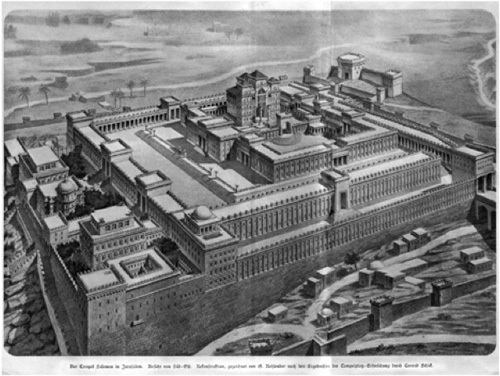
temple-etching
Solomon’s Temple in Jerusalem
A song for going up to worship.

134 “Praise the Lord, all you servants of the Lord,
    you who serve at night in the Temple of the Lord.
Raise your hands in the Temple
    and praise the Lord.

May the Lord bless you from Mount Zion,
    he who made heaven and earth.”

Psalm 134, NCV

This remarkable Psalm is part of an elite group known as “the Psalms of Ascent.” These 15 were sung as the congregation of Israel went up the steps of the temple in Jerusalem. They would sing each in “rounds” with each other. As you can well imagine, this made the ascent slow, but meaningful.

As you read the three verses, I get a picture of worshipers turning back and blessing the Levites. This takes place at the very end of the day. The Levites, and other godly ones who lived in the Temple, (remember Anna and Simeon, in Luke 2?) They were the support staff for the priests.

Commentary

V. 1, “Praise the Lord, all you servants of the Lord,
you who serve at night in the Temple of the Lord.”

The first significant thought is “Lord” mentioned three times. The word is the recognition of someone’s status and standing. We call Him Lord, because He is that (and more).

The second has to deal with the Levitical “night shift.” They served and guarded the Temple during the wee hours of the night. They probably cleaned, stacked wood, sharpened knives and maintained the Holy Place with its needs.

There was no real glory working the night shift. There were no people to serve. The crowds were for the day shift. (Here’s a weird thought– think “Disneyland at 2:00 a.m.”) There was also a contingent of non-Levite people ministering to the Lord as well. They had no duties, and only the priests could serve through their work.

The Levites working at night were not ‘second best.’ At least, not in the eyes of the Holy Spirit. They were integral in both presence and service to the Lord. To despise them is to reveal one’s ignorance. They definitely mattered.

V. 2 “Raise your hands in the Temple
and praise the Lord.”

I’ve worked nights before. It’s a real adjustment. You never feel like you’ve had enough sleep, and it is really hard to be positive and cheerful.  I could get pretty grouchy at times.

But an exhortation is given, a shout and a blessing as the crowds leave. “Raise up your hands– and praise Him!” It is as the work, although necessary, would be secondary. The worship however, was primary. We need to hear that.

V. 3, “May the Lord bless you from Mount Zion,
he who made heaven and earth.”

To be blessed (literally, made “lucky”) by our Creator and Lord is pretty profound. As a kid who read a lot, I think of ‘fairy dust.’ I know better now, but to be blessed by God is deeply significant.

To summarize, I believe this Psalm is speaking of those in the church who are doing “hidden service.” No one sees them really. They go about there duties quietly, and purposefully. The only recognition is from God– who sees all.

I must encourage you to keep on. There are many more than you think who see your hidden ministry to the Father. You are His ‘night shift.’ You’re seen by few, but Him. He knows what you do.

aabryscript

cropped-christiangraffiti1-2

Suffering That Baffles Us

nebulaJigsaw
”Sometimes it takes a long, long time before we can glean enrichment from the deprivation and suffering which has baffled and overwhelmed us.”

Mildred Tengbaum

Seldom do puzzles solve themselves. Jigsaw puzzles especially. We sit at the table turning the pieces over, separating the “edges” to start. It’s slow going; we look at the picture on the box, looking at what we’re trying to put together. Nothing really helps, and it is slow going, even for someone who is experienced in puzzle solving.

It can take a long time to put it together. You’ll probably require the “patience of Job” in order to manage it. The puzzle makers design them to challenge, not to solve. There is kind of a “grinding out” involved. Pieces that look like they may fit, but don’t.

In life we go through trials. We’re challenged– sometimes beyond our limits. Testing can be extreme sometimes and we don’t know how we’re going to survive. It seems “the odds are against us.” In the book of Psalms there are many encouraging promises, here are just a few:

“I am not afraid of ten thousand enemies
    who surround me on every side.”
Psalm 3:6, NLT
“Though a mighty army surrounds me,
    my heart will not be afraid.
Even if I am attacked,
    I will remain confident.”
Psalm 27:3
“The Lord is for me, so I will have no fear.
    What can mere people do to me?”
Psalm 118:6

The Psalms aren’t for those who have it all together. (They don’t need them). Rather, these psalms are for the burned-out, the afflicted, the scared and desperate. We “own” these.

Life in general, is impossible without God. Our issues are leading us back to Him, and so they serve His purpose. I thank God for my mental illness. Depression leads me to seek Him with a whole heart. What was meant to destroy me, works out to my good.

Oh, I slapped the following together:

Tips for the puzzles of life.

  1. Separate the pieces into groups.
  2. “Edge” pieces go first.
  3. Consult the picture on the box repeatedly.
  4. Take a break when the pieces all look a like.
  5. Get help. A fresh set of eyes can be a blessing.

I hope Brokenbelievers.com is a blessing to you. “We aim to please.”

bry-signat-1

cropped-christiangraffiti1 (2)

An Armored Response

tank-wallpapers-8

When the Holy Spirit talks we listen. What He shares is usually pretty relevant, and typically mandates our action. He is into change, and guides us into Christlikeness.

In my prayer time I saw a man climbing into the turret of a tank. He was sheltered there, protected by the tank’s armor. He seemed to be discovering the capabilities of the tank. He slowly began to grasp the potential of it, and soon began to turn the massive gun. He played around, not so much as a soldier, but as a child would. It was fun to spin the turret around. He could go places on its tracks. He could run over trees.

But slowly he realized that this was much more than a shelter, but it was an offense weapon as well. The tank could be quite formidable, as well as safe and secure. Surrounded by the armor, he at last began to understand exactly what this tank was capable of, and his role as driver/gunner. Using the gun, he could go up against enemy strongholds.

We come into a certain maturity when we begin to obey. God-given tasks become a joy. We start to see not just the defensive perspective, but the offensive as well. God’s ability is given to anyone who asks. His power can’t be diminished. He alone is the force to be reckoned with.

We are often stunted by our vision, we simply don’t grasp the enormity of what has been given to us.

I also pray that you will understand the incredible greatness of God’s power for us who believe him. This is the same mighty power that raised Christ from the dead,”

Ephesians 1:18-19

“For the Kingdom of God is not just a lot of talk; it is living by God’s power.”

1 Corinthians 4:20

1brobry-sig4

cropped-christiangraffiti1 (1)