Repeated Sin

I must tell you this right from the start! You must believe it before we can go any further.

(I want to apologize for my brother pastors who may have told you otherwise.)

1 John 3:6-9 

Over and over, we sin the same sin until it has become habitual. It is exactly the opposite of godliness (that’s why we call it ungodliness.) It’s truly the other side of the proverbial coin. It haunts everyone who sincerely wants to follow Jesus.

Let’s understand these things. I’ve listed seven consequences of repeated sin.

  1. It creates hypocrisy and self-hatred.
  2. It nullifies witness, and the work of missions.
  3. It cancels out real praise, worship, and Bible reading.
  4. It destroys real fellowship between other believers.
  5. Any personal ministry is degraded and turned upside down.
  6. It blinds others, and deceives them to who we really are inside.
  7. It always engenders guilt and unworthiness, especially toward God.

I once lived in a house that had a severe mold problem. The previous owner, in an attempt to make things liveable, painted over the offending walls. He meant well, of that I am sure, but the problem of the mold was never dealt with properly. No matter how much you slathered on the paint, the mold was still alive and well. It simply worked its way to the surface. Sin is like this.

Paul’s letter to the Romans, chapter 7, gets to the root of our “mold.” If we read it carefully (as we should) we’ll start to grasp what it means to walk biblically.

Paul floats different concepts our way. Law, sin, nature. Each word must be processed.

“Law” is something that is always true. (Think of the Law of gravity.) “Sin” or falling short. The Greek word is pretty descriptive–it means “an arrow that misses the target.” “Nature,” or the intrinsic character of something.

We use these words so seldom that they seem archaic and outdated; but not so. Understanding these three opens up the entire realm of spiritual holiness. When we realize that the Word explains our situation so clearly we become convinced that holiness is possible. We begin to hope again.

Tolerating repeated sin is a terrible form of “spiritual suicide.” It always breaks fellowship with the living God. But as a believer, God doesn’t break fellowship with us, rather He comes closer and patches up our self-inflicted wounds. But even then we will not understand Him.

The Father’s heart is for us to be heart-holy. This is His perfect plan for us. 

1 Peter 1:14-16

You must become convinced. You dare not continue to sin and live in terrible guilt and risk “spiritual suicide.” You must decide that the Spirit of holiness is in residence in your heart, and live willingly as true saints. 

But there is an all powerful remedy to our sickness-plague of repeated sin. Almost always we stare at this ugliness, it seems we’re fixated on it. Often there are two approaches we take regarding repeated sin. 1) We ignore and flail out a life of “holiness.” We minimize this. 2) We become hyper-aware of our sin and guilt. We maximize sin to the point where we lose all joy and peace.

“Looking at the wound of sin will never save anyone. What you must do is look at the remedy.”

D.L. Moody

I need to stop teaching now. Rereading this has made me slightly frustrated about what I’ve written. If any of this has helped, I’m glad. I’d like to close this with a Billy Sunday quote. He explains the seriousness of repeated sin. 

“I’m against sin. I’ll kick it as long as I’ve got a foot, and I’ll fight it as long as I’ve got a fist. I’ll butt it as long as I’ve got a head. I’ll bite it as long as I’ve got a tooth. And when I’m old and fistless and footless and toothless, I’ll gum it till I go home to Glory and it goes home to perdition!” 

 Billy Sunday

Messed Up People

Elijah was suicidal. Job wished he had never been born. David understood deep depression. Moses was anxious. Hannah was barren. Jonah was angry. Paul was all alone in a prison cell.

And actually, this is only a brief list. The Bible is loaded with flawed people who stumbled trying to be faithful. God uses imperfect people, because there really isn’t any other kind to be found. And there were others.

Noah got spectacularly drunk. Abraham lied. Jacob repeatedly deceived others. Rahab was a whore. Samson lusted. David committed adultery and was a murderer. Peter denied Christ.

Why does God favor and love people who are so disturbed? Honestly, none of us measure up. It seems He uses the weak to carry out a plan and a purpose of redeeming others, and establishing a Kingdom. He takes messes and gives them His message.

He is Love– 100% of the time, and He loves you, and He loves me, He loves the world. (John 3:16.)

Messed up people of faith become instruments and vessels of grace to other messed up people. We carry a treasure that is not ours. Sometimes it takes years to see this. I hope you can understand this. I hope it doesn’t take long.

And nothing is ever really wasted. Our mistakes (sins) become useful things to Him. For example, David’s sin would be transformed into Psalm 51 and 32. Yes, his disobedience had consequences, I won’t dispute that, but something wonderful also came when he repented.

David paid an awful price for his sin. That disobedience almost destroyed him. Not only did it separate him from God, but his family felt the effects of his evil actions.

Yes, you need to repent. But when sin is destroying you, it does seem you need to turn from it, and leave it now.

The first two verses of Psalm 51 can bring tears when we finally understand their profound beauty, for they came out of David’s personal evil:

Psalm 53:1-2, ESV

For thousands of years people of real faith have come and drawn beauty and grace from this song. David knew his sin was real, and incredible pain emerged from that, but the Psalm did also.

Please do not try to hide or excuse your sin, it always has the most awful consequences.

Broken people can be forgiven, redeemed and used. Sometimes I think God gets special enjoyment out of picking the worst and patiently loving us to wholeness. If you really know Him, and know your flaws, you’re well on your way of usefulness in His kingdom.

“But we have this treasure in jars of clay, to show that the surpassing power belongs to God and not to us.”

2 Corinthians 4:7

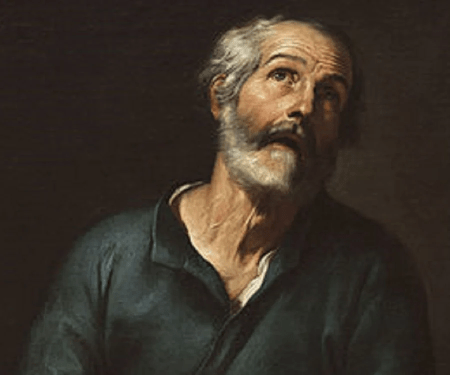
Peter’s Greatest Flops

The apostle Peter was well acquainted with failure. He understood blowing it big time. I’ve identified at least 11 times when he did the wrong thing; He stumbled repeatedly, but that encourages me. (I’m glad he struggled.)

I suppose that we must acknowledge that Jesus saw something in Peter–a definite future of a ministry that would be critical in the lives of the other disciples, but it wasn’t going to be easy for Peter. Jesus was alert and He prayed specifically for His bumbling disciple.

“…but I have prayed for you that your faith may not fail. And when you have turned again, strengthen your brothers.”

Luke 22:32, ESV

Here’s my list of Peter’s greatest flops:

  • Peter can’t figure out the Parable of the Sower, so he asks Jesus for further explanation. We too don’t understand all the things Jesus taught, we get confused. Peter’s example is a strength for us. Jesus doesn’t reject our ignorance. (Matthew 15:15-16.)
  • Peter and the others try to keep the children away from Jesus. (Mark 10:13-14.)
  • Peter is full of selfish ambition and argues with the other disciples as they walk with Jesus. (Mark 9:33-34; Luke 22:24.)
  • Peter tried to follow Jesus by walking on the water. He failed and sank; Jesus took him by the hand and gave him a gentle rebuke. (Matthew 14:28-33.)
  • On the Mountain of the Transfiguration Peter witnessed an incredible event when Jesus was seen in all His glory. Peter blew it by not understanding what had just happened. (Mark 9:2-8.)
  • Peter actually is strongly rebuked by Jesus and called, “Satan.” (Matthew 16:23.)
  • Peter resists Jesus when He is washing the disciple’s feet. (John 13:5-9.)
  • Peter fails to listen to Jesus in the garden of Gethsemane and falls asleep. He was told to watch and pray. Peter failed, and fell asleep. (Matthew 26:36-46.)
  • Peter, with “oaths” and “curses” denies knowing Jesus in the courtyard of the High Priest. (Matthew 26:69-75.) See also, Matt. 10:33.
  • Peter is broken over his denial of Jesus. It seems that he’s a complete failure as a disciple and returns to his boat and goes fishing. The other disciples follow him.(John 21:1-3.) We also see Jesus restoring Peter to Himself. (John 21:15-19.)
  • Peter is intimidated by the Jews, and withdraws from fellowshipping with the Gentile believers. He is soundly rebuked by Paul “to his face.” (Gal. 2:11-14.)

It seems that none of these are spiritually fatal, but perhaps they could be. In every case listed we can see the tenderness and goodness of the Lord Jesus who forgave and restored Peter. He loves His disciple much more than Peter realizes.

At times our walk is also somewhat discouraging.

We sin, and we fail in so many ways. It seems overwhelming at times. The Holy Spirit calls us to pray and sing, but if we’re honest we often can’t really do these things. Our failures seem to disqualify us to be disciples. A kind of “spiritual depression” falls over us. We seem to believe that God is angry with us. We think He condemns us.

But God’s love for you is total and everlasting.

 “I give them eternal life, and they will never perish, and no one will snatch them out of my hand.”

John 10:28

On that day you accepted Him as your Savior a covenant was made. He’s committed to bring you through life and to Himself. Forever. Jesus is completely faithful and He loves you deeply and most unreasonably. We call this “grace.” And it’s amazing.

  1. God has initiated your salvation. He launched it and is in charge of it.
  2. God works over and over in your life to make you like His Son.
  3. When you die and stand before Him that process will be finished completely.

“And I am sure of this, that he who began a good work in you will bring it to completion at the day of Jesus Christ.”

Philippians 1:6

Setting Yourself on Fire

Difficulty and pain sometimes come from others, and challenges to the Lordship of Jesus often come from our unique circumstances.

But what if it was something we’ve done?

I remember the classic picture of a Buddhist monk who sat in the middle of a street. He was serene as he soaked himself with gasoline, and lit himself on fire as a protest against a war he believed was wrong and evil. He burned himself in front of the cameras.

All too often we’re pretty much responsible for our own self-immolation. It is we (and we alone) that set ourselves ablaze. Sin affects our minds and hearts. We set ourselves on fire.

When we sin– when we walk in ‘known’ disobedience we always put ourselves in an awful place. We love it but learn to hate it too. But we continue to do it regardless of the awful death that ensues.

God promises to forgive us. Out of our ashes, He keeps bringing us life and hope.

You can be forgiven. You can find life again, even if you’re fully responsible for the evil we’ve done to yourself. Yes, we all sin, and yes we walk in our own personal rebellion. But Jesus knows it all. These awful things we’ve all done can be forgiven.

As a man and a preacher of the Gospel, I realize that I often choose to sin. In spite of all I know and teach I realize that I can live in the ashes of my own making. As one who also struggles with bipolar, I understand that I’m even more susceptible to doing awful things. I understand that I choose darkness even though others will call me “a man of God.”

As you read this I’m praying that you find His forgiveness and mercy. You’ve come a long way it seems, but you must see His blood that was ‘released’ from His veins and arteries for you.

He desperately loves you–even if you’ve set yourself on fire, and sit in the ashes of your doing.

“To appoint unto them that mourn in Zion, to give unto them beauty for ashes, the oil of joy for mourning, the garment of praise for the spirit of heaviness; that they might be called trees of righteousness, the planting of the Lord, that he might be glorified.

Isaiah 61:3