There is Death in the Camp

Numbers 21:6-9, ESV

The children of Israel were under attack by thousands of snakes. I remember hearing of Jonestown, where on November 18, 1978 when 918 people drank ‘kool-aid’ mixed with cyanide. The whole thing was based on Jim Jones‘ delusion and rampant paranoia.

Death like this is never easy to deal with. It’s frightening. It boggles our mind.

It’s hear we read of poisonous snakes attacking people in the camp of Israel.  The people had taken umbrage with God and Moses because the way was too hard. They accused God of leading them out of Egypt, just so He could whole-scale destroy them.

I venture to say that the effects of sin have a terrible tendency (and a purpose) to kill people.  Its infection will work through our “blood stream” and be a certain poison that will eventually destroy us.

If we could actually see the snakes we might just take our sin a bit more seriously.  

But our particular viperous horde comes to us on a spiritual level.  We aren’t suddenly falling down, and our sin doesn’t bring us immediate death. (A slow death, which is, maybe harder.) We see it sometimes, but we can’t do anything about it.

Like it or not, there is a savage battle going on in our hearts and minds.  

The cross of Jesus is the only antidote, and through faith the poison is being rendered inert.  But personally I must admit, there are good days, and not-so-good ones. I know it’s the poison that works inside of me. Others may see it sometimes, but it’s pretty obvious to me.

John 3:14-15, ESV

I read the following story somewhere, and it seems to explain exactly what i want to say.  I think it is more than a cute story.  If we should take the time and unzip it, the truth will spill out.

Look  to Jesus, who was lifted up to destroy our sin, and heal our lives.  Fix your eyes on Him, and He will save.

My other teaching site is at alaskabibleteacher.com

For a deeper study in Numbers 21 can be found at: A Place for Truth.

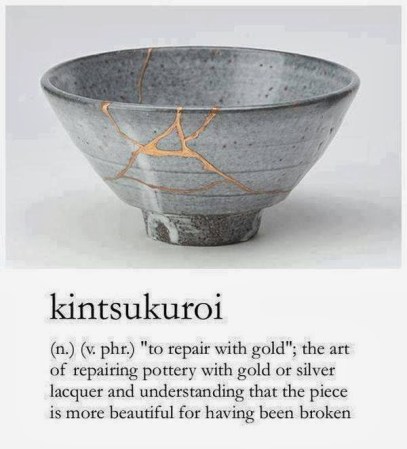
Deeply Flawed–A Jar of Clay

Elijah was suicidal. Job wished he had never been born. David understood deep depression. Moses was anxious. Hannah was barren. Jonah was angry. Paul was all alone in a prison cell.

And actually, this is only a brief list. The Bible is loaded with flawed people who stumbled trying to be faithful. God uses imperfect people, because there really isn’t any other kind to be found.

Noah got spectacularly drunk. Abraham lied. Jacob repeatedly deceived others. Rahab was a whore. Samson lusted. David committed adultery and was a murderer. Peter denied Christ.

And there were others.

Why does God favor and love people who are so disturbed? Honestly, none of us measure up. It seems He uses the weak to carry out a plan and a purpose of redeeming others, and establishing a Kingdom. He takes messes and gives them His message.

He is Love– 100% of the time, and He loves you, and He loves me, He loves the world. (John 3:16.)

Messed up people of faith become instruments and vessels of grace to other messed up people. We carry a treasure that is not ours. Sometimes it takes years to see this. I hope you can.

And nothing is ever really wasted. Our mistakes (sins) become useful things to Him. For example, David’s sin would be transformed into Psalm 51 and 32. Yes, his disobedience had consequences, I won’t dispute that, but something wonderful also came when he repented.

Yes, you need to repent. But when sin is destroying you, it does seem logical.

The first two verses of Psalm 51 can bring tears when we finally understand their profound beauty, for they came out of David’s darkness:

Psalm 53:1-2, ESV

For thousands of years people of real faith have come and drawn beauty and grace from this song. David knew his sin was real, and incredible pain emerged from that, but the Psalm did also.

Please do not try to hide or excuse your sin, it always has the most awful consequences.

Broken people can be forgiven, redeemed and used. Sometimes I think God gets special enjoyment out of picking the worst and patiently loving us to wholeness. If you really know Him, and know your flaws, you’re well on your way of usefulness in His kingdom.

2 Corinthians 4:7

Our Salvation Is Quite Sure

My favorite of all the apostles is John, “the disciple whom Jesus loved.” I love his Gospel, the three epistles that he wrote, and of course,  Revelation.

There are a couple of things I love about John’s writings:

  1. He reminds his readers that he was an eyewitness to Jesus’ life, death, and resurrection.
  2. He clearly sets out the evidence for Jesus’ divinity.
  3. He focuses, particularly in the epistles, on the love of God.
  4. He reveals the power and purpose of the Holy Spirit in the lives of believers.
  5. He provides believers with an assurance of salvation.

It is this last point that I want to write about today.

Early in the history of the Christian faith, deceivers had come into the church who taught that one had to achieve sinless perfection to be saved. John wrote his first epistle to combat this heresy. The same type of heresy has crept into many legalistic denominations even today. By outwardly following the rules, such people claim to be without sin. But as John writes:

If we claim to be without sin, we deceive ourselves and the truth is not in us. If we confess our sins, he is faithful and just and will forgive us our sins and purify us from all unrighteousness. If we claim we have not sinned, we make him out to be a liar and his word is not in us.

1 John 1:8-10 (NIV).

John here provides assurance that the fact that the believer sometimes sins does not negate their salvation, because Jesus is faithful and forgives our sin. One of the definitions of assurance on Dictionary.com is “full confidence; freedom from doubt; certainty.” Throughout this epistle, John provides further assurance that those who trust in Jesus can be assured of their salvation even though they are not sinless and perfect.

The word “know” appears 42 times in this short epistle.

John wants to make sure believers know that God loves them and that they can rely on His promise of salvation. In each of the chapters of the epistle, John includes his assurance:

I am writing to you, dear children,
   because your sins have been forgiven on account of his name.
I am writing to you, fathers,
   because you know him who is from the beginning.
I am writing to you, young men,
   because you have overcome the evil one.

1 John 2:12-13 (NIV).

“Dear friends, if our hearts do not condemn us, we have confidence before God and receive from him anything we ask, because we keep his commands and do what pleases him. And this is his command: to believe in the name of his Son, Jesus Christ, and to love one another as he commanded us. The one who keeps God’s commands lives in him, and he in them. And this is how we know that he lives in us: We know it by the Spirit he gave us.”

1 John 3:21-24 (NIV).

“If anyone acknowledges that Jesus is the Son of God, God lives in them and they in God. And so we know and rely on the love God has for us.”

1 John 4:15-16 (NIV).

“I write these things to you who believe in the name of the Son of God so that you may know that you have eternal life. This is the confidence we have in approaching God: that if we ask anything according to his will, he hears us.”

1 John 5:13-14 (NIV).

None of us is perfect and completely sinless. If we were, we would not need a Savior. But we do need Him, and we thrive best knowing that He is faithful in His promise of salvation for those who believe.

John does not advocate living a life in which we sin ‘willy-nilly’ simply because we know we can be forgiven.

Now don’t get me wrong. Those who truly believe in Jesus, and trust in Him for salvation, will desire to keep God’s commands. His Spirit living in our hearts will help us to overcome the temptations of the world and to love as He has commanded.

You may be struggling today with worries that you are not good enough, or that God will give up on you and you will lose your salvation. But remember – God is faithful in His promises and He has promised eternal life to all who believe in Jesus and allow His love to live in them. He has not hidden the truth from us but has made Himself known through His Son and the witness of the apostles so that we can be assured of our place in His Kingdom. Your salvation is sure.

Checkout my other page

Learning to Walk Again

Hosea 11:3

Early in my walk, over 40 years ago, I concluded that I would be able to acquire all the knowledge that I could ever want.  I was on the short track, going up of course.  It was a glorious thing, it took me some time to realize I was very ignorant of so much.

The Bible communicates truth, not always facts.

As I age, I start to understand that things are much more enigmatic and unfathomable than I ever dreamed they would be.  It is a step of faith to accept the truth when there are still a lot of things that are still vague. 

Take the mystery of healing for example:

“You say you have faith to be healed, but what about the faith to be sick?”

Mike Mason

That’s a penetrating question, indeed.  “Why are some healed, and others are not?  Why do I have eternal life, and my friend does not?  Why should AIDS sweep through poor African villages when I live in a very comfortable suburb in the US?” 

I have many other questions like this.

And I’m not making a whole lot of headway here.  Reasons and facts are not there. Life becomes more mysterious and inscrutable.  But there is a word we must know–it is the word “trust.”  It is a faith that assists us through the landscape of challenging questions.

As a sometimes struggling, mentally ill Christian, many (even in my own church) create more questions for me.  “Therapists, psychiatrists, and daily medications are really good, but do you really need them?” or  “Did God create in you the need for lithium and Zoloft?” and ” How can you follow Jesus when you have all of these depression issues?”

And here’s a humdinger that stings, “Where is your joy?”

But it is precisely these issues that help me be a disciple. Someone who must trust.

I’ve been slowly learning you see.  And my weaknesses are becoming my strengths.  They lead me to exercise my feeble faith.  I trust in Jesus; my faith helps me trust. I find it interesting to note that the Book of Psalms, for the most part, was written by “a broken believer” like David– a king and (also) a rascal.

These nebulous areas have only increased. 

And ironically my trust has only grown.  I have more questions than ever before, but my faith in him only gets stronger. I suppose I will never, ever be a gleefully upbeat, cheery person.  But I am learning “to trust and obey, there is no other way…” 

He himself has taken up the chore of teaching me to walk again. But just one thing, He wants me to keep trusting.

Psalm 131:1-2