A Puppet, or Your Sovereign Prince?

“While Jesus was in one of the towns, a man came along who was covered with leprosy. When he saw Jesus, he fell with his face to the ground and begged him, “Lord, if you are willing, you can make me clean.”

–Luke 5:12, NLT

This man, an infectious leper, approaches Jesus. The Lord looking at him (most people would avert their gaze) asked simply, “What do you want?”  There was no hesitancy as he falls at Jesus’ feet.  “Please!  Make me clean, if you want to.”  His beautiful prayer of absolute surrender and trust sets up the staggering miracle.

There are so many plagued with personal sin-– and its like leprosy, it started out small, hardly noticeable.  But time and opportunity has caused it to spread through the whole body.  The man now lived among the unclean.  He has been utterly infected, and totally consumed by his disease. It has taken over his body, and his life.

His prayer exposes his desperate humility.  It is Jesus’ decision completely.  The man does not demand, or challenge Jesus.  So many try to make it an issue of Jesus proving his power and deity.  The man has lost all willingness to manipulate and control the healing process. He has been stripped of his power in this matter.

Much of the time, when I come before Jesus in prayer, I come with my checklist.  I build my case around things I have done to deserve my request.  (I’m very stupid sometimes.)  I don’t say it, but I’m trying to earn an answer by my effort.  We still try to achieve spiritual blessings by works.

What I need to do, is to throw myself at the feet of Jesus.  I need to plead for mercy.  Scripture has revealed to us that God draws close to the humble and contrite. “If you want to, you can cleanse me.”

There are no hoops to jump through.  There are no vows you can make so that it will happen. There are no deals to make. “(If you do this for me, I  promise never to swear again.)” But it is grace, from start-to-finish.  It raises havoc with our built-in sense of spiritual entitlement.  Personally, the grace of God has been the most profound, and significant concept I have ever encountered.

It’s all about a simple, childlike trust in the Savior.  He is always good and merciful.  I will exercise no agenda of my own.  I will pull no spiritual strings, He is not my puppet.  Instead I put myself at His feet, and wait for Him to do what He wishes. Is Jesus your puppet, or is He your Prince?

Two O’ Clock in the Morning Poetry, #5

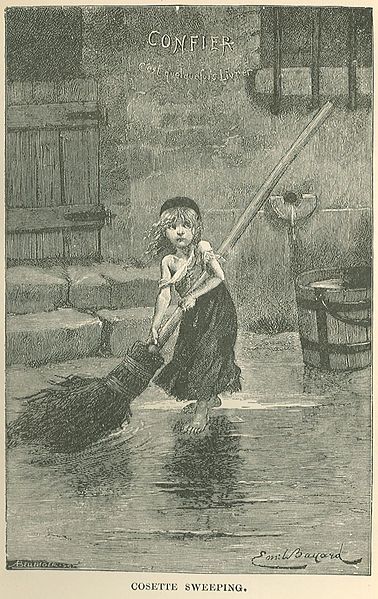
Cosette-sweeping-les-miserables-albert-bellenger-1886

~Victor Hugo – Les Miserables 

“Deep hearts, wise minds, take life as God has made it. It is a long trial; An unintelligible preparation for an unknown destiny. This destiny, the true one, begins for man at the first step in the interior of the tomb.”

“There he begins to discern the definite. The definite, think of this word! The living see the infinite; the definite reveals itself only to the dead. Meantime, love and suffer, hope and contemplate. “

“Woe, alas! to him who shall have loved forms, bodies, appearances only. Death will take all from him. Try to love souls, you shall find them again.”

yY

Victor Marie Hugo (French pronunciation: ​[viktɔʁ maʁi yɡo]; 26 February 1802 – 22 May 1885) was a French poet, novelist, and dramatist of the Romantic movement. He is considered one of the greatest and best known French writers. In France, Hugo’s literary fame comes first from his poetry but also rests upon his novels and his dramatic achieveme’
nts. Among many volumes of poetry, Les Contemplations and La Légende des siècles stand particularly high in critical esteem. Outside France, his best-known works are the novels Les Misérables, 1862, and Notre-Dame de Paris, 1831 (known in English as The Hunchback of Notre-Dame).
y

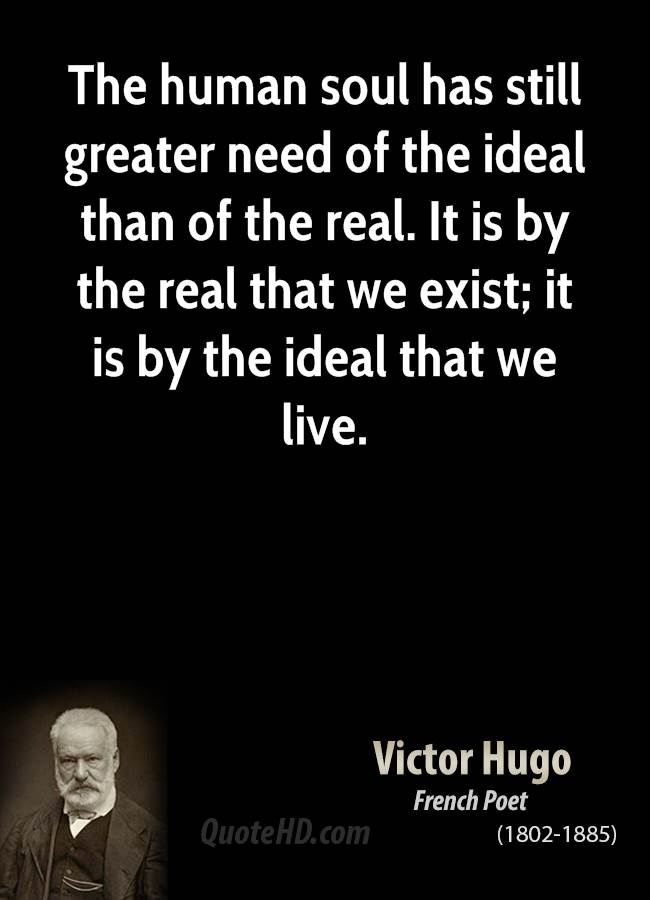
victor-hugo-author-the-human-soul-has-still-greater-need-of-the-ideal-than-of-the

Deciding What Makes Up Wisdom

kind-words1

“Often wise sayings fall on barren ground; but a kind word is never ever thrown away.” Sir Arthur Helps

There are so many things to grasp. Our own recovery practically insists we grab vital truths. When we latch on them, we must stick to them no matter what. When we lose someone, or even lose ourselves, we must listen so much closer– the Lord will send someone to our side.

Some rules though:

  • Curiosity is not ever the same as caring.
  • Losing ones balance is never the same as losing ones testimony.
  • A gentle touch can mean more than a powerful revelation.
  • Words of kindness are better than cold truth.
  • To really hear is better than a speech of true words.
  • We must live out the questions we whisper to God
  • Practising prayer is better than just simply praying.
  • Similar experiences that emphasize a connection is never the same as the individuals.
  • Our questions to God reveal far more than His answers.
  • When we do decide to dance, our true friends will dance too.

Ok, I must admit these are not always true and concrete in my heart. My life seems to be a cavern of emptiness; there is little inside but a silly reputation. But it’s a blanket that can’t warm my chilly heart.

12 “Since God chose you to be the holy people he loves, you must clothe yourselves with tenderhearted mercy, kindness, humility, gentleness, and patience. 13 Make allowance for each other’s faults, and forgive anyone who offends you. Remember, the Lord forgave you, so you must forgive others. 14 Above all, clothe yourselves with love, which binds us all together in perfect harmony.”

Colossians 3:12-14, NLT

“Share each other’s burdens, and in this way obey the law of Christ.”

Galatians 6:2

“It is a sin to belittle one’s neighbor;
    blessed are those who help the poor.”

Proverbs 14:21

recite-25825-95458975-1jznxku

Two O’ Clock in the Morning Poetry, #1

cohen-poet
(b. 1934- )

“Anthem” by Leonard Cohen

The birds they sang
at the break of day
Start again
I heard them say
Don’t dwell on what
has passed away
or what is yet to be.
Ah the wars they will
be fought again
The holy dove
She will be caught again
bought and sold
and bought again
the dove is never free.
)(
Ring the bells that still can ring 
Forget your perfect offering 
There is a crack in everything 
That’s how the light gets in. 
^
We asked for signs
the signs were sent:
the birth betrayed
the marriage spent
Yeah the widowhood
of every government —
signs for all to see.I can’t run no more
with that lawless crowd
while the killers in high places
say their prayers out loud.
But they’ve summoned, they’ve summoned up
a thundercloud
and they’re going to hear from me.
Ring the bells that still can ring …
You can add up the parts
but you won’t have the sum
You can strike up the march,
there is no drum
Every heart, every heart
to love will come
but like a refugee.
but like a refugee.
Ring the bells that still can ring 
Forget your perfect offering 
There is a crack, a crack in everything 
That’s how the light gets in. Ring the bells that still can ring 
Forget your perfect offering 
There is a crack, a crack in everything 
That’s how the light gets in. 
That’s how the light gets in.
flourish-bird
Wikipedia says the following–
&

Leonard Norman CohenCC GOQ (born 21 September 19170px-Leonard_Cohen17b34) is a Canadian Juno Award-winning[1] singer-songwriter, musician, poet, and novelist. His work often explores religion, isolation, sexuality, and personal relationships.[2] Cohen has been inducted into the American Rock and Roll Hall of Fame and both the Canadian Music Hall of Fame and the Canadian Songwriters Hall of Fame. He is also a Companion of the Order of Canada, the nation’s highest civilian honour. In 2011, Cohen received a Prince of Asturias Award for literature.

The critic Bruce Eder wrote an assessment of Cohen’s overall career in popular music, writing, “[Cohen is] one of the most fascinating and enigmatic … singer/songwriters of the late ’60s … [and] has retained an audience across four decades of music-making … Second only to Bob Dylan (and perhaps Paul Simon) [in terms of influence], he commands the attention of critics and younger musicians more firmly than any other musical figure from the 1960s who is still working at the outset of the 21st century.”[3]

Bonus stuff–

cohen-quote cohen-quote2