‘Who gathered this flower?’ The gardener answered, ‘The Master.’ And his fellow servant held his peace.”
It was November 13th, in the year of our Lord 1999, was unlike any day I have ever experienced. A beating with a baseball bat would seem preferable. On this cold afternoon, hell was unleashed on my wife and I. What we encountered was soul-wrenching and profoundly tragic.
Perhaps a parent’s worst nightmare is the loss of a child.
On this day we lost Elizabeth Grace. She was stillborn, which is rare these days– or so I have been told. She entered this world fully formed, a beautiful baby girl. Today, she would have been 24 years old, and maybe married, planning a family of her own?
“But now he is dead. Why should I fast? Can I bring him back again? I shall go to him, but he will not return to me.”
2 Samuel 12:23, (When David’s newborn son died.)
Our loss was grievous, but we know that there are others.
Plenty of families have suddenly lost a child. I can truly commiserate with them. Somehow we are connected in a perverse way. It seems like an exclusive club, that requires a secret handshake, or something. Suddenly without warning, you are thrown into personal chaos, and very little is remotely decipherable, even to a believer.
The book of Ecclesiastes that there is a definite “time to mourn.” Matthew tells us, “Blessed are those who mourn.” He does go on to say. “for they shall be comforted.”This comfort is available for any who chooses to take it, but you can refuse it if you really want to.
Grief unites us all, but Jesus loves us infinitely.
I can’t imagine meeting life without his care and comfort. He has been outstandingly gracious to this family. Sure there was pain, but there was also tenderness and a kind grace. Still, sometimes it may have felt like a “kick in the head.” (But I assure you– it was grace.)
What I still can’t understand is simply this. What would it have cost God to allow Elisabeth to live? I mean, what ‘skin off His nose’ would’ve it taken to let her live? To this day I still have questions, but I have decided to trust. (I trust Him after all, to save my soul.)
Those who have suffered will comprehend and grasp, the noxious environment of grief and loss.
But we can only take what we are dealt. The sadness is there, but so is His comfort. Make no mistake, His love matches (and even exceeds) the pain and the loss of a child. Truly, God is wonderful and He is good.
I do know that He loves me, a weirdly rascalish, struggling disciple. He holds me close to His precious heart, and I will have no other gods except Him. I will not take up umbrage with Him on this. But I must believe that someday soon, I will truly and completely understand this.
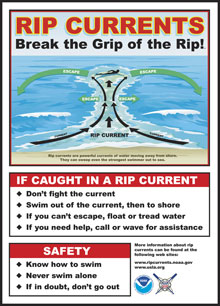
In the late 1990s, my wife Lynn and I were based in a mission station about 200 miles south of Tijuana, Mexico. We would be working in Baja in the sleepy little village of San Telmo. It was hard work, but sometimes we would take day trips to a beach on the Pacific Ocean. One beach in particular, was a favorite place for surfers.
One day we headed out for some sand, surf and sea. Little did I know that day, that I would almost drown. Yes, the waves were bigger then usual, but we set up camp and our two children combed the beach, under our watchful eyes. After a while, I gathered up my ‘boogie board’ and headed for the water.
I had caught several nice waves, and was having a wonderful time. But all of a sudden things got scary. I was working the waves on the north side of the beach, when suddenly– I lost control. The current began to pull me away from the shore. I doubled my paddling efforts, but still I was being pulled out.
I became really afraid. The beach was getting very small, and I still was being pulled out. It was at this point, I began to pray. I had never experienced a rip tide before. I really wasn’t sure what was happening.
In retrospect, I was being ‘schooled.’ I learned more in 15 minutes of stark terror, then in many months of classroom teaching.
1) I learned that I’m not in control of my life, there are things completely beyond me. I had zero control over what was happening. But often life is like that.
2) God can take my life whenever He chooses. He decides when I leave this earthly existence. “My times are in His hands,” the psalmist declared.
3) I needed to admit my profound ignorance of many things that are intensely important to know. These gaps in my knowledge will often take me where I don’t want to go.
4) Stay on your board! Cling to it. You WILL drown if you get separated from it. You can also use it to rest on when your arms feel like they are going to fall off.
5) And finally start to swim parallel with the beach, NOT toward it! The current is very likely 30-40 yards wide. The rising panic will probably keep you focused on the beach. You cannot overcome a riptide by trying to paddle harder.
6) If you make it through this, the beach is beautiful. You will be exhausted. Your friends will not grasp how close you came to drowning. They have no idea what has just transpired, and you realize you can’t explain what just happened. But all of a sudden, you have lost all enthusiasm for the board and the waves.
Often it feels like my depression a massive riptide. To fight it directly is disastrous, and pulls me away. I look back and realize that my experience has given me valuable things, an understanding that nothing can replace.
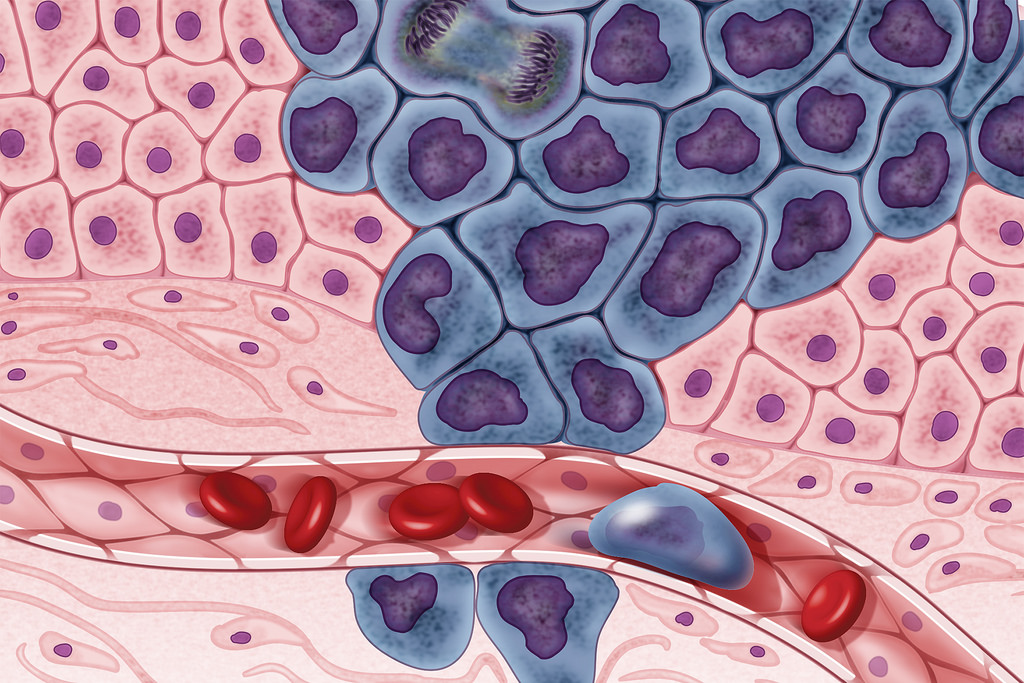
Before I entered college I hardly gave a thought to cancer and terminal illness. But ever since those college days death by disease has walked beside me all the way. Two of my college acquaintances died of leukemia and cancer of the lymph glands before they were 22. At seminary I watched Jim Morgan, my teacher of systematic theology, shrivel up and die in less than a year of intestinal cancer. He was 36. In my graduate program in Germany my own “doctor-father,” Professor Goppelt, died suddenly just before I was finished. He was 62—a massive coronary. Then I came to Bethel, the house of God! And I taught for six years and watched students, teachers, and administrators die of cancer: Sue Port, Paul Greely, Bob Bergerud, Ruth Ludeman, Graydon Held, Chet Lindsay, Mary Ellen Carlson—all Christians, all dead before their three score and ten were up. And now I’ve come to Bethlehem and Harvey Ring is gone. And you could multiply the list ten-fold.
What shall we say to these things? Something must be said because sickness and death are threats to faith in the love and power of God. And I regard it as my primary responsibility as a pastor to nourish and strengthen faith in the love and power of God. There is no weapon like the Word of God for warding off threats to faith. And so I want us to listen carefully today to the teaching of Scripture regarding Christ and cancer, the power and love of God over against the sickness of our bodies.
I regard this message today as a crucial pastoral message.
You need to know where your pastor stands on the issues of sickness, healing, and death. If you thought it was my conception that every sickness is a divine judgment on some particular sin, or that the failure to be healed after a few days of prayer was a clear sign of inauthentic faith, or that Satan is really the ruler in this world and God can only stand helplessly by while his enemy wreaks havoc with his children—if you thought any of those were my notions, you would relate to me very differently in sickness than you would if you knew what I really think. Therefore, I want to tell you what I really think and try to show you from Scripture that these thoughts are not just mine but also, I trust, God’s thoughts.
Six Affirmations Toward a Theology of Suffering
So I would like everyone who has a Bible to turn with me to Romans 8:18–28. There are six affirmations which sum up my theology of sickness, and at least the seed for each of these affirmations is here. Let’s read the text:
I consider that the sufferings of this present time are not worth comparing with the glory that is to be revealed to us. For the creation waits with eager longing for the revealing of the sons of God; for the creation was subjected to futility, not of its own will but by the will of him who subjected it in hope; because the creation itself will be set free from its bondage to decay and obtain the glorious liberty of the children of God. We know that the whole creation has been groaning in travail together until now; and not only the creation, but we ourselves, who have the first fruits of the Spirit, groan inwardly as we wait for adoption as sons, the redemption of our bodies. For in this hope we were saved. Now hope that is seen is not hope. For who hopes for what he sees? But if we hope for what we do not see, we wait for it with patience.
Likewise the Spirit helps us in our weakness; for we do not know how to pray as we ought, but the Spirit himself intercedes for us with sighs too deep for words. And he who searches the hearts of men knows what is the mind of the Spirit, because the Spirit intercedes for the saints according to the will of God.
We know that in everything God works for good with those who love him, who are called according to his purpose. (RSV)
1. All Creation Has Been Subjected to Futility
My first affirmation is this: the age in which we live, which extends from the fall of man into sin until the second coming of Christ, is an age in which the creation, including our bodies, has been “subjected to futility” and “enslaved to corruption.” Verse 20: “The creation was subjected to futility.” Verse 21: “The creation will be freed from slavery to corruption.” And the reason we know this includes our bodies is given in verse 23: not only the wider creation but “we ourselves (i.e., Christians) groan in ourselves awaiting sonship, the redemption of our bodies.” Our bodies are part of creation and participate in all the futility and corruption to which creation has been subjected.
Who is this in verse 20 that subjected creation to futility and enslaved it to corruption? It is God. The only other possible candidates to consider would be Satan or man himself. Perhaps Paul meant that Satan, in bringing man into sin, or man, in choosing to disobey God—perhaps one of them is referred to as the one who subjected creation to futility. But neither Satan nor man can be meant because of the words “in hope” at the end of verse 20. This little phrase, subjected “in hope,” gives the design or purpose of the one who subjected creation to futility. But it was neither man’s nor Satan’s intention to bring corruption upon the world in order that the hope of redemption might be kindled in men’s hearts and that someday the “freedom of the glory of the children of God” might shine more brightly. Only one person could subject the creation to futility with that design and purpose, namely, the just and loving creator.
Therefore, I conclude that this world stands under the judicial sentence of God upon a rebellious and sinful mankind—a sentence of universal futility and corruption. And no one is excluded, not even the precious children of God.
Probably the futility and corruption Paul speaks of refers to both spiritual and physical ruination. On the one hand man in his fallen state is enslaved to flawed perception, misconceived goals, foolish blunders, and spiritual numbness. On the other hand, there are floods, famines, volcanoes, earthquakes, tidal waves, plagues, snake bites, car accidents, plane crashes, asthma, allergies, and the common cold, and cancer, all rending and wracking the human body with pain and bringing men—all men—to the dust.
As long as we are in the body we are slaves to corruption.
Paul said this same thing in another place. In 2 Corinthians 4:16 he said, “We do not lose heart, but though our outer man (i.e., the body) is decaying (i.e., being corrupted) yet our inner man is being renewed day by day.” The word Paul uses for decay or corrupt here is the same one used in Luke 12:33 where Jesus said, Make sure your treasure is in heaven “where thief does not come near and moth does not corrupt.” Just like a coat in a warm, dark closet will get moth eaten and ruined, so our bodies in this fallen world are going to be ruined one way or the other. For all creation has been subjected to futility and enslaved to corruption while this age lasts. That is my first affirmation.
2. An Age of Deliverance and Redemption Is Coming
My second affirmation is this: there is an age coming when all the children of God, who have endured to the end in faith, will be delivered from all futility and corruption, spiritually and physically. According to verse 21, the hope in which God subjected creation was that some day “The creation itself also will be set free from its slavery to corruption into the freedom of the glory of the children of God.” And verse 23 says that “We ourselves groan within ourselves waiting eagerly for our adoption as sons, the redemption of our bodies.” It has not happened yet. We wait. But it will happen. “Our citizenship is in heaven from which we await a Savior, the Lord, Jesus Christ, who will transform the body of our lowliness to be like the body of his glory” (Philippians 3:20, 21). “In a moment, in the twinkling of an eye, at the last trumpet, for the trumpet will sound and the dead will be raised incorruptible and we shall be changed” (1 Corinthians 15:52). “He will wipe away every tear from our eyes, and there shall be no longer any death; and there shall be no longer any mourning or crying or pain; the first things have passed away” (Revelation 21:4).
There is coming a day when every crutch will be carved up, and every wheelchair melted down into medallions of redemption. And Merlin and Reuben and Jim and Hazel and Ruth and all the others among us will do cartwheels through the Kingdom of Heaven. But not yet. Not yet. We groan, waiting for the redemption of our bodies. But the day is coming and that is my second affirmation.
3. Christ Purchased, Demonstrated, and Gave a Foretaste of It
Third, Jesus Christ came and died to purchase our redemption, to demonstrate the character of that redemption as both spiritual and physical, and to give us a foretaste of it. He purchased our redemption, demonstrated its character, and gave us a foretaste of it. Please listen carefully, for this is a truth badly distorted by many healers of our day.
The prophet Isaiah foretold the work of Christ like this in 53:5–6 (a text which Peter applied to Christians in 1 Peter 2:24):
But he was wounded for our transgressions, he was bruised for our iniquities; upon him was the chastisement that made us whole, and with his stripes we are healed. All we like sheep have gone astray; we have turned every one to his own way; and the Lord has laid on him the iniquity of us all. (RSV)
The blessing of forgiveness and the blessing of physical healing were purchased by Christ when he died for us on the cross. And all those who give their lives to him shall have both of these benefits. But when? That is the question of today. When will we be healed? When will our bodies no longer be enslaved to corruption?
“The good physician treats the disease; the great physician treats the patient who has the disease.”
– Sir William Osler, 1849-1919
I wrote this poem the other day for ‘Thankful Thursday’ on my own blog. Knowing that many who visit Broken Believers struggle with illness and pain, I thought this would be good to share here as well.
There are plenty of cracked clay pots that find this place, and God’s in the business of putting the pieces back together. It’s His special supernatural work, and only He can do it properly.
He loves helplessness. He cures the sick. It’s what He’s been called to do.
“And when Jesus heard it, he said to them, “Those who are well have no need of a physician, but those who are sick. I came not to call the righteous, but sinners.”
Mark 2:17
Our Great Physician
Illness comes to everyone – pain, fever, fatigue, and tears Chronic or acute, it’s such a trial – these clay pots we inhabit are so incredibly fragile even in the hands of the Potter
But our Great Physician provides strength, comfort – Sometimes He brings doctors, nurses, and medication – Wisdom and talents used to do His will, to heal, to mend
Sometimes all it takes is to touch the hem of His robe – Like the woman who bled for twelve long years, outcast one moment, then healed completely and wholly
The greatest good – spiritual health and salvation for the least of us, for all – each clay pot is used to help others as grace leaks out of cracks – Cracks that never seem to heal
Sometimes what the Physician has in store is our ultimate healing – A new body, new life eternal in a place of no more pain, no tears, energy galore – as death brings everyone home
“But we have this treasure in jars of clay to show that this all-surpassing power is from God and not from us. We are hard pressed on every side, but not crushed; perplexed, but not in despair; persecuted, but not abandoned; struck down, but not destroyed.”






 Broken Believers