The Shepherd’s Oil

I have to admit, I always wondered what this verse in Psalm 23 meant. I thought He anoints my head with oilwas a nice poetic phrase for God blessing David. But as I delved deeper into the context and explored different interpretations, a beautiful and profound meaning unfolded before my eyes.

First of all the act of anointing with oil holds significant cultural and spiritual symbolism in biblical times. It was a practice to anoint guests as a sign of honor and welcome, especially in lavish feasts and celebrations.

Anointing with oil also had medicinal purposes, as it could soothe and heal various ailments. (Now that’s interesting, I thought.)

In the context of Psalm 23, the phrase “He anoints my head with oil” takes on a deeper metaphorical meaning. It signifies God’s abundant blessings, His provision, and His care for His people. Just as a host anoints the head of a guest as an act of honor and hospitality, God lovingly anoints us with blessings and favor.

Moreover, the act of anointing with oil has spiritual connotations. In ancient religious rituals, anointing with oil was a sign of consecration, setting apart someone or something for a holy purpose.

This verse also portrays a practical picture of medicinal shepherding.

In biblical times, shepherds used oil to treat and protect the sheep’s wounds and keep insects away from their heads. By anointing our heads with oil, God brings healing and comfort to our brokenness, soothing our hurts and protecting us from the turmoil of life.

Sheep often can do harmful things to themselves as they try to find relief from flies and ticks.

Their ears and eyes can be targets for tormenting insects as well.

Sheep have been known to bash their heads against rock walls to dislodge flies from their ears, noses, and eyes. A good shepherd watches closely over his flock. He watches over them carefully.

A good shepherd knows that poured out oil forms a barrier of protection against these things that would try to destroy the sheep.

Have you ever asked God to anoint your head with oil?

Psalm 23 as a whole beautifully paints a picture of God as our loving and caring Shepherd, guiding us, providing for us, and protecting us. The imagery of anointing with oil further illuminates the depth of His love and the extent of His care. It reminds us that we are chosen and cherished by God, and that His blessings are abundant and unending.

But ask yourself these questions. Do you have times of mental torment? Do the worrisome thoughts invade your mind over and over? Do you beat your head against a wall trying to stop them?

The Holy Spirit can come with His endless supply of oil!

“You prepare a table before me
    in the presence of my enemies;
you anoint my head with oil;
    my cup overflows.”

Psalm 23:5, ESV

Oh how He loves you!

The Art of Denying Jesus

deny

“Suddenly, Jesus’ words flashed through Peter’s mind: “Before the rooster crows, you will deny three times that you even know me.” And he went away, weeping bitterly.”

Matthew 26:75, NLT

Three denials are followed by three reaffirmations.

A third time he asked him, “Simon son of John, do you love me?” Peter was hurt that Jesus asked the question a third time. He said, “Lord, you know everything. You know that I love you.” Jesus said, “Then feed my sheep.”

John 21:17

The apostle Peter was a fervent disciple. He knew who Jesus was before most. He was always included in special times (e.g. the transfiguration, Gethsemane). He was favored by Jesus throughout times of ministry. I also believe that he was Jesus’ friend.

Peter is known for:

  • being called on the shores of Galilee, Matt 4:18-19
  • ‘almost,’ sort of, walking on water, Matt 14:29-30
  • finding the tax money in a fishes’ mouth, Matt 17:24-27
  • having his feet washed, John 13:6-7
  • in Gethsemane– cutting off an ear, John 18:10-11
  • his remorse at denying Jesus, Matt 26:75
  • running to the empty tomb with John, John 20:3-8

Peter’s own denials were of a serious nature affecting who he was, and who he was to become. Jesus astutely intervenes as they ‘breakfasted’ on the seashore. There would be three affirmations; one for each denial. Peter needed to meet the resurrected Jesus, and speak with him about what he had done. Peter needed this.

A denial has different intensities and can be understood in many different ways.

Out of our own confusion, we realize that we can also deny Jesus. Perhaps frequently.  (And none of us have any immunity as of yet.) We deny the Lord when we refuse to speak of him to others. We deny the Lord when we fail to do what is right. Sometimes we deny him flagrantly, other times it is a more subtle attitude. At best, we’re still inconsistent, and at worst (I hate to say it,) apostates.

We’re not punished or abandoned for this behavior.

(It seems like we punish ourselves though.)

Human logic would suggest that we should be condemned. But instead we are gently restored. Given the opportunity, Peter the fisherman, would eventually become a wise shepherd to the young Church. I would suggest that Peter’s personal weakness would serve him well as a gentle, and caring pastor.

Peter now understood these things, and he would be careful and gentle.

“God appoints our graces to be nurses to other men’s weaknesses.”

 Henry Ward Beecher

Peter, near the end of his life, goes ‘full circle’ and uses a very precise Greek word found in only two places in the New Testament. It is the specific form of the word “shepherd.” It is only used in John 21:16-17 in Peter’s restoration, and in 1 Peter 5:2. Peter encourages the Church with the same words Jesus himself spoke to him on the beach so long ago!

Peter wrote this:

Be shepherds of God’s flock that is under your care, watching over them—not because you must, but because you are willing.”

1 Peter 5:2


Hiding Our Wounds

Brennan Manning Quote
“You are the light of the world. A city set on a hill cannot be hidden. 15 Nor do people light a lamp and put it under a basket, but on a stand, and it gives light to all in the house.”

Matthew 5:14-15, ESV

Overall, I think this Manning quote is a great observation. We, the torn and wounded, often try to hide, secluding ourselves in the “Island of Misfit Toys.” (Got to love those 60s Christmas cartoons.) We pretty much accept our lot as damaged merchandise.

Maybe we choose to isolate ourselves more than we want to admit. Could that be what we do? Are we still embarrassed and ashamed by all that we’ve done? That’s quite possible.

This may come as a shock, but the Church doesn’t need any more gifted people.

But it does need broken people who understand ‘the giftedness of the flawed.” When we conceal, we diminish the Church by our absence. We can ostracize ourselves, through a self imposed shame— but the Church will suffer. We need to show them that everyone can be healed, even screwy ‘fruit-cakes’ like us.

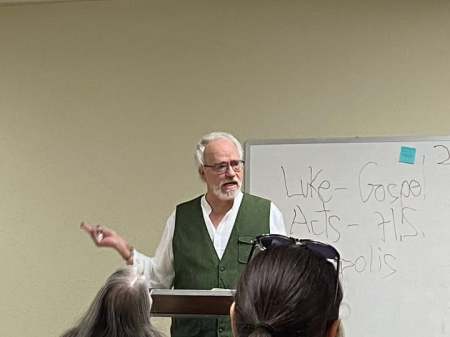
I recently had the privilege of speaking to a class of young Bible college students.

My subject was decidedly not on being successful, but on being a failure. Whole courses are geared toward ministerial success– but where are the ones for failure? I think that it just might be even more important, in the long run.

No human effort is going to erase your past.

I have tried and it can’t be done. I have blitzed my brains on drugs and booze, but I still remember the people I’ve hurt. (And I pray for them.) There really isn’t a cure for the evil we have done. I believe in forgiveness. And I hold to the idea that are sins are never to be a subject of  guilty accusation–

“He will again have compassion on us;
    he will tread our iniquities underfoot.
You will cast all our sins
    into the depths of the sea.”

Micah 7:19

Our dark iniquity is put in a very deep place. But there are the memories of an unkind word, or a sad and dark foolishness that we must learn to live with. There will be many regrets, and we face the terrible consequences of our sins, but it’s enough to know that all is under the blood of Jesus.

We are indeed forgiven. Completely.

We are now to live as forgiven sinners, yet precious in God’s eyes. We discover that although the Father has no favorites among His children, but He does have intimates. We are to live the rest of our lives for His glory, exploring that intimacy.

“Leave the broken, irreversible past in God’s hands, and step out into the invincible future with Him.”

  Oswald Chambers

Pastors Who Can Pastor

PASTORING

“The authority by which the Christian leader leads is not power but love, not force but example, not coercion but reasoned persuasion. Leaders have power, but power is safe only in the hands of those who humble themselves to serve.”

    John Stott

I think that most of us fail to get a real grip on what pastoring is all about. And that is spiritually dangerous. Not only do we stunt our pastor’s growth, but we cripple ourselves, and we all flunk some important spiritual lessons. I want to share three basic things (there are more, believe me).

1) Our pastors are sinners.

Surprise! They are just like you and me– definitely not superheroes and certainly not always saintly. They will have their moments and struggles. We really need to understand this to fully receive their gifts. Just knowing this about them, prepares us to receive deeply and sincerely from their ministries.

It seems that their own battles are necessary to do a work of brokenness inside of them. Humility happens inside, and it often happens deep within.

2) Our pastors need to be prayed for.

What they do is probably one of the hardest, most challenging work on planet Earth. Deep down the good pastors know this. But they still wade courageously into the thick of things. Our real prayers can buttress and stabilize their lives. Pastors substantially encounter the darkness and do warfare for us.

Most have a family to pray for, but they also have a Church they must cover too. A local pastor must have solid elders and active intercessors, or they will certainly stumble and fall. Pastors need your grace, not your gripes–prayer, and certainly not your complaints.

(For a background read the story of Moses and his intercessors.)

3) Our pastors must be empowered by the Holy Spirit.

God’s work must be done His way. And the Lord repeatedly insists His leaders be filled with the Spirit. They receive power right from the true source. Again, Jesus, the True Shepherd gives power and wisdom and grace for each singular moment. A good pastor, over time and much prayer– develops discernment and an awareness for his flock. He learns to love them as he watches over them.

Much, much more could be written. There are so many facets to consider. I only want to encourage you to love and honor your pastor. When you do this, it will probably activate his gift, and fresh ministry will become available.

I suppose that the main thing is make sure you find a way to encourage them.

Real work will be done inside of you, and inside your pastor as well.

“Then I will appoint responsible shepherds who will care for them, and they will never be afraid again. Not a single one will be lost or missing. I, the Lord, have spoken!”

Jeremiah 23:4

ybic, Bryan

My own pastor–David and Karen Taylor, CCC, Homer Alaska