The Plow and Jesus

57 As they were walking along the road, a man said to him, “I will follow you wherever you go.”

58 Jesus replied, “Foxes have dens and birds have nests, but the Son of Man has no place to lay his head.”

59 He said to another man, “Follow me.”

But he replied, “Lord, first let me go and bury my father.”

60 Jesus said to him, “Let the dead bury their own dead, but you go and proclaim the kingdom of God.”

61 Still another said, “I will follow you, Lord; but first let me go back and say goodbye to my family.”

62 Jesus replied, 

“No one who puts a hand to the plow and looks back is fit for service in the kingdom of God.”

Luke 9:57-62, NIV

There’s to be no whitewashing the way of discipleship–there’s no glamour, no special recognition–no acclaim in it to speak of it openly. I guess this is the “real” way of being His follower. The path Jesus has for me demands I give Him my whole heart. Heart enough to turn it all to Him. Heart enough to give Him total commitment.

Jesus seems to make it hard to follow Him. But is it really?

We can see this in His responses to each prospective disciple. His statements to each possible follower seem harsh, difficult, and a bit “unreasonable,” but He doesn’t receive these men unless they do what He says.

Discipleship demands that we give up what we hold dearest.

What happened to these three “would-be” followers? Did they return home dejected and frustrated? To follow in Jesus’ footprints means we give up our personal agendas, and turn our backs on what is closest and dearest. We must renounce everything, and give Him preeminence over all.

These are hard verses with profound implications.

But this passage is given to us for a reason. We dare not minimize what it means to be a disciple. We must grasp the plow with both hands, and we can’t look back. All that we do is a fair response to His mercy, and His kindness. There is incredible joy in all of this.

“Christianity without discipleship is always Christianity without Christ. Unless he obeys, a man cannot believe.”
    Dietrich Bonhoeffer

brokenbelievers.com

Dancing With Bruises

ballerina stretching
Photo by Beto Franklin on Pexels.com

It seems like bruises are part of our life.

Dancers are some of the most talented people I know. Their gracefulness can be seen both on and off the stage. A dancer’s training is far from easy. But by choosing to become dancers they have made a decision to absorb pain.

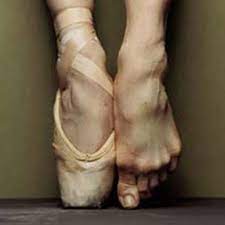
Their toes and feet are blistered and bruised; they take constant abuse. Some live with chronic tendonitis. Their feet bleed sometimes, and pain is their constant companion, but they still choose to dance.

Two things to consider.

  • They choose to dance. Dancers must operate with an iron will and an elegant grace. I suppose that is why they can dance the way they do. They have painfully blended the two.
  • The scars and bruises often become “badges of honor.” They would rather dance in pain, than not dance at all.

I once heard someone describe depression as having a mental bruise. I understand this. It makes sense.

As one prone to depression, I know what it is like to bury myself in my bed for weeks at a time. My own mental bruise was simply more than I could take. There was a sensation of sinking into blackness, a sense of total and complete despair. I felt lost and completely alone.

I prayed. I groaned, and I prayed again. Things weren’t going well.

dancer-feet

My sense of being totally lost in sad, dark thoughts was beyond comprehension. Dear reader, this was something quite real, and you must become aware of these things. Some of your friends are suffering, and it is often a hellish and desperate depression.

We would never say that diabetics are that way because of the enemy. The dark one will surely exploit it, but I think you give him far too much credit if you suggest he was able to initiate it. I don’t think Satan has the spiritual “voltage.”

I refuse to hide my mental bruises from those who share my pain. I will make the choice to dance. I’m bruised, but I will try to ignore the pain. I would exult in my God, walk in His love, and “leaping with joy like calves let out to pasture” (Malachi 4:2.)

“A bruised reed he will not break, and a smoldering wick he will not snuff out, till he has brought justice through to victory.”

Isaiah 42:3

The great pastor/evangelist Charles Spurgeon once spoke about his own personal battle with depression. Read this quote slowly and deeply:

 “I find myself frequently depressed – perhaps more so than any other person here. And I find no better cure for that depression than to trust in the Lord with all my heart, and seek to realize afresh the power of the peace-speaking blood of Jesus, and His infinite love in dying upon the cross to put away all my transgressions.”

Charles Spurgeon

Repeat Offenders

“Father, every family has a rascal someone who breaks the rules a juvenile delinquent of untold frustrations and sleepless nights a repeated offender and bearer of sad woe the problem child who needs the most discipline.

Is this why you love me most persistently? When you correct me, is it because I’m the one most contrary?

Or is it that you love me so much?”

 I wrote this thinking about Hebrews 12 and God’s purpose of chastening. I don’t pretend to understand this dynamic completely–all I can say is that my childhood was punctuated by much difficulty. But now, as a father (my two children are now grown), fatherhood has become far easier than my dad had with me.

7 “As you endure this divine discipline, remember that God is treating you as his own children. Who ever heard of a child who is never disciplined by its father? 10 For our earthly fathers disciplined us for a few years, doing the best they knew how.

But God’s discipline is always good for us, so that we might share in his holiness. 11 No discipline is enjoyable while it is happening—it’s painful! But afterward there will be a peaceful harvest of right living for those who are trained in this way.”

Hebrews 12:7, 10-11

I really think we understand our Heavenly Father when we spend quality time with Hebrews 12. We are given insight into His care and into our own issues. It is a good thing He gives us— it enriches our spiritual lives.

It’s never nice to be corrected.

It’s not pleasant. Part of being corrected is being reminded that we’re not as righteous as we think we are. To be corrected strikes us to a reprimand, an admonition that something isn’t right inside of us.

The Father corrects His children–in many ways through a myriad of circumstances. He loves us far too much to allow us to continue in our sin. He’s making us into the image of Christ.

We should welcome His correction. He has a plan for you.

When He disciplines you, it only proves that He is your Father. It’s critical to remember: God’s correction is always for our good. It may be painful yes, but it comes with real hope. It’s not to harm or punish you.

“Father, I’m so sorry that I grieve you as often as I do. I promise to behave. Thank you for being a faithful Father who cares deeply for my soul. Amen.”

 Hannah Whitall Smith.

Nothing But the Blood


1 John 1:7, ESV

At first glance it seems that the Old Testament is a collection of extremely bloody books. So many sacrifices were made that the levitical priesthood had to sacrifice lambs 24 hours a day. People had this desperate need to cover their sins with an offering. This was instilled in them by the Law and their conscience. The guilt emanating from their sins must be covered by a lamb’s blood.

As our sins mount up (and they will) we have an innate need to cover them up.

Sin is almost never hidden, and never, ever exalted as a virtue. And yet we try to skate though our accumulation of many sins. We forget many, and try to excuse the more heinous. Our guilt condemns us, and we have no choice but to hide it, from ourselves, others, and from God. We can no longer pretend we’re without sin.

“Human beings, all over the earth, have this curious idea that they ought to behave in a certain way, and can’t really get rid of it.”

-C.S. Lewis

The Jewish people no longer sacrifice lambs, and it seems the Gentiles have never caught on. But sin has never gone out-of-style. But yet there is still a way for God to forgive our sin. The New Testament teaches clearly that Jesus has offered His blood as the payment of every sin ever committed. His death wiped our slates clean, forever.

The New Testament is crystal clear on this. I’m not making this up.

The crucifixion of Jesus Christ had enough sufficiency to cover everyone, once, and for all. It seems astonishing, beyond belief and possibility. The blood it seems, has never lost its power. This may be why Christians can’t seem to ‘shut-up’ about their faith.

They ‘see’ something!

“Therefore, brothers and sisters, since we have confidence to enter the Most Holy Place by the blood of Jesus.”

Hebrews 10:19

We are given a ‘backstage pass.’

Simply put, you now have the confidence–sort of like ‘backstage passes,’ into God’s presence, all because of His death. The cross is far, far beyond a gold religious medallion worn around the neck. The cross of Christ, and more precisely His blood, is now regarded as complete righteousness for anyone (who by faith) receives it as his/her own. A brand-new confidence takes hold. “God loves me, and He really has forgiven me.” 

2 Corinthians 5:17

Our sins, from our fallenness, are now smothered in the blood of Jesus. That red blood makes us ‘white as snow’ in God’s analysis. At long last, the tremendous guilt is lifted from the believer, and they want others to know about it. Brokenbelievers’ everywhere are cheering.

We know we aren’t quite right, and we understand our sin, but we have become fans of Jesus Christ. After all, His death has brought us eternal life.