Frederick, [Handling Giftedness]

Fredrick-big
Frederick, the ‘prophetic’ mouse

I have always loved to read. I was given books by my mother, and these books were like gold. I had been a avid patron of the library, but terrible at returning books. I had pretty much been branded as “persona non grata” by the librarians of my hometown library at the ripe old age of 12.

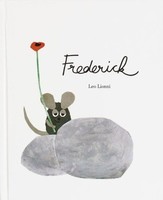
I have fond memories of some fine books. But perhaps the most influential of them all was a title called, “Frederick” by Leo Lionni.  It won the ’68 Caldecott ‘back in the olden days.’ It very well could be one of best children’s books ever written. ( I realize now that many of these books that shaped me were prophetic in their own way.)

We see Frederick, who is a young field mouse, off on excursion to find food with his four brothers. They must fill their pantry for the cold winter that’s coming. They are quite successful (it appears) and all seems well.

However, there is a bit of a problem with Frederick. While the other mice are ‘busting their mouse-butts’ he sits quietly thinking. They question him repeatedly, trying to motivate him (or shame him perhaps?)  There seems to be a general consensus against him, which is verging on open warfare.

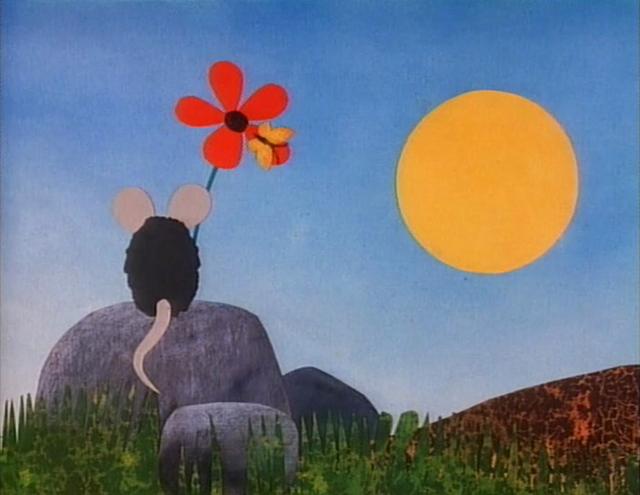
But Frederick insists that he is needed to do this. He says that he is ‘working’. He is collecting sunlight, absorbing it until it’s needed.  He takes in colors, and then words. He just seems soak up these really wonderful experiences, and he seems a bit “clueless” (that’s not the right word), maybe a bit “preoccupied.”
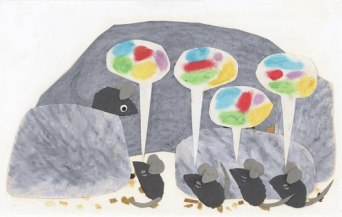
FrederickFinally in the dead of winter, sheltered deep underground, their supplies are running low. One of the mice turns to Frederick, and asks him to share what he has collected. And he does precisely that. They sit in a circle and Frederick shares the sunlight, and the rich colors and the beautiful words he has stored up for them. Their little ‘mouse-hearts’ are deeply touched by Frederick’s contribution.

In so many ways, this has become a parable, or metaphor of my life. As a eight year old, I could hardly have foreseen how my life would unfold. I do however had a deep sense of being different, even then. My mental illness, mixed with being “gifted”, and then combined with being isolated and dirt-poor, worked in me.

Essentially, we all are products of our personal history.  What we have experienced good or bad develops us.  It did me.  I think what “Frederick” wants to do for us is to process uniqueness, gifting and steadfastness.  One of the things that the Holy Spirit has been speaking to me for the last few years is this, “Bryan, can you receive from the giftedness of other believers?”

We really must make room for “Fredericks” and what they can bring to us.  We will be drastically weakened if we won’t– or can’t.  Jesus faced a ton of resistance as He began to minister.  There is nothing new about that.  But it didn’t touch His spirit.

“Now Joseph had a dream, and when he told it to his brothers they hated him even more.”

Genesis 37:5

bry-signat (1)

cropped-christiangraffiti1.jpg

&

fredrick-small

The Fellowship of the Saints

The fellowship of the saints

The following is Psalm 16:3 in several different versions.  They differ from each other but all express the same fundamental thought.  The variation is refreshing and allows for a stronger development of thought.

 3 As for the saints who are on the earth,
“They are the excellent ones, in whom is all my delight.” (NKJV)  


3As for the saints who are in the earth,
They are the majestic ones in whom is all my delight. (NASB)


3 The godly people in the land
are my true heroes!  I take pleasure in them! (NLT)
_______________________

No matter how we look at it, the Psalmist knows the value of other believers.  He exults in their companionship and rejoices in their presence in his life.  He knows that they have an excellence in them and about them.  He savours all contact with them.

We could say the psalmist has struck gold.  Whenever he has contact with them, good things start to happen.  A joy is awakened in him and bubbles to the surface. ( This Psalm 16 should be read in its entirety, I am only pulling out a single verse because of the light within it.)

Friendship, or companionship is a critical necessity for us, especially when the momentum of our culture is towards isolation.  I’ve been told of a certain kind of rock will begin to resonate, becoming warm in the presence of a rock of the same type.  (IDK if this is true but it is a great story).

I need brothers and sisters to awaken me.  As a man who struggles with physical and mental illness that connection brings me healing and wholeness.  I in turn through this same connection transmit grace and wisdom to them (or whatever).

There is not a lot of things better, and more invigorating than coffee with a Christian friend.  In heaven, there will be a Starbucks on every other corner serving up Vanilla Lattes for disciples wanting to visit and share their hearts (that is my personal theory anyway.)

The Psalmist puts our relationships into the light and evaluates them by the encouragement they bring.  We need to have that awareness as we contact each other.  As a “closet-hermit” I need that extra push.  I would anticipate or even expect it. 

The Holy Spirit works in the specific area of relationships.  That is His strength and forte’.  I believe that the way the Kingdom of God works, flows and advances is in large part because of godly relationships.  The more we cultivate them, the more the Church grows.

Limits of Mental Illness

748

Mental illness is so limited,

It cannot cripple love, 

It cannot shatter hope.

It cannot corrode our faith.

It will never destroy peace.

It cannot.

It will never kill friendship, 

It cannot suppress memories. 

It cannot invade the soul.

It cannot steal eternal life.

It cannot conquer eternal life.

It cannot conquer your spirit.

Amen.

flourish2


 P.S. I have received some criticism over the contents of this post. The argument is that mental illness is very destructive, and that I’m misleading others by suggesting it isn’t. The thinking is that we dwell on the past and how it effects the present moment. I believe we have a mental illness. But I also believe more strongly so that Christ redeems us completely. “Because he lives,” goes the old hymn, “I can face tomorrow.”

In the “heat of the moment” the situation can seem overwhelming. Our illness can be completely devastating. However the Holy Spirit is yet to fully redeem us, yet we still must view this coming event as something triumphant and total. This life is not the end. What a relief to shed this mortal darkness!

“Behold, the dwelling place of God is with man. He will dwell with them, and they will be his people, and God himself will be with them as their God. 4 He will wipe away every tear from their eyes, and death shall be no more, neither shall there be mourning, nor crying, nor pain anymore, for the former things have passed away.”

Revelation 21:3-4

1brobry-sig4


cropped-cropped-christiangraffiti1.jpg


So You Want to Become Vulnerable?

freedom_by_ahmetorhan

“To love at all is to be vulnerable. Love anything and your heart will be wrung and possibly broken. If you want to make sure of keeping it intact you must give it to no one, not even an animal. Wrap it carefully round with hobbies and little luxuries; avoid all entanglements. Lock it up safe in the casket or coffin of your selfishness. But in that casket, safe, dark, motionless, airless, it will change. It will not be broken; it will become unbreakable, impenetrable, irredeemable. To love is to be vulnerable.”

 — C.S. Lewis, The Four Loves

Public speaking has never been a problem for me. All through high school, Bible college, as a street evangelist– nothing I’ve ever done really has ever been a concern.  But,  I have friends who rather submit themselves to hideous torture then to put themselves in that public position.  They are afraid of the spotlight, feel exposed and just a little too accessible in the lime light.

Becoming vulnerable in love is ‘above and beyond’ the fear of public speaking.  It is almost irrational in the way it takes charge.  We refuse to put out, with the fear of being that accessible.  We will not allow ourselves to become a victim.  But public speaking has nothing on loving someone deeply, because of the risk involved.

Men are the greatest perpetrators of this attitude.  We close ourselves off and keep our hearts protected and safe.  We cannot truly give our hearts away, because we cannot share that which is most intimate (we hate that word!).  I will refuse to become vulnerable to anyone, because of the risk I put myself in. To really “trust,” in deep way, is way too much exposure for us.

Our families cannot understand our emotional coldness.  They think that the problem is their fault.  They struggle to understand.  And we respond to their attempts to accommodate us with skepticism and fear.  We hold back and pathetically attempt to adjust to their efforts.  Selfishness ultimately wins the day.

Lewis reveals that our natural inclination is towards selfishness.  We try to hide and avoid the “nakedness” that love requires.  I am convinced that we will spare no effort to stay safe, becoming invulnerable to another’s inspection.  We wall up ourselves to the risks of love.  But learning to trust is one of life’s most difficult tasks.

Jesus Christ has come, to teach us how to love openly and freely.  He became vulnerable, laying aside his prerogative of being God.  He is teaching us to love like him. We will only truly heal when we risk it all, with our Father, and our brothers and sisters.

aabryscript