“O My Dove,” a Thought from A.B. Simpson

white-dove-159498_960_720
“O my dove, that art in the clefts of the rock,
in the secret places of the stairs,
let me see thy countenance, let me hear thy voice;
for sweet is thy voice, and thy countenance is comely.”

Song of Solomon 2:14, KJV

“The dove is in the cleft of the rock”—that is, the open side of our Lord. There is comfort and security there. It is also in the secret places of the stairs. It loves to build its nest in the high towers to which men mount by winding stairs for hundreds of feet above the ground. What a glorious vision is there obtained of the surrounding scenery.

It is a picture of ascending life. To reach our highest altitudes we must find the secret places of the stairs. That is the only way to rise above the natural plane. Our lives should be ones of quiet mounting with occasional resting places; but we should be mounting higher, step by step. Not everyone finds this way of secret ascent. It is only for God’s chosen.

The world may think we are going down. We may not have as much public work to do as formerly.

“Blessed are the poor in spirit.”

Matthew 5:3

It is a secret, hidden life. We may be hardly aware that we are growing, until one day a test comes and we find we are established.

  • Have you arrived at the place where Christ is keeping you from willful disobedience?
  • Does the consciousness of sin make you shudder?
  • Are you lifted above the world?”

~~A.B. Simpson

flourish14

Albert Benjamin Simpson, (Dec. 15, 1843 – Oct. 29, 1919)
FOUNDER OF THE Christian and Missionary Alliance, Albert Benjamin Simpson was born in Canada of Scottish parents. He became a Presbyterian minister and pastored several churches in Ontario. Later, he accepted the call to serve as pastor of the Chestnut Street Presbyterian Church in Louisville, Kentucky. It was there that his life and ministry were completely changed in that, during a revival meeting, he experienced the fullness of the Spirit.

He continued in the Presbyterian Church until 1881, when he founded an independent Gospel Tabernacle in New York. There he published the Alliance Weekly and wrote 70 books on Christian living. He organized two missionary societies which later merged to become the Christian and Missionary Alliance.

–Wikipedia

*********

The Urgency of This Moment

 
“Johnny Quick”

 “We must quickly carry out the tasks assigned us by the one who sent us. The night is coming, and then no one can work.”

John 9:4, NLT

To be quick means that we move very fast; being slow often implies a reluctance or a mental delay.  To hesitate while doing God’s will for us suggests a degree of ignorance or stubbornness.  Our quickness is to be seen while doing “the tasks assigned to us.”

Urgency should be woven into our hearts.  We need to have wings on our feet, a fleetness and an alacrity.  A “double-eagerness” as we carry out His work.  It should be of no surprise that God sets before us an itinerary of work He wants us to do.

So many brothers and sisters sleepwalk through their salvation. They snooze when Jesus desires they “watch and pray” with Him.

Jesus was on a  timetable. He communicated a need of doing.  He is in tune with the work of God, and is involved in the urgency of his present moment.  Jesus knows this, and he clearly communicates the need to do.  We are not called to be manic for Jesus; we are expected to be alert and aware.

This is a cry for urgency to his disciples.

“The night is coming.”  It is getting late.  In response Jesus issues an order.  Work at what the Father has assigned you.  It is almost dark now.  There is a “principle of spiritual velocity” calling us to an alertness and an awareness of needful things to do before “the time is up.”

In Acts 9 the disciples show a holy zeal in their day’s work.  We can’t stop speaking what we have seen and heard.”  The Old Testament prophets carried this urgency–Jeremiah and Amos both declared to us this avidity placed on the believer.  Jesus desires that we factor in this concentrated awareness of the approaching night.

I recently read of an evangelist in the last century.  He had a watch made, and on the dial he had a picture of a setting sun.  And over it, the words, “the night comes.”  Everytime he would look at his watch he would be reminded of the shortness of life and the need of the performance of his duty.  That lesson should be transmitted to each zealous believer.

The key word I guess, in all of this, is zeal.  And often the older we get the more this word becomes diminished, and distant.  (I believe our Father understands this about us.) No matter what we do, He focuses His love on us.  There will never be a condemnation on us.  But we can still waste away our lives in a tragic way, which we will later regret. 

But we have to ask ourselves this, will I just be an admirer, or can I become a zealous disciple of Christ?

bry-signat (1)

cropped-christiangraffiti1.jpg

Listening to God’s Voice 101

mastersvoic

“But blessed are your eyes, for they see, and your ears, for they hear.”

Matthew 13:16, ESV

There is a vast audio ocean that surrounds us.  Did you know that in the room where you are reading this, that there are cartoons, music, mysteries, and concerts going on? You just don’t see or hear them unless you have your radio or television tuned in to the right frequency. We live in the golden age of Bluetooth and cell phones. (Oh my!)

There is a frequency that we must lock into, where we can hear important things (or block-out confusing sounds.) God is so into ‘communicating.’  We understand He desires us to communicate with Him. He yearns for a dialogue with us,  just like He had once a long time ago in the early chapters of Genesis.

Knowing that I’ve been created in imago dei. I ponder the visible, which is a simple shadow of the real world. Mankind in general, creates and communicates–this is what we do–because it’s how God acts. In a certain sense, you might say we are miniaturized versions of Him. Afterall, we are in His image.

He is always speaking, but we’re not always listening.

The attribute of listening is amazingly profound.  Often, I listen to my local radio station while I’m driving in my car. When I drive away from the radio tower, the signal gets weaker and weaker. But if I turn the car around and drive back into town, the signal becomes stronger and I can hear it again.

In the same way, we stop hearing God when we drift away from Him. But if we will turn around and come back to Him, we’ll hear His voice again. The closer we are to God, the clearer we can hear Him. “Draw near to God and He will draw near to you” (James 4:8).

1brobry-sig4


cropped-christiangraffiti1 (1)


Walking With the Lord Jesus, [Humility]

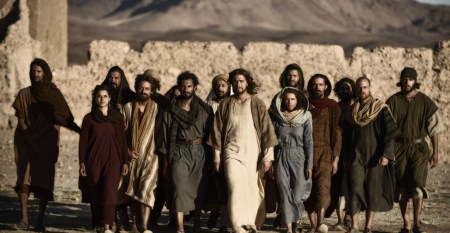
jesuschrist_mary_marymagaleneandthedisciples_20130319

The subject and emphasis on is becoming obscure— “just like Jesus.” I suppose my main contention is this– our understanding of discipleship has too much “me, and not enough Him.” This can be a gentle error of a young believer.

When Jesus who was the fullness of God in bodily form came, He came as a lowly slave. We see Him stripping down, filling a basin, and scrubbing dirty feet. He actively made Himself a broken and humble servant. It was deliberate and conscious.

Read Philippians 2. It will blow you away!

I think we learn this from Him. The disciple never exceeds his master. He made it very clear that we were to follow Him in this. It’s processed by us when we are very firmly aware that the One who knows us. To be loved by Him is enough (or is it?)

Exceptional effort is made by the Holy Spirit to help us understand. There is a repeated thought given to us in various permutations. In one of my favorite verses King David, standing in front of God, and his people, declared,

“But who am I, and who are my people, that we could give anything to you? Everything we have has come from you, and we give you only what you first gave us! 15 We are here for only a moment, visitors and strangers in the land as our ancestors were before us. Our days on earth are like a passing shadow, gone so soon without a trace.”

1 Chronicles 29:14-15, NLT

“We don’t remember what happened in the past, and in future generations, no one will remember what we are doing now.” This is the cheery assessment found in Ecclesiastes 1. This view irks us big time. Especially if we have invested so much in our wealth, gifts, experiences and accomplishments.

“Our days on earth are like grass;  like wildflowers, we bloom and die.  The wind blows, and we are gone— as though we had never been here.”

Psalm 103:15-16, NLT

In the New Testament, the emphasis is only stronger. Remember when James and John tried to get the corner on the authority and honor of being on “the right and left?” (My, but they were ambitious lads!)

“When the ten other disciples heard what James and John had asked, they were indignant. 42 So Jesus called them together and said, “You know that the rulers in this world lord it over their people, and officials flaunt their authority over those under them. 43 But among you it will be different. Whoever wants to be a leader among you must be your servant, 44 and whoever wants to be first among you must be the slave of everyone else. 45 For even the Son of Man came not to be served but to serve others and to give his life as a ransom for many.”

Mark 10:41-45, NLT

There are two certain issues here:

  • The first is authentic discipleship.
  • The second is a decided and eager servanthood.

Both ideas are often missing in our churches, and in our teaching. Somehow we are not communicating the real transferable concepts. Their simplicity evades us.

I intend to return to this fairly soon. Again, I appreciate any constructive criticism, your own thinking on this, and your prayers.

*

1brobry-sig4


cropped-christiangraffiti1 (1)