Job’s Friends, They Want to Help!

By John Piper
(The following is an edited transcript of the audio.)

Can we learn something from Job’s friends about how to help the hurting?

Absolutely. Those first seven days were their golden hour. If they had stopped there they would have been heroes, I think, because they would have shown compassion and patience. And that’s what we should learn.

When you walk into a horrific calamity you should be really slow to speak and quick to listen. You should be quick to cry, quick to hold, and quick to meet needs, bring meals, and wait upon the Lord. The theological wrestling comes later, probably. It’s different with different people.

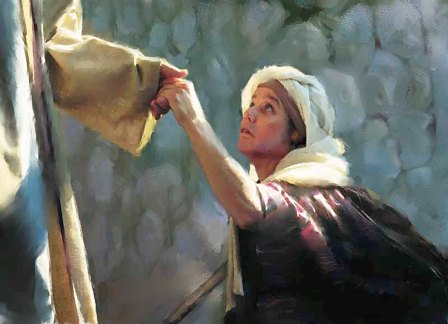
But I think the lesson we learn from the progress of the book of Job is that while those three friends—Eliphaz, Bildad, and Zophar—were sitting in dust and ashes, aching with their friend Job, he was helped by them. And many people are helped just by the loving presence of another.

I don’t think this nullifies the importance of truth. Let me give you an example.

I’m a colleague here with Tom Steller, who has been with me for 24 years. And Tom and I have sometimes said to each other, “It would be great to stay together long enough to die together, Tom.” And depending upon which one of us comes to visit the other in the hospital at our dying moment, we know, because of 24 or (perhaps by then) 54 years together, we don’t have to say a word. It’s all been said.

We have a common theology.

Neither of us will have to preach to the other in order to fix their ideas. We will all know that God reigns, God is good, God is loving, and God is wise. We’re perplexed, but you don’t need to preach. Let’s just take each other’s hands and pray and fight this fight of faith together.

© Desiring God, Permissions: You are permitted and encouraged to reproduce and distribute this material in any format provided that you do not alter the wording in any way and do not charge a fee beyond the cost of reproduction. For web posting, a link to this document on our website is preferred. Any exceptions to the above must be approved by Desiring God.
Please include the following statement on any distributed copy: By John Piper. © Desiring God. Website: desiringGod.org
 
Related articles


Fire Walking [Protection]


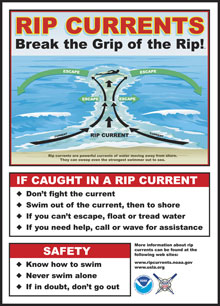
“When you pass through the waters, I will be with you.
     When you cross rivers, you will not drown.
    When you walk through fire, you will not be burned,
      nor will the flames hurt you.”  

Isaiah 43:2, NCV

There is a unique immunity that is given to the simple disciple.  Believers find that suddenly they have been inoculated against a reality that others can’t understand.  Passing through the waters, we find the divine presence.  We discover it and find that it covers us.

Daniel tells us of three men dropped into a super-heated furnace. Surviving was impossible, and yet they felt no heat or flame while inside. That is a tremendous thing for believers to understand. (Daniel 3:19-27)

Having Him to cover us is a profound thing.  There are many reasons this should not be happening to us, and not given any serious thought.  And yet He appears out of nowhere and declares that we are completely immune to every attack against our desperate souls.

Jesus watches over us.  He concentrates His focus on us, and we find a strength that is almost absurd, something that doesn’t make any sense at all.  He covers us from all the ugliness that could be focused on us.  A barrier is put around us.   His care protects us and shields us from insidious attacks on our very vulnerable hearts.

Isaiah 43 declares that there is a protective grace that surrounds our soul. 

We encounter a sense that He is there and that He will not let anything happen to us.  This security is not from anything we produce, maintain or manufacture.  He brings it to us without any logical reason.  It’s called “grace” and it gives us immense protection.

This world generates a lot of ugliness.  We must enter and pass through a whole lot of difficulty and pain.  Water and fire, in abundance, are things that will happen to us.  We will deal with these things, and work our way through them.  One thing needs to be understood,   His spirit in us resists being controlled by sin.

We travel through intense times when our faith seems ludicrous when it seems weak and illogical.  But somehow we make it, and we will pass through this and other challenges.  He intervenes and brings us safety and strength.  We are indeed survivors, and we pass through all evil and darkness without being scorched or singed.

“And I am certain that God, who began the good work within you, will continue his work until it is finally finished on the day when Christ Jesus returns.”

Philippians 1:6, NLT

1brobry-sig4


Sifted Wheat, [Trial]


Threshing Wheat
“Simon, Simon, Satan has asked to sift each of you like wheat.  But I have pleaded in prayer for you, Simon, that your faith should not fail.”
“So when you have repented and turned to me again, strengthen your brothers.”

Luke 22:31-32

I’ve been thinking about failure;  it is something that I am really, really good at.  In my over 40 years of walking with Jesus, I realized that I’ve experienced more weak moments then strong.  I have easily failed more than I have succeeded. I am embarrassed by this.  I’ve sinned, and failed more as a Christian, than I ever did as a pagan sinner. And things sometimes show little sign of improving. 

Simon Peter is about to undergo a trial so intense and difficult, that unless Jesus intervenes it will probably destroy Peter.

(The only other blatant attack where Satan seeks permission is in the life of Job. It is reasonable to believe that the forces of hell are concentrated on Peter.)

You and I undergo some of this onslaught ourselves.  We go through periods of intense trial.  Everything just falls apart, and we lose hope.  I’ve had several periods like that, it’s like a tornado from hell bears down upon my life.

But there is something remarkably good in all of this.

  • First, Jesus is praying for me to endure.  He is the faithful intercessor for my soul.
  • Second, He gives us a modicum of understanding by warning us of the approaching storm.  Peter is told ahead of time of what was going to happen.
  • Third, the wheat will be sifted.  Sifting or winnowing of the grain is necessary, it’s a good and godly work of the Holy Spirit. It is a good thing, as it builds your faith.
  • Four, you will survive to strengthen your brothers and sisters.

All pain and failure gives us a mandate to serve others. Our weakness gives us a spiritual license to become a shepherd of mercy and hope.  (You could say that you are now a licensed minister.)

We can ask for nothing more; it is a good and profound work to serve others.

In love’s work, only sifted people can truly serve.


From Vessel to Vessel

amphora_on_stand

“Moab has been at ease from his youth, and he has settled on his lees, and has not been emptied from vessel to vessel, neither has he gone into captivity: therefore his taste remained in him, and his scent is not changed.”

Jeremiah 48:11, ESV

The expression, “emptied from vessel to vessel” is a figure that speaks of wine making. It relates to a method used to produce a well-refined wine, which is poured into a vessel and allowed to stand for a certain length of time. Then it is poured into another vessel.

Each time this is done, there is a settling of the dregs and sediment which remain in the container, as the wine-maker carefully pours the liquid into another vessel. This process is repeated until the wine is perfectly refined and yields a freshness of fragrance and color that is pleasing to the maker.

This result will not occur if the wine had been allowed to stay in only one vessel. Instead, it would have “settled upon its lees” and become scented with the essence of the dregs. Because the intention of the Lord is to bring us to spiritual maturity, we also are carefully poured from vessel to vessel.

We’re being poured from one dealing to another.

As we yield to His purpose, the Holy Spirit will see to it that we are brought, step upon step (vessel by vessel), into spiritual growth and maturity. With our wills yielded, and our spirits mellowed, we shall then become “wine, well refined.”

Once we understand what we are by nature, we realize that no natural power could carry out so massive of  an undertaking. If ever this is to be accomplished, the power must come from a source other than ourselves. Thus, the Lord simply asks us to become willing, yielded, broken material upon which to work, and He will furnish the means and power for our transformation.

The Lord does not say the vessels are all alike.

That would spoil the teaching given in this figure. Rather, the vessels are quite different, scarcely two being alike. Let’s consider a few in order to enlarge our understanding.

The first is a vessel made of tinted glass.

As the wine is emptied within, it assumes a color that results from the hue of the glass. This is the vessel of misunderstanding. People then judge the wine as being “off-color.” An endless course of reasons ensues as to the cause of its being thus.

The “wine” is aware of these remarks, and as a result has a difficult time remaining still and submitted, so the sediment might settle and cling to the sides and bottom of the vessel. All this keeps the wine in a disturbed state, until finally it discovers that it is really what it should be at this time of its development, since only the glass (dealing) is tinted. Thus there is a delay and a longer time is needed to produce clear wine.

The Maker waits for it to become settled and then carefully pours it into another vessel. All that is left behind are a few dregs of self-importance and some shreds of the self-life.

There is the vessel of being in the public eye.

As the wine is poured out, it beholds the new vessel, a large but shallow receptacle, gray and ugly. At first there is a shrinking, for the vessel seems so unusual, and so absolutely unlike any into which it had been before emptied. As the wine is poured, it is so wide that it fills the entire open vessel. This is the vessel of “public gaze.” It is where the Lord pours us when we are to experience ‘weakness.’

The wine cannot gather itself up to appear in any other shape. It must spread out flat and be open to public judgment and criticism. The snide remarks hinder the wine from becoming quiet, yielded, and silent. But as it realizes that this is a necessary step in its perfection, it becomes settled and is again poured out. Clinging to the sides of the ugly, gray vessel are the dregs of pride and self-preservation, but added to the wine is a richer hue.

There is the vessel of isolation.

The next vessel is made of clay. It is tall with a long narrow neck, and is not transparent. Thus, it reflects no light. As the wine is poured, it has difficulty getting adjusted, owing to the darkness and a fear as to the certainty that it belongs there. But at last it yields and fills the vessel in ‘quietness.’

Here it stands for a long period of time, in shadow and darkness. At times, the wine faintly hears the music and delightful cries of those without who are in the light, but the clay allows no participation, nor affinity of satisfaction. The wine can only remember the light it had found in former days, and simply trust that it will shine again.

There’a another trial of a dark and bitter trial.

This is the vessel of long, dark trial; the kind in which the Lord leaves us alone in order to prove us, even in shadow and darkness. But it works wonders in the wine. As it is again poured forth, it gleams with the light of faith, tried and tested. Left behind are the dregs of impatience, questioning, and unbelief.

There is the vessel of misunderstanding.

Again the wine is poured into a new vessel, which is unusual in size and unique in design. It has many bulges and ridges. Therefore, the wine has a difficult time finding its way into the many bulges, odd nooks, and corners. Those who watch, immediately conclude that the wine is in the wrong vessel, and that it was never called to go into such a receptacle. Thus, it appears to others that the wine’s leading and witness is wrong. This is the vessel of misunderstanding.

The Lord’s ways are not our ways; thus, His ways are often incomprehensible. The Lord seldom explains to others the leadings which He lays upon those who are His own. It is certainly death to our flesh to be led into situations that produce criticism from others, and then not be able to satisfy their reasoning’s. Thus, the wine finds no pleasure in this vessel, but it had been poured and must now fill the vessel.

“The same Jesus who turned water into wine can transform your home, your life, your family, and your future. He is still in the miracle-working business, and His business is the business of transformation.”

     Adrian Rogers