Nothing But Leaves

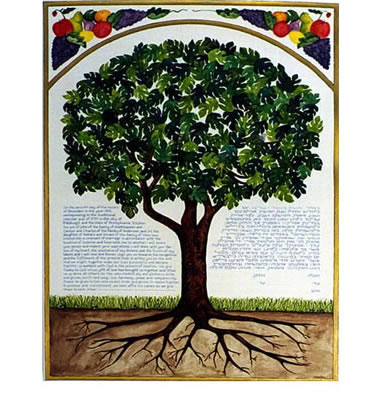
“Seeing at a distance a fig tree in leaf, He went to see if perhaps He would find anything on it; and when He came to it, He found nothing but leaves, for it was not the season for figs.”

Mark 11:13, NASB

Perplexing isn’t it?  I personally have had a certain amount of ambiguity with this passage.  I have questions that I’ve swept under the rug.  Why did that poor tree get cursed?  It wasn’t the trees fault, after all.  And didn’t Jesus realize this?  So why go through the theatrics?

I don’t know if this is the case with anyone else. 

I hesitate to ask around.  But recently have come to a better place about this entire event.  The traditional view is that it comes immediately after “the cleansing of the temple” and that explains a lot.  The fig tree is always emblematic of Israel.  (The Old Testament is well populated with these references.) The disciple Mark adroitly organized his Gospel in order to connect both events.

I assure you, Jesus has no issues or vendettas against trees.  😁

But He does take an issue with things that claim fruit, but really have nothing.  There’s nothing but leaves. I’ve been told that the figs do grow, almost as fast as leaves.  The lush greenness is the prime indicator of the succulent fruit. At least, in theory, it has the potential.

Luke 12:7-9,

Look, for three years now I have come seeking fruit on this fig tree, and I find none. Cut it down. Why should it use up the ground?’ And he answered him, ‘Sir, let it alone this year also, until I dig around it and put on manure. Then if it should bear fruit next year, well and good; but if not, you can cut it down.’”


The beautiful leaves declare its fruitfulness.  This tree was loaded, but had nothing to show but leaves.  Within God’s plan for Israel was for fruit.  Enough to feed the nations that would stream to Jerusalem.  Instead, it was worthless.  There was nothing to be had.  Loads of leaves, and the promise of an incredible harvest, but zilch, zero, nothing.

Hypocrisy is a deadening experience, with a definite sterility.

Israel was finding this out, and Jesus is now declaring it to the nation.  A corrupt temple, and a fruitless tree; this were all indicators of hypocrisy and showiness.  The luxuriant leaves loaded the tree, but ‘where’s the fruit?!’

Sometimes we declare that we are fruitful, on the mere basis of our lovely leaves. 

At times maybe even green?  Leaves are pretty much all we can do.  And we do it quite well. But the fruit is from the Holy Spirit, (Galatians 5:22.)

Israel failed God.  They became religious and neglected mercy, and justice.  Humility and graciousness.  The widow and the orphan were not part of their personal equation.  They produced leaves by the wheelbarrow load, but were missing out on the authenticity to what was true, and what really mattered.

Pharisees will do this all the time.

They turn into hypocrites who do not possess what they profess. A hypocrite values true godliness, but he personally falls short of all those things he admires. But he will never, ever admit it to anyone.  And even we who struggle so, must continually admit that we stumble and falter as we try to follow.

The terrible temptation of this time is to look good without being good.

It’s the awful curse of legalistic religion, and it runs rampant in our nation today, even in our government. The Lord absolutely detests it. God help us understand, and repent from what He shows us.

Personally, I may be a ‘screwy’ excuse of being a disciple, but I have decided I don’t want to deceive people anymore. 

God, help me.

“This year, or this month, or, more likely, this very day, we have failed to practice ourselves the kind of behavior we expect from other people.”  

C.S. Lewis


1brobry-sig4

cropped-christiangraffiti1 (1)

Freezing a Brother

 Bearing with one another and, if one has a complaint against another, forgiving each other; as the Lord has forgiven you, so you also must forgive.”

Colossians 3:13, ESV

Since this blog originates in Alaska, and since winter is upon us, this post seems fitting. It’s cold. And, well, I’ve been thinking about things that have happened to me recently.

We have a sinful tendency to “freeze” people that offend us.

We do it with our words, attitudes, actions. It is called unforgiveness, or stigma, or just plain contempt. It locks another person in a place were they will stay forever, and you won’t ever have to deal with them.

We glaciate others with extraordinary ease.

Someone offends me, or irritates me and I blast them. In my mind I solidify them into one spot, and there they are locked. Sealed away, and out of my thinking. I sometimes call it “discernment.” And then I can avoid those pesky urges to humble myself.

I have been frozen by others, and to be quite honest, I have been the ‘freezer’ as well.

The sad part is that we ourselves are so far from perfect. When we zap someone we will never, ever ‘receive’ from that person. We can even preclude them as outside of the grace of God. (And usually that’s what happens.)

“You offend me, and I will never forget it, and you will never be more than an evil miscreant to me.” My rationale is “life is too short for hassling with jerks like you.” But yet I can’t fully accept that idea. That is not God’s will for me, and I know it.

We end up debasing ourselves by our own unforgiveness.

We restrict others from the Holy Spirit’s transforming ability. In our mind’s eye, the wicked person will never be able to offer up anything of value. We freeze–locking them into a place. And a vast amount comes from an unforgiveness that is ‘fallen,’ and an unbelief in God’s grace and power.

Mr-Freeze-1Furthermore, any use of our ‘freeze gun’ freezes us as well. Unforgiveness turns on us (which we didn’t count on) and the effect is cumulative. We can only absorb so much an we get hard and cold.

One more thing. We do this to whole groups of people. The alcoholics, the mentally ill, other races. This can be called prejudice or stigma. Ask yourself this–have you ever been stigmatized or demonized?  You will usually know it. But we cannot afford to be controlled by our unforgiveness.

There is far too much at stake.

“And whenever you stand praying, if you have anything against anyone, forgive him and let it drop (leave it, let it go), in order that your Father Who is in heaven may also forgive you your [own] failings and shortcomings and let them drop.”

Mark 11:25, Amplified

*bry-signat (1)Related articles:

When Your Rocks Become Gems

RoughCutMalaya1

For this light momentary affliction is preparing for us an eternal weight of glory beyond all comparison,”

2 Corinthians 4:17

There is an old folk tale told by the Arab people.

Weary travelers meet up with a man while on a hard journey. “Two more miles, and when you stop, fill your packs with the rocks along the road” he said. “In the morning light, you will become happy and sad at the same time.”

It was dark when they arrived. They were pretty much exhausted, and hardly took any time to think about picking up rocks. They needed food and sleep and there was a few hours to rest; who had time to ponder the odd riddle of an old man?

But there were a few that listened; several went and picked up the gravel– the stones they could find in the dark. Those who listened filled their bags– some little, others more so. The majority did nothing. Who wants to carry rocks in their packs?

The morning came too early, and soon they were back on their journey. There was little time for anything but packing up to move. For some their packs were heavier, and they stopped to inspect their load.

Suddenly, someone shouted out. “Oh my God! Check your packs!” The one who cried out held up an emerald the size of his fist. Others cried out with excitement as they discovered rubies, diamonds and jade gems.

You see, the rocks they had picked up in the dark were really jewels of staggering wealth.

Of course, it only mattered to those who had listened. What some regard as a burden becomes something of significance in the daylight. Perhaps our trials will become more than we could ever fathom. It is worth consideration.

“For I consider that the sufferings of this present time are not worthy to be compared with the glory that is to be revealed to us.”

Romans 8:18

P.S. Don’t doubt in the dark what God has shown you in the light.

cropped-christiangraffiti1-2

Sifted Wheat, [Trial]


Threshing Wheat
“Simon, Simon, Satan has asked to sift each of you like wheat.  But I have pleaded in prayer for you, Simon, that your faith should not fail.”
“So when you have repented and turned to me again, strengthen your brothers.”

Luke 22:31-32

I’ve been thinking about failure;  it is something that I am really, really good at.  In my over 40 years of walking with Jesus, I realized that I’ve experienced more weak moments then strong.  I have easily failed more than I have succeeded. I am embarrassed by this.  I’ve sinned, and failed more as a Christian, than I ever did as a pagan sinner. And things sometimes show little sign of improving. 

Simon Peter is about to undergo a trial so intense and difficult, that unless Jesus intervenes it will probably destroy Peter.

(The only other blatant attack where Satan seeks permission is in the life of Job. It is reasonable to believe that the forces of hell are concentrated on Peter.)

You and I undergo some of this onslaught ourselves.  We go through periods of intense trial.  Everything just falls apart, and we lose hope.  I’ve had several periods like that, it’s like a tornado from hell bears down upon my life.

But there is something remarkably good in all of this.

  • First, Jesus is praying for me to endure.  He is the faithful intercessor for my soul.
  • Second, He gives us a modicum of understanding by warning us of the approaching storm.  Peter is told ahead of time of what was going to happen.
  • Third, the wheat will be sifted.  Sifting or winnowing of the grain is necessary, it’s a good and godly work of the Holy Spirit. It is a good thing, as it builds your faith.
  • Four, you will survive to strengthen your brothers and sisters.

All pain and failure gives us a mandate to serve others. Our weakness gives us a spiritual license to become a shepherd of mercy and hope.  (You could say that you are now a licensed minister.)

We can ask for nothing more; it is a good and profound work to serve others.

In love’s work, only sifted people can truly serve.