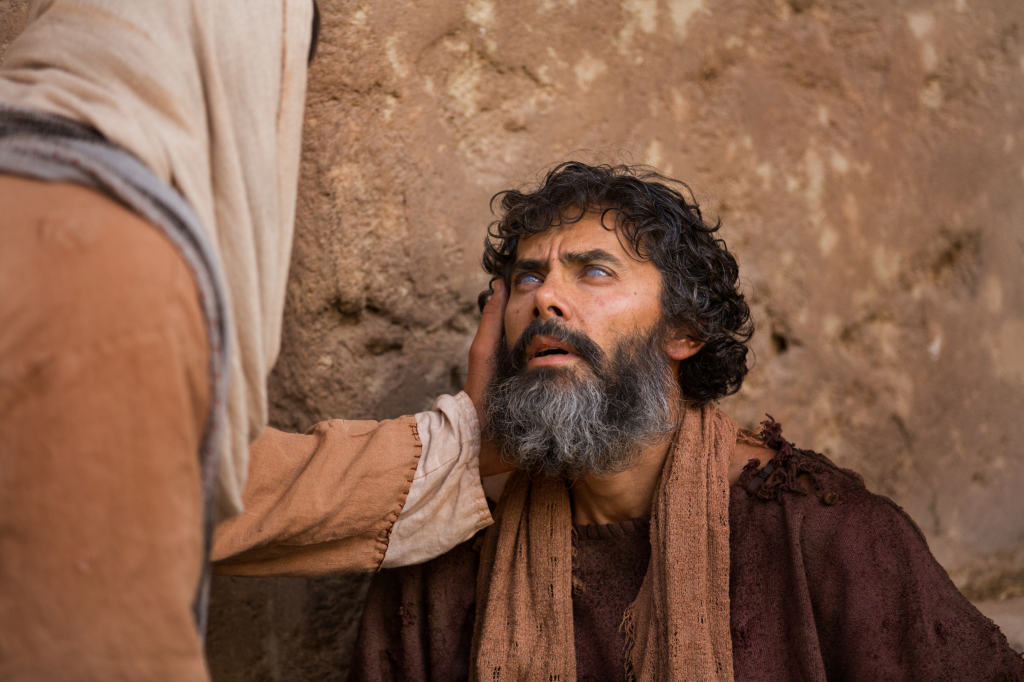
Sometimes we live in darkness. We suffer and it’s hard. We mentally accept God’s grace and His love for us, but in our heart we remain untouched. Pain saturates everything it seems. We seem to go through the motions, but deep down we’re convinced that we’ll never find the light that so many claim to have.
Have we been cursed?
Pain fills our life. We live with something that is persistent, and our hope is a day when it’s all over. Psalm 88 is our Psalm. Nothing is sugar-coated. It is raw and unabridged. It’s pain under a microscope. That Psalm is yours.
For I know that nothing good dwells in me, that is, in my flesh.
For I have the desire to do what is right, but not the ability to carry it out.
For I do not do the good I want, but the evil I do not want is what I keep on doing.
Romans 7:18-19, ESV
When we struggle like this we can safely assume that we’re trying to be holy and accepted by God apart from the grace of God. Our efforts to please Him fall woefully short. This frustration is when we try to keep the Law and neglect to walk in the Spirit.
To be disappointed in your behavior is not grace. To continue living like this becomes deception and hypocrisy. Most of all it creates a vicious wall between your walk and God’s love. A barrier between you and others.
The tension of Romans 7 is real. Every believer will encounters it.
The Scriptures teach us the depravity of man. All we do, even our best efforts and noblest actions are selfish and corrupt. As we understand this we end up realizing that there is a vast gulf between our aspirations and our actions.
“We are all infected and impure with sin. When we display our righteous deeds, they are nothing but filthy rags.”
Isaiah 64:6
We have a problem when our heart doesn’t match our actions. I’ve worked through the obvious. And yet it gets a little hairy when our ‘little’ sins are visible to others. We feel like hypocrites and we know that our testimony is officially ‘toast.’
“Many have passed the rocks of gross sins – who have suffered shipwreck upon the sands of self-righteousness.”
Romans 7 describes what is wrong with us, it seems we are attempting to please God by our own efforts.
In Romans 7 we read of a man who is constantly disappointed in himself. It can be wrenching to read– partly because it is so real. It describes us too well. At times the Word is like looking into a mirror.
“How can you be so inconsistent? I feel like there are two ‘Bryans,’ I don’t understand how you can live like this.”
This is what a dear friend said to me recently. I was flabbergasted. I didn’t know how to answer. It was a bit embarrassing, but I couldn’t respond. Later, the Spirit ministered to me while praying about it.
The Lord spoke, “He has no idea how bad you really are. Don’t you dare defend yourself!’
I now realize I should have said this to my friend. “You’re absolutely right, I am a bit of a flake. But you only see the veneer, deep down I’m much worse than you will ever know. I can’t defend my actions, and I desperately need a Savior. Would you pray for me to work this out? I need Jesus”
The daily struggle with sin and personal failure is sometimes more visible than we would like. Even as a believer I can and do sin. That should surprise no one, and yet, it seems I’m the most amazed when sin inevitably breaks out. At times I feel like I specialize in inconsistency.
I wonder when we boldly ‘strut’ into His presence if the angels don’t ‘roll their eyes?’
Whenever we come before God, we should never show up with our list of great things we have recently done for Him. It won’t be accepted. They are at best, filthy rags. They’re not fit for a King’s court. But yet we keep coming, parading our dirty, grimy rags.
We keep forgetting that only Christ’s righteousness is accepted in God’s eyes.
“The greatest enemy to human souls is the self-righteous spirit which makes men look to themselves for salvation.”
There are different ways God uses to hear your heart. Your voice, actions and attitudes are all subject to His evaluation and analysis. He is continually watching us. He uses His divine stethoscope to know us.
“Yet even now,” declares the Lord, “return to me with all your heart, with fasting, with weeping, and with mourning; 13 and rend your hearts and not your garments.” Return to the Lord your God, for he is gracious and merciful, slow to anger, and abounding in steadfast love; and he relents over disaster. 14 Who knows whether he will not turn and relent, and leave a blessing behind him,”
Joel 2:12-14
The Old Testament prophet Joel is also interested in the human heart. His words make that a central issue. He diminishes the outward that doesn’t include the inward. (Unfortunately, it is easier “to be seen” rather than “to be.“)
“Rend your hearts and not your garments.”
This is God’s very real word to a wayward people. To “rend” means to tear and it is perhaps the most critical attribute for a wayward heart.
I’m convinced that we must learn what it means to repent everyday. It is never completely done–never once and then you’re finished with it.
We also seem to have this strange tendency to reduce repentance to outward actions. We however must stress the inward rather than the outward. We must go deeper, and take repentance right down to the deepest core.
True repentance must go as deep as you can go, and be truly proven before we claim a victory.
God desires to hear your heart. The Holy Spirit is going to insist on it. (But He will also be a loving Guide.)
“Blessed are those who mourn [especially them], for they shall be comforted.”
Matthew 5:4, Emphasis mine
“To do so no more is the truest repentance.” —Martin Luther
“Which one of you having a servant tending sheep or plowing will say to him when he comes in from the field, ‘Come at once and sit down to eat’? 8 Instead, will he not tell him, ‘Prepare something for me to eat, get ready, and serve me while I eat and drink; later you can eat and drink’?”
9 “Does he thank that servant because he did what was commanded? 10 In the same way, when you have done all that you were commanded, you should say, ‘We are unworthy servants; we’ve only done our duty.’”
Luke 17:7-10
“The will of God for your life is simply that you submit yourself to Him each day and say, “Father, Your will for today is mine. Your pleasure for today is mine. Your work for today is mine. I trust You to be God. You lead me today and I will follow.”
Really now. What little we give Jesus determines so much, since we owe him so much. The service that we can give to our Master Jesus is just a miniscule repayment for everything. Settle that now and God will use you.
Let’s think about this parable.
Question: Is the master unfair? Does he lord his authority over the servant? Is he taking advantage of him? Why is the servant so compliant? Every time I read this passage, questions like this always come up.
But even reading this, I still don’t grasp being a real servant. At least not consistently.
A couple of observations–
#1, the Holy Spirit really hasn’t taught me about being a total servant yet. Until he does, I don’t understand the deep meaning of this parable. (And it always goes deeper than I want it to.)
#2, I’m a product of my country, no such things like slaves, we’re a democracy. We have equal rights– to be a slave isn’t something I really understand. (It doesn’t really compute.)
#3, It’s purposefully constructed to create issues in my mind and heart. Something that “irritates” me–but in a good way. (Perhaps it’s the grain of sand that eventually becomes a pearl?)
And maybe all three are somewhat true. But no matter how I handle this parable, I always hit this spiritual speed bump. I really don’t grasp real servanthood. But yet, I still like this parable; I love reading it, no matter what it does to me.
We owe everything to him. Plain and simple.
I understand that I’m weak and shaky, but still, Jesus wants to be my Master. I’m his servant–at least I want to be–and He commands me to serve. Reading this parable puts this idea into a real perspective. OK, let’s now consider this verse:
“For you were bought with a price. So glorify God in your body.”
1 Corinthians 6:20, ESV
A transaction has been made for your soul. God has intervened, and he’s given you salvation. We have a life now that will give us life, eternally. Since he is our master, we can no longer direct our own lives. Like the “unworthy servant” in verse 10, we now walk forgiven and very much redeemed.
Interesting. The parable isn’t really talking to us on how to be saved, that’s given to us by faith. Rather it points out the service we give Him after our salvation. We are simply His servants now.
And we owe it all to him, He’s our Savior, and now our Master.
“The question in salvation is not whether Jesus is Lord, but whether we are submissive to His lordship.”