Misfits

Broken-Fresco-Assisi-Italy-1999-1024x750 (1)
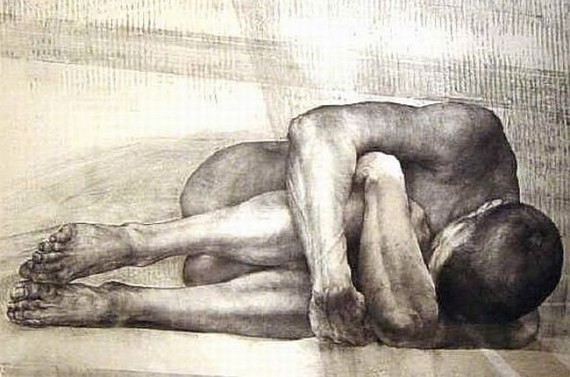
Broken Fresco– Assisi, Italy

Many voices tell me that there must be distinct lines between sinners (like, me) and Church people. These borders keep order and provide security to those on the ‘inside’ of our Faith. This seems more from a reaction to control than actual sin.

But there are so many people with mental illness: Depression, anxiety, bipolar disorder, schizophrenia, addictions, PTSD, and many others. We are truly an afflicted people.

donkey_boat-300x245
Fitting in isn’t always easy

–Joni Eareckson Tada

There needs to be an adjustment to the status quo. Room must be made for the ‘losers’ and the misfits. These are people for whom Christ died. They are special to God.

According to federal  law, buildings must be accessible to the handicapped. Special signs are placed in the parking lots, for special parking and wheelchair ramps need to be installed. This is well and good. But let’s extend this ‘deliberateness’ to those with other needs as well.

“The power of the Church is not a parade of flawless people, but of a flawless Christ who embraces our flaws. The Church is not made up of whole people, rather of the broken people who find wholeness in a Christ who was broken for us.”

–Mike Yaconelli

I encourage you to become proactive when it comes to “opening up” the Church to include ‘the brokenness of the other.’ Even a smile can make the difference to the down-trodden soul.

Love the unlovely,  just like Jesus.

Hiding Our Wounds

Brennan Manning Quote
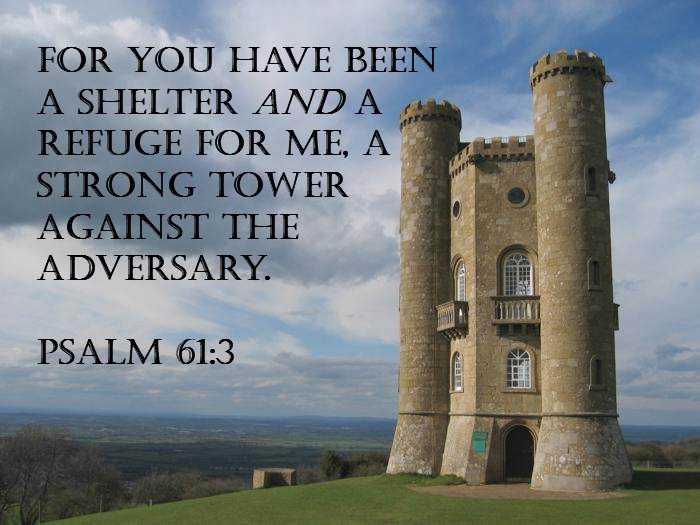
“You are the light of the world. A city set on a hill cannot be hidden. 15 Nor do people light a lamp and put it under a basket, but on a stand, and it gives light to all in the house.”

Matthew 5:14-15, ESV

Overall, I think this Manning quote is a great observation. We, the torn and wounded, often try to hide, secluding ourselves in the “Island of Misfit Toys.” (Got to love those 60s Christmas cartoons.) We pretty much accept our lot as damaged merchandise.

Maybe we choose to isolate ourselves more than we want to admit. Could that be what we do? Are we still embarrassed and ashamed by all that we’ve done? That’s quite possible.

This may come as a shock, but the Church doesn’t need any more gifted people.

But it does need broken people who understand ‘the giftedness of the flawed.” When we conceal, we diminish the Church by our absence. We can ostracize ourselves, through a self imposed shame— but the Church will suffer. We need to show them that everyone can be healed, even screwy ‘fruit-cakes’ like us.

I recently had the privilege of speaking to a class of young Bible college students.

My subject was decidedly not on being successful, but on being a failure. Whole courses are geared toward ministerial success– but where are the ones for failure? I think that it just might be even more important, in the long run.

No human effort is going to erase your past.

I have tried and it can’t be done. I have blitzed my brains on drugs and booze, but I still remember the people I’ve hurt. (And I pray for them.) There really isn’t a cure for the evil we have done. I believe in forgiveness. And I hold to the idea that are sins are never to be a subject of  guilty accusation–

“He will again have compassion on us;
    he will tread our iniquities underfoot.
You will cast all our sins
    into the depths of the sea.”

Micah 7:19

Our dark iniquity is put in a very deep place. But there are the memories of an unkind word, or a sad and dark foolishness that we must learn to live with. There will be many regrets, and we face the terrible consequences of our sins, but it’s enough to know that all is under the blood of Jesus.

We are indeed forgiven. Completely.

We are now to live as forgiven sinners, yet precious in God’s eyes. We discover that although the Father has no favorites among His children, but He does have intimates. We are to live the rest of our lives for His glory, exploring that intimacy.

“Leave the broken, irreversible past in God’s hands, and step out into the invincible future with Him.”

  Oswald Chambers

Have Courage

By Joni Eareckson Tada

 (818) 707-5664 | info@joniandfriends.org

After more than four decades of quadriplegia, I’m tired. My bones are weary from battling everything from pressure sores and pneumonia to stage III cancer. My question these days is never “Why, God?” It’s most often “How?” How do I keep on going? How do I care about others when I’m consumed with my own physical challenges? How can I be kind and civil when pain wracks me?

The other morning Ken could see the weariness in my eyes. Right before I wheeled out to go to the van, he said, “Wait here; I know exactly what you need.” He rushed back with a yellow post-it note. On it he had penned the letter ‘C’ with a felt-tipped marker. I gave him an odd look. “It stands for Courage,” he said, “the courage of Christ. I can see it in your eyes, Joni, and you can do this day. I know you can!” With that, he pressed the post-it on my shirt, right above my heart.

I can’t explain what happened next, but I could feel God’s encouragement

Ken only said a few words, but they were brimming with power and life. His was a declaration of the good he saw in me; or, at least the good he wanted to see. And God gave me his amazing grace to rise to the occasion.

Even the best of Christians can feel the weight of weariness. It’s why Hebrews 3:13 tells us to “Encourage one another daily.” Think of the people you’ll see today: friends recovering from surgery, neighbors dealing with grief, coworkers coping with pain. Whether you say it in an email, over the phone, or in person, your words have the capacity to change their countenance and character. And the best word? The Word made flesh, Jesus, who always has courageous words of life.

Oh, Father, I need the courage of Christ to face this day’s demands. Thank you for making me strong in him.

Joni Eareckson Tada, Founder of Joni and Friends, is an international advocate for people with disabilities. A diving accident in 1967 left Joni with permanent quadriplegia. After rehabilitation she emerged with new skills and fresh determination to help others in similar situations. She founded Joni and Friends in 1979 to minister to people living with disability. For over 40 years Joni and Friends has served thousands of families navigating disability, and has delivered over 225,000 wheelchairs and Bibles to individuals with disabilities in developing nations. Joni has survived breast cancer twice and lives with chronic pain and weakening lungs. By God’s grace Joni perseveres, keeping an active schedule, including radio recording, writing, and providing leadership and encouragement to the Joni and Friends staff. Joni and her husband Ken reside in Calabasas, California.

Notice Her Eyes, [Handicaps]

Stuck in the wonders of scripture we read about Leah and her sister Rachel. We see the two daughters of Laban have become Jacob’s wives. We must step into Genesis 29 to see more.

Jacob longs for Rachel. She is his “soul mate” and because he’s in love, the customs and technicalities of the day somehow get by him. Because of this, he will have to take on Laban’s subtle trickery, where daughters get exchanged, and we must sort out who is who.

Laban’s deception creates a huge crisis for everyone. 

But it seems Jacob just rolls with it. I suppose deception has always been Jacob’s strong suit. (But when we see a deceiver like Jacob gets deceived, that can’t be all bad).

But it’s Leah that I tend to think about. Her own issues are unique. Genesis 29 explains it a bit cryptically,

“Leah’s eyes were weak, but Rachel was beautiful in form and appearance.” 

Genesis 29:17

You must know that there is confusion by commentators about the “weak eyes.” Some take it literally (as in, she is very “near-sighted,”) while others who look at the original Hebrew find the words to be a bit looser and vague. They tend to think that this is a polite way of saying she really wasn’t pretty.

The text also states that Leah was “hated.”

Genesis 29:30-31.

She is wounded, and life requires that she live as unwanted. She is a woman of tragedy and broken hopes and dreams. She will always live as a reject. At best, she will always be a distant second, and perhaps a bit scorned and neglected for this.

I conclude that Leah is the champion for the challenged.

I love Leah and I think I understand her. Her life is a long tragedy and very full of sadness. For the next 30-40 years she will always be a cast-off, someone who has been broken on life’s bitter vagaries. She’s a fellow struggler, and a survivor.

Her sad life is comparable to us who have to fight so hard over our own illness or handicaps.

She must’ve been challenged by her terrible weakness. I understand this. My own life has been “topsy-turvy” and a really hard struggle. Somehow it seems we must work through these things way too much.

It doesn’t seem fair. 

For those of you who are confined to a wheelchair, or must use a cane, or who deal with a physical or mental illness. Leah should be our hero. For those who have been betrayed by addiction, or who have felt rejected through a bitter divorce– Leah speaks to us.

She is for every loser and for failures of all stripes. But through all of our setbacks and messes, we must realize that God does love us– even as we weep.

We may have Leah’s eyes, but we also have His grace.

I have a new site at alaskabibleteacher.com.