Devotions, [Eugene Peterson, Interview]

eugene-petersonInterview with Eugene Peterson

Why Can’t I Hear God? By Nancy Lovell

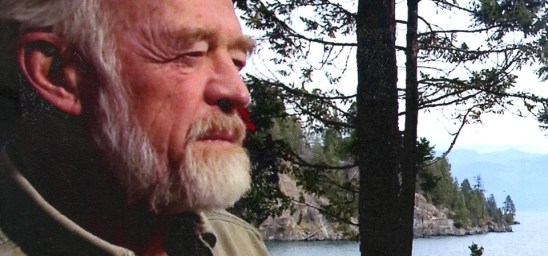
The musical group U2’s Bono quotes Eugene Peterson from the stage. Readers of the best selling Bible, ‘The Message,’ find themselves holding onto lines from his ‘fog-slicing’ Bible paraphrase, and many other works. For several years now, TheHighCalling.org has provided a daily prayer and reflection by Eugene Peterson. Recently, we asked the man himself: What are devotions and why do they matter in our daily work?

Why do so few people who believe in God bother to know Him?

The most obvious answer is that we’re in a hurry and not used to listening. We’re trained to use our minds to get information and complete assignments; but the God revealed to us in Jesus and our Scriptures is infinitely personal and relational. Unless we take the time to be quiet, in a listening way, in the presence of God, we never get to know him.

The same question is why so few married couples really know their spouses. People get divorced after 20 years of marriage, and the rejected spouse says, “I never knew this was coming. I thought everything was fine.” But there was not much listening in those 20 years. Devotions are the discipline of being quiet and listening for what we don’t hear in the streets, in the media, in the workplace.

What about people who sincerely set apart time, read the Bible, stay still, and hear nothing? They ask themselves whether God’s voice is anything more than their own thoughts.

We’re not good at this. We’ve had no practice doing it. No wonder we only hear our own thoughts. This is why the church is so insistent that we do this whether anything happens or not. Supported by 2000 years of history, we know that God does commune with us in our listening. But because we’re so unused to this way of communion, we don’t hear it. So it takes time.

How would you direct someone trying to start?

I would say: Get your Bible and find a place. If you can’t do this daily (some people can’t because of their life circumstances; mothers with young children are obvious instances), try for at least 20-30 minutes, two or three times a week, or four. Don’t make demands on yourself too high. Don’t ask questions about, “How long is this going to take?” Believe that something does happen in that silence—usually through Scripture, but not always—in prayerful, attentive listening, knowing that you’re in the presence of God.

I ask for a commitment of six months; so don’t come back in three weeks and say nothing’s happened. I’ve never had anyone who’s done this at least six months who came back to me and said, “I did it and nothing happened; I’m going on to something else.” Not many who give this a fair test ever say that nothing happens. Also, when I’ve asked people to do this as their pastor, I also ask them to worship regularly. This is a place where the whole community is gathered and listening and being in the presence of God.

Is that how you started?

I was lucky. In the family I grew up in, I started when I was about 14 …mostly with the Psalms, but all the Scriptures become part of it.

In your writing and speaking, you must have seen moments when a person realizes, “Yes, I want more and I want God.” What turns on the light for people?

Often the motivation is that people are tired of the way they’re living. They think there’s got to be more than just the motions they’re going through and the work they’re doing. There’s a craving and hunger that they identify with God. There’s enough pain or boredom or something to motivate them to do something that the culture’s not telling them to do. I got a letter recently from a friend of 40 years. She had been a parishioner of mine for a long time. Then she was ill, and divorced; and she quit, just gave up. She quit reading the Bible, quit going to church. Six months ago she wrote me a lovely letter that she was sitting with a group of friends and, in her words, “a rooster crowed”—it all came back and she was a Christian again and aware of the presence of God. Isn’t that a wonderful phrase? ‘A rooster crowed.’

Who knows what went into that statement of hers? Twenty years of unhappiness, pain, suffering, disillusionment …but still there was the need.She would have said during that time she didn’t believe in God. But the rooster crowed. That’s why we use the term the Holy Spirit to explain times like this. Given that it’s hard to discipline ourselves to silence, listening—and to daily time in quiet—tell us about your devotions on this website. I wrote those in the early morning for 20 years, maybe 25 years. And what I was trying to do was be present to the Scripture, listen to God, and to write as honestly as I could. I wasn’t thinking about anybody else but me.

It’s really hard to be honest as a writer. You get these wonderful ideas, and you love to manipulate words and see if you can make it sound good. It’s hard to be honest, especially working for God. That was the thing I was most aware of. “Eugene: Don’t say anything that is not relational, immediate, honest; stay present to the text and be honest before God.” I believed if I could be honest, I could draw some other people to honesty, too.

To read the rest of this interview, you will need to follow this link: http://www.christianitytoday.com/workplace/articles/interviews/eugenepeterson.html

 

cropped-christiangraffiti1-3

Steps to Use, [Making Wise Decisions]

for-his-glory

The decision to make decisions that will please God is in itself a monumental step.  It means you have come to the place where it matters.  It’s coming to the place where I say “Yes” to all that God says yes to and “No” to everything He has forbidden.  The willingness to be guided is itself a powerful thing.

A fundamental principle to begin with: Every heart has a throne, the question is– who sits on it? 

Step 1:  Putting God First.

In part you have already done this just by your eagerness to do His will.  You  have made a deliberate decision to honor and esteem Him by letting God be completely God.  It is likely that God will withhold His direction if you have no real intention of doing it.  You will just sputter around in the dark. Your life will be painfully empty.

Step 2:  Worship Him willingly.

For me, to commence praise & worship is like firing up the nuclear power plant that I have in my backyard.  It is a source of unlimited energy that I have at my disposal, but it’s not about me at all.  When I start to worship, it must be all about Him.  It’s His character, attributes, love and grace I lift up to be examined by all.

“But the time is coming—indeed it’s here now—when true worshipers will worship the Father in spirit and in truth. The Father is looking for those who will worship him that way.”

John 4:23

Step 3:  Read the Word faithfully.

Guidance often comes when we turn to the Bible for light.  Each part or style of my “leather bound Book” is a purposeful and deliberate unveiling of truth.  After 25 years since I became a Christian, the Bible has shown itself over and over to be important.  The Life of David has been rich, and Daniel as well.  I needed to discern the difference between:

  • A moral decision that concerns things that are right & wrong, evil & good.
  • A non-moral decision that directs me in the areas of preference and direction.
  • Reading the Bible provides us with all that we need.

“Your word is a lamp to my feet
       and a light for my path.” 

Psalm 119:105

Step 4:  Seek out the counsel of elders and veteran saints.

The Church has this big ‘brain-trust’ at her disposal whenever she needs it.  There is accumulated wisdom and insight that often is ignored or not even considered.  My life has changed because of my contact with these older saints.  Most of them never really recognized the imprint they were having on me, my marriage, or my ministry.  I realize that I stand on the shoulders of giants, that I only see further because they were willing to raise me higher.  We will fail in decision making if we will not involve our elders.

“Plans fail for lack of counsel,
       but with many advisers they succeed.” 

Prov. 15:22

Step 5:  Prepare yourself to walk by faith.

The scripture is jam-packed with people who had to have faith.  They are everywhere and they are doing everything!  But, all through faith.  I got to thinking about Noah, and his faith.  Directed to construct an ark, which took him years and years.

“It was by faith that Noah built a large boat to save his family from the flood. He obeyed God, who warned him about things that had never happened before.”

  Heb. 11:7

Faith is defined as trusting God to carry out His unseen promises.

 “Faith is the confidence that what we hope for will actually happen; it gives us assurance about things we cannot see.” 

Heb. 11:1

Step 6:  Concentrate on eternal purposes.

I have heard it said, that this life is very short, and only what is done for Christ will last.  I believe this. Matthew also tells us to seek first the kingdom of God, and everything else will be given to you.

It is the kingdom that must be paramount.  The kingdom is carried around in our hearts; it is the place where the King dwells and rules.

These are not just noble and lofty thoughts to be smiled at, humored and regarded as quite quaint.  This is for real, these are concrete realities that we choose. God’s will is not some abstract, it is as specific as the believer wants or needs it to be.

Summary

I honestly believe that you and I can know deep inside us what constitutes a Godly decision.  It very often is on the path of greatest humility.  And when you meet up with humility, you will find faith– and then follows goodness.  And as you accrue these qualities it becomes much easier to make Godly decisions.


bry-signat (1)

cropped-christiangraffiti1.jpg

#

Recommended Reading 

“Decision Making and the Will of God,” by  Garry Friesen, J. Robin Maxson

Bitter Water, [The Cross]

bitterwater

24 Then the people complained and turned against Moses. “What are we going to drink?” they demanded. 25 So Moses cried out to the Lord for help, and the Lord showed him a piece of wood. Moses threw it into the water, and this made the water good to drink.

It was there at Marah that the Lord set before them the following decree as a standard to test their faithfulness to him.”

Exodus 15

In this brief narration we have a graphic portrait of the condition of many within the Church today. The situation is becoming critical and its effects are devastasting. Some call it ‘crossless Christianity,’ ‘cheap grace’ or the ‘new cross.’ The writer of Exodus 15 calls it ‘bitter water.’

The children of Israel had begun to murmur. They demanded water for the long and hot journey through the Sinai desert. Coming to the ‘springs of Marah’ they discovered it bitter and undrinkable.

Moses responds directly to directly quell this potential rebellion. He begins to cry out to the Lord (what else can you do?) and begs the Lord for wisdom. He must know the next step.  So Moses cried out to the Lord for help,”

There was a tree, a piece of wood, and when that wood was tossed into the waters, the water were made sweet.

********

Today– people are waiting— searching for water. And never, ever has there been such a desperate search. They stampede to any new well on the horizon, and they search for anything.  Any well will do. Most will seek there lives away, only to perish at the ‘end.’ They’re chasing a mirage.

The Church is to be a well, an oasis in a dry and desperate land. But the water is becoming ‘bitter.’ We have defiled it with ‘sin and self.’ Friends, please understand— the ‘bitterness’ of our ‘uncrucified’ flesh pollutes our wells. We have poisoned our own selves.

We need ‘the cross.’ It is a sweet source for our ‘bitterness.’

We must return to ‘the old rugged cross.’ We need to embrace its reality again. Jesus, himself said this: “Whoever doesn’t bear his cross, and follow me cannot be my disciple.’ Those who followed after Him needed no preacher to interpret.

Rome had a nasty habit of executing her criminals publicly. Everyone who had listened to Jesus Christ had seen people crucified.

One Roman general, after suppressing a Jewish rebellion crucified 2,000 men at one time. The roads into Jerusalem were lined with crosses of dying men. This was done purposefully and publicly.

Every man and woman would see the terrible price of resisting Rome. This would result in death, and there are no halfway about it. A cross is a radical thing. There is nothing ‘halfway’ about it. It demands ‘no less than all.”

The Cross is in danger of being misinterpreted’ today. Our cross seems somehow different. It seems softer, and more padded, it doesn’t rub us the wrong way.” It allows us much: our favorite habits, our prideful ways, and our self-centered ideas. It would seem that what we call ‘our cross’ has a built-in ‘life-support’ system that keeps our old man alive just a little bit longer.

********

Dr. A.W. Tozer in an article entitled “The Old Cross and the New” wrote:

“The new cross is not opposed to the human race, rather it is a friendly pal, and if understood aright, it is the source of oceans of good clean fun, and innocent enjoyment. His life motivation is unchanged, he still lives for his own pleasure, only he takes delight in singing choruses and watching religious films, instead of singing bawdy songs, and drinking hard liquor. The accent is still on enjoyment, though the fun is on a higher plane morally, if not intellectually.The new cross does not slay the sinner, but redirects him.”

The old cross is a symbol of death. It stands for an abrupt and violent end of a human being.

 “Examine yourselves to see if your faith is genuine. Test yourselves. Surely you know that Jesus Christ is among you; if not, you have failed the test of genuine faith.”

2 Corinthians 13:5

Are we really carrying the cross of the Bible? Is our faith real? Are we carrying the real cross? We cannot be really His disciples unless we do so, and we are apostate if we do not.

“Then, calling the crowd to join his disciples, he said, “If any of you wants to be my follower, you must turn from your selfish ways, take up your cross, and follow me.”

Mark 8:34

bry-signat (1)

cropped-christiangraffiti1.jpg

My Pretend Jesus [Reality]

Aslan-lion-girl-sleeping

Question. Is the real you, touching the “real Jesus?”

For some time now, I am asking myself this simple question. I’ve had some convicting  moments as I swirled this question around in my heart. There is no condemnation in this; believe me– it’s just a question (But I think it has pretenses of being more.)

First, I truly believe that God does not hide Himself the way we might think He does. As new covenant people; those purchased through Jesus’ death and resurrection, there is no room for doubt about this. We now truly have access into the very throne room. We are free to come and go, according to our desire.

Second, I’m starting to realize that I want to approach Him, but I draw back in fear, guilt and doubt. I hide in the bushes when I hear Him approaching (sound familiar?) And although I have assurance that Jesus wants me, I’m not fully convinced that He likes being with me– deep down.

And I’m not sure I always like Him. So, all too often, I creep up (in my creepy kind of way) and try to get enough of His Holy Spirit, without getting pulled into anything too authentic. I’m of the (false) opinion that He will demand something for me I won’t like.

In the C.S. Lewis book, “The Silver Chair” we are introduced to Jill. She is thirsty, she looks for water and finds it in a nearby stream. But, there is a difficult problem. You see the lion Aslan is very close, and to drink would make her vulnerable. The Lion speaks. He invites her to come and drink all the water she wants. She stalls. He waits. The thirst quickly intensifies until she can think of nothing else.

I have a ‘Jill-heart.’  God is present, and quite eager for me to come satisfy my thirst. But it terrifies me to become open and vulnerable. It is hard. It seems I still have to work through this issue.

Sometimes, I find I construct a modified Jesus to allow me to cope with this problem. He is not the real Jesus, and somehow I know this. But encountering the real is a bit too much. So I have a Jesus that is really kind, and never corrects me. He lets me get away with a lot of things. And I don’t have to have contact with the homeless or tithe. I admit I’m fairly comfortable with Him. (He is like me, but more “god-like.”)

OK, new thought. Many centuries ago, a monk by the name of Lawrence wrote the classic book,  The Practice of the Presence of God. In it he directs the seeker to be in habitual awareness of God. And I’m thinking about this. I know it’s really not a fluid or unending experience, but throughout my day I take a moment and invite Jesus to come closer. And, it’s best if you don’t turn “the means into the end.” After  all, its the presence of God we seek– and not the mechanics of seeking.  Big difference.

I have gotten very dissatisfied with my fake Jesus. He’s not a bad guy, but he is only a “knock-off,” an imitation– an imaginary Jesus.

I’m coming to this place where I want the real Jesus– in contact with the real me, as often as I can. For years I have dodged Him, ducking in alleys and in dark places. I have propped up a Jesus that I found easier. Those days are done, I hope.

Question. Is the real you touching the “real” Jesus?

ybic, Bryan


cropped-christiangraffiti1-2