The Inertia, [Apathy]

Customer-Inertia-2

“Science may have found a cure for most evils; but it has found no remedy for the worst of them all – the apathy of human beings.”

Helen Keller

—————————————-

As I suffer with manic depression I have come to see that much grief comes not from mania, and not from the debilitating depression. These are both substantial, but my biggest issue has to do with the inertia that lies between these two poles. There is a paralysis– an apathy that immobilizes me. And this is as bad as any other state of mind.

“And Elijah came to all the people, and said, “How long will you falter between two opinions? If the Lord is God, follow Him; but if Baal, follow him.” But the people answered him not a word.”

1 Kings 18:21

My passivity is disturbing, and bipolar disorder is as much of “detachment” as it is of extremes. I sit and stare, not able to motivate myself to get up and do something. I’m not really depressed, but nor am I manic– I’m just “there” unable to find energy to do anything. Life just rolls over me.

Perhaps the most deadly sin is this “faltering between two opinions?” We are content to just sit and watch with no commitment. We’re content to let things just roll on by as we sit in our inertia and passiveness. This is the part of my BP that scares me the most (or at least it should.)

If you suddenly went up in flames I wouldn’t stir. Yes, it would get my attention, but I probably wouldn’t do anything, (I’d probably just take notes for my book.)

Inertia is not just a part of a mental illness. It effects normal people as well, and there are degrees of it. The average person it seems will avoid making a real decisive decision at all costs. Inertia can be encountered in any church (ask a pastor who tries to get volunteers) or workplace.

In his day, Elijah cried out for a decision from the Israelite people. I have to believe he was disturbed not only by the idolatry– but by the passiveness of the bystanders. Their neutrality was a big issue.

Joshua would call out to a passive people these words:

“But if you refuse to serve the Lord, then choose today whom you will serve. Would you prefer the gods your ancestors served beyond the Euphrates? Or will it be the gods of the Amorites in whose land you now live? But as for me and my family, we will serve the Lord.”

Joshua 24:15

I know my own heart, and I know my own spiritual paralysis. Rather than commit myself, I would rather settle down on a sofa and just let things happen. I’m quick to point out how those in the arena are doing it all wrong. I’m ready to criticize, but unwilling to volunteer.

Mental illness is filled with ordinary things, but often in the wrong proportions. When we do things it is extreme or not at all. My own apathy is just a mirror of what happens in the hearts of normal people.

I may be excessive, but my own issues have made me aware of what is happening in others.

—————————————–

“It is not the critic who counts; not the man who points out how the strong man stumbles, or where the doer of deeds could have done them better. The credit belongs to the man who is actually in the arena, whose face is marred by dust and sweat and blood; who strives valiantly; who errs, who comes short again and again, because there is no effort without error and shortcoming; but who does actually strive to do the deeds; who knows great enthusiasms, the great devotions; who spends himself in a worthy cause; who at the best knows in the end the triumph of high achievement, and who at the worst, if he fails, at least fails while daring greatly, so that his place shall never be with those cold and timid souls who neither know victory nor defeat.”

–Theodore Roosevelt
bry-signat (1)

cropped-christiangraffiti1.jpg

A Towel, Not a Title

There are no shortcuts in discipleship
“Jesus knew that the Father had given him authority over everything and that he had come from God and would return to God. 4 So he got up from the table, took off his robe, wrapped a towel around his waist.”  

John 13:3-4, NLT

Jesus was always constant.  Nothing could erode His place or position.  The authority had been His Fathers, and it had been given to Him.  He carried it as a special burden, treasured and separating Him.  Jesus had the freedom to act like the servant.  It didn’t bother or confuse Him, He understood perfectly who He was.

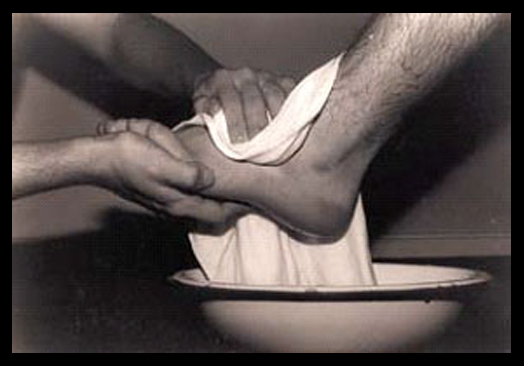
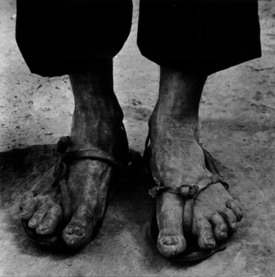
With the supreme authority given to him, he got down on His knees, and began to wash dirty feet.  I can offer no magic or flair to adjust this scene.  He washed off dirt, cleaned between toes, making filthy feet clean.  And all of this ‘as God in human flesh’.  This staggered the disciples, perhaps a baseball bat on the side of the head, would’ve been more compassionate.

This was revolutionary, it completely devastated the disciples.  They just couldn’t grasp what was happening.  Jesus, who was ‘God in flesh’, had decided, in a moment of time, to clean their feet.  Outrageous!  Not really happening!  No way! Never!

The reality.

This spun them around.  They tried as fast as possible to process what had just happened, and ‘who’ it had happened from.

Essentially, it buried them.  Jesus Christ, as Servant pounded them into the ground.  Servanthood was to take the supremacy from this point forward.  Becoming an indentured slave was now the way of Christlikeness.  This servanthood was to now guide us to a point of slavery.

Gone are the days of Zebedee, when one can ask for a position, on the right or the left.  We can ask, most certainly, but we haven’t been the first.  We can ask but the sheer weight is against us.  So very many have gone before us.  We must become a people who accept, and then presses into His grace, His specialness, His presence.

Today, more towels are what we need.

We have got to turn over our ‘need’ for recognition and pick up from the pile the rag of servanthood, we must ‘ask’ our brother/sister if we can scrub their feet.  We must get on our knees and do the unspeakable.  We must find a way to clean off their feet. This dear one, is what you’ve been told to do.

“There are many of us that are willing to do great things for the Lord, but few of us are willing to do little things.”   D.L. Moody

bry-signat

flourish91

Discernment and Your Ministry

zebras

“He begs God on behalf of a human
as a person begs for his friend.”

Job 16:21, NCV

I’ve been thinking about a class I had in Bible School.  The instructor made a comment that has stuck in my thinking for over 30 years now.  I have relied on it countless times in ministry since. It has helped me piece together certain issues of the heart.

When we “preach” to a person, we are actively accelerating the judgement of God in their life. When we pray for that same person, we delay this judgement and allow more room for the Holy Spirit to work.


Preaching

Now I know this is a generalization, and yet the basic premise of preaching and praying has a specific action.  When you preach, you are calling that person to make a decision.  They meet up with the truth and must decide for themselves.  This is a very sensitive moment.  If they consider your message at all– you must understand, one way or the other, that it will require a decision.  Either they act on it, or they’ll decide to reject it.

Within the Bible we often see judgement coming to someone, and very often it comes right after a “declaration of the truth” by a witness or a sermon.  Those who hear the word must choose to believe it, or spurn it.  Even a neutral position is a position. A decision must be made on all light that comes their way.

Prayer

Perhaps this may be easier to see.  The Word is full of men and women who interceded for others.  If preaching accelerates God’s judgement on a person (or group,) than prayer decelerates it.  In a sense, authentic intercession can give them more time.  It delays things, without approving them.

A classic case is Abraham.  He intercedes, and by doing so desires to save and deliver God’s own.  He “stands in the gap” for the unaware.  We see him “negotiating” with the Lord, trying to make a deal of sorts. He is bold and somewhat presumptuous. And actually, this is a regular occurrence with different circumstances.  Many in scripture do seem to get intensely involved in the lives of the people they represent.

“I will surely not stop praying for you, because that would be sinning against the Lord. I will teach you what is good and right.” 

1 Samuel 12:23

 Conclusion

Should we preach or pray?  We must consider, I think, the certain obligations of both.  I believe at the end of a person’s life, they have had both dynamics working.  Its like the tide– it ebbs and then advances, and perhaps that will help us to do the right thing at the right time.  We understand the necessity of preaching, and just as important the work of prayer.  We must do both, but grasp the issues behind each work.  Both are necessary for one to come to faith in Jesus.

Seeing the effects of our actions brings us into a deeper understanding of the life in the Spirit.  It motivates and will guide us.  We start to understand the Lord’s ways and become aware of what is happening in the world that is around us. This new discernment can only sharpen our work.

bry-signat

flourish9


Led Aside by Jesus, [Consideration]

“He took the blind man by the hand and led him outside the village. When he had spit on the man’s eyes and put his hands on him, Jesus asked, “Do you see anything?”

–Mark 8:23, NIV

Here I can imagine the gentleness and the kindness of Jesus–we see Him leading this man out of town to a quieter place. Showmanship?  Not on your life.  Jesus has made the decision to avoid the theatrics of a blind man given sight, and ducked the paparazzi for a moment to touch this man.

In a way, we are all like this blind man.  We stumble around and try to make our way.  But it is raucous confusion– the fields of philosophy, religion, psychology, politics and art are not much more than a blind men tapping with his cane, trying to find their way into the light.  This may be rather simplistic, but I believe it’s more true then we care to admit.  The entire social history of humans is based on confusion and conflict.

We grope in the gloom, and there is none to take our hand and lead us out of the darkness.  We stumble and fall, and come no closer to understanding then when we first started.  It is hopeless.  Our striving borders on madness and insanity.

The blind man in Mark 8 entrusted himself to Jesus’ care.  He willingly went with Jesus, following down the path and out of the village.  Jesus carefully leads him by the hand, which is quite remarkable.  (I guess I’m envious.)  Jesus would have led this man past every obstacle.

Each of us have to encounter Jesus for ourselves.

We are born blind, having no awareness (zero, zilch, nada) of spiritual truth.  We must be taught to see.  At the airport in Salt Lake City recently, I saw a young blind man being led through large crowd.  I was fascinated by his trust in his guide as people jostled to try to make their connections.  There was a quiet composure in him.  (In his place, I would be terrified.)

We must trust Jesus, with that same composure and grace.  When we cannot see, we must trust.

“I do not try to see my way,
Before, behind, or left, or right;
I cannot tell what dangers gray
Do haunt my steps, nor at what height
Above the sea my path doth wind:
For I am blind. 

“Yet not without a guide I wend
My unseen way, by day, by night;
Close by my side there walks a Friend,——
Strong, tender, true: I trust His sight;
He sees my way before, behind,
Though I am blind.”

by an Unknown Author

bry-signat

cropped-christiangraffiti1-3