Toxic Shame

“My disgrace is before me all day long,
and shame has covered my face.”

Psalm 44:15

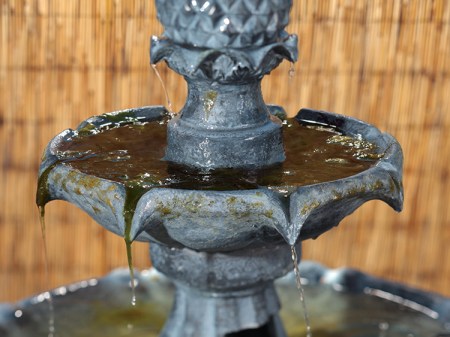
Some years ago while in prayer I saw myself, apart of God. There was a marble fountain abandoned in a gorgeous courtyard. It was beautiful. As I looked I realized that it didn’t have clean fresh water like you might think, but it spewed feces and urine. It was gross, it was awful, and I immediately understood.

I suddenly realized that I was that marble fountain, and I was spouting out only filth.

Being ashamed is cruelty that can only destroy a person. We think we must have defense mechanisms to survive. We drink, use drugs, and get involved with sex. Some might put on a tie and raise their hands during our church worship time. Whatever works I suppose. Almost always shame drives us to look for ways to escape.

People who live with shame often feel worthless, depressed, and anxious.

Shame can be a contributing factor to depression, anxiety, and low self-esteem. People who are constantly ashamed live out a difficult emotional and mental battle each and every day.

The Hebrew word for “shame” is disgrace, confusion, or dishonor.

I believe only the power and blood of Jesus can purify me. Only He has the ability to clean my spirit. In the New Testament, we see Jesus healing the leper with just a touch. Shame will be removed from your heart when He touches your own “leprosy” of sin.

Here are things you must consider.

  • Shame separates me from God.
  • Shame is a sign of self-hatred.
  • Shame makes me feel like giving up.
  • Shame leads me to go out and sin more.
  • Shame destroys the gifts that He is waiting for me to serve others.
  • Shame makes me judgemental and critical of others.
  • Shame weakens the Church in ways I can’t comprehend.

God intends to move you out of shame and guilt. You must have faith to put His Word into practice before you can be really free. It will probably be a battle–every day. Faith is the only way to freedom. The following promise is crucial.

“But if we confess our sins to him, he can be depended on to forgive us and to cleanse us from every wrong. And it is perfectly proper for God to do this for us because Christ died to wash away our sins.”

1 John 1:9, LB

I must reiterate this, and use the authority God has given to me as a teacher of the Word, please shake off the humiliation you live in. You must do this.

Unless you step completely away from the shame of your life you’ll be destroyed by the enemy. I dare not pull any punches with you. I don’t mean to be hard, I really don’t. But I do understand. I really do.

“Once again you will have compassion on us. You will tread our sins beneath your feet; you will throw them into the depths of the ocean!”

Micah 7:19

You can be free from sin and shame. God has a way.

It is the cross of Jesus, and by His blood–that is the only way sin and shame can be cleansed from our lives. There is nothing else in the whole universe that will do this. Only the red blood can turn the black into white.

I strongly suggest you share your battle with another believer who will understand and be discreet. (Sharing this maybe is the step you’re missing?)

Shame is the ugly fountain that only produces deadly things. It’s that shame that keeps me from understanding that I’m the beloved of God and His precious child.


Under Quarantine

quarantine

Quarantines are a real possibility, even to this day. A quarantine is imposed when a disease is contagious enough that it would harm a society: Measles, Smallpox, and the recent COVID-19 are just a few physical diseases where isolation must be imposed.

It can be severe— an epidemic, with desperate consequences if not adhered to; in some rare cases, the use of deadly force has been authorized to maintain a quarantine until the disease is no longer communicable.

This may surprise you, but there are examples of ‘quarantines’ in the Bible.

The term ‘unclean’ was used for ‘leprosy.’ Those afflicted had to isolate themselves; they had to ‘announce’ their presence when in contact with society. Lepers lived in groups away from the general populace, as a result of their disease.

In Paul’s epistle to the Corinthians, he addresses another kind of ‘quarantine.’ The situation was dire; the church had advocated a Christian living with his father’s wife.

“I have already passed judgment on this man in the name of the Lord Jesus. You must call a meeting of the church. I will be present with you in spirit, and so will the power of our Lord Jesus. Then you must throw this man out and hand him over to Satan so that his sinful nature will be destroyed and he himself will be saved on the day the Lord returns.”

1 Corinthians 5:3-5, NLT

Understanding the Principle of Usefulness

Now in a large house, there are not only gold and silver vessels, but also vessels of wood and of earthenware, and some to honor and some to dishonor.”

2 Timothy 2:20, NASB

Found in God’s pantry are lots of pots and pans of various uses.  Paul writes Timothy about the ‘large house’ which is the Church inclusive. Look around Timothy, there are gold ones, and there are silver ones. They have a noble purpose fitting for such a great house. These are the ones the guests will use; they befit the significance of the Lord himself. These vessels have great value for they are made of precious metals.

There are vessels of different categories. These are the ones made of wood, and of clay. These are part of the household, make no mistake about it. But their use is one of function, they’re utilized in common and ignoble ways. (A clay ‘bed-pan’ perhaps?!)

21 “Therefore, if anyone cleanses himself from these things, he will be a vessel for honor, sanctified, useful to the Master, prepared for every good work.”

2 Timothy 2:21

Paul, the author of the New Testament doctrine of grace emphasizes the place of personal holiness. We are to ‘cleanse’ ourselves to become a vessel of honor. There is good news here:

  • All are vessels in the Father’s house. Each of us belongs to Him. He alone determines their use.
  • Things are not yet in their final state. Changes in status can be experienced. In God’s economy, clay pots can become ‘golden.’ Silver can become ‘wood.’

Some sin is contagious.

It affects believers, and the Church becomes compromised by what we’ve done. And then sometimes we are quarantined by the Holy Spirit–until the contagion passes. This spiritual disease must not be permitted.

I have experienced this several times in my own discipleship. These are not pleasant times, but there is no condemnation. I’m still His servant, His love for me stays outrageously constant. He has never turned away a sinning child who repents of their sin.

“Yes, I am His servant, but I must wait out in the hall. I haven’t been faithful. So I sit in His waiting room, waiting for His call. This is for my good. And my Father knows what is best.” 

Messed Up People

Elijah was suicidal. Job wished he had never been born. David understood deep depression. Moses was anxious. Hannah was barren. Jonah was angry. Paul was all alone in a prison cell.

And actually, this is only a brief list. The Bible is loaded with flawed people who stumbled trying to be faithful. God uses imperfect people, because there really isn’t any other kind to be found. And there were others.

Noah got spectacularly drunk. Abraham lied. Jacob repeatedly deceived others. Rahab was a whore. Samson lusted. David committed adultery and was a murderer. Peter denied Christ.

Why does God favor and love people who are so disturbed? Honestly, none of us measure up. It seems He uses the weak to carry out a plan and a purpose of redeeming others, and establishing a Kingdom. He takes messes and gives them His message.

He is Love– 100% of the time, and He loves you, and He loves me, He loves the world. (John 3:16.)

Messed up people of faith become instruments and vessels of grace to other messed up people. We carry a treasure that is not ours. Sometimes it takes years to see this. I hope you can understand this. I hope it doesn’t take long.

And nothing is ever really wasted. Our mistakes (sins) become useful things to Him. For example, David’s sin would be transformed into Psalm 51 and 32. Yes, his disobedience had consequences, I won’t dispute that, but something wonderful also came when he repented.

David paid an awful price for his sin. That disobedience almost destroyed him. Not only did it separate him from God, but his family felt the effects of his evil actions.

Yes, you need to repent. But when sin is destroying you, it does seem you need to turn from it, and leave it now.

The first two verses of Psalm 51 can bring tears when we finally understand their profound beauty, for they came out of David’s personal evil:

Psalm 53:1-2, ESV

For thousands of years people of real faith have come and drawn beauty and grace from this song. David knew his sin was real, and incredible pain emerged from that, but the Psalm did also.

Please do not try to hide or excuse your sin, it always has the most awful consequences.

Broken people can be forgiven, redeemed and used. Sometimes I think God gets special enjoyment out of picking the worst and patiently loving us to wholeness. If you really know Him, and know your flaws, you’re well on your way of usefulness in His kingdom.

“But we have this treasure in jars of clay, to show that the surpassing power belongs to God and not to us.”

2 Corinthians 4:7