A Jubilate Discipleship: Psalm 95

Montage-Jubilate

A Psalms Study

“Come, let’s sing for joy to the Lord.
    Let’s shout praises to the Rock who saves us.
Let’s come to him with thanksgiving.
    Let’s sing songs to him,
because the Lord is the great God,
    the great King over all gods.
The deepest places on earth are his,
    and the highest mountains belong to him.
The sea is his because he made it,
    and he created the land with his own hands.

Come, let’s worship him and bow down.
    Let’s kneel before the Lord who made us,
because he is our God
    and we are the people he takes care of,
    the sheep that he tends.

Today listen to what he says:

Psalm 95:1-7, NCV

Such joy: it just bubbles through the words. This is a psalm saturated with excitement. These first seven verses are ‘carbonated joy.’ They pronounce an excitement of a living God that excels in every way. These are simple words made to escort us into a true worship, unlike any other. We might use the word, “jubilant” when hearing this psalm. And we wouldn’t be far off.

“The Lord is the great God,” and He is the King of any ‘so-called’ gods. Everything concerning the earth is His doing– for He created it, with His own hands! And our creating God is also our Shepherd, tending and caring for us as His very own flock.

These verses extol our God, to the point of exuberance. It channels us to the point of worship upon our knees, with the realization of the greatness of God. But this Psalm continues for four more verses.

Today listen to what he says:
“Do not be stubborn, as your ancestors were at Meribah,
    as they were that day at Massah in the desert.
There your ancestors tested me
    and tried me even though they saw what I did.
10 I was angry with those people for forty years.
    I said, ‘They are not loyal to me
    and have not understood my ways.’
11 I was angry and made a promise,
    ‘They will never enter my rest.’”

Psalm 95:7-11

There are two parts to Psalm 95. The first is of jubilant worship. But the second part emphasizes a solid obedience. The phrase, “Today listen to what he says:’ welds these two sections together.

Worship must always lead to obedience. You can do ‘cartwheels’ on Sunday morning, as long as you follow Him on Monday.

The issue is an history lesson that goes back to Israel’s days of Moses and the days following the Exodus. Because they were so hard and stubborn, they would wander for forty years in the desert. Their continued ‘stubbornness’ not only closed off the Promised Land, but also closed off their relationship with God— a relationship that would’ve been ‘jubilant’ and  profound (at the same time). They missed out on verses 1-6 and settled on verses 8-11. How tragically sad.

There is a thread that works through scripture called “the rest of God.” The book of Hebrews uses in 12x usually as a warning:“Now, since God has left us the promise that we may enter his rest, let us be very careful so none of you will fail to enter.” (Heb. 4:1).

 “Let us try as hard as we can to enter God’s rest so that no one will fail by following the example of those who refused to obey.”

Heb.4:11

To be in God’s rest is to be in harmony with Him. It is a mixture of confident faith mixed with a careful obedience. When you combine these two, you have the recipe for joy.

I believe this rest is the believer’s place of joy, peace and confident faith. It obeys because it really wants to. It is Psalm 95:1-7 in action. It is for the jubilant Christian.

bry-signat (1)

cropped-christiangraffiti1.jpg

The Depression Epidemic

Why we’re more down than ever—and the crucial role churches play in healing.

Dan G. Blazer | originally posted 3/06/2009 at Christianity Today

crossredThe church is God’s hospital. It has always been full of people on the mend. Jesus himself made a point of inviting the lame, the blind, and the possessed to be healed and to accompany him in his ministry, an invitation often spurned by those who thought they were fine as is. We should not be surprised, then, that the depressed populate not only secular hospitals and clinics, but our churches as well. Yet depression remains both familiar and mysterious to pastors and lay church leaders, not to mention to those who share a pew with depressed persons.

Virtually everyone has experienced a “down” day, often for no clear reason. We might say we “woke up on the wrong side of the bed,” are “out of sorts,” or just “in a funk.” Such polite references are commonplace in America. Yet as familiar as melancholic periods are to us, the depths of a severe depression remain a mystery. We may grasp in part the distress of King David:

David
King David putting pain in his Psalms

“Be merciful to me, O Lord, for I am in distress; my eyes grow weak with sorrow, my soul and my body with grief. My life is consumed by anguish and my years by groaning; my strength fails because of my affliction, and my bones grow weak”

(Ps. 31:9-10).

But most of us have no idea what David meant when he further lamented, “I am forgotten by them as though I were dead” (v.12). Severe depression is often beyond description. And when such deep and painful feelings cannot be explained, they cut to the heart of one’s spiritual being.

Humans are intricately complex creatures. When things go wrong in us, they do so in myriad and nuanced ways. If churches want to effectively minister to the whole of fallen humanity, they must reckon with this complexity. Depression indicates that something is amiss. But what? And what should churches be doing about it?

For the remainder of this article:  http://www.christianitytoday.com/ct/2009/march/15.22.html


cropped-christiangraffiti1 (3)

Working God’s Night Shift

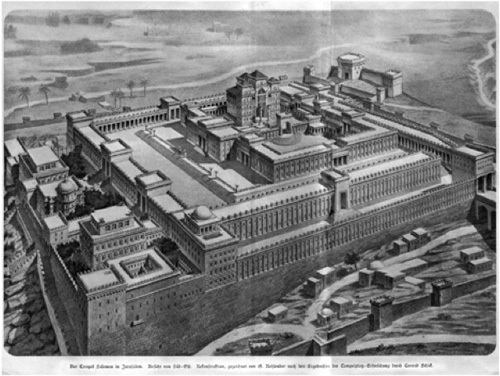
temple-etching
Solomon’s Temple in Jerusalem
A song for going up to worship.

134 “Praise the Lord, all you servants of the Lord,
    you who serve at night in the Temple of the Lord.
Raise your hands in the Temple
    and praise the Lord.

May the Lord bless you from Mount Zion,
    he who made heaven and earth.”

Psalm 134, NCV

This remarkable Psalm is part of an elite group known as “the Psalms of Ascent.” These 15 were sung as the congregation of Israel went up the steps of the temple in Jerusalem. They would sing each in “rounds” with each other. As you can well imagine, this made the ascent slow, but meaningful.

As you read the three verses, I get a picture of worshipers turning back and blessing the Levites. This takes place at the very end of the day. The Levites, and other godly ones who lived in the Temple, (remember Anna and Simeon, in Luke 2?) They were the support staff for the priests.

Commentary

V. 1, “Praise the Lord, all you servants of the Lord,
you who serve at night in the Temple of the Lord.”

The first significant thought is “Lord” mentioned three times. The word is the recognition of someone’s status and standing. We call Him Lord, because He is that (and more).

The second has to deal with the Levitical “night shift.” They served and guarded the Temple during the wee hours of the night. They probably cleaned, stacked wood, sharpened knives and maintained the Holy Place with its needs.

There was no real glory working the night shift. There were no people to serve. The crowds were for the day shift. (Here’s a weird thought– think “Disneyland at 2:00 a.m.”) There was also a contingent of non-Levite people ministering to the Lord as well. They had no duties, and only the priests could serve through their work.

The Levites working at night were not ‘second best.’ At least, not in the eyes of the Holy Spirit. They were integral in both presence and service to the Lord. To despise them is to reveal one’s ignorance. They definitely mattered.

V. 2 “Raise your hands in the Temple
and praise the Lord.”

I’ve worked nights before. It’s a real adjustment. You never feel like you’ve had enough sleep, and it is really hard to be positive and cheerful.  I could get pretty grouchy at times.

But an exhortation is given, a shout and a blessing as the crowds leave. “Raise up your hands– and praise Him!” It is as the work, although necessary, would be secondary. The worship however, was primary. We need to hear that.

V. 3, “May the Lord bless you from Mount Zion,
he who made heaven and earth.”

To be blessed (literally, made “lucky”) by our Creator and Lord is pretty profound. As a kid who read a lot, I think of ‘fairy dust.’ I know better now, but to be blessed by God is deeply significant.

To summarize, I believe this Psalm is speaking of those in the church who are doing “hidden service.” No one sees them really. They go about there duties quietly, and purposefully. The only recognition is from God– who sees all.

I must encourage you to keep on. There are many more than you think who see your hidden ministry to the Father. You are His ‘night shift.’ You’re seen by few, but Him. He knows what you do.

aabryscript

cropped-christiangraffiti1-2

When Your Soul is Helpless

Psalm 86:1, A Cry for Help

(A prayer of David)

1″Lord, listen to me and answer me.
I am poor and helpless.”

There is a poverty that far exceeds anything physical.  It is not tied to our checking account or our investment portfolio.  We are poor people; quite destitute as a clear matter of fact.  We are penniless, and truly destitute of all things spiritual.  We don’t have, rather we  owe.

We are really nothing more than helpless beggars.  

Some of us gather at the King’s gate, truly assured we are nothing more than “sinners saved by a wondrous grace”.  We have to admit, we can never earn or achieve a spot in heaven.  This is quite embarrassing for us, that there is such a social pressure to be good and proper. (Funny, but yesterday I went out for a bit and when I got home I discover my pants were unzipped.  I was mortified.  But this brought home to me the embarrassment of being “undone”).

In some infinitesimal way, I was tapping into this deep feeling of being undone and shamed. But without knowing this sensation (spiritually speaking) we will go to our graves trying to excuse ourselves, and trying to avoid admitting our sin.  We point to our environment, trying to divert attention to something or someone else.

Jesus told us in Matthew 5, “Blessed are the poor in spirit… and blessed are those who mourn.”  It seems we are not suppose to attain, but obtain.  To take a certain forgiveness and a sincere mercy from Him.  He will give it freely to any who sense their need.  If you don’t ask, you simply will not receive.

King David spiritually understood his own poverty before the Almighty.  In spite of his deep weakness and evil, he knew that God was still approachable, and that He was listening to anything and everything David shared with Him.  This is a whole another level of faith.  It strikes us as arrogant and slightly outrageous.  “David, the cold and unfeeling murderer– the ugly adulterer?  How can this be?”

But it takes poverty to become “poor in spirit.”  What I mean is this.  To be a sinner, we must’ve sin.  We become beggars, by begging.  We need to stand at the corner, with our cardboard sign and our cup and confront others with our desperate need. We must do this spiritually.

In our discipleship, we simply can’t unhitch the wagon from our spiritual poverty.  We are exactly who we are.  Luther once said, “Sin boldly, but believe in God more boldly still.”  If we think that he was permitting sin, we are being astonishingly stupid.  Through this quote we come to a truth, allowing us to just accept who we are– “world-class” sinners! But also to believe, deep down, in a God who loves us profoundly and completely.

bry-signat-1

cropped-christiangraffiti1 (2)

5