“Oh, how often they rebelled against him in the wilderness and grieved his heart in that dry wasteland.”
Psalm 78:40, NLT
“For forty years I was angry with them, and I said, ‘They are a people whose hearts turn away from me. They refuse to do what I tell them.’”
Psalm 95:10, NLT
“And do not grieve the Holy Spirit of God [do not offend or vex or sadden Him], by Whom you were sealed (marked, branded as God’s own, secured) for the day of redemption (of final deliverance through Christ from evil and the consequences of sin).”
Ephesians 4:30, AMP
I must say, we instinctively know how to offend God. No one has to teach us how it’s done, we just know how to do it. We have the amazing ability to sadden God. Our sins, and our rebellion causes God to tremble and weep. Disobedience, in any form affects the very essence of God’s well-being.
As a believer in Jesus, I know that sin is never permanent. It is not like getting a spiritual tattoo on our hearts. Our faith prevents sin from completely attaching itself to our hearts. But my sorrow or grief over my sin, must drill itself directly into my heart. I should come to the point where I can not sin against Him who loves me hysterically.
To turn back to Him involves “contrition.” To be contrite is to imply a very simple acknowledgment of our sin– and the rebellion that is often seen within. Somehow this is possible. I do not understand the mechanics of it all. But I am very glad it is there. God loves a heart that is contrite.
God is very offended by our sin. But somehow we do not grasp this. More or less this is a bit intangible. In our mind, we go don’t ever stop sinning against Him. We feel that we are getting away of something, which isn’t true at all.
As a closet-Lutheran, I propose the Lutheran Church which also has its own act of contrition, which is said during Holy Absolution. The following version, taken from the Lutheran Service Book (2006), says:
O Almighty God, merciful Father, I a poor, miserable sinner, confess to you all my sins and iniquities, with which I have ever offended you and justly deserved your punishment now and forever. But I am heartily sorry for them and sincerely repent of them, and I pray you of your boundless mercy, and for the sake of the holy, innocent through many bitter sufferings and death of your beloved son, Jesus Christ, to be gracious and merciful to me, a poor sinful being.
I can say nothing more than this. I will simply rest in this kindness that isn’t me at all. He loves each of us, as if we were the only ones. Thank you Father.
How many families in your church have a loved one who struggles with mental health problems? That’s kind of a trick question. People don’t talk about mental health problems. You’re more likely to hear them describe their child’s condition as “something like autism,” as the elder of one church we know says.
Or they might cover up entirely, as does an elder’s wife in another congregation. When her bipolar disorder swung into mania after childbirth, her family, already managing the added responsibilities of a newborn, had to manage her condition as well. But because her condition is a secret, they did so without any support beyond the usual “new baby” dinners.
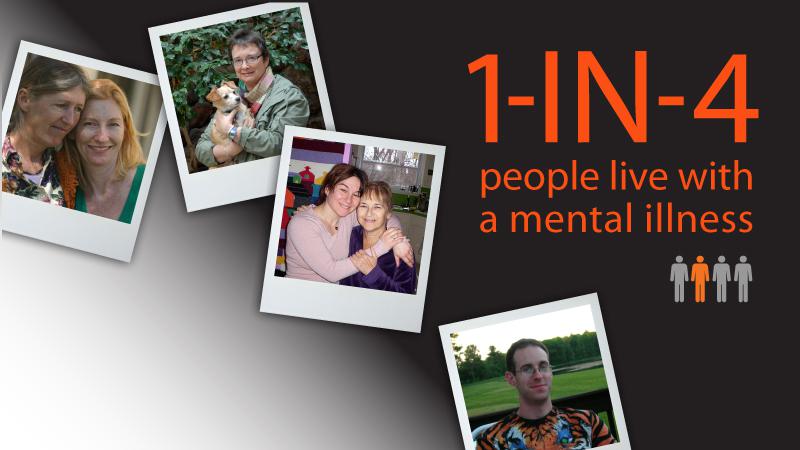
The answer to the question is, if your congregation is representative of the U.S. population, one in four households will struggle with someone’s mental health problems over their lifetime. That’s schizophrenia, bipolar disorder, obsessive compulsive disorder, disabling chronic depression, and various anxiety disorders. Look at the faces seated around you this Sunday. Someone is probably hurting. And they’re probably afraid to tell you.
The least acceptable disability
Out of Control
A study where people ranked disabilities by their “acceptability” returned these results, in order–most acceptable: obvious physical disabilities, blindness, deafness, a jail record, learning disabilities, and alcoholism.
Least acceptable: mental health problems. People with mental health problems frighten us because when people become mental ill, they become someone we don’t know. A bright boy who was his family’s bright hope may find he just can’t cut it anymore as schizophrenia turns him paranoid, disoriented, unmotivated in the extreme, and overwhelmed by delusional voices that tell him, over and over, how worthless he is.
Or, in the case of bipolar disorder, a girl who was a well-liked and active member of her Teen Challenge group may suddenly turn promiscuous, run away from home, and make a new home in the streets of a strange city. Laziness. Promiscuity. Violence. Sin. That’s what many people see when they look at those with mental health problems. It’s hard to believe that people may behave in such unacceptable ways and not be in control of their behavior.
Having a mental health problem is a lot like being on alcohol or drugs, without being able to stop. Medications “work” for about two-thirds of us. That means that a third of us can’t ever get off the chemical ride that our brains produce.
For those of us who can use medications, the side effects can be daunting. I have lost about 20 percent of my small motor functionality as a result of one of the five medications I take for bipolar disorder. I prefer that to losing large motor control and having another auto accident, being so disoriented I can’t find my way home from the store, losing bowel control in a busy bookstore, gaining 45 pounds, or any of dozens of side effects I’ve experienced on other medications.
Many people become so frustrated with side effects that they stop taking medications. Only about half of us accept treatment. Even when we are treated, not everyone regains their status as a fully functioning adult. In our extended family, six people have diagnoses. Those with bipolar disorder and chronic depression are successfully medicated and work full-time. Those with panic disorder and schizophrenia are on permanent disability. Nothing has pulled them through.
What the Bible says
The Bible talks about mental illness, as well as physical illness.
It describes a king who was made mentally ill until he would recognize the sovereignty of God (Dan. 4:29-34).
It describes demonized men who lived among the tombs and terrorized everyone until Jesus set them free (Matt. 8:28-33).
It also describes as demonized a young boy that most scholars today say had epilepsy (Matt. 17:15-18). Jesus delivered him, too.
What was once believed
What does this tell us about illness?
First, that God is able to heal. Second, that some physical and mental illnesses are caused by demons. Third, that some mental illnesses are caused by sin. But are all mental illnesses caused by demons or sin, and is seeking God our sole resource for physical and mental healing?
Since the 1950s, we have usually sent church members with epilepsy to doctors for effective treatment with anti-convulsant drugs. In a similar way, we’ve learned that medicines can effectively treat many cases of mental illness. So if all mental illnesses were caused by demons and sin, medicine would be exorcising demons and turning hearts to repentance. That is certainly untrue, for those are the works of the Holy Spirit.
Instead, we now know that most if not all mental illnesses are biological in origin, with environmental factors possibly triggering an existing genetic predisposition to the illness. Mental illnesses, just like epilepsy, are biological disorders of the brain.
What can the church do?
Compassionate service is one of our core charges as Christians. We observe it almost daily in the experience of one man we know with schizophrenia. His life is confined almost entirely to his home due to the fear, indecision, and lethargy that have become the shape of the illness in his body. But neighbors bring him occasional meals. The secretary of his small church talks to him by telephone every weekday. Several other members take weekly calls at designated times to help break his isolation. If he doesn’t feel up to driving to his Bible study meeting or Sunday services, some member will give him a ride. Nearby relatives help him plan and manage his finances, and come by to clean occasionally and for DVD “movie nights.” Phone cards given as gifts allow him to call his mother nightly. There’s much more that could be done—more frequent house cleaning and more meals and more visits—but he enjoys far more contact with many more loving people than many shut-ins.
The challenging good news is that when people with mental illness turn to someone outside “the system” for help, the church is first to get the call 40 percent of the time. Is your church ready?
…………………..
Carlene Hill Byron is the former Director of Communications for Vision New England. Through NAMI—the Nation’s Voice on Mental Illness, she and her husband, James, train churches to effectively serve people within the congregation with mental health problems and also teach NAMI’s class for families of people with mental health problems. They are members of Asbury United Methodist Church in Raleigh, North Carolina, where James serves on staff. First published by Vision New England’s Ministries with the Disabled, Acton, Massachusetts.
Bulimia nervosa is characterized by recurrent and frequent episodes of eating unusually large amounts of food (e.g., binge-eating), and feeling a lack of control over the eating. This binge-eating is followed by a type of behavior that compensates for the binge, such as purging (e.g., vomiting, excessive use of laxatives or diuretics), fasting and/or excessive exercise.
Unlike anorexia, people with bulimia can fall within the normal range for their age and weight. But like people with anorexia, they often fear gaining weight, want desperately to lose weight, and are intensely unhappy with their body size and shape. Usually, bulimic behavior is done secretly, because it is often accompanied by feelings of disgust or shame. The binging and purging cycle usually repeats several times a week. Similar to anorexia, people with bulimia often have coexisting psychological illnesses, such as depression, anxiety and/or substance abuse problems. Many physical conditions result from the purging aspect of the illness, including electrolyte imbalances, gastrointestinal problems, and oral and tooth-related problems.
Other symptoms include:
chronically inflamed and sore throat
swollen glands in the neck and below the jaw
worn tooth enamel and increasingly sensitive and decaying teeth as a result of exposure to stomach acids
gastroesophageal reflux disorder
intestinal distress and irritation from laxative abuse
kidney problems from diuretic abuse
severe dehydration from purging of fluids
As with anorexia, TREATMENT FOR BULIMIA often involves a combination of options and depends on the needs of the individual.
To reduce or eliminate binge and purge behavior, a patient may undergo nutritional counseling and psychotherapy, especially cognitive behavioral therapy (CBT), or be prescribed medication.
Some antidepressants, such as fluoxetine (Prozac), which is the only medication approved by the U.S. Food and Drug Administration for treating bulimia, may help patients who also have depression and/or anxiety. It also appears to help reduce binge-eating and purging behavior, reduces the chance of relapse, and improves eating attitudes.
CBT [or, talk therapy] that has been tailored to treat bulimia also has shown to be effective in changing binging and purging behavior, and eating attitudes. Therapy may be individually oriented or group-based.
“Loneliness was the first thing that God saw that was not good”
John Milton
Are you lonely? It really doesn’t matter if you are married or single. Frankly, those who have a spouse can be powerfully affected by a sense of loneliness. (They obviously are pressured to suppress this.) But they truly feel very much alone.
When we find ourselves affected by this issue, we think a lot about being alone. We become an ‘island,’ isolated and separate, and the intense figure of this is the ‘castaway’ of those who, somehow end up completely alone on a deserted beach.
There is nothing ‘romantic’ or ideal about this experience.
After a week, we start to feel the isolation. It creeps in on us, expands, and begins to ‘feed’ on our perceptions. And that can poison us.
To define it, to be lonely is the absence of human relationships. But to be alone is to be without connections. They can overlap sometimes, but they are very separate issues. The unmarried 40-year-old could be free from loneliness, and the person who is married (with several kids) feels quite lonely.
We cannot attribute our ‘heart issues’ to our response to isolation.
Some will thrive, and others chafe. Many derive a sense of well-being by becoming married. Essentially they choose the fallacy that this may just solve their feeling of loneliness. If I cut my hand, a band-aid will not heal the wound, it can only help (on a superficial level,) but the healing comes from within us.
There is a definite need to see the unique situation and understand how it does fluctuate. Things will move and our attitudes may change. We can cross back and forth, and that is quite understandable. But embedded sadness over being alone can be disastrous to a full and amazing life with Jesus.
“And I will ask the Father, and He will give you another Helper, that He may be with you forever.”
John 14:16, NASB.
We certainly need each other. That is ‘how we roll.’ But what is necessary and for certain is, “We are not alone, never.” The deep presence of Jesus can be profoundly close, and all we need is His nearness and our awareness, and it’s going to be ok.
There is so much we can do.
The first is to get real about the issues that are involved. Go ahead and acknowledge the struggle you encountering. Secondly, we need to admit the sin of harboring this, and even letting it to take control of our thinking. Thirdly, to actively turn away from sin, and then focus on Jesus as our dear companion and friend.
These three are just focal points. They will often take very different adjustments for each person. But they are definitely a starting point. Even as you work through this, allow the Holy Spirit to be your faithful guide.









 Broken Believers