Hiding Our Wounds

Brennan Manning Quote
“You are the light of the world. A city set on a hill cannot be hidden. 15 Nor do people light a lamp and put it under a basket, but on a stand, and it gives light to all in the house.”

Matthew 5:14-15, ESV

Overall, I think this Manning quote is a great observation. We, the torn and wounded, often try to hide, secluding ourselves in the “Island of Misfit Toys.” (Got to love those 60s Christmas cartoons.) We pretty much accept our lot as damaged merchandise.

Maybe we choose to isolate ourselves more than we want to admit. Could that be what we do? Are we still embarrassed and ashamed by all that we’ve done? That’s quite possible.

This may come as a shock, but the Church doesn’t need any more gifted people.

But it does need broken people who understand ‘the giftedness of the flawed.” When we conceal, we diminish the Church by our absence. We can ostracize ourselves, through a self imposed shame— but the Church will suffer. We need to show them that everyone can be healed, even screwy ‘fruit-cakes’ like us.

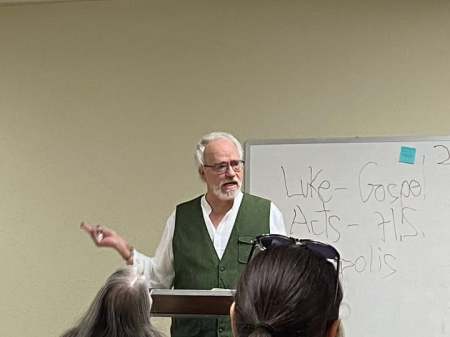
I recently had the privilege of speaking to a class of young Bible college students.

My subject was decidedly not on being successful, but on being a failure. Whole courses are geared toward ministerial success– but where are the ones for failure? I think that it just might be even more important, in the long run.

No human effort is going to erase your past.

I have tried and it can’t be done. I have blitzed my brains on drugs and booze, but I still remember the people I’ve hurt. (And I pray for them.) There really isn’t a cure for the evil we have done. I believe in forgiveness. And I hold to the idea that are sins are never to be a subject of  guilty accusation–

“He will again have compassion on us;
    he will tread our iniquities underfoot.
You will cast all our sins
    into the depths of the sea.”

Micah 7:19

Our dark iniquity is put in a very deep place. But there are the memories of an unkind word, or a sad and dark foolishness that we must learn to live with. There will be many regrets, and we face the terrible consequences of our sins, but it’s enough to know that all is under the blood of Jesus.

We are indeed forgiven. Completely.

We are now to live as forgiven sinners, yet precious in God’s eyes. We discover that although the Father has no favorites among His children, but He does have intimates. We are to live the rest of our lives for His glory, exploring that intimacy.

“Leave the broken, irreversible past in God’s hands, and step out into the invincible future with Him.”
  Oswald Chambers

Scorched, but Deeply Loved

“But he turned and said to Peter, “Get behind me, Satan! You are a hindrance to me. For you are not setting your mind on the things of God, but on the things of man.”

Matt. 16:23

The principles of the Kingdom will often confuse an outsider.  In this chapter of Matthew, we hear Peter extolling the divinity of Jesus (vv. 15-17).  Peter exceeds the norm with his analysis of what he believes is real and true.

Peter’s insight is as perceptive as it is supernatural.  “You are the Christ,” Peter proclaims, “the Son of the Living God,”  Jesus responds to this and He praises Peter for his sensitivity.

But, just a short time after he makes his astonishing pronouncement, he is taken apart by Jesus, being solidly rebuked face-to-face.  In one clear and singular moment, he expresses a wonderful faith, and then suddenly his personal awareness precipitously crashes.  He is now an evil person with Satan’s agenda. (See verse 23.)

I’m not sure why Peter does what he does. 

It seems that in the light of this chapter (which actually seems like a bright glare), Peter is devastated.  In three years of discipleship, it seems that all he merits is a brutal ‘dressing-down.’ All because he thinks he can correct Jesus, “the Son of the Living God.”

The rebuke is bitter.  Peter is being compared to Satan!

I suspect that Peter was ashamed.  He most likely wished he had a rewind button.  His Savior, Jesus– has given him a new label.  And it hurts.  Many times, we would become resentful, maybe a bit bitter.  It could cause some to walk away, developing an anger that solidifies into a permanent offense. Thank God, Peter doesn’t do anything that stupid.

The correction in the rebuke gives him life and hope.

But who’s to say we would be as correctable?  Peter was rebuked in the presence of the other disciples.  The publicity was embarrassing.  Too many people were watching and listening. Peter will survive this, but he has to learn something valuable.

Our daily commitment to Jesus hinges on our willingness to be undone. 

Jesus pretty much rakes us over the coals.  He insists on total obedience to His faithfulness. And like Peter, we will learn. It may take some time though.

Every true disciple will be scorched– but incredibly loved.

Should I Take Medication?

What’s Your Take on Christians Using Antidepressants?

by Pastor John Piper

I’m going to say that there are times when I think it is appropriate, but I want to go there cautiously and slowly, with warnings.

Depression is a very complex thing.

It’s got many layers. I think we all would agree that there are conditions in which nobody would deny that certain people are depressed in a pathological way because they’re immobile. They’re not even able to function.

And then there’s a continuum of discouragements and wrestlings with having an ‘Eeyore-type’ personality, which may or may not be depressed.

So that means that I want to be so careful not to have a knee-jerk reaction. When you come into my office and describe to me your discouragements, I don’t want my first response to be, “See a doctor and get a prescription.”

I fear that is way too quick today. The number of people on antidepressants as a first course rather than the last course is large.

And the assumption is that you can’t make any progress in counseling unless you get yourself stabilized or something.

So I just want to be very cautious.

As a Christian who believes that Christ is given by the Holy Spirit to deliver us from discouragements and from unbelief and sorrow and to help us live a life of usefulness, what makes me able to allow for antidepressants is the fact that medicine corresponds to physical realities.

And the physical realities are that we get headaches that make us almost unable to think. Migraine headaches can put a man out. And we are pretty much OK if the doctor can help us find some medicine that would not let us get these immobilizing headaches.

And the headaches clearly have a spiritual impact, because they’re making me unable to read my Bible and function in relation to people that I want to love and serve. And so medicine becomes spiritually effective in that way.

In the short run especially, sometimes long term—then I think, in God’s grace and mercy, we should take it as a gift from his hand.

If that physical dimension could be helped by medicine.


So we apply this principle that we all use to depression, and then the fact that the body is included in depression. Whether we should use the terms “chemical imbalances”—I’ve read both sides on that. Some people say that there is no scientific evidence for such a thing and others say that it is a given. Whatever. Everybody knows that there are physical dimensions to depression.

Has God Given Up on You?

“If we are unfaithful,
    he remains faithful,
    for he cannot deny who he is.” 

2 Timothy 2:13

There are often times of great despair; when sin or sickness is definitely front and center. Losing hope is an easy response for mere mortals like us. There can be a place where the darkness won’t lift; and it’s at that point you realize that you’re simply in over your head.

I know that feeling quite well.

I have depressive disorder and because of that I tend to camp out at the margins where it seems like the grace of God evaporates. Whether it is my sin or circumstances, I occasionally feel pretty much abandoned, and it usually is something self-inflicted. (Or is it? I’m not always sure.)

We have this glaring tendency to put ourselves in where we should not have been. And condemnation means no comfort can get through to us.

We wonder if God has finally given up on us, throwing us in the trash heap of lost souls. We might feel that’s what we deserve. He simply gives up on us.

“Many are saying about me, “God won’t rescue him.” 

Psalm 3:2

In Psalm 3, David has come to the realization that his sins have “tainted” him. He talks of many enemies that have suddenly gathered, and they are claiming that David had now gone outside of God’s grace and favor. Forever.

The theology of this seemed logical. David had sinned greatly. And he had. David’s sin of adultery and murder was heinous and depraved. His enemies suggested that God would now abandon him. It seems logical, doesn’t it.

Our own sin may be excessive, but God’s faithfulness is to the uttermost.

”Lord, your love reaches to the heavens, your loyalty to the skies.’‘

Psalm 36:5

The grace of God is limitless. It is beyond human comprehension or reasoning. When He committed Himself it was for forever. King David understood this, and would survive the devastating fall-out from his sins. Indeed he would reap all that he sowed (Gal. 6:7-8). But God still loved him, no matter what.

You see, Jesus has taken every ounce of your sin upon Himself.  

That includes your faithlessness. He has done this astonishing thing out of the deep depths of His love and mercy. We don’t deserve it and we can’t pretend it is something else. A heart that’s been welded to His knows this. We are “saved by grace through faith.”

Do you still feel God has abandoned you forever?

“The Lord appeared to us in the past, saying:“I have loved you with an everlasting love; I have drawn you with unfailing kindness.”

Jeremiah 31:3

Take a look at my other site: alaskabibleteacher.com. Thanks.