An Open and Sincere Prayer

mental-health

Eternal Father, you alone fully know my past and the deeds I have done.  I ask that you remove from my burdened mind the guilt and darkness of those days.

Having been set free from this pain, I earnestly want you to direct my steps.  The futurebelongs to you and there is nothing more from me that would desire the dark.  I have had enough of sin and the vain delights of this world.  I am yours forever.

Lord, I struggle with my depression.  It trips me up at times and I let it take control. Forgive me.  Unless you bring your light I will continue to struggle further while sinking deeper. I so need your help in this.


Help me to reach forward to the prize of the upward call of the high calling of God in Christ Jesus.  Help me to forget the ugly past and lunge for the tape.  Amen.

________

“I’m not saying that I have this all together, that I have it made. But I am well on my way, reaching out for Christ, who has so wondrously reached out for me. Friends, don’t get me wrong: By no means do I count myself an expert in all of this, but I’ve got my eye on the goal, where God is beckoning us onward—to Jesus. I’m off and running, and I’m not turning back.”

Philippians 3, the Message

*

Hope this blesses you today.


cropped-christiangraffiti1 (3)

The Blessings of a Long Battle, part 4

boxing3

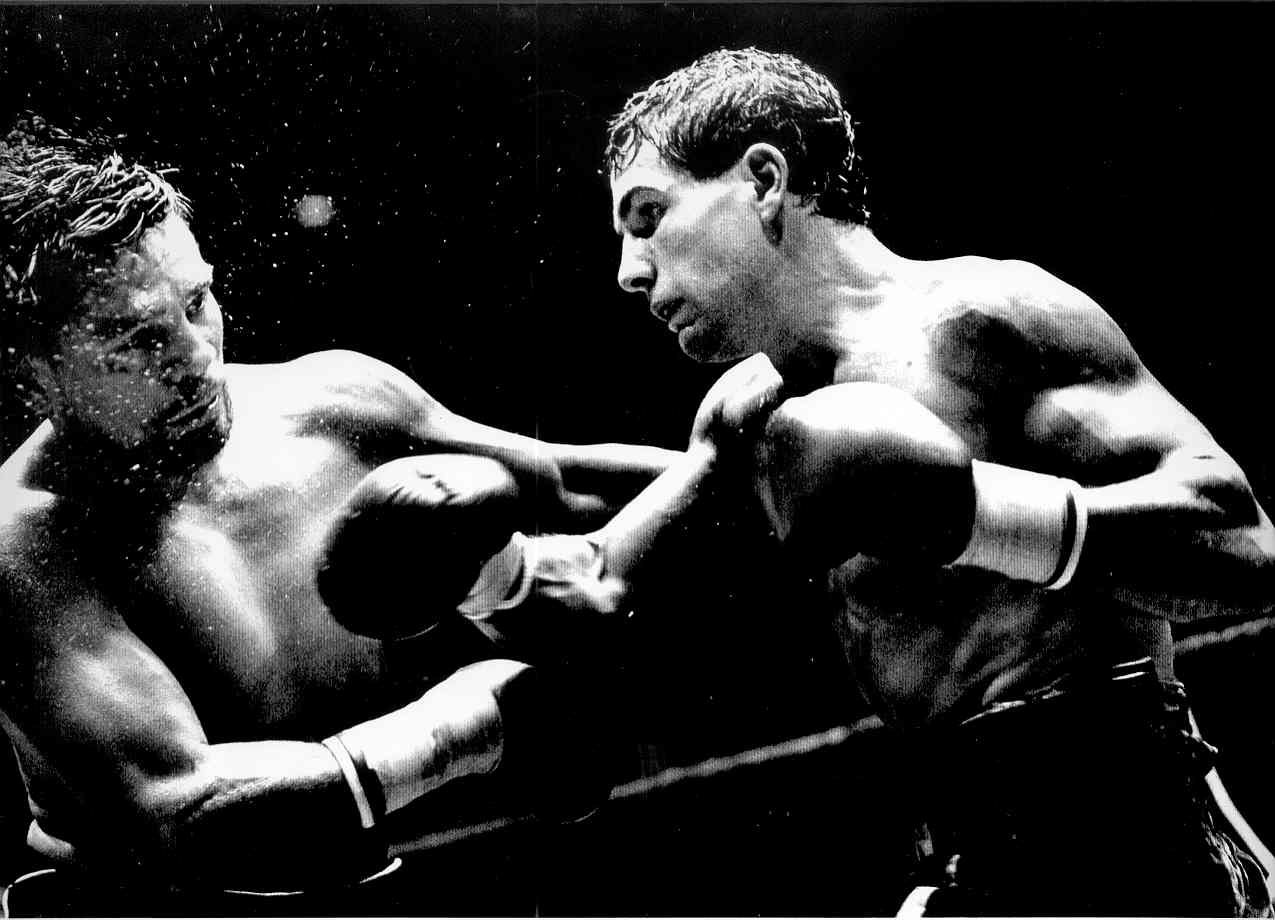
In thinking about this final installment about how God can bring much good out of our protracted struggle with sin, weakness, or a problem, it dawned on me how important it is to see the Big Picture. In some ways this post reiterates truths in part 2 of this series, but also adds important new dimensions to those truths and explores new territory.

When a soldier goes through boot camp, it’s crucial for him or her to see the overall purpose of his training–the Big Picture. He or she is being pushed and tested in different ways to the extreme so that they will be prepared for any situation on the battlefield, won’t crack under pressure, and will be a team player.

In the conquest of Canaan under Joshua’s leadership, the nation of Israel experienced many victories over different hostile nations. However, Judges 3:1–4 says that God did not allow the Israelites to completely triumph but left certain enemies in the land (e.g., the Philistines) so that his chosen people would learn warfare.

When we became Christians, God could have put us in a cocoon of protective grace where we would be insulated from our three primary enemies–the world, the flesh, and the devil–but he didn’t so that we would also learn warfare.

If he would’ve sheltered us from the battle, we would end up like many “trust fund babies,” who, because of their vast inherited wealth, never have to work a day in their lives. They’re protected from the toil and struggle of life and never have to worry about paying the rent or the electric bill.

Often there is something profoundly missing in their lives: many are spoiled, shallow, and have not been battle–tested. Perhaps God designed an existence where we battled the world, the flesh, and the devil so that we would not end up becoming spiritual trust fund babies.

Macarius was a great monk who composed the Macarian Homilies in the 4th century. He was convinced that, if after becoming Christians, we were protected in a cocoon of grace from the temptations of the world, the flesh, and the devil, many of us would soon become conceited and fall as Satan fell. Instead of a three steps forward, two steps back grind that life often is, we would have a series of unbroken successes and become lifted up in pride and fall like Lucifer did.

In seeing the big picture, nothing is more important than understanding that God the Father through the Holy Spirit has been preparing a Bride for his Son in a Marriage that will span eternity. He wants you to be a part of that Bride. The Father wants the Bride to fervently love the Groom.

There is no love without free choice. If we would’ve been protected from the enemies of our soul, and choosing the Groom was exquisitely easy or even automatic, where’s the love that has been tested in the furnace of affliction? Like any spouse, Christ wants to be chosen. If we were automatons or even semi–automatons, where’s the love in that?

When we are in a long struggle with sin or weakness, it is because we have become over–attached to some created thing. Addiction is over–attachment in the extreme (e.g., overeating, alcohol, drugs, pornography, sex, power, work, shopping, etc.)

Christ the Uncreated One wants to be chosen over all the created things. Christ the Groom wants to stand in the midst of all his competitors–i.e. created things–and have the Bride choose him. One of the blessings then of a long battle is this: it’s the vehicle whereby we choose Christ as our Groom, as our only lover.

Does that love somehow go away if you’re a Christian who is up to your eyeballs in sin, addiction, and weakness? If anything God loves you more after you fall, because where sin abounds, grace abounds more. And as the old religious cliché tells us, he loves us in our sin and loves us too much to leave us there.

 *

Jonathan

Check out Jonathan’s own site at http://www.openheavensblog.com/.

 

Tensile Prayer

“Please be assured that from the first day we heard of you, we haven’t stopped praying for you, we are simply asking God to give you wise minds and spirits attuned to his will, and so you can acquire a thorough understanding of the ways in which God works.”

“We concentrate on this, and pray that you’ll live well for the Master, making him proud of you as you work hard in his orchard. As you learn more and more how God works, you will learn how to do your work.”

“We pray that you’ll have the strength to stick it out over the ‘long haul”—not the grim strength of gritting your teeth but the “glory-strength”  God gives. It is strength that endures the unendurable, and then spills over into joy, thanking the Father who makes us strong enough to take part in everything bright and beautiful that he has for us. ”

–Amen.

This is a paraphrase that I made of Colossians 1:9-12, using the Message Bible.  This is one of those “scripture” prayers, often found in the Psalms, but also in the Epistles.  It does seem as Paul actually prayed as he wrote.  This prayer is indeed evidence of this.  It has the wonderful side effect of praying while doing something else, and what that might look like, especially when done discreetly and appropriately.

“Tensile” is a most interesting word, and concept.  It has the idea of being stretched without being torn apart.  A perfect word to describe intercessory prayer.

Do we really pray enough?  It isn’t a question of “volume”  but of quality, and precision.  When I am focused and begin to be directed to a certain person, or a very idea— I start to pray, focused and accurate.  But in the “quantity” aspect.  I do admit I often falter and fumble this.

The content of this man’s prayer was fabulous, and incredibly strong.  It does seem that it covers quite a few bases.  We can draw out so much.  And yet I keep coming back to the manner in which  Paul prayed.  I wonder if we could be taught to do the same?

Somehow we start praying in this same level. By faith we can weave that  tensile strength into hearts of those we love, and understand the hearts of our brothers, or sisters.

bry-signat (1)

cropped-christiangraffiti1.jpg

Psalm 13, Your Deliverance is Ready

Psalm 13, For the choir director: A psalm of David.

Five Questions

 1 “O Lord, how long will you forget me? Forever?
How long will you look the other way?
2 How long must I struggle with anguish in my soul,
with sorrow in my heart every day?
How long will my enemy have the upper hand?”

Nothing is as stretching and painful as the belief that God has given up on you.  I have personally experienced this misbelief.  It was like my entire nervous system was ripped out of my body.  Suicide seemed a logical thing to do.

Sometimes, the struggle to remain a believer is difficult.  It is a war, often accentuated by depression and sadness.  It’s relentless and its arena of conflict is in our hearts.  David asks five questions.  They are the questions of the besieged heart when our abandonment seems possible.

 3 “Turn and answer me, O Lord my God!
Restore the sparkle to my eyes, or I will die.
4 Don’t let my enemies gloat, saying, “We have defeated him!”
Don’t let them rejoice at my downfall.”

David recognizes that he needs God’s answer.  He also needs meaning to be restored to him.  The “sparkle”, or that joy of having a purpose is what gives life meaning.  Once you taste it, nothing else will satisfy.  Verse 3 tells us that David saw this as a “life or death” matter.

Furthermore, David could see that the enemies of his soul had gathered.  They spoke with a common voice, reflecting a unified purpose, “We have defeated him!”  We must be cognizant of the reality of evil around us.  God has a will for your life, but so does Satan.  It involves your corruption and destruction.

5 “But I trust in your unfailing love.
I will rejoice because you have rescued me.
6 I will sing to the Lord
because he is good to me.”          ~~New Living Translation

We fast-forward ahead to David’s deliverance.  He has an uncommon confidence in the character of God.  David’s declaration, He rescued me and He is good to me!  Both verses 5-6 illustrate that worship finds its root in times of personal emancipation.

bry-signat (1)

cropped-christiangraffiti1.jpg