Grief Sucks but God Restores Hope

It’s been 15 days since I got the news. My sister Suz passed away at 4:00 a.m. on a Thursday morning.

I hate that phrase, “passed away.” It makes it sound like she floated off in a gondola across the sea.

She died. Why do we shroud death in such wishy-washy language?

I never went to visit her before she died. I had plans to visit Memorial Day weekend. But that was a week too late. I really need to stop planning to visit loved ones who are sick and just do it.

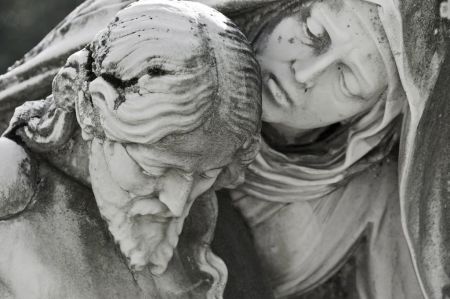
The cards and condolences all give me permission to grieve this terrible loss. But I’m scared to let myself grieve. I can’t think about this loss of my oldest sister without remembering the loss of our sister Peggy (who also died on a Thursday), and Daddy before her, and Mom before him. The grief seems too much to bear.

Grieving is doubly difficult when every impulse to let tears fall feels like teetering on the rim of the pit of depression. What if I let the grief run free and it drags me into that hell I haven’t really known in over 20 years? I remember that place of desperation all too well and I refuse to go back there.

It’s not that I haven’t cried about her being gone. I definitely have, but it terrifies me when I do. And why do the tears keep coming back once they’ve been cried? How do I grieve but continue to live? 

I know this deep sadness is different from major clinical depression. I know the reason for these tears. When my depression was at its worst I had no idea why I couldn’t stop crying. The incessant tears served no discernible purpose. But the head knowledge that my tears of late do have a purpose—the loss of someone I dearly love—doesn’t alleviate the fear that they may drag me into another bout of depression.

The other day I queued up a few Chris Stapleton songs on YouTube while I worked on a relatively mindless project. I fondly reminisced about when she bought us tickets to see him at a small venue in Portland. Then a song came on that I hadn’t heard him sing before called “Drink a Beer.” The next thing I know I’m bawling and my heart feels like it’s breaking into a million little pieces and being compressed in a vise all at once.

Today, as every day for the last two weeks, the hard cider in the fridge calls to me. I usually wait until after work to have one. But I’m on vacation this week and today 3:00 p.m. seemed like a good time to have one. It’s 5:00 p.m. somewhere, right? And at least I’m not drinking tequila in her honor.

Maybe it’s the compound grief that is making it harder for me to cope with this loss. I don’t remember it being quite so unbearable when Peggy died, but then Suz was there with me for that loss. We began the grieving together. Now all my family support it on the other end of a telephone line.

When Mom and then Dad died, I was already depressed. My grief was fused with the vague despair of my mental illness. I suppose it could be that fusion that makes grieving so difficult now. I can’t seem to separate the two states of sorrow.

And yet this spiritual discipline of writing my thoughts and fears on paper helps me to gain a clearer perspective. I’m reminded as I write of a favorite Bible verse. John 11:35 says, “Jesus wept.” The occasion was the death of his dear friend Lazarus. Even though Jesus knew he was about to raise Lazarus to life again, Jesus modeled grief over the loss of a loved one. He declared in that shortest verse that tears are a normal part of this broken life we live in a world of sorrow upon sorrow.

The same apostle who recorded this verse penned the book of Revelation where we are told God “will wipe every tear from their eyes. There will be no more death or mourning or crying or pain, for the old order of things has passed away.” Revelation 21:4 NIV.

These tears I cry for my sister are normal. This grief is okay. Today won’t be the last time I grieve this loss. This will likely not be the last loss I will know in this broken world.

“We will never be the same as we were before this loss, but are ever so much the better for having had someone so great to lose.”

Spellbound Captives of the Night


“We are all infected and impure with sin.
      When we display our righteous deeds,
      they are nothing but filthy rags.
   Like autumn leaves, we wither and fall,
      and our sins sweep us away like the wind.”

Isaiah 64:6, NLT

There are bad things that happen to us— ugly, awful and evil things, that only God himself can explain.  We read theology and we read our Bibles, we listen dutifully to preachers, but we still ‘can’t’ fathom this terrible ‘mystery of iniquity.’ “Filthy rags is what we wear. Our sins have destroyed us.

We are seem to be playing ‘ping-pong’ with the most challenging  issues.  We come to Him, because there is no one left who can answer things that have perplexed everyone else.  Why do we suffer?  Why does evil exist?  Why do people who live in blatant sin, succeed?  Why am I sick all the time?

If God is really God, why doesn’t he just give us an explanation about these questions?  Our title talks about being “spellbound.”  Are we really that inured, attached to a truly sinister evil, that we are being confused about what is real or true?  To be spellbound means we’re being hypnotized by something quite awful.  A cobra rises up, and opens its “hood.”  Its victim is entranced by what it sees in front of it.  He soon becomes supper.

Being held captive seems to be an ordinary occurrence for human beings.  Captivity implies imprisonment.  Usually in a dark, dirty and unpleasant place.  But yet, it intrigues us so much, and after all the “light” is such a boring and dull thing.  We feel great as we trade the truth for lies. We never realize that satanic power has blinded us.

 “And you were dead in the trespasses and sins in which you once walked, following the course of this world, following the prince of the power of the air, the spirit that is now at work in the sons of disobedience— among whom we all once lived in the passions of our flesh, carrying out the desires of the body and the mind, and were by nature children of wrath, like the rest of mankind.”

Ephesians 2:1-3, ESV

From this new and fresh influence we come under the control and will of ‘the dark side’.  (And this is not merely “Star Wars” mythos.  It is very real.)  We gradually give ourselves over to the dark. We think we are pretty much impervious to being deceived, but the truth is that we’re already blind. In our lostness we can only stumble through life.

And this is the judgment: the light has come into the world, and people loved the darkness rather than the light because their works were evil.”

John 3:19

At this point things have gotten desperately grim.  From a human standpoint, there will be no way to avert the inevitable.  Sin will roll over you, blasting into your life, and worst of all into the hearts of your family.  In a stark way— things get very dark, very fast.

Sin will always enslave.  It will turn on you and rock your world. 

But we are so entranced by what it wants to give us.  It looks so good…one could call it “self-actualizing.”  (Maybe even “liberating!”)  But in one of the many purposes of the Old Testament, is to clarify what happens in people’s hearts when we step down and let the sin and confusion take over.  You could say, that there will be pleasure for a brief season, but  it will always have a very savagely grim and a black conclusion. ”For the wages of sin is death.”

Jesus forgives us, and lifts the darkness. We start to see things as they are, reality breaks out in our minds. He has changed everything. His blood covers us, and we start to walk in what is true. We finally understand what sin has done to us, and we turn from it to what He now gives freely.

“If God thinks this state of war in the universe a price worth paying for free will then we may take that it is worth paying.”  

–C.S. Lewis

Your brother in Christ,

Bryan

You’ve Already Been Punished

“If one believes in the death of the Lord Jesus as his substitute he already has been united with the Lord Jesus in His death. For me to believe that in the substitutionary work of the Lord Jesus is to believe that I already have been punished in the Lord Jesus. The penalty of my sin is death; yet the Lord Jesus suffered death for me; therefore I have died in Him.”

–Watchman Nee

“The salvation of the righteous is from the Lord; he is their stronghold in the time of trouble.”

Psalm 37:39

“Give up the struggle and the fight; relax in the omnipotence of the Lord Jesus; look up into His lovely face and as you behold Him, He will transform you into His likeness. You do the beholding–He does the transforming. There is no shortcut to holiness.”

–Max Lucado

The Blessings of a Long Battle, Part 3

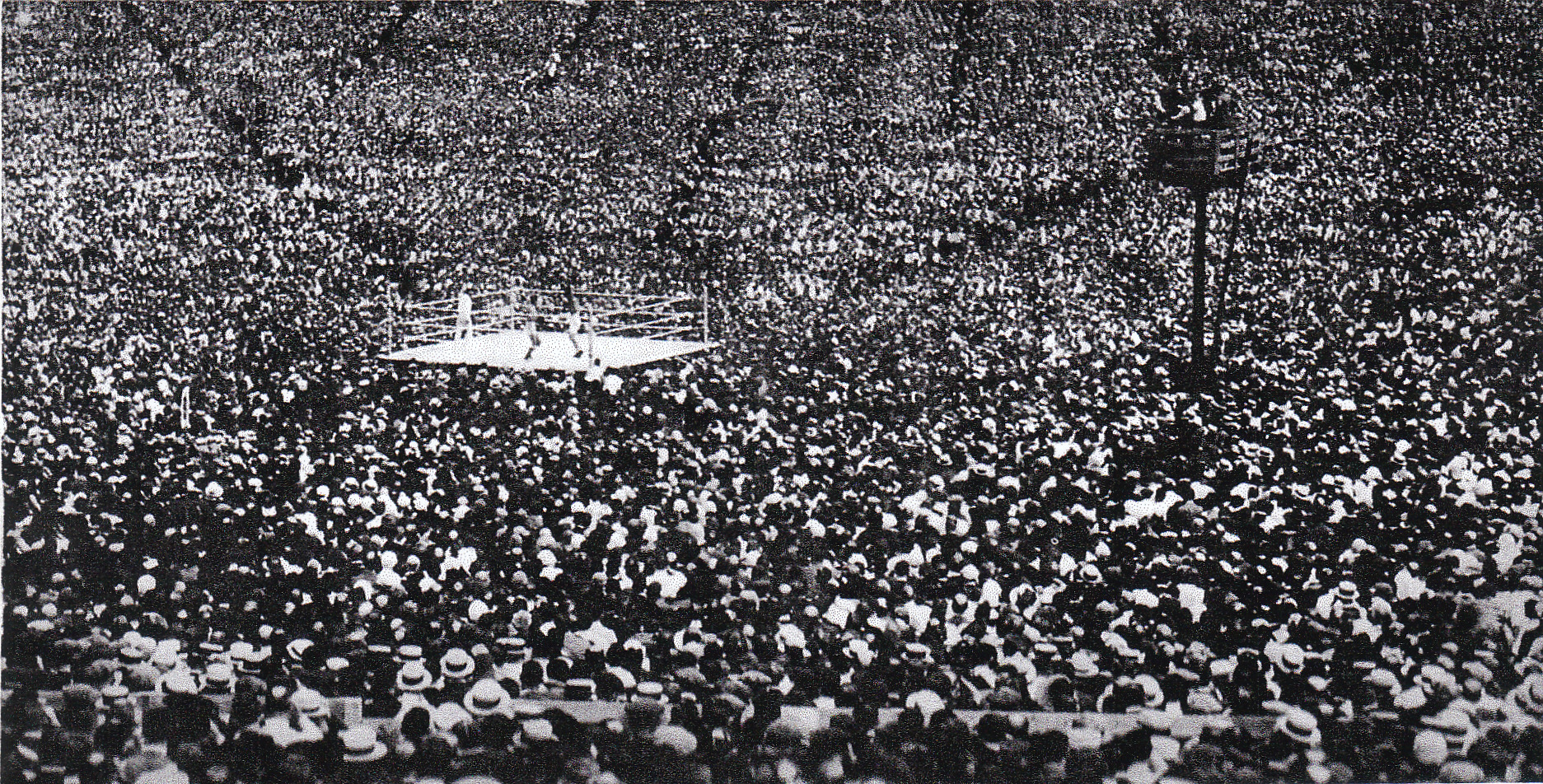
boxing2

From Jonathan Coe’s website at http://www.openheavensblog.com/. Thank you gracious brother! (I’m so glad you are my friend.)

As I look over the last two posts on the blessings of a long battle, I’m reminded of what the Apostle Paul said to the Corinthians about the importance of not being ignorant concerning the schemes of Satan (II Corinthians 2:11). After reading those posts, I realized a word of balance was needed in discussing the relationship of formulaic Christianity to spiritual practices lest the devil distort the truth to his advantage.

Both posts encouraged the believer to move beyond canned formulas to a restful trust in and radical dependence on Christ. A common formula for someone who finds themselves in a protracted struggle with sin, weakness, or some thorn in the flesh is “Read the Bible, pray, and attend church and that will solve your problem.”

These are wonderful spiritual practices but the problem is that people begin to trust in the formula more than the Person who can heal their inner leper. The formula can become a religious idol.

The biblical view of spiritual practices (prayer, Scripture study, church attendance, fellowship, fasting, meditation, and the sacraments) is that they are both avenues of renewal and bridges to intimacy with the Living God. They are sacramental; they are a means of grace.

Christ is the Vine; we are the branches. One of the primary ways that the branches stay connected to the Vine is through spiritual practices. That is how we abide in him and apart from abiding in him, we can do nothing.

This next part is crucial, and, if you only get one thing out of this post, this is it: when the believer gets frustrated enough to forsake impotent formulas, the devil’s primary agenda then is to get that person to forsake authentic, life–giving spiritual practices too.

That’s why the Christian should ask for wisdom every day so that he or she can tell the difference between the two. Satan is more than happy to allow us to forsake the false as long as we don’t replace it with the real.

It’s part of the human condition that, in our anger and frustration, we often throw out the wheat with the chaff. And a person who is involved in a long, difficult battle is going to need all the grace–filled spiritual practices they have time for!

I’m convinced that when the devil sees a believer, who is involved in a long battle, leave anemic formulas and begin to become engaged in regular, soul–nourishing spiritual practices, it fills him with uncontrollable rage. He will come to that Christian with many false voices in an effort to separate the branch from the Vine. Here’s a small sampling:

  • “ You tried this religious stuff before and you still have the same addiction/weakness/problem. What makes you think it’s going to work this time?”
  • “If you have your quiet time with God in the morning when you don’t feel like it, you’re being a phony. You should only do it when you feel like it.”
  • “If your quiet time with God becomes a regular thing, it will become a dead religious ritual. You don’t want to become legalistic. Keep things spontaneous. Just do it when your heart moves you to do it.”
  • “Regular spiritual practices aren’t the real you. You can find God in every day life without them in a way that fits your personality.”
  • “You’re a person of action not of contemplation. You get things done without all this navel–gazing and spiritual stuff.”

These are just a few plays out of the devil’s playbook. May God give us the discernment to recognize his voice and the wisdom to reject his counsel.

Reposted from http://www.openheavensblog.com/. Thank you Jonathan for your great teaching.