Make the Decision to Be Weak


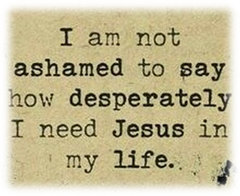
Our society has pretty much embraced the American cultural icon of the cowboy.  We revere those who ride alone and hard. We are rugged individualists and hardened men making our own way.  Our society reflects this in subdued ways.  No matter what happens, we are fiercely free and independent.  We are ‘desperadoes’–we do whatever we think is best.

John Wayne, the ‘Alamo,’ and the biker with his Harley-Davidson on Route 66 have been our inspiration.  Each are distinctly heroic and carry our hopes and dreams.

We must understand that the Bible is not an American book.

It belongs to every tribe, race, and nation. 

A cowboy did not die for our sins (which are countless).  The way of discipleship does not take us through Luckenbach, Texas. We’re not desperados. We are Jesus’ disciples.

His Words to us are bold and entirely challenging in an amazingly fresh and different direction.  We are told to wash feet, to repeatedly turn the other cheek, to surrender all our rights, and then take the lowest place there is in every situation.

Our lives truly begin when we come under the Lordship of Jesus Christ.

Humility is to become the way we think and how we act, we have become slaves to righteousness.  Our vaunted independence has been toppled. This selfish crown has slipped. My willfulness still wants to stand instead of kneeling. We discover this has been the truth all along.  We have never ever been in control. 

He has been the King since before time, and will always be, for an eternity.

“Many Christians have what we might call a “cultural holiness”. They adapt to the character and behavior pattern of Christians around them. As the Christian culture around them is more or less holy, so these Christians are more or less holy. But God has not called us to be like those around us.

He has called us to be like Himself. Holiness is nothing less than conformity to the character of God”.

Jerry Bridges

Our churches often struggle over our personal issues of pride and stubbornness. 

I pose the following questions.  Are we honestly in a condition of being weak?  Can you serve with a basin and towel?  Is your heart that of a child? Do we see the world through the ‘lens’ of a soft and broken spirit?

I write these things surveying my own life. 

Self will and my hard heart fit ‘hand-and-glove’ with being that desperado.  I ride alone, making my own way, and I don’t make any disciples. I jettison my cross— my cross of discipleship.  I serve no one, unless it suits me.  Am I His disciple, or am I a man of my own?  Is He my Lord, or have I decided to claim that right for myself?

I only hope I have spoken the truth today. Forgive me if I offended.

“Lord, I am willing to receive what You give, to lack what You withhold, to relinquish what You take, to suffer what You inflict, to be what You require.”  Amen.


How Well Do You Suffer?

John Newton, Exodus 3:2

It seems that pain is the best teacher. We learn the hard way to come under God’s direction, and we finally learn to love others. Maybe it’s our pain that communicates His grace–is this how God changes us?

After all, the crushed grapes make the wine.

C.S. Lewis once made the comment, (and it’s worth thinking about), that “experience is the most brutal of teachers. But you learn, my God do you learn.” We face many obstacles, run into quite a few dead ends, and along the way we learn that when we really hurt, we start to teach something that the Church desperately needs.

My discipleship has been chock full of challenges. I’ve lost the use of my right arm, I have struggled with depression. I had a brain tumor removed, and must walk with a cane. I struggle with intense fatigue. I now have severe issues with pain. (I no longer pastor a church or teach in a Bible college.)

In November 1999, my wife and I lost a child.

I have prayed earnestly for a complete healing and had others pray for me. It’s funny, but all of this has happened after I became a Christian disciple! I often ask myself why? Why did God allow this to happen?

What did I do to deserve all of this?

Paul and Barnabas came into an interesting place (we can read about it in Acts 14.)

“Strengthening the souls of the disciples, encouraging them to continue in the faith, and saying that through many tribulations we must enter the kingdom of God.”

Acts 14:22, ESV

Some Bible teachers we listen to on the internet choose to minimize suffering, and of course we adopt a lot of our own theology to factor out pain and difficulty. But is this what the Bible teaches? If we read Hebrews 11, we find that life could be pretty grim for those with faith in God.

“Women received back their dead, raised to life again. There were others who were tortured, refusing to be released so that they might gain an even better resurrection. 36 Some faced jeers and flogging, and even chains and imprisonment. 

37 They were put to death by stoning; they were sawed in two; they were killed by the sword. They went about in sheepskins and goatskins, destitute, persecuted and mistreated— 38 the world was not worthy of them. They wandered in deserts and mountains, living in caves and in holes in the ground.”

Why does it have to be so hard for us as believers in Jesus?

Common sense suggests that things should get easier for those who believe. We somehow think that God rewards faith with instant glory. But I painfully discovered that my discipleship, my faith, doesn’t mean some wonderful existence on this planet. It seems that pain becomes the way we grow up and mature in Him.

I honestly believe, after over 40 years of following Jesus, that suffering is part of God’s plan for me.

It has never been easy. It never was. And I wish it was different.

My God, I wish it was different.

No matter what you are going through, remember that God always loves you. He has chosen us to navigate us through much difficulty. We must however, convert these painful things by our faith in Him. And only our faith does this.

And we know that in all things God works for the good of those who love him, who have been called according to his purpose.”

Romans 8:28

We must learn to regard people less in light of what they do or omit to do, and more in the light of what they suffer.

Dietrich Bonhoeffer

The Extraordinary Breath of Jesus

“Jesus said to them again, “Peace be with you. As the Father has sent me, I also send you.” 22 After saying this, he breathed on them and said, “Receive the Holy Spirit. 23 If you forgive the sins of any, they are forgiven them; if you retain the sins of any, they are retained.”

John 20:21-23 (19-23)

This is the second “peace be with you” in this passage. So why the duplication of this peace proclamation? The disciples are sequestered and scared in the upper room (v. 19; and Luke 24:36. Having peace is being emphasized–the disciples were afraid of the Pharisees, but they also were undone by Jesus’ surprise visit.

Peace was definitely a precious commodity for them.

Jesus gives his disciples a mission to do, and they must be as ‘familiar’ with Jesus just as Jesus is with God. The disciples had followed him for three years–seeing incredible miracles, and hearing profound teaching, they’re ready, they just need power.

In track and field, there’s a relay race where a baton is passed from runner to runner, and maybe that’s how it’s working here? We see the same idea in John 17:18.

The baton has now been passed to the disciples.

The breath of the risen Jesus is necessary (and yes, he’s breathing.) What went down here, I don’t know exactly. But Jesus recognizes that his 12 followers will need this to do his work. Also, we might consider Adam in Genesis 2:7 where God’s breath brought him to life, which is pretty awesome when you think of the parallels.

The Holy Spirit energizes these men to do this new work.

The disciples were pretty much observers, but now they are to take up the ‘mantle’ of Jesus’ work. This is a definite duplication, which connects with the idea of one seed producing many others (John 12:24.) That’s how the Kingdom will come to people.

Verse 23 intrigues me. It seems that our life comes from the breath of Jesus. And it’s the Holy Spirit that gives both power and the authority that’s needed to function like Jesus. We now have the ability to pronounce forgiveness to the new believer, and yet that doesn’t seem a function of the Church today.

I wonder why this is so?

This entire passage as a doozy. It clearly declares the Churches new role as we follow in his footsteps. Disciples are to do exactly what Jesus does–with his breath and authority–filled with the Holy Spirit.

If we neglect these things (it seems anyway) we’re going to fall flat on our face.

“The work of Jesus for His disciples on resurrection Sunday gives an ongoing pattern for His work among His people. Jesus wants to continue this fourfold ministry of assurancemission, the Holy Spirit and authority to His people today.”

From David Guzik’s website

Deeply Flawed–A Jar of Clay

Elijah was suicidal. Job wished he had never been born. David understood deep depression. Moses was anxious. Hannah was barren. Jonah was angry. Paul was all alone in a prison cell.

And actually, this is only a brief list. The Bible is loaded with flawed people who stumbled trying to be faithful. God uses imperfect people, because there really isn’t any other kind to be found.

Noah got spectacularly drunk. Abraham lied. Jacob repeatedly deceived others. Rahab was a whore. Samson lusted. David committed adultery and was a murderer. Peter denied Christ.

And there were others.

Why does God favor and love people who are so disturbed? Honestly, none of us measure up. It seems He uses the weak to carry out a plan and a purpose of redeeming others, and establishing a Kingdom. He takes messes and gives them His message.

He is Love– 100% of the time, and He loves you, and He loves me, He loves the world. (John 3:16.)

Messed up people of faith become instruments and vessels of grace to other messed up people. We carry a treasure that is not ours. Sometimes it takes years to see this. I hope you can.

And nothing is ever really wasted. Our mistakes (sins) become useful things to Him. For example, David’s sin would be transformed into Psalm 51 and 32. Yes, his disobedience had consequences, I won’t dispute that, but something wonderful also came when he repented.

Yes, you need to repent. But when sin is destroying you, it does seem logical.

The first two verses of Psalm 51 can bring tears when we finally understand their profound beauty, for they came out of David’s darkness:

Psalm 53:1-2, ESV

For thousands of years people of real faith have come and drawn beauty and grace from this song. David knew his sin was real, and incredible pain emerged from that, but the Psalm did also.

Please do not try to hide or excuse your sin, it always has the most awful consequences.

Broken people can be forgiven, redeemed and used. Sometimes I think God gets special enjoyment out of picking the worst and patiently loving us to wholeness. If you really know Him, and know your flaws, you’re well on your way of usefulness in His kingdom.

2 Corinthians 4:7