
It is often quite difficult for people to forgive themself from their past sins. We have a tendency to hold ourselves to a stricter, more accountable level then other people.
I usually don’t have a big problem forgiving others. But for many people they will struggle through their entire Christian walk with both self-forgiveness and its cousin, self-acceptance.
Self-forgiveness is:
* Accepting yourself as a human who has faults and makes mistakes.
* Letting go of self-anger for your past failures, errors and mistakes.
* No longer needing penance, sorrow and regret over a grievous, self-inflicted, personal offense.
* The act of self-love after you have admitted your failure, mistake or misdeed.
* The spiritual self healing of your heart by calming self-rejection, quieting the sense of failure and lightening the burden of guilt.
* The act of letting go of the need to work so hard to make up for your past offenses.
Negative consequences of the absence of self-forgiveness
In the absence of self-forgiveness, you run the risk of:
* Unresolved hurt, pain and suffering from self-destructive behaviors.
* Unresolved guilt and remorse for self-inflicted offenses.
* Chronically seeking revenge and paybacks toward yourself.
* Being caught up in unresolved self-anger, self-hatred and self-blaming.
* Defensive and distant behavior with others.
* Pessimism, negativity and non-growth oriented behavior.
* Having a festering wound that never allows the revitalization of self-healing.
* Fear over making new mistakes or of having the old mistakes revealed.
* Being overwhelmed by fear of failure, fear of rejection, fear of non-approval, low self-esteem and low self-worth.
Signs of the absence of self-forgiveness. Lack of self-forgiveness can result in:
* A loss of love for yourself.
* Indifference toward yourself and your needs.
* An emotional vacuum in which little or no emotions are shown or shared.
* Chronic attacks or angry outbursts against self.
* Disrespectful treatment of self.
* Self-destructive behaviors.
* Self-pitying.
* Chronic recalling and reminding of past failures, mistakes, errors and offenses.
* Suspicions about others’ motives, behaviors, attitudes and beliefs when they are accepting of you.
* Chronic depression.
* Chronic hostility, sarcasm and cynicism.
* Self name-calling, belittling and self-demeaning behaviors.
* Unwillingness to change and/or unwillingness to seek the help necessary to change.
* Resistance to doing what is necessary to heal within and recover from low self-esteem.
Irrational thinking preventing self-forgiveness
* I hurt myself so much; how can I ever expect to be forgiven for that?
* No one deserved the treatment I dished out, and I do not believe that forgiveness is deserved in this situation.
* I am sick over what I did; how can I ever forgive myself?
* I must be inherently evil, and I am despicable. No forgiveness will ever change that.
* I am vicious and cruel, and I always need to be on guard because of that; so why try to forgive what I have done?
* It is a sign of weakness or softness to forgive myself. I must always keep my guard up so as never to repeat my wrongdoings.
* There are some things I can never forgive myself for.
* Only God can forgive me, though at times I don’t believe He can for what I have done.
* What has happened in my life is God’s seeking revenge for all the evil I have done in the past.
* I have done too much for which I can never be forgiven.
* I am just seeking my forgiveness so that I can come back and hurt myself again.
* I do not deserve any self-kindness, self-compassion or self-forgiveness for what I have done to myself or others; I’ll see to it that I am never able to forget it!
* All people who do wrong deserve the worst that life has to dish out.
* I resent myself for hurting myself or others. It is better for me to be hidden behind my wall so I don’t hurt anybody again.
* If I could treat myself or others that way, then I am undeserving of being forgiven, loved or cared for.
New behaviors needed to create self-forgiveness. In order to forgive yourself you need to practice:
* Letting go of past hurt and pain.
* Trusting in God’s goodness. Trusting in the goodness and mercy of God to take over the burden for you.
* Letting go and letting the Holy Spirit lead you during a hurtful time.
* Believing in the infinite justice and wisdom of the Lord * Letting go of fears for the future.
* Allowing yourself to be vulnerable to growth.
* Taking a risk.
* Letting go of self-hostility, resentment and self-destructive behaviors.
* Working out your self-anger.
* Overlooking slight relapses or steps backward and getting back on the wagon of recovery immediately.
* Developing a personal spirituality.
* Developing an openness to the belief that you can change.
* Developing trust in yourself.
* Open, honest and assertive communication with yourself concerning hurts, pains and offenses experienced.
* Identifying and replacing the irrational beliefs that block your ability to forgive yourself.
Two Steps to Develop Self-forgiveness.
Step 1: In order to increase your ability to forgive yourself, you need to recognize what this behavior involves. Answer the following questions.
A. What do you mean by “self-forgiveness”?
B. Have you ever forgiven yourself before? How did it feel?
C. Have you ever brought up something from the past to remind you how you hurt yourself or others? How did that make you feel?
D. What role do you feel self-forgiveness has in your growing down? How could you improve?
E. How has the absence of forgiving yourself affected your current emotional stability?
F. What are the signs of the absence of self-forgiveness in your relationship with your family of origin, current family, significant others, spouse, children, parents, relatives, friends or co-workers? With whom do you experience a wall or barrier behind which you hide your past real or perceived failures, mistakes, errors or misdeeds? What feedback do you get about this wall you have been hiding behind?
G. What beliefs block your ability to forgive yourself? What would be necessary to change these beliefs?
H. What new behaviors do you need to develop in order to increase your ability to forgive yourself?
I. What role does the existence of spirituality play in your ability to forgive yourself? The lack of it?
J. For what do you need to forgive yourself?
Step 2: Now that you have a better picture of what is involved in self-forgiveness, you are ready to work on a specific past failure, mistake, error or misdeed.
A. List a failure, mistake, error, misdeed or event for which you are unable to forgive yourself.
B. How much energy, creativity, problem solving capability and focus on growth is sapped from you whenever you recall this past hurt?
C. What feelings come to mind as you recall this past hurt?
D. How would you describe your role in this past event? In what ways were you the victim, perpetrator, enabler, martyr, bystander, instigator, target, scapegoat, distracter, peacemaker, people pleaser or rescuer?
E. Why do you feel strongly over what happened and how you treated yourself or others?
F. What did this event do to your self-esteem and self-worth?
G. Who was responsible for your reaction to the incident?
H. Who was responsible for your feelings about the incident?
I. Who was responsible for your inability to forgive yourself?
J. How can you forgive yourself?
K. How can you put this incident behind you?
L. How can you avoid being so hurt when something like this happens again?
ybic, Bryan
- Forgiveness (crossquotes.org)


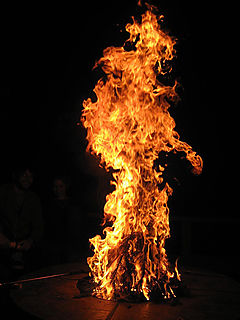 One morning in January 1984 I set myself on fire. I was in my cabin up on the ridge and I was trying to build a fire. Alaska can be a cold place. I had also started a coffee pot and because it was so cold I opened up the oven door a couple of inches to get some heat.




 Broken Believers