Defining Depression

There seems to be three distinct varieties of depression. 

I’ve thought about this for some time now, and I’m coming to the point where I want to share.

1)  There is a depression that comes from guilt

There’s a corrosive place that eats us up, it’s where we sin, and continue to sin.  We fully understand our guilt and our sin.  Sin, will always will stain us.  Banks will often place “dye packets” into stacks of money.  A robber grabs the money, only to find that something explodes on him.  He then, is marked indelibly.  There isn’t anything he can do; he has been stained.  The following verses explain this dynamic.

“When I kept things to myself,
       I felt weak deep inside me.
       I moaned all day long.
4 Day and night you punished me.
My strength was gone as in the summer heat. 

5 Then I confessed my sins to you
       and didn’t hide my guilt.
    I said, “I will confess my sins to the Lord,”
       and you forgave my guilt. “

Psalm 32, NCV

2)  There is a depression that is organic. 

It simply resides in us as if it were eye color, or a talent to play music.  This type of depression is hard wired in us.  It is just a natural inclination, or propensity toward melancholy.  We typically gravitate toward a negative outlook.  We are not ‘a cheery lot.’  The glass is always half empty, and that is our certain perspective.

Some have diabetes, and others are deaf.  We have been saddled with certain issues.  We did nothing to warrant such challenges.  They are just the part and parcel of the human condition.  We need to see our depression as sort of diabetes of the emotional world.  Very often we will need to take meds to restore our sense of balance and wholeness. Sometimes all we need is to rest, as fatigue can become a serious issue.

3)  There is a depression that is reactionary. 

We find ourselves responding to trials and difficulties, and they just overwhelm us.  Persecution and attacks slam into us, and our reaction is to hide, or shut down.  Paul had to endure major attacks. This ‘depression’ is found in situations and issues. It can come about by Satan or ungodly authorities.

We will respond to the death of someone close, loss of a job, bankruptcy or whatever–you can fill in the blank:_________________________. But we must remember, if there is a way in, there must be a way out. If we can only put some trust in God, we can believe he will lead us out. Eccl. 3:1-8 describes “seasons” that every person goes through. Perhaps, this is just a time?

“So we do not give up. Our physical body is becoming older and weaker, but our spirit inside us is made new every day.17 We have small troubles for a while now, but they are helping us gain an eternal glory that is much greater than the troubles.18 We set our eyes not on what we see but on what we cannot see. What we see will last only a short time, but what we cannot see will last forever.”

2 Cor. 4:16, 18, NCV

Summary

As we look at ourselves, we can determine which of the three kinds of depression that we’re facing.  It seems we can have all three working in our lives.  But it’s very helpful to find our particular variety, or our certain inclination.   Seldom will we identify with just one ‘type’, as all three can be working at once. Understanding the three will hopefully give us a definite advantage.

We can ask ourselves: Is this depression coming from sin or guilt?  Is this something organic or ‘hardwired’ in me?  Could it be that I’m reacting to the evil that is coming at me so fast?  Distinguishing between these three can be very useful, and direct us as we build our discipleship.


The Deep Pit

“I waited patiently for the Lord to help me,
    and he turned to me and heard my cry.
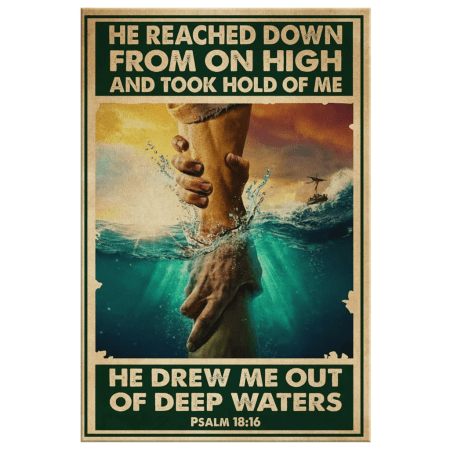
He lifted me out of the pit of despair,
    out of the mud and the mire.
He set my feet on solid ground
    and steadied me as I walked along.”

3″He has given me a new song to sing,
    a hymn of praise to our God.
Many will see what he has done and be amazed.
    They will put their trust in the Lord.”

Psalms 40:1-3, NLT

Psalm 40 is jam packed with great and wonderful truth. It contains freedom for the Christian– a way out for the broken believer. We do well when we use it, and that’s what it’s there for. The deep pit has been used over many centuries as the way God teaches us to sing certain songs. But that doesn’t make it easier, does it?

Verse 1

I waited patiently for the Lord to help me, and he turned to me and heard my cry.

Waiting is a critical word, it should not be regarded as trivial. In our daily walk we must be patiently seeking the Lord, that comes first. Admitting you need help is the first step. And guess what? You need help. 😁

The word ‘wait’ is special, it’s kawvah in Hebrew. It can mean ‘to bind together by twisting.‘ It can be used with the idea of braiding strands of rope together. It is never a passive act that just happens. Waiting on God is to be done with intentional purpose.

Remember that the Lord is not some distant deity on a hill far away.

He’s not hiding from you. It’s really quite the opposite.

He is closer to you than you think. He is responsive and aware. He hears your cries and wants to act; He is not deaf, but our patience is critical. Waiting on Him is crucial to being free. We must bind and twist our hearts and live our life to His desires.

Verse 2

He lifted me out of the pit of despair, out of the mud and the mire. He set my feet on solid ground and steadied me as I walked along.

The seeable terrain can be awful, with muddy paths and mucky pits. Things that pull you down and suck you in. They’ll trap the traveler. But the Holy Spirit is quite able to lift us out. He picks us up and secures us. He uses the rope of God’s Word.

He is way more willing to save us, than we are to being saved.

Solid ground is where we are meant to be. It’s become a place of firm standing and secure footing. He makes us steady and He keeps us safe. The Holy Spirit now has intimate care over your soul.

Verse 3-4

“He has given me a new song to sing, a hymn of praise to our God.

Many will see what he has done and be amazed. They will put their trust in the Lord.

Some of the greatest songs are the ones that come from those just delivered from the pit.

These are ‘pit songs,’ offered to God from sincere and true hearts that have once been trapped. There’s something solid heard from the hearts of those redeemed from disaster.

These songs no longer sound religious or contrived.

“YOU CAN SEE GOD FROM ANYWHERE IF YOUR MIND IS SET TO LOVE AND OBEY HIM.”

A.W. Tozer

From our deepest pits come our greatest praises.

There is a passionate quality that saturates these ‘pit praises’ that is highly treasured by God, and esteemed and valued by the Church– a sense of authenticity starts to be finally heard. We can finally start to see that our pits become ‘launching pads’ of true songs of deliverance.

The Blessings of an Illness

The Bible is a book of miraculous healing.

Jesus Christ performed many of them. He taught His disciples, and those who would follow, to heal the sick and afflicted. This is a real part of the Gospel, and it’s the definite work of his Kingdom.

I’ve personally seen legs lengthened and fevers ‘broken’ on several occasions. Obviously it changes life for the sick person, certainly! But it can also boost the faith of those who witness these miracles. I truly believe the Holy Spirit still works these wonders today. We must let him do these things. That isn’t an option.

Somehow though, there is the ‘understanding’ that in order to be healed you must have sufficient faith. Those who are not healed are the people who have a weak faith, they’re missing out somehow on a miracle because their faith didn’t measure up. I wonder though, how much faith was needed to wash in the pool of Siloam in John 5? But really, all that is needed is a mustard seed (Matthew 17:20).

Faith is an active component to many who were healed in Scripture. Jesus said to the blind man, “Receive your sight; your faith has healed you” (Luke 18:42). It happened!

Yet we read of many believers in Hebrews 11 who endured sickness and ill-treatment. We read of vicious brutality and persecution of these “people with faith.”

Not everyone who is sick will receive a physical healing.

For believers today who suffer physically or mentally, we may question our faith. (Especially when the healing evangelist comes to town). After 2-3 tries we settle back on our “deficient’ faith feeling a bit miserable. I honestly don’t think that’s what the Lord wants.

It seems to me that the real issue is not so much a weak faith, but holding on to your faith when you are not healed.

I hear talk about having faith to be healed–but what about the faith that’s needed to be sick?

Why do we suffer from illness? I suspect that for many believers sickness is really there to bring glory to God. Holding onto faith in the midst of pain often encourages those who witness it. I believe that was Paul’s experience (2 Cor. 12:7-10).

Oh dear one, continue to seek healing, (James 5:14).

The Spirit does these things today. But if you’re left in your illness, trust in Him still. All your ways end up in His nail-scarred hands of our Lord Jesus. But remember, when he greets you in heaven, you will know him by the scars.

“The moment an ill can be patiently handled, it is disarmed of its poison, though not of its pain.”

–Henry Ward Beecher

Loving Others (Just Like Jesus Loves Us)


““A new command I give you: Love one another. As I have loved you, so you must love one another. By this everyone will know that you are my disciples, if you love one another.””

– John 13:34-35

What is “love” like?  How do we consistently understand love when we fall short of it all the time?

We understand love by coming to know Jesus.  He not only explains it, but He also exhibits it–He puts it out in the public eye for all to see.  His explanation of what love is will mean a cruel death in order to save us.  When Jesus dies, I am saved.  My salvation has absolutely nothing to do with me– and everything to do with Him, and all that He has done.

Jesus helps us to see others.  He makes a definitive statement, that we are to love others.  We are to use what He has done for me, as an example.  What Jesus did is the pattern, the prototype.  We are to be the photostat or mimeograph.  As believers we are to be captured and drawn into this approach.

We are to find someone, and then, in some sense, ‘die’ for them. That is the way God’s love is.

That very strong word, must in verse 34 cannot escape our attention.  It implies a deep and a very definite commitment to doing that is beyond us.  We ‘must’ connect and receive all that moves through our life.  We love the unlovely, and this is irrational. God says that people are worth crucifixion. We’re the criminals, and the judge has sentenced us. And then He Himself has decided to pay our penalty. This is ‘agape’ love.

We must love accurately. We should love the way He loves us.  We cannot do anything less. 

But the love of Jesus is tracking each wanderer.  He is working to connect with every person on this planet.  No one escapes His view, or His love.  Everyone who belongs to Him, is required to know this.  Our Lord is definitely not going to move if there are still “seekers” still out there.  He leaves no one behind.

Loving others will require a significant broadening of the way we see things.  We purposefully lift up Jesus because He lifted us.  We exalt Him because we have discovered we are so pitiful.  We must be convinced, that His way, is the way of the cross.

We must love more accurately —the same way He loves us.  We cannot do anything less.  For many of us, love is just a concept–a way of feeling ‘warm and fuzzy’ inside.  But it is far more than feeling nice thoughts. It is all about “the extra mile” and we honestly can’t make that trip if we haven’t been willing to die ourselves.