Give thanks to the Lord, for he is good! His faithful love endures forever. 2 Who can list the glorious miracles of the Lord? Who can ever praise him enough? 3 There is joy for those who deal justly with others and always do what is right.
4 Remember me, Lord, when you show favor to your people; come near and rescue me. 5 Let me share in the prosperity of your chosen ones. Let me rejoice in the joy of your people; let me praise you with those who are your heritage.
These five verses cap a “Psalm of Rebellion,” tragically found in part two of this psalm (vv. 6-46.) This work dates to ‘post-exile’ times, and Daniel is believed to have written it. Nehemiah himself quotes from it as he intercedes for the nation upon Israel’s return from captivity.
But these five verses are very different from the rest of the Psalm. They ably serve as a positive introduction to some pretty depressing stuff. I like these first five, they carry a refreshing quality about them. I read them and I’m happy I did.
V. 1,Thanksgiving is to be a normal part of the believer’s life. Imagine little Johnny. He is celebrating his sixth birthday today. His uncle has brought over a gift—a bright red tricycle, with ribbons out of the handlebars! Johnny is estatic, he can’t believe it. Mom steps in and says to him, “What do you say, Johnny?” Johnny thinks. “Thank you, Uncle Ed. This is what I’ve wanted my whole life.”
If the truth be told, Johnny’s response to his uncle’s perfect gift is much like the believer’s response to God. “What do you say, Johnny?” Johnny’s mom would say— and that is what the little guy did. We are to also give thanks. To do is an easy thing, and perhaps does more for us than our Father in heaven.
V.2, “Who can ever praise him enough?” Excessive displays of affection are ‘nothing to roll your eyes at.’ Some wag defined a fanatic as “someone who loves Jesus more than youdo.”
V. 3,is an observation by Daniel about the joy available to us if we will only work-out our issues of obedience. This verse might seem out of place, but I assure you its not. It fits in well with vv. 6-46.
V. 4,“Remember me, Lord,” contains the desire to be included in the grace that will follow. We should let our heavenly Father know that we want to be part of what He is doing.
V. 5, “Let me” is repeated three times. This phrase is critical to the believer’s walk; it is a statement of submission combined with desire. The writer is asking ‘permission’ from God to become part of the aspects of His kingdom. Matthew 7 gives us the principle that God is looking for. So ask.
8 “For everyone who asks, receives. Everyone who seeks, finds. And to everyone who knocks, the door will be opened.”
Our lives can get quite complicated. This goes for our Christian walk as well. It seems what is simple is what is lacking, and we entertain a bedlam of confused priorities and misguided principles. It seems a wonder that we are still walking with Jesus at all. The clear wisdom of the first commandment is as true as it was when it was spoken:
“You must not have any other god but me.”
Exodus 20:3, NLT
Things go quickly awry when we violate this. We get lost in anxiety, worry, ego, and envy when we seek other things before we seek the Lord. The Church in Ephesus was a blessed church. Paul seems to set them apart in his dealings and pastoral care. The letter to the Ephesians is ‘the crown jewel’ of the entire New Testament. Revelation 2 are Jesus’ words to his special ones:
“I know all the things you do. I have seen your hard work and your patient endurance. I know you don’t tolerate evil people. You have examined the claims of those who say they are apostles but are not. You have discovered they are liars.3 You have patiently suffered for me without quitting.”
4 “But I have this complaint against you. You don’t love me or each other as you did at first!5 Look how far you have fallen! Turn back to me and do the works you did at first. If you don’t repent, I will come and remove your lampstand from its place among the churches.”
Revelations 2:2-5
There were two sisters. Martha and Mary. Martha was the busy one, she busied herself with making a special dinner for Jesus. Mary, on the other hand, sat at Jesus’ feet and hung on every word. It so exasperated Martha that she brought her complaint to Jesus. (You can read this in Luke 10).
” But the Lord said to her, “My dear Martha, you are worried and upset over all these details!42 There is only one thing worth being concerned about. Mary has discovered it, and it will not be taken away from her.”
Luke 10:41
We do well if we keep this in our minds and our hearts.
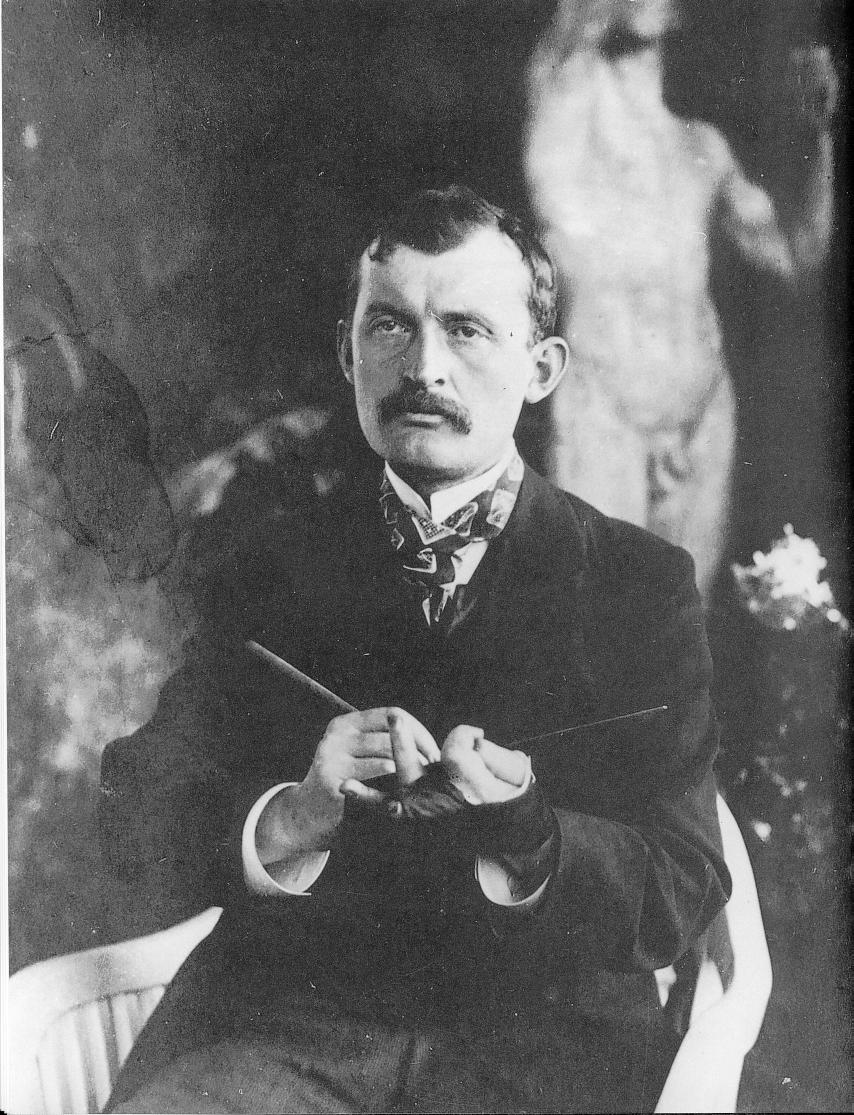
December 2, 1863 – January 23, 1944, he was a Norwegian painter. He is regarded as a Symbolist and a forerunner of expressionism. He focused on themes of fear, anxiety, melancholy, and death. He did not believe in heaven, or other Christian themes or doctrines, as far as I know.
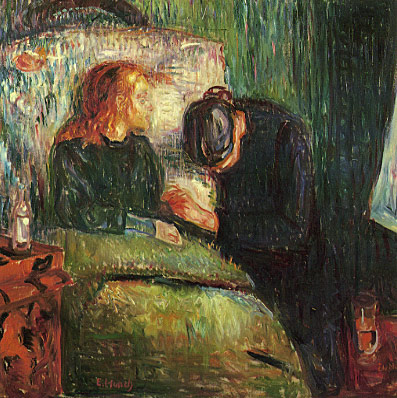
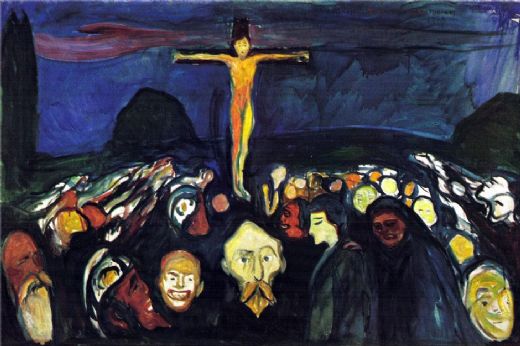
My intention is to reintroduce you to an artist that I highly esteem. The challenge I suppose is to understand the issues that Munch discovers in his work. He clearly taps into the ‘angst’ of the modern man, and what he does perpetuates a mindset for our generation.
Obviously these paintings are just an introduction, and I understand that they are selective. I have refrained from any kind of interpretation, other than laying down a general principle– to Munch, color is everything.
Munch was probably not a cheery person. He essentially was driven by anxiety through his whole life. It seems that he could be very ambitious. His classic work was “The Scream” which he made several versions to sell. He used different mediums to do this– tempera, lithograph and pastel. Interestingly, “The Scream” is a favorite target for art thefts. It captures the minds of every modern thinker.
Within our culture, “The Scream” is iconic. Warhol, Gary Larson, Dr. Who and even “The Simpsons” have cashed in on a parody of it.
Quotes
“I painted the picture, and in the colors the rhythm of the music quivers. I painted the colors I saw.”
“Painting picture by picture, I followed the impressions my eye took in at heightened moments. I painted only memories, adding nothing, no details that I did not see. Hence the simplicity of the paintings, their emptiness.”
“For as long as I can remember I have suffered from a deep feeling of anxiety which I have tried to express in my art.”
“Disease, insanity, and death were the angels that attended my cradle, and since then have followed me throughout my life.”










 Broken Believers