Learning to Walk Again

Hosea 11:3

Early in my walk, over 40 years ago, I concluded that I would be able to acquire all the knowledge that I could ever want.  I was on the short track, going up of course.  It was a glorious thing, it took me some time to realize I was very ignorant of so much.

The Bible communicates truth, not always facts.

As I age, I start to understand that things are much more enigmatic and unfathomable than I ever dreamed they would be.  It is a step of faith to accept the truth when there are still a lot of things that are still vague. 

Take the mystery of healing for example:

“You say you have faith to be healed, but what about the faith to be sick?”

Mike Mason

That’s a penetrating question, indeed.  “Why are some healed, and others are not?  Why do I have eternal life, and my friend does not?  Why should AIDS sweep through poor African villages when I live in a very comfortable suburb in the US?” 

I have many other questions like this.

And I’m not making a whole lot of headway here.  Reasons and facts are not there. Life becomes more mysterious and inscrutable.  But there is a word we must know–it is the word “trust.”  It is a faith that assists us through the landscape of challenging questions.

As a sometimes struggling, mentally ill Christian, many (even in my own church) create more questions for me.  “Therapists, psychiatrists, and daily medications are really good, but do you really need them?” or  “Did God create in you the need for lithium and Zoloft?” and ” How can you follow Jesus when you have all of these depression issues?”

And here’s a humdinger that stings, “Where is your joy?”

But it is precisely these issues that help me be a disciple. Someone who must trust.

I’ve been slowly learning you see.  And my weaknesses are becoming my strengths.  They lead me to exercise my feeble faith.  I trust in Jesus; my faith helps me trust. I find it interesting to note that the Book of Psalms, for the most part, was written by “a broken believer” like David– a king and (also) a rascal.

These nebulous areas have only increased. 

And ironically my trust has only grown.  I have more questions than ever before, but my faith in him only gets stronger. I suppose I will never, ever be a gleefully upbeat, cheery person.  But I am learning “to trust and obey, there is no other way…” 

He himself has taken up the chore of teaching me to walk again. But just one thing, He wants me to keep trusting.

Psalm 131:1-2

A Cheerful Heart

 “A happy heart is good medicine and a cheerful mind works healing, but a broken spirit dries up the bones.”

Proverbs 17:22, Amplified

“Laughter is the closest thing to the grace of God.”

Karl Barth

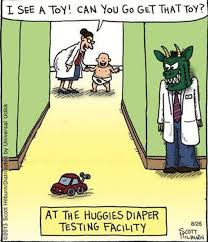
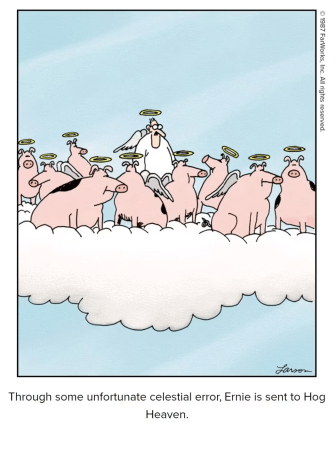
I hope these bring a smile to your face. Often the best medicine is laughter and I hope these help you today.

Love, Bryan

Making a List

This is a scary list. We’re told repeatedly that love is the evidence that disciples are to be identified. Love is the blood of the body. It’s that necessary. It’s critical. We’re called to love (one another) that proves we’re real and authentic.

Some of us are handicapped, either mentally or physically. Our issues are truly formidable, very few understand.

I pretty much live in physical pain now. I struggle with depression. I have some battles that few understand. And I get terribly self-absorbed by all of it. If love is the blood of the Christian then I absolutely need a transfusion. I’m anemic. I’m the proverbial 95 pound spiritual weakling! 😁

“Love one another.” I believe I’m missing this in my spiritual walk. For the most part I operate as “to tolerate one another.” It’s easy to love those who love me, but that’s not how discipleship to Jesus works. He wants us to find enemies to love. (At least I think it does.)

Our Teacher, the Holy Spirit, knows how ignorant we really are. But He is patient and oh so very kind. He has lessons that fit us and our needs. I want to love (usually) and I’m counting on Him to tutor me. How do I do this?

You learn to love by loving.

A few things (I know it’s a terribly incomplete list):

  • To love you must walk in discernment. Learn to “see” the needs of specific people. Contrary to church opinion, discernment is not to pass judgement on another, rather it’s all about seeing needs. Not everyone can do this.
  • To love takes availability. You need to be “ready for use.” This takes a certain amount of skill. I’m a terrible kind of introvert. Sometimes I won’t answer the phone or go to a home group. I sorta resent it. The Spirit keeps putting me in spots that require interaction with others, and I hate it.
  • Love creates humility in us (which takes some doing). As I learn to love I find myself stripped down and washing somebody’s feet. I become a servant who is learning to scrub between the toes if that’s what it takes.
  • To love you must love others just like Jesus loves you. (Yikes!) “The extra mile,” all of that. So tell me, how much has He loved you? Isn’t that supposed to teach you something? Remember, love is a fruit of Him living inside of you.
  • To love creates growing joy. This joy will protect us from legalism. When joy is operational every burden is light–we do our tasks smiling. I heard a preacher speak about J.O.Y. Jesus, Others, and You. In order of importance.
  • To love is to learn how to pray. Intercession is like oxygen to a fire. It’s like one of those old fashioned bellows to a sputtering flame. It pumps air into the pile of twigs and wood to spread the fire and ignite a blaze. We pray and love starts spreading.

To live with hard mental and physical issues as an authentic Christian is profoundly difficult. We get so self-absorbed at times. But being a disciple of love isn’t just for healthy believers, it’s also for us who struggle.

Grace is increased exponentially to those of us with deep physical problems.

I totally believe this. God takes special care as He works on and in us. We can count on Him to give us the extra attention we need as we learn love.

I’ve found that suffering is like learning another language. Changed by His love we are speaking to others in a way they understand. We can communicate with others because we’ve learned how to “speak their language.” We have been taught by God to speak into broken lives because we’ve been broken too.

1 John 4:19

When Others Are More Gifted Than You

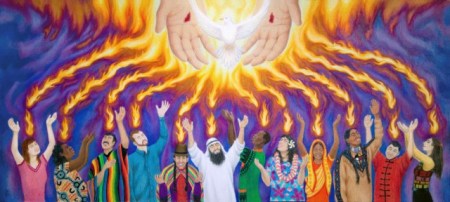
pentecost_holy_spirit

“There are different kinds of spiritual gifts, but the same Spirit is the source of them all.”

1 Corinthians 12:4, NLT

“God has given each of you a gift from his great variety of spiritual gifts. Use them well to serve one another.”

1 Peter 4:10

“Deliver me, O Lord, from that evil man, myself.”

     Thomas Brooks

Several years ago, the Holy Spirit upended my understanding of the Church. It took some time, as I’ve been in full time ministry for almost 40 years now–and that can be good, or bad. I made many mistakes, and naturally blamed most of the failures on others.

Over the years I suppose I had made the Body of Christ into a competitive sport. And although I wouldn’t have phrased it exactly that way, it was how I approached the Christian brothers and sisters in my life. There were simply rungs to be climbed.

A great deal of my effort was generated to receive the proper recognition.

I had misunderstood the nature of being a ‘gifted’ person. As I look back, I was very much like James and John, in Matt. 20:20-22. It wasn’t so much that I was exalting myself, but I felt (?) that I needed to push for all that Jesus had for me. I desperately thought it had to be on a platform.

We must learn to respect the giftedness of others.

Often, this is easy. Encountering those with a special ability, it can be fairly easy to do. When we hear a teacher or preacher, a worship leader or even an amazing writer we often put them on a pedestal. Because of that gifting it becomes fairly simple for the Church to recognize them.

I suspect we’re probably more inclined to operate out of our own envy or frustration. Rather than accepting others, we look for any reason at all to invalidate and disparage them. We scour and search for anything to minimize or reject our “competitor.” To bolster our efforts, we label it as “discernment.” This justifies us, as we think that it is protecting the Church.

The Spirit, out of His infinite inventory, distributes the gifts to the Church.

We honor and respect Him when we acknowledge that. We don’t elevate the person, but we do accept them, and their obvious gifts. We can’t ignore any sin, but we should recognize the Spirit’s decision to use a person in a certain way. Almost always, that gift is hidden in a clay pot. And maybe that’s our difficulty? (I have met some gifted saints who were absolute jerks).

What about a person who has a gift that is seen in someone 30 years younger than you? Paul wrote young Timothy precise instructions on how to handle his youth, and understand how he should understand his position in the Body.

“Don’t let anyone think less of you because you are young. Be an example to all believers in what you say, in the way you live, in your love, your faith, and your purity.”

1 Timothy 4:12

We honor the Spirit when we honor His gifted people.

We should respect the giftedness that others may have. Humility often varies with the person, the gift and the maturity. And yet, it would be foolishness for us to think we have settled this issue, once and for all.

A good place to start. And finish:

-Unknown