O Hang On, Dear One!

“He comes to us in the brokenness of our health, in the shipwreck of our family lives, in the loss of all possible peace of mind, even in the very thick of our sins. He saves us in our disasters, not from them. He emphatically does not promise to meet only the odd winner of the self-improvement lottery: He meets us all in our endless and inescapable losing.”

Robert Farrar Capon

For most of us, life is not an ecstasy of really wonderful things that roll unceasingly over us. Sometimes it attacks us. It can have teeth. Goblins and giants begin to encircle us, pressing to our very door. Several friends of mine have faced down divorce lately. Others have gotten very sick. I have some dear ones who battle with mental illnesses. Pain, pain, and more pain.

I certainly don’t intend to be excessively bleak. It was Job who described us as, “Man is born to trouble, as the ‘sparks’ fly upward.” Job was no pessimist, but he was neither an optimist. But he fully grasped that bad things will happen to good people. And I suppose sitting quietly, grieving with friends will adjust your perspective.

“Paul and Barnabas returned to Lystra, Iconium, and Antioch of Pisidia, 22 where they strengthened the believers. They encouraged them to continue in the faith, reminding them that we must suffer many hardships to enter the Kingdom of God.”

Acts 14:21, 22, NLT

These two heroes of the faith, Paul and Barnabas visit these cities. They now have an awareness of what their message is to be. It was one of encouragement, and of endurance, and of the ways of God. They both had the physical evidence to show that they “understood” the scope of their teaching.

Suffering is like learning another language. It is then you can minister deeply.

When I learned Spanish it was a new and vital way of communicating to millions of other people. Learning to speak “fluent” suffering will open up the world to billions of people. Learning to speak the language of pain will unlock many closed doors. Broken believers are in high demand for this “kind of work.”

A lot of us will never learn. We are sold on this exotic idea that God wants us healthy and wealthy. But health and wealth were never supposed to be ends in themselves. Jesus is to be all we seek and desire. When the bottom drops out, will Jesus be enough for you? Will you be encouraged by this revelation of suffering to enter the Kingdom?

“So do not throw away this confident trust in the Lord. Remember the great reward it brings you! Patient endurance is what you need now, so that you will continue to do God’s will. Then you will receive all that he has promised.”

Hebrews 10:36, NLT

flourish20

“You will know more of Jesus in one sanctified trial, than in wading through a library of volumes, or listening to a lifetime of sermons.” 

Octavius Winslow

“Adversity is always unexpected and unwelcomed. It is an intruder and a thief, and yet in the hands of God, adversity becomes the means through which His supernatural power is demonstrated.” 

Charles Stanley

“He knows when we go into the storm, He watches over us in the storm, and He can bring us out of the storm when His purposes have been fulfilled.” 

Warren W. Wiersbe

cropped-christiangraffiti1-2

Working God’s Night Shift

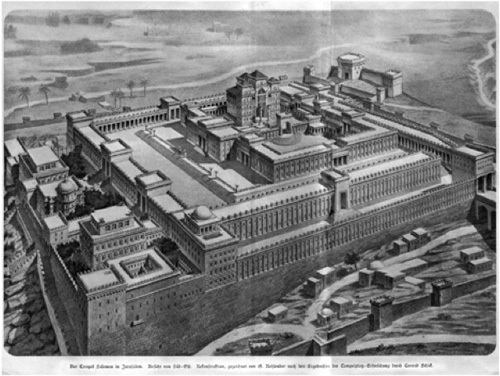
temple-etching
Solomon’s Temple in Jerusalem
A song for going up to worship.

134 “Praise the Lord, all you servants of the Lord,
    you who serve at night in the Temple of the Lord.
Raise your hands in the Temple
    and praise the Lord.

May the Lord bless you from Mount Zion,
    he who made heaven and earth.”

Psalm 134, NCV

This remarkable Psalm is part of an elite group known as “the Psalms of Ascent.” These 15 were sung as the congregation of Israel went up the steps of the temple in Jerusalem. They would sing each in “rounds” with each other. As you can well imagine, this made the ascent slow, but meaningful.

As you read the three verses, I get a picture of worshipers turning back and blessing the Levites. This takes place at the very end of the day. The Levites, and other godly ones who lived in the Temple, (remember Anna and Simeon, in Luke 2?) They were the support staff for the priests.

Commentary

V. 1, “Praise the Lord, all you servants of the Lord,
you who serve at night in the Temple of the Lord.”

The first significant thought is “Lord” mentioned three times. The word is the recognition of someone’s status and standing. We call Him Lord, because He is that (and more).

The second has to deal with the Levitical “night shift.” They served and guarded the Temple during the wee hours of the night. They probably cleaned, stacked wood, sharpened knives and maintained the Holy Place with its needs.

There was no real glory working the night shift. There were no people to serve. The crowds were for the day shift. (Here’s a weird thought– think “Disneyland at 2:00 a.m.”) There was also a contingent of non-Levite people ministering to the Lord as well. They had no duties, and only the priests could serve through their work.

The Levites working at night were not ‘second best.’ At least, not in the eyes of the Holy Spirit. They were integral in both presence and service to the Lord. To despise them is to reveal one’s ignorance. They definitely mattered.

V. 2 “Raise your hands in the Temple
and praise the Lord.”

I’ve worked nights before. It’s a real adjustment. You never feel like you’ve had enough sleep, and it is really hard to be positive and cheerful.  I could get pretty grouchy at times.

But an exhortation is given, a shout and a blessing as the crowds leave. “Raise up your hands– and praise Him!” It is as the work, although necessary, would be secondary. The worship however, was primary. We need to hear that.

V. 3, “May the Lord bless you from Mount Zion,
he who made heaven and earth.”

To be blessed (literally, made “lucky”) by our Creator and Lord is pretty profound. As a kid who read a lot, I think of ‘fairy dust.’ I know better now, but to be blessed by God is deeply significant.

To summarize, I believe this Psalm is speaking of those in the church who are doing “hidden service.” No one sees them really. They go about there duties quietly, and purposefully. The only recognition is from God– who sees all.

I must encourage you to keep on. There are many more than you think who see your hidden ministry to the Father. You are His ‘night shift.’ You’re seen by few, but Him. He knows what you do.

aabryscript

cropped-christiangraffiti1-2

WWJD?

meat-market-idols
Idol meat at market

Be careful, however, that the exercise of your rights does not become a stumbling block to the weak. 10 For if someone with a weak conscience sees you, with all your knowledge, eating in an idol’s temple, won’t that person be emboldened to eat what is sacrificed to idols? 11 So this weak brother or sister, for whom Christ died, is destroyed by your knowledge. 1When you sin against them in this way and wound their weak conscience, you sin against Christ.13 Therefore, if what I eat causes my brother or sister to fall into sin, I will never eat meat again, so that I will not cause them to fall.”

“Others may, you cannot.” There are certain things that other believers are allowed to do that are forbidden for you personally. These are not the “biggies” like adultery, or murder (or anything in the flesh, see Galatians 5:19-21).

However, there are the relatively small things of individual conscience. They are the issues of personal preference. Sometimes a Christian has the liberty to smoke or drink a glass of wine. Since there are nothing specific in the Bible against these, some feel free to exercise a certain amount of liberty.

In Paul’s time, meat that had been offered up to idols was afterwards sold in the markets. Some believers would buy the meat; others stringently objected to this. Their faith wouldn’t allow this.

“All things are lawful, but not all things are profitable. All things are lawful, but not all things edify. 24 Let no one seek his own good, but that of his neighbor. 25 Eat anything that is sold in the meat market without asking questions for conscience’ sake; 26 for the earth is the Lord’s, and all it contains. 29 I mean not your own conscience, but the other man’s; for why is my freedom judged by another’s conscience?”

1 Corinthians 10:23-26, 29

I believe conscience is how we are meant to conduct certain decisions. We’re to always surrender our right to do something that might offend another’s principles. Their faith should never be weakened by your actions or behavior. At that point– it becomes sin.

“Idol meat” (code for things of “individual preference”) should never be a stumbling point for other believers. Some issues of conscience could be:

  • the theatre, ballet, dancing,
  • internet, reading material,
  • sporting events, parties
  • parades, arena performances,
  • movies, TV
  • Halloween, solstice observances,
  • smoking, chewing tobacco,
  • drinking wine or a beer, (but not drunkenness),
  • playing cards,
  • medications, mental health services,
  • rock music, Christmas, eating pork, etc.

Perhaps the real issue to grasp is the manner in which we’ll serve another brother’s faith. I believe that that is the core point. Often the conscience has to be trusted to become the guidance we seek in doing the will of the Lord.

I may have throughly confused you, I pray that I haven’t. Just keep in mind that your conscience should be “tuned in” to the Lord’s Spirit. It is not an infallible guide. Great questions to ask when your wondering if it is right or not:

  • Is it loving?
  • is it God-honoring?
  • is it going to encourage a brother or sister?
  • what would be right?
  • does it edify (build up)?

Follow the Lord’s lead, “WWJD?” It may sound corny, but there is something of value here.

Your brother, Bryan


cropped-christiangraffiti1-2

The Hidden Blessings of the Long Struggle

freelancing-struggle

by Jonathan Coe

It’s a familiar story. A person has become a Christian in recent years and is engaged in spiritual practices–prayer, Bible study, meditation, church attendance, fellowship, tithing, and/or the sacraments. They have listened closely to their pastor or priest and have developed some formulas that are supposed to help them overcome the problems, sins, and weaknesses in their lives.

They’ve heard sermons and/or read books that have titles that start with “Three Steps,” “Five Keys,” and “Four Ways,” that are supposed to lead them to the abundant Christian life. They see progress in their lives but are discouraged because they still struggle with certain sins, problems, and/or weaknesses. Some feel like they can’t overcome the very deep negative legacy from the unhealthy family they grew up in.

Church leadership would do many believers a service by teaching them about how God can bring good out of their protracted struggle. No, it’s not God’s will for us to habitually sin , but God, in his tender mercies can work redemptively in this long and frustrating battle against profound sin.

One of the first good things that can come out of a long battle with a character flaw or problem is deliverance from a formulaic Christian faith. “Do these three things and your problem will go away” you learn from a best–seller, but your problem doesn’t go away. The fallen human heart is a complex and formidable thing, and these canned approaches are a little like taking a squirt gun to a forest fire.

When people experience sustained adversity, their lives feel out of control, and they will often grab on to formulas to give them a sense of righting a ship that’s taking on water. Unfortunately, they end up trusting in the formulas more than God himself.

Faith in formulas will always eclipse faith in God.

The Christian life is more about a restful trust in a Person than embracing a set of principles (no matter how spiritual those principles may sound.)

The New Testament is clear on the centrality of faith (not self–effort or formulas) in the overcoming life:

When asked by his disciples what they must do to do the works God requires, Jesus answered, “The work of God is this: to believe on the one he has sent” (John 6:2829). When describing the person who overcomes the world, the Apostle John said, “He who believes that Jesus is the Son of God” (I John 5:45).

The failure of formulas is a good experience because it drives the believer to faith in the living God. In this faith, there is a wonderful exchange: I give Christ my pitiful attempts to live the victorious Christian life and he gives me his transforming power to overcome sin. However, this exchange may not happen overnight; it may be a process that takes years.

For those of you in a long struggle, please be comforted by the mercies of God that endure forever. If he can forgive a murderer and adulterer like David, he can forgive you and me. Please take the advice that Winston Churchill gave the British people during World War II: “Never, never, never, never give up ” or listen to the lyrics from a U2 song called “Miracle Drug” : ”There is no failure here, sweetheart/ Just when you quit.”

Even better is C.S. Lewis from The Business of Heaven:

“I know all about the despair of overcoming chronic temptations. It is not serious, provided self–offended petulance, annoyance at breaking records, impatience, etc. don’t get the upper hand. No amount of falls will really undo us if we keep on picking ourselves up each time. We shall of course be very muddy and tattered children by the time we reach home, but the bathrooms are already, the towels put out, and the clean clothes in the airing cupboard. The only fatal thing is to lose one’s temper and to give it up. It is when we notice the dirt that God is most present in us: it is the very sign of his presence.”

I say Amen.

ybic,

Jonathan Coe

&

Bryan’s note: Jonathan is a very old friend. He deeply loves Jesus. He is wise and he is aware. He is a writer, blogger, and a house-painter. (He is also a Dodgers fan, which I suppose he can find forgiveness for). I am made a rich man by knowing him.