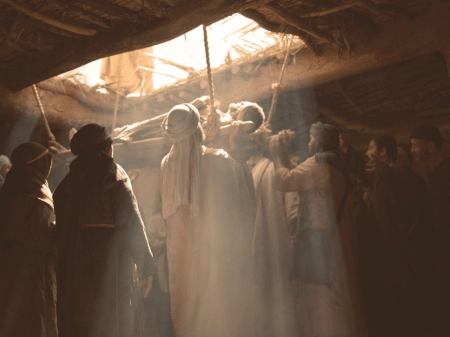
“They came, bringing to him a paralytic carried by four men.4 And when they could not get near him because of the crowd, they removed the roof above him, and when they had made an opening, they let down the bed on which the paralytic lay.”
Mark 2:3-4
In this Gospel story recorded in Mark 2:1-12 we read of the four friends who brought the paralyzed man to Jesus. What a privilege it is to carry those we love to our Lord for His healing presence to surround them.
Their simple faith is what we are called to. “Paralyzed” people are waiting for us to only act. If God gives us eyes to see, we will see them.
I was inspired to write this simple poem as I thought about this man and his friends. I hope it blesses you.
Let Me Carry You
You lie alone broken and weak Unsure if you will make it through Seeing a future dark and bleak To Jesus let me carry you
Your daily troubles set in stone Seem heavy with unchanging hue And though you think you’re all alone To Jesus, I will carry you
You struggle to remember love Ev’ry feeling painfully blue I will bring God’s grace from above To Jesus let me carry you
“Thank you for making me so wonderfully complex! Your workmanship is marvelous—how well I know it.”
Psalm 139:14
“God is not a duplicator, He is a Creator. You are an original.”
-Reinhard Bonnke
The Bible states many wonderful things. One of them is that we are created in the image of God, and I’m quite certain that each of us are shaped completely different. I recently read that an estimated 117 billion people have lived on earth. That’s amazing; and to think we are all unique.
Sometime ago I found my Grandmother’s Bible.
I was somewhat intrigued, and I supposed that it might just ‘impart’ some special spiritual blessing to me. I sat down on the couch, and reverently opened it up. It was filled with wonderful handwritten notes.
As I sat down to read it though, I slowly began to realize that it was exactly like my own! The verses and the promises were the same, they had not changed. What was true for my grandma was true for me. That amazed me, and it kind of sent me spinning. But I suddenly started thinking.
Each of us struggles differently.
We endure depression, PTSD, schizophrenia, even suicidal thoughts. We struggle with different addictions and lonely divorces. There are those believers who are epileptics or disabled. There are some of us who have been raped or molested. I have a paralyzed right arm, and am typing this with my left hand. I also struggle with depression and anger.
Each of us are the same in a basic sense, and yet we are all distinctly different. We all have gone through things, some good, some quite awful. These issues are uniquely our own. Our “personal” testimony with God is unlike someone else’s. We respond to our different circumstances in different ways.
We are “snowflakes’ that have been artistically crafted. Our circumstances are individually tailored by God, who is the ultimate Artist. I opened this post with the idea that God creates “snowflakes,” and I’ve been told that every one of them is unique.
I do believe that when we stand before God we will all have these fantastically different stories. Each of us have found forgiveness, mercy and grace that the Lord freely gives us. As “grace-walkers” our life can be mixed with His love, filtered through a myriad of circumstances.
And they mix exceedingly well.
Reading the Word we must realize that each man or woman who walked with God had a different story to tell. We rightly consider them in amazement. And yet none of them knew they were special at the time, all they understood was “the daily grind.”
We can trust Him. We slowly begin to see, and understand, that there are implications of being ‘snowflakes.’ God took Joseph and ‘molded’ him by His unique circumstances, he went from prison to the Prime Minister overnight. Each of us has testimony of His incredible care.
“People are special, and human life is sacred, whether of not we admit it. Every person is worth fighting for, regardless of whether he is young or old, sick or well, child or adult, born or unborn, or brown, red, yellow, black or white.”
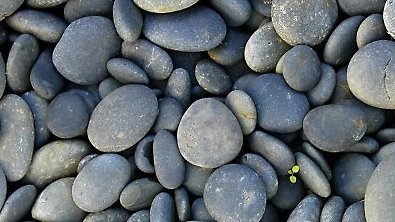
“And He withdrew from them about a stone’s throw, and He knelt down and began to pray,”
Luke 22:41
WHO KNOWS WHAT JESUS IS THINKING AT THIS PRECISE MOMENT as he entered the Garden? His disciples waited for Jesus and scripture states that he proceeded ahead of them to find some needed strength through prayer— this verse tells us he went “a stone’s throw.”
We often share in the sorrows of the people closest to us, and Jesus wants His disciples to follow him. And they do, but not all the way. They came close, but were oblivious to the full nature of the pain that was beginning for Jesus. They slept while he agonized.
He was for the first time perhaps, needing someone close.
Many of us will make the same trip to the garden. Soon every believer makes the trip to ‘Gethsemane,’ but not as mere observers. It is a distinct place of testing and of sorrow. And each will experience it for themselves. “The servant is not above his master.”
But Jesus is close— he completely understands what it means to be alone with sorrow. The believer can lean on Jesus as the pain continues. He sends his “Comforter” to each, as he escorts us through this time. He comes in grace, and is completely kind.
He is truly just a stone’s throw away.
“God is our refuge and strength, always ready to help in times of trouble.”
This post and poem were originally written while I waited in my doctor’s waiting room to talk to her about my pain medication. When I told her I was writing a thankfulness poem titled “Pain and Suffering” she was skeptical, until I told her the perspective from which it was written.
“Dear brothers and sisters, when troubles of any kind come your way, consider it an opportunity for great joy. For you know that when your faith is tested, your endurance has a chance to grow.”
James 1:2-3
Although I would love to live a life in which I experienced no pain or suffering, that is not my lot. (I’ve never actually met anyone who did live a life with absolutely no pain or suffering.) I know that those who find their way here to Broken Believers have often had more than their fair share.
I have finally come to a place in my life where I can find the good in all my pain and suffering – the “silver lining” if you will – in that it has taught me perseverance and compassion.
For that I am very thankful.
I am also thankful for God’s promise that my perseverance will finish its work so that I will be mature and complete. It will happen, I know it! God promised.
Pain and Suffering
I will pray because I care as the pain drags you down Exhausting endless pain
I understand how you feel I’m exhausted just like you
I have no power to eliminate the pain Yours or mine
Will you let compassion blossom from the compost of your pain?
Or will bitterness engulf your soul as pain ravages your body and mind?
Because I care I will pray that we persevere that the pain will be eased
I will remind you this, too, shall pass someday
It might not be until Jesus returns or calls us home
But we’ll make it We’ll persevere and become mature and complete I will pray because I care
Will you pray for me, too?
“God blesses those who patiently endure testing and temptation. Afterward they will receive the crown of life that God has promised to those who love him.”