Present Day Thorns

And lest I should be exalted above measure by the abundance of the revelations, a thorn in the flesh was given to me, a messenger of Satan to buffet me, lest I be exalted above measure.”

2 Corinthians 12:7

“I have thanked thee a thousand times for my roses, but not once for my thorn. I have been looking forward to a world where I shall get compensation for my cross, but I have never thought of my cross as itself a present glory. Thou divine Love, whose human path has been perfected through sufferings, teach me the glory of my cross and the value of my thorn.” 

— George Matheson

We like the rose, but tolerate the thorns. But alas, if we want the flower we must by default receive those pesky jabs. It’s part of the whole package. They come together and you can’t separate them (perhaps scientists will engineer a thornless rose someday).

The Apostle Paul engaged his own version repeatedly. On three different occasions he asked the Lord for relief.

“Concerning this thing I pleaded with the Lord three times that it might depart from me. And He said to me, “My grace is sufficient for you, for My strength is made perfect in weakness.” Therefore most gladly I will rather boast in my infirmities, that the power of Christ may rest upon me.”

2 Corinthians 12:8-9

Some conjecture can be made to what this thorn was. A telling word is “infirmities.” It means “feebleness of health; sickness,” (Thayer’s Lexicon, #769). Some have surmised it was a problem with his eyes, and that could well be. He was blinded on “the Damascus Road” for a period of time (?).

Satan has the power to afflict believers, but only under supervision. The verses declare God’s sovereignty over Paul’s thorn. God would work it for His own glory. Satan would be ultimately defeated.

 “My grace is sufficient for you, for My strength is made perfect in weakness.”

This must of been an incredible truth for Paul to learn. Perhaps his entire ministry hinged on apprehending what the Lord wanted him to know here. It was a critical lesson for Paul to know. It would enable and sustain him through a very difficult ministry.

Those who are afflicted, mentally or physically, are in prime position to teach us about grace. They’ve experienced the thorns first-hand. And in their most lucid moments can tell us of finding strength in their weakness.

There is much to learn in these couple of verses. There is much to learn from our brothers and sisters.

What is your thorn? What repeatedly drives you to the power and grace of God? Can you see the Lord’s hand in it?

“Without Your Wound, Where Would Your Power Be?”

The subject of “the pool at Bethesda” alludes to the following excerpt from the Thorton Wilder play “The Angel that Troubled the Waters”. The play is based on the biblical verses of John 5:1-4, but it changes the end of the parable.

I first encountered this excerpt within the book “Abba’s Child: The Cry of the Heart for Intimate Belonging“, by Brennan Manning.

The play tells of a physician who comes periodically to the pool of Bethesda, hoping to be the first in the water and healed of his melancholy when the angel appears and troubles the water. Everybody at the pool also hopes to be the first in the water and thereby healed of his malady. The angel appears but blocks the physician at the moment he is ready to step into the pool and be healed.

Angel: “Draw back, physician, this moment is not for you.”

Physician: “Angelic visitor, I pray thee, listen to my prayer.

Angel: “Healing is not for you.”

Physician: “Surely, surely, the angels are wise. Surely, O Prince, you are not deceived by my apparent wholeness. Your eyes can see the nets in which my wings are caught; the sin into which all my endeavors sink half-performed cannot be concealed from you.”

Angel: “I know.”

……………… A long pause

Physician: “Oh, in such an hour was I born, and doubly fearful to me is the flaw in my heart. Must I drag my shame, Prince and Singer, all my days more bowed than my neighbor?”

Angel: “Without your wound where would your power be? It is your very sadness that makes your low voice tremble into the hearts of men. The very angels themselves cannot persuade the wretched and blundering children on earth as can one human being broken on the wheels of living. In Love’s service only the wounded soldiers can serve. Draw back.”

Later, the person who enters the pool first and was healed rejoices in his good fortune then turns to the physician before leaving and said:

“But come with me first, an hour only, to my home. My son is lost in dark thoughts. I — I do not understand him, and only you have ever lifted his mood. Only an hour . . . my daughter, since her child has died, sits in the shadow. She will not listen to us but she will listen to you.”

………………………………………

For me, this story is quite exceptional, probably because the message of this excerpt—“Without your wound where would your power be?“—carries so much meaning for me, as this has taught me that through my weakness I can see others.  I believe that for us,  it should be our whole philosophy of ministry.

The depressed physician ministered out of his brokenness.  He parallels the way the Apostle Paul did his work “out of much suffering.”  Just something to think about.

This is a Broken Believers classic post.  It is shared again with the steady hope that it will encourage you and strengthen you in your walk with Him.

*******

ybic, Bryan

cropped-christiangraffiti1 (1)


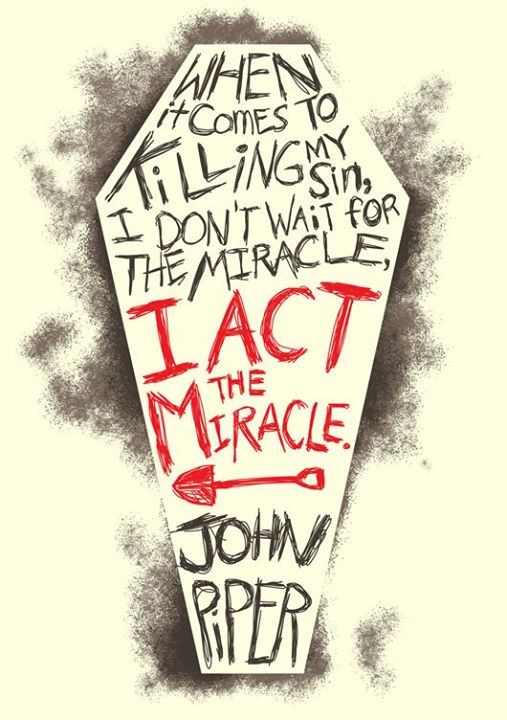
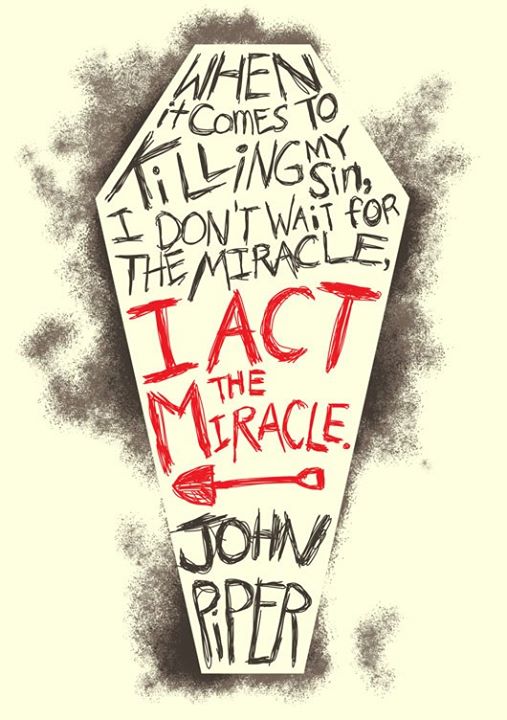
Killing My Sin, Before It Kills Me

killing-sin-act

We are for the most part anyway, eager to please God. We are Jesus’ people with the occasional brush with sin. But hey, who doesn’t? But that attitude must be questioned.

“My little children, these things I write to you, so that you may not sin.”

1 John 2:1

John hopes that his readers would make a choice— not to commit sin. After all, what soldier goes into battle with the intent of getting just a little wounded? Often we will sin just because it seems so inevitable, and we feel we can’t help ourselves. (But the reality is that we can.)

But the Holy Spirit now lives inside. Cooperation with Him is needed. Often we will work ourselves into a ‘no win scenario’ where we believe that sin rules. We can’t beat it, so we stop trying. That is common, and sad.

‘Passivity’ is defined as not participating readily or actively; inactive. When we are passive spiritually, we disengage ourselves from any effort of living holy and pure lives. Not being ‘hot’, but content to be lukewarm. At this point sin becomes, reluctantly, tolerated. “After all, I’m a sinner, what else can I do?”

Mentally ill people are often passive. We are told that we have an uncontrolled illness which dictates that we act ‘irresponsible.’ Our depression often escalates and we feel victimized by it. My experience has taught me that there are three kinds of depression:

  • organic depression, or the ‘biochemistry’ of the disease,
  • guilty depression, the kind that feels bad because of what we’ve done (or didn’t do),
  • reactionary depression, the type we feel when experiencing a loss, a loved one, or a job

Depression will almost always fall in these three categories. And passivity plays a part in all three. We  frequently feel victimized and ‘acted upon.’ When it comes to our discipleship we don’t act, we react. We are utterly convinced of the Bible— God’s truth, but we are so sporadic we can’t seem to get it to work for any length of time.

Yes, we are believers. And yes, we have issues. We’re waiting for a miracle, and hope we get a breakthrough soon.

At the base point of our lives, quite often, there is a passive attitude. Passivity aggravates our depression or mental illness. It deepens, spreading through our lives like a contagious illness. Our discipleship sputters and stalls. We no longer act on God’s Word, but we find ourselves fabricating a faith that makes allowances for our situation.

But we must ‘act the miracle.’ Everything God gives… everything… must be received by a convinced faith. We must be persuaded to give up our flawed ideas, and believe God for the real thing. I opened up this with 1 John 2:1. But there’s much more to this verse:

“My little children, these things I write to you, so that you may not sin.  And if anyone sins, we have an Advocate with the Father, Jesus Christ the righteous.”

I don’t want you to sin. Avoid sin. But even if you do— we have someone who will plead our case before God. He stands and argues our plight. He loves us that much.


bry-signat (2)

cropped-christiangraffiti1.jpg


Afflictions That Heal Us

Today I especially wanted to share a message the David Wilkerson shared on his blog a few years ago.  It is probably one of the better messages I’ve read in quite awhile on the issue of pain and affliction in a believer’s life.  I hope this helps!

“Curse the scalpel if you must; but kiss the Surgeon’s hand.”

flourish14

“Before I was afflicted I went astray: BUT NOW have I kept thy word”

Psalm 119:67

“I believe in healing. I believe in affliction. I believe in “healing afflictions.” Any affliction that keeps me from going astray—that drives me deeper into his Word—is healing. God’s most gracious healing force spiritually and physically can be afflictions.

To suggest that pain and affliction are of the devil is to suggest that David was driven by the devil to seek God’s Word. I have suffered great pain. I have called on God for deliverance and I believe him for complete healing. Yet, while I go on believing, I continue to thank God for the present condition and let it serve to remind me how dependent on him I really am. With David I can say, “It is good for me” (Psalm 119:71).

Pain and affliction are not to be despised as coming from the devil. Such burdens have produced great men of faith and insight.

“Casting ALL your care upon him…”

1 Peter 1:5

Paul spoke of the “cares” of the churches that were thrust upon him (see 2 Corinthians 11:28). Every newborn church was another “care” on his shoulders. Growth, expansion, lengthening of stakes always involve new cares. The man God uses must have broad shoulders. He dare not shrink under the challenge of numerous cares and responsibilities.

Every new step of faith God leads me to take has brought with it numerous new cares and problems. God knows just how many cares he can trust us with. It is not that he seeks to break us—in health or strength; it is only that willing laborers are few and the harvest is so great. Cares are taken from those who refuse them and given as gifts to those who are not afraid of them. Forget the load of cares you carry—can we not cast them all on him?

Every new blessing is related to a family of cares. They cannot be divorced. You cannot learn to live with the blessing until you learn to live with the cares.”

Source: http://davidwilkersontoday.blogspot.com/