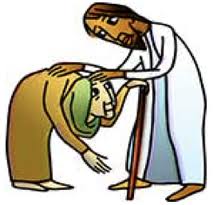
Jesus: Our City of Refuge

Hidden in the Old Testament is the idea of the Cities of Refuge. They have incredible meaning for us today.

They speak profoundly to our situation and bring real hope to those who struggle. Six places of safety were given to protect those who accidentally killed another person— maybe an ax head flew and hit someone, and they died as a result. This is a tragedy.

God told Joshua to establish cities of protection where one could be safe from an avenger. There were six of them, three on the east side of the Jordan river, and three on the west. The cities covered Israel; each was spread out intentionally so they were always close.

That city became a place of asylum for those guilty of manslaughter.

As believers, we know that we’ve committed crimes against God and other people. The burden we carry threatens to undo us. Satan (and his minions) want to destroy us—and honestly, we deserve it. We are essentially spiritual ‘criminals’ who have hurt others and damaged ourselves in the process.

Outside the city, we’re vulnerable—but inside those walls we find safety.

Those who have killed others are protected. If we venture outside, we find our adversary who is waiting. Scripture tells us that we must stay cloistered there until the current high priest dies. Upon his death, we’re released and may leave the city walls.

For broken believers, the whole concept rings true.

The text speaks for itself, and there is spiritual logic in all of this. We see parallels here that speak to our condition. We’ve messed up big time. We also carry issues that the enemy can attack. Depression, bipolar, trauma, and even thoughts of committing suicide— can be a fundamental part of our lives.

I must tell you that safety is found only in the Savior.

Finding God and abiding in him is our place of safety. His walls protect us, Jesus is our high priest, who never dies; that means we need to stay with him, permanently. I like Hebrews 6:18, LB:

“Now all those who flee to him to save them can take new courage when they hear such assurances from God; now they can know without a doubt that he will give them the salvation he has promised them.”

For us especially, we often have problems with the doctrine of assurance of salvation. Our enemy works overtime to accuse us (Rev.12:10). We’re his targets and the lies of many demons assault us. We can, at times, wonder if we’re really saved. We wonder if we are really forgiven, and we doubt our salvation. Satan’s efforts can be constant and crippling.

I encourage you to think this over and pray about this.

Numbers 35 is a good place to start. That chapter is pretty clear. Look also at Exodus 21:13-14; Joshua 20:1-6; Deuteronomy 19:2-13.

Living With Chronic Pain

Chronic Pain

Sometimes we live in darkness. We suffer and it’s hard. We mentally accept God’s grace and His love for us, but in our heart we remain untouched. Pain saturates everything it seems. We seem to go through the motions, but deep down we’re convinced that we’ll never find the light that so many claim to have.

Have we been cursed?

Pain fills our life. We live with something that is persistent, and our hope is a day when it’s all over. Psalm 88 is our Psalm. Nothing is sugar-coated. It is raw and unabridged. It’s pain under a microscope. That Psalm is yours.

Psalm 88:3-4

I love you,

Bryan

God Must Hear Your Heart


There are different ways God uses to hear your heart. Your voice, actions and attitudes are all subject to His evaluation and analysis. He is continually watching us. He uses His divine stethoscope to know us.

“Yet even now,” declares the Lord,
    “return to me with all your heart,
with fasting, with weeping, and with mourning;
13     and rend your hearts and not your garments.”
Return to the Lord your God,
    for he is gracious and merciful,
slow to anger, and abounding in steadfast love;
    and he relents over disaster.
14 Who knows whether he will not turn and relent,
    and leave a blessing behind him,”

Joel 2:12-14

The Old Testament prophet Joel is also interested in the human heart. His words make that a central issue. He diminishes the outward that doesn’t include the inward. (Unfortunately, it is easier “to be seen” rather than “to be.“)

“Rend your hearts and not your garments.”

This is God’s very real word to a wayward people. To “rend” means to tear and it is perhaps the most critical attribute for a wayward heart.

I’m convinced that we must learn what it means to repent everyday. It is never completely done–never once and then you’re finished with it.

We also seem to have this strange tendency to reduce repentance to outward actions. We however must stress the inward rather than the outward. We must go deeper, and take repentance right down to the deepest core.

True repentance must go as deep as you can go, and be truly proven before we claim a victory.

God desires to hear your heart. The Holy Spirit is going to insist on it. (But He will also be a loving Guide.)

“Blessed are those who mourn [especially them], for they shall be comforted.”

Matthew 5:4, Emphasis mine

“To do so no more is the truest repentance.”Martin Luther


Nothing But Leaves

“Seeing at a distance a fig tree in leaf, He went to see if perhaps He would find anything on it; and when He came to it, He found nothing but leaves, for it was not the season for figs.”

Mark 11:13, NASB

Perplexing isn’t it?  I personally have had a certain amount of ambiguity with this passage.  I have questions that I’ve swept under the rug.  Why did that poor tree get cursed?  It wasn’t the trees fault, after all.  And didn’t Jesus realize this?  So why go through the theatrics?

I don’t know if this is the case with anyone else. 

I hesitate to ask around.  But recently have come to a better place about this entire event.  The traditional view is that it comes immediately after “the cleansing of the temple” and that explains a lot.  The fig tree is always emblematic of Israel.  (The Old Testament is well populated with these references.) The disciple Mark adroitly organized his Gospel in order to connect both events.

I assure you, Jesus has no issues or vendettas against trees.  😁

But He does take an issue with things that claim fruit, but really have nothing.  There’s nothing but leaves. I’ve been told that the figs do grow, almost as fast as leaves.  The lush greenness is the prime indicator of the succulent fruit. At least, in theory, it has the potential.

Luke 12:7-9,

Look, for three years now I have come seeking fruit on this fig tree, and I find none. Cut it down. Why should it use up the ground?’ And he answered him, ‘Sir, let it alone this year also, until I dig around it and put on manure. Then if it should bear fruit next year, well and good; but if not, you can cut it down.’”


The beautiful leaves declare its fruitfulness.  This tree was loaded, but had nothing to show but leaves.  Within God’s plan for Israel was for fruit.  Enough to feed the nations that would stream to Jerusalem.  Instead, it was worthless.  There was nothing to be had.  Loads of leaves, and the promise of an incredible harvest, but zilch, zero, nothing.

Hypocrisy is a deadening experience, with a definite sterility.

Israel was finding this out, and Jesus is now declaring it to the nation.  A corrupt temple, and a fruitless tree; this were all indicators of hypocrisy and showiness.  The luxuriant leaves loaded the tree, but ‘where’s the fruit?!’

Sometimes we declare that we are fruitful, on the mere basis of our lovely leaves. 

At times maybe even green?  Leaves are pretty much all we can do.  And we do it quite well. But the fruit is from the Holy Spirit, (Galatians 5:22.)

Israel failed God.  They became religious and neglected mercy, and justice.  Humility and graciousness.  The widow and the orphan were not part of their personal equation.  They produced leaves by the wheelbarrow load, but were missing out on the authenticity to what was true, and what really mattered.

Pharisees will do this all the time.

They turn into hypocrites who do not possess what they profess. A hypocrite values true godliness, but he personally falls short of all those things he admires. But he will never, ever admit it to anyone.  And even we who struggle so, must continually admit that we stumble and falter as we try to follow.

The terrible temptation of this time is to look good without being good.

It’s the awful curse of legalistic religion, and it runs rampant in our nation today, even in our government. The Lord absolutely detests it. God help us understand, and repent from what He shows us.

Personally, I may be a ‘screwy’ excuse of being a disciple, but I have decided I don’t want to deceive people anymore. 

God, help me.

“This year, or this month, or, more likely, this very day, we have failed to practice ourselves the kind of behavior we expect from other people.”  

C.S. Lewis


1brobry-sig4

cropped-christiangraffiti1 (1)