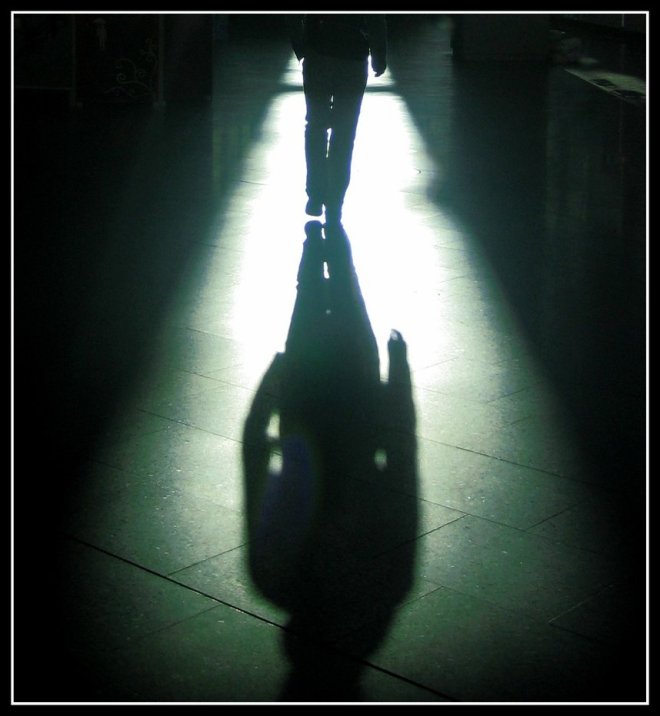
Sometimes, I feel like a tour guide for believers that are walking through hell. I point out the different strugglers, and urge each one not to linger too long but to keep moving. We look on those trapped (they have no hope within them) but we hope that they are yet to reach out for the Savior. It is distressing, and yet somehow we understand them just a little bit.
Our journey out and down each sad corridor can be painfully disturbing for us. There are so many different types of prisons and chains used to confine and control. Dante wrote his “Inferno” (Italian, for hell), and somehow he in some curious way walks through the different levels (varieties) of hell with us. Virgil (Dante’s own tour guide) takes Dante through some pretty hairy stuff, and they pass through the very gate, which bears an inscription, of the infamous phrase “Lasciate ogne speranza, voi ch’intrate“, or “Abandon all hope, ye who enter here.”
Our own rescue from this dreadful place is based on that singular word, “hope”. Somehow, hope has distilled inside us, and that alone can enable us to walk out as the freed. We have chosen not to abandon hope, but to use it as our passport out of the bottom of hell itself. We show it to each guardian, and then pass through without any hinderance.
- And so at last the poor have hope. (Job 5:16)
- Having hope will give you courage. You will be protected and will rest in safety. (Job 11:18)
- Lord, you know the hopes of the helpless. Surely you will hear their cries and comfort them. (Ps. 10:17)
- All day long I put my hope in you. (Ps. 25:5)
- Let your unfailing love surround us, Lord, for our hope is in you alone. (Ps. 33:22)
- O Lord, you alone are my hope. (Ps. 71:5)
- Your word is my source of hope. (Ps. 119:114)
- “Listen to me, all who hope for deliverance— all who seek the Lord!” (Isa. 51:1)
- And his name will be the hope of all the world.” (Matt. 12:21)
- Even when there was no reason for hope, “Abraham kept hoping.” (Rom. 4:18)
- We, too, wait with eager hope. (Rom. 8:23)
- Rejoice in our confident hope. (Rom. 12:12)
- The Scriptures give us hope and encouragement as we wait. (Rom. 15:4)
- Three things will last forever—faith, hope, and love. (1 Cor. 13:13)
- That you can understand the confident hope he has given us. (Eph. 1:18)
- Our hope is in the living God, who is the Savior of all. (1 Tim. 4:10)
- In order to make certain that what you hope for will come true. (Heb. 6:11)
- This hope is a strong and trustworthy anchor for our souls. (Heb. 6:19)
- Let us hold tightly without wavering to the hope we affirm. (Heb. 10:23)
- They placed their hope in a better life after the resurrection. (Heb. 11:35)
- You have placed your faith and hope in God. (1 Pet. 1:21)
- If someone asks about your Christian hope. (1 Pet. 3:15)
I suppose we must say (it’s clear) that hope is what sets us free from the difficulty that rests in our minds. Whatever DSM-IV has branded us, whatever a psychiatrist has declared us to be, and whatever our therapist has told us– our hope, that’s in Christ, will open all doors that are closed and locked.
Hope really is the Christian’s freedom from hell. Those of us who have been freed from our incarceration from our mental illness are amazingly liberated. I know the lostness of being very much lost. But hope is everything. When our hope somehow connects with Jesus, our souls are set free. We walk out of hell, with our souls soaring clean.
kyrie elesion, Bryan
*
Related articles
- Hope – Four Things You Need to Know About It (devosfromthehill.org)
- Hope (hiking2christ.org)
- My Hope is in You, Lord (redeeminginfertility.wordpress.com)
- Making Sense of Trials (preciousthanjewels.wordpress.com)
- Highway to Hell (losingsightofthemargin.wordpress.com)
- Dante’s Inferno (thegatesofdis.wordpress.com)