Paranoia & Delusions

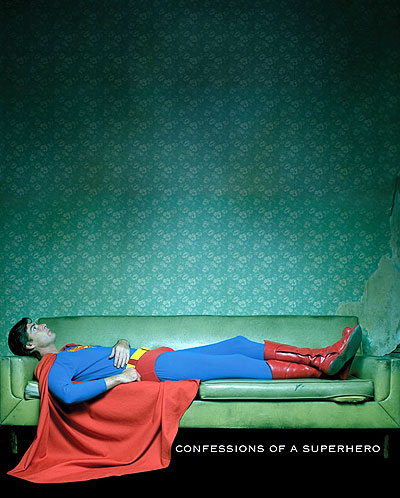
superhero_400pxDelusional disorder, (previously called paranoid disorder,) is a type of serious mental illness called a “psychosis in which a person cannot tell what is real from what is imagined. The main feature of this disorder is the presence of delusions, which are unshakable beliefs in something untrue.

People with delusional disorder experience non-bizarre delusions, which involve situations that could occur in real life, such as being followed, poisoned, deceived, conspired against, or loved from a distance. These delusions usually involve the misinterpretation of perceptions or experiences.

In reality, however, the situations are either not true at all or highly exaggerated.

People with delusional disorder often can continue to socialize and function normally, apart from the subject of their delusion, and generally do not behave in an obviously odd or in a bizarre manner. This is unlike people with other psychotic disorders, who also might have delusions as a symptom of their disorder. In some cases, however, people with delusional disorder might become so preoccupied with their delusions that their lives are disrupted.

Types of delusional disorder

There are different types of delusional disorder based on the main theme of the delusions experienced. The types of delusional disorder include:

  • Erotomanic — Someone with this type of delusional disorder believes that another person, often someone important or famous, is in love with him or her. The person might attempt to contact the object of the delusion, and stalking behavior is not uncommon.
  • Grandiose — A person with this type of delusional disorder has an over-inflated sense of worth, power, knowledge, or identity. The person might believe he or she has a great talent or has made an important discovery.
  • Jealous — A person with this type of delusional disorder believes that his or her spouse or sexual partner is unfaithful.
  • Persecutory — People with this type of delusional disorder believe that they (or someone close to them) are being mistreated, or that someone is spying on them or planning to harm them. It is not uncommon for people with this type of delusional disorder to make repeated complaints to legal authorities.
  • Somatic — A person with this type of delusional disorder believes that he or she has a physical defect or medical problem.
  • Mixed — People with this type of delusional disorder have two or more of the types of delusions listed above.

Basic Principles

There are no systematic studies on treatment approaches and results in Delusional Disorder. The patient’s distrust and suspiciousness usually prevents any contact with a therapist.

Hospitalization

Hospitalization is indicated if a potential for danger is present; otherwise outpatient management is advisable. Unfortunately, involuntary hospitalization may increase distrust and resentment and increase the patient’s persecutory delusions.

Antipsychotic Drugs

Antipsychotic medication may be useful, particularly for accompanying anxiety, agitation, and psychosis. Because patients may be suspicious of medication, depot forms may be helpful. Although antipsychotics may have a good response, they are often only marginally effective for specific forms of Delusional Disorder.Other Therapies

Other treatments have been tried (electroconvulsive therapy, insulin shock therapy, and psychosurgery), but these approaches are not recommended.


Copied materials. NO COPYRIGHT INFRINGEMENT INTENDED. All content belongs to its rightful owners. Not for monetary gain. For educational purposes only.
 

Empty Broken, Here I Stand


Cambridge, UK

In June of 2002, I journeyed from Alaska to Cambridge, England. It was there I somehow found myself on the streets talking to myself; alone, disoriented and quite lost.

I wasn’t taking my medication.

I had just been released from a hospital in Anchorage, Alaska and was under the care of a psychiatrist. I headed out without his approval..And so here I am now all alone in a country I had never visited before. My confusion was profound. I was desperate and mentally ill.

I noticed the stares and the whispers as wandered the streets.

Or maybe it was just my raging paranoia. But yet there’s more. Much more.  On just a mildly benign occasion I wandered into the English version of a Wal-mart. I was in a dreary daze, but I thought I ‘heard’ a 5 foot bush call out as I walked by. I just knew my calling was a prophet. I was like Moses. I also heard God from a bush! (Exodus 3:2).

My chosen, eternal destiny was to save it. I grabbed and scootched it toward the check-out line. After a few minutes the bush was insanely heavy and I saw that the line was very long.

After some time I finally abandoned the tree in the middle of the check-out line. It seems I did have some moments of clarity, even at my strangest. It was a weird experience. (What can I say, I’m a sucker for talking bushes.) 

I was told later that over hundred people were praying for me.

Finally, at my worst, I reached into my pack and there was this CD. I began to listen to it, and imperceptibly began to be restored to some semblance of sanity. My thinking was clearer and I would finally find my way back to where I was staying.

King Saul, in his own weak grip on sanity, was ministered to by David’s music.

One song on the CD in particular ministered to me. It’s called “Kyrie Eleison,” which is Latin for “Lord Have Mercy.”

Kyrie Eleison Lyrics

Verse 1
Empty broken here I stand,
Kyrie eleison,
Touch me with Your healing hand,
Kyrie eleison,
Take my arrogance and pride,
Kyrie eleison,
wash me in Your mercy’s tide,
Kyrie eleison.

Chorus–
Kyrie eleison,
Christe eleison,
Kyrie eleison,

Verse 2
When my faith is all but gone,
Kyrie eleison,
Give me strength to carry on,
Kyrie eleison,
when my dreams have turned to dust,
Kyrie eleison,
In You O Lord I put my trust,
Kyrie eleison.

Chorus:
Kyrie eleison,
Christe eleison,
Kyrie eleison,

Verse 3
When my heart is cold as ice,
Kyrie eleison,
Your love speaks of sacrifice,
Kyrie eleison,
Love that sets the captives free,
Kyrie eleison,
O pour compassion down on me,
Kyrie eleison.

Repeat Chorus

Verse 4
You’re the voice that calms my fears,
Kyrie eleison,
You’re the laughter dries my tears,
Kyrie eleison,
You’re the music, my refrain,
Kyrie eleison,
Help me sing my song  by Text-Enhance” href=”http://www.thelyricarchive.com/song/2258792-376352/Kyrie-Eleison-(Love-Have-Mercy)#”>again,
Kyrie eleison.

Repeat Chorus

Verse 5
Humble heart of holiness,
Kyrie eleison,
Kiss me with Your tenderness,
Kyrie eleison,
Jesus, faithful Friend and true,
Kyrie eleison,
All I am I give to You,
Kyrie eleison.

Repeat Chorus 

bry-signat (1)

Avoiding the Cul-de-sac

“Then God said, “You’ve been going around in circles in these hills long enough; go north.”

Deuteronomy 2:3 

I believe that there are cul-de-sacs in a broken believer’s walk. There are times when we seem to walk in circles and our path seems to take us around and around. It can be a real cause of frustration–we know deep down that there must be something more.

For city planners, a cul-de-sac solves many problems. Homes built there can be off the beaten track, kids can play without too much concern about traffic. The idea can be very appealing.

But a spiritual cul-de-sac can be dangerous.

The children of Israel are free from the profound bondage of their Egyptian masters. They now know freedom, but… (you know).

The children of Israel wandered. They turned an 11-day journey into 40 years! Although one can learn things going nowhere, it really isn’t what the Father wants.

The scenery never changes (“what? didn’t I see that cactus before?) The journey becomes one of repetition. Around and around, dealing (and seeing) the same old stuff, over and over. We really don’t see anything new. We really don’t hear His voice.

This really isn’t what God intended for you.

Perhaps going in circles is a real issue for those with physical and mental issues. We feel trapped by our illnesses, hemmed in by these difficult things. We wander and continue to take another trip around the mountain. Instead of having a ‘straight’ walk, ours is crooked.

Our journey needs to be ‘linear,’ not circular.

I know all about these dead-ends. I’ve been there. I guess if I was to explain my own walk it would be one word–stagnant. I wandered in circles dealing with the same ugly stuff over and over. It seemed like I never went forward. My life was caught in some kind of spiritual loop.

Quite often we get trapped through sinful habits.

Sometimes we can’t break out of this vicious cycle without the Father’s helpful discipline. We must understand that the Lord will “rock your world” if you keep choosing to sin.

He will not allow you to continue in rebellion or disobedience.

I saw others on their straight path. Yes they sinned and struggled, but they seemed to be going forward, and I wasn’t. There were my issues, Bipolar and chronic pain (what a mix, huh)? I knew I was trapped and I never could break this on my own.

The spiritual scenery never changed for you.

God really does love you. You must become utterly convinced of that. If you’re stuck in a cul-de-sac you must know this. Condemnation never comes from Him. Never. I suggest that you call on Him (get on your face) and ‘beg’ to be with Him.

Thinking Without My “Tin Foil Hat”

As we think of mental illness an immediate question arises:  what is “serious” mental illness, and how is it different from the normal issues that are part of everyday life?

Wearing a tin-foil hat is the delusion that those who wear them are some how protected from space rays or conspiracy theories. Crazy, I know. But some believers approach mental illness in this way.
Brother and sister, we’re called to think biblically. Ephesians 6:17 tells us that the “helmet of salvation” is the only head gear we’re called to wear. It tells us that the ‘warriors’ protection is God’s salvation. We are protected by a helmet of truth.
We must educate ourselves, through our community, and knowledgeable Christian leadership, to serve the broken that are in our midst.  This figure includes a wide variety of disorders, these stats are compelling:
  • Severe mental illnesses affect 5.4 percent of adults,
  • Some 22 to 23 percent of the U.S. adult population—or 44 million people-“have diagnosable mental disorders”
  • Such statistics only begin to capture the level of pain many of our fellow believers endure daily.

 One person wrote of the broad reach of mental illness:

“I have a thousand faces, and I am found in all races. Sometimes rich, sometimes poor, sometimes young, sometimes old. I am a person with the disabling pain of a broken brain.”

We must find an acceptable form of understanding about mental illness if we are going to find our way to those who are quite frankly, very definitely lost.

Both Scripture and eldership, (healthy counseling), should be an active component to recovery. The sacrifical sacrifice of Jesus, through His blood must be taught again to the afflicted. Mental disease needs to be as understood in the same context as a physical one (e.g. diabeties or cancer).

Discernment must be sought as the whole person often needs to be taught. Issues like guilt, unforgiveness and pride are a big part of seeing people set free. Issues of past trauma like sexual and phyical abuse are factors as well.

 Your support of Brokenbelievers.com through your prayers and encouragement goes a long way. Linda and I need your help in this. We both need wisdom and a gentle hand on our lives. As we reach out, a ‘tinfoil hat’ is definitely not part of our acceptable head gear. 

The Father’s love embraces the torn and wounded consistently. This is the key to the healing of a broken heart.