Of Promises and Plans

Jeremiahverse

To understand this truth is to be set free.

We live in sort of toxic atmosphere that ‘leeches’ out of us God’s sure promises. But we do have significant resources that will keep us secure. What has been given is fortified promises and plans.

“And because of his glory and excellence, he has given us great and precious promises. These are the promises that enable you to share his divine nature and escape the world’s corruption caused by human desires.

2 Peter 1:4

Every believer has been given these strong promises. It doesn’t matter if you have a physical or mental illness. God is for you in the midst of your pain and disability. You may be miraclously healed, or you may ‘carry the load’ on a daily basis; God is for you regardless.

“What shall we say about such wonderful things as these? If God is for us, who can ever be against us?”

Romans 8:31

When a believer is in a storm, sometimes God will calm it, and other times He will calm the child. Either way we are remarkably protected in His hands. God is for us. We are given ‘promises and plans.’ We may traverse through much difficulty— that seems to be the normal state of things. It seems some will travel from crisis-to-crisis, yet God holds them secure. We will trust Him in the storm.

Think of all you have already been through— search your memories. You will undoubtly recall some hard times, yet you have survived the awful storms.

“I will trust Him. Whatever, wherever I am, I can never be thrown away. If I am in sickness, my sickness may serve Him; in perplexity, my perplexity may serve Him; if I am in sorrow, my sorrow may serve Him. My sickness, or perplexity, or sorrow may be necessary causes of some great end, which is quite beyond us. He does nothing in vain.”    

John Henry Newman

bry-signat (1)

cropped-christiangraffiti1.jpg

Good Medicine

medicine

“A joyful heart is good medicine,
    but a crushed spirit dries up the bones.”

Proverbs 17:22, ESV

We have from ‘King Solomon’s mines’ a truth regarding joy. Whether we acknowledge its truth, or not, we find its effects on us to be binding. “A joyful heart” is like medicine for our souls. There are many issues that afflict us, many things that trouble us. I find within myself a veritable zoo. But there is a sure and ready relief.

“Worry, fear, distrust, care-all are poisonous! joy is balm and healing, and if you will but rejoice, God will give power. He has commanded you to be glad and rejoice, and He never fails to sustain His children in keeping His commandments. Rejoice in the Lord always, He says. This means no matter how sad, how tempted, how sick, how suffering you are, rejoice in the Lord just where you are-and begin this moment. The joy of the Lord is the strength of our body, The gladness of Jesus, the balm for our pain, His life and His fullness, our fountain of healing, His joy, our elixir for body and brain.”

A.B. Simpson


For those among us who struggle so, we find a  treatment plan that will work. There is an active ingredient within a joyful heart that heals and protects our souls. Real joy— applied frequently to our aching souls— provides something quite  like medicine to someone quite ill. I’m no snake oil salesman. Nor am I into herbs and vitamins. (I suppose I could be a little more aware.) But I know that this principle is true.

“A crushed spirit dries up the bones.” We know first-hand that this is true. There is a ‘crushing’ wound that can breakdown our spirits and bodies. We are simply overwhelmed by life and we experience a crumbling and mashing of our personalities. We are as sick in our ‘bones’ as we might be physically. Now there is a huge difference between a physical illness and a spiritual one, but the factual principles are the same. The pain is different, but is it not similar?

A joyful heart is the pharmaceutical of choice for treating diseases of the personality and spirit. Sometimes we are unwell because we ignore the prescription.  “The joy of the Lord is your strength.”  (Nehemiah 8:10) Joy in the deepest part of us is almost always:

  1. transforming,
  2. God-honoring, and
  3. contagious.

If this is true, then we do well to ‘give it a whirl.’

“The joyless Christian reveals himself by having negative thoughts and talk about others, in a lack of concern for others welfare, and a failure to intercede on others behalf. Joyless believers are self-centered, selfish, proud, and often vengeful and their self-centeredness inevitably manifests itself in prayerlessness.”

John MacArthur

bry-signat (1)

cropped-christiangraffiti1.jpg


The Melancholy of Edvard Munch

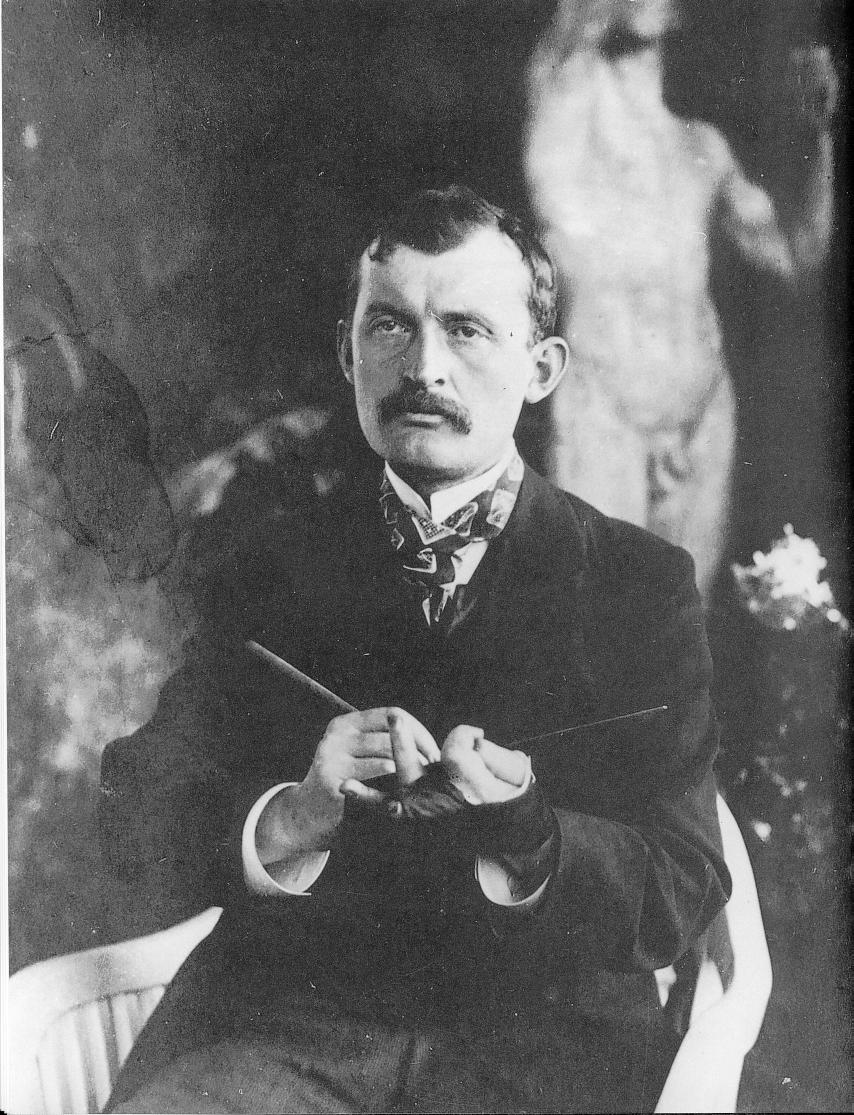
munchDecember 2, 1863 – January 23, 1944, he was a Norwegian painter. He is regarded as a Symbolist and a forerunner of expressionism. He focused on themes of fear, anxiety, melancholy, and death. He did not believe in heaven, or other Christian themes or doctrines, as far as I know.

My intention is to reintroduce you to an artist that I highly esteem.  The challenge I suppose is to understand the issues that Munch discovers in his work. He clearly taps into the ‘angst’ of the modern man, and what he does perpetuates a mindset for our generation.

Obviously these paintings are just an introduction, and I understand that they are selective. I have refrained from any kind of interpretation, other than laying down a general principle–  to Munch, color is everything.

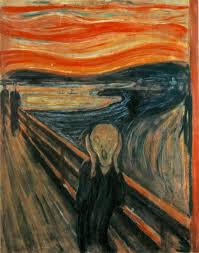
Munch was probably not a cheery person. He essentially was driven by anxiety through his whole life. It seems that he could be very ambitious. His classic work was “The Scream” which he made several versions to sell. He used different mediums to do this– tempera, lithograph and pastel. Interestingly, “The Scream” is a favorite target for art thefts. It captures the minds of every modern thinker.

Within our culture, “The Scream” is iconic. Warhol, Gary Larson, Dr. Who and even “The Simpsons” have cashed in on a parody of it.

Quotes

“I painted the picture, and in the colors the rhythm of the music quivers. I painted the colors I saw.”

“Painting picture by picture, I followed the impressions my eye took in at heightened moments. I painted only memories, adding nothing, no details that I did not see. Hence the simplicity of the paintings, their emptiness.”

“For as long as I can remember I have suffered from a deep feeling of anxiety which I have tried to express in my art.”

“Disease, insanity, and death were the angels that attended my cradle, and since then have followed me throughout my life.”

munch-thescream
The Scream, 1893
Munch’s best known painting ^


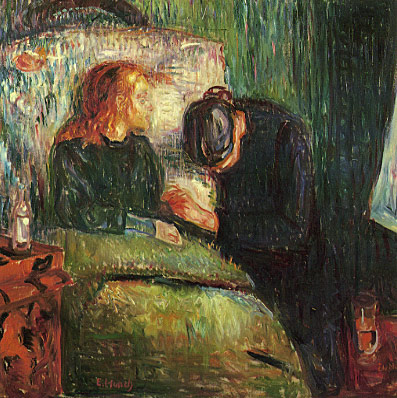
The Sick Child (1885)
Melancholy, 1894
Melancholy, 1894
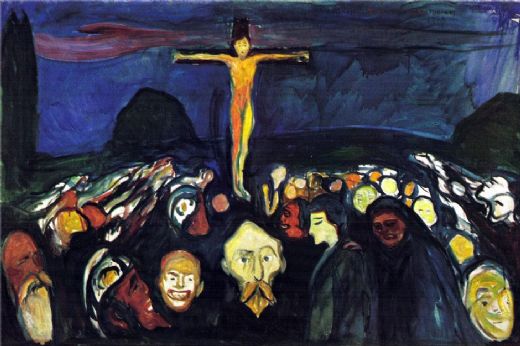
Golgotha, 1900
Golgotha

My Favorite Psalm

psalms_2

Probably the best known Psalm in the Bible is Psalm 23:The Lord is my shepherd, I shall not be in want . . .” And I do like this Psalm. I particularly like the part that says “Even though I walk through the valley of the shadow of death, you are with me.” I like this part because of the preposition “through,” which indicates the valley of the shadow of death is not a permanent dwelling place, but rather a place we travel through to get somewhere else. But this is not my favorite Psalm.

Psalm 22 is also another popular one, especially since Jesus quoted it on the cross when he said, “My God, my God, why have you forsaken me?” I like this Psalm because of it’s prophetic nature. Looked at closely you can find many of the things that would later happen to Jesus talked about by David in this Psalm even though David did not know that is what he was doing. But this is not my favorite Psalm either.

Psalm 27 is another favorite of many because it gives courage when it says, “ The Lord is my light and my salvation; whom shall I fear? The Lord is the stronghold of my life; of whom shall I be afraid?” In a sometimes terrifying and wearying world, this Psalm provides great comfort to those enduring trials. But this is not my favorite either.

If you ask most Christians (and even some non-Christians), they will have a favorite Psalm, and I am no different. My favorite is Psalm 116. This Psalm starts in verse 1 with: “I love the LORD, for he heard my voice; he heard my cry for mercy.” This is a Psalm of David when he was in great anguish and danger. The verses that speak to me the most are 3-4 and 8-9.

3 The cords of death entangled me,
       the anguish of the grave came upon me;
       I was overcome by trouble and sorrow.

 4 Then I called on the name of the LORD :
       “O LORD, save me!”

8For you, O LORD, have delivered my soul from death,
       my eyes from tears,
       my feet from stumbling,

 9 that I may walk before the LORD
       in the land of the living.

Reading this Psalm reminds me of my journey through major depression and how God was with me in it all. It reminds me why I trust in Him – because He has proven Himself faithful to me in the past and has heard my cries for mercy. I supposed Psalms 23, 22, or 27 could serve the same purpose, but the language of Psalm 116 more closely fits the trouble and sorrow I went through, especially the part about delivering my eyes from tears. If you have ever experienced major depression, or known someone who has, you know that tears are an almost constant companion, and yet there is no understanding of why they are there.

I still have times of melancholy, and I certainly cry from time to time. But now I can identify what is making me blue and my tears have a reason and purpose when they come. And my God is always there to hear my cries of mercy.

So this is my favorite Psalm. What’s yours?

ysic, Linda K.

flourish15