By Mark Earley, Christian Post Guest Columnist, Wed, Aug. 08, 2007
The least of these is my brother
In the 16th century, London’s mentally ill were often kept at Bethlem Royal Hospital. The conditions inside the hospital were notoriously poor. Patients were often chained to the floor and the noise was so great that Bethlem was more likely to drive a man crazy than to cure him. The conditions were so infamous that the nickname locals gave the hospital—Bedlam—has come to mean any scene of great confusion.
Unfortunately five hundred years later, we’re still treating the mentally ill more like prisoners than patients. Fifty years ago, more than 550 thousand people were institutionalized in public mental hospitals. Today, only between 60 and 70 thousand are, despite a two-thirds increase in the country’s population.
Since there’s no evidence that the incidence of mental illness has dropped precipitously, the mentally ill who previously had been institutionalized had to have gone somewhere. While some are being treated successfully in their communities, at homes and groups homes, but for many that “somewhere” is behind bars. This last part shouldn’t come as a surprise.
Five years ago, the Washington Post told the story of “Leon,” a one-time honor student, who had 17 years in and out of jail on various drug-related charges. It was only after several suicide attempts, including drinking a “bleach-and-Ajax cocktail,” that Leon was diagnosed with bipolar disorder. Leon’s story was a microcosm of a larger problem: “Prisons and jails are increasingly substituting as mental hospitals.”
As one advocate for the mentally ill told the Post, “a lot of people with mental illness are charged with minor crimes as a way to get them off the streets.” In effect, they are behind bars for “being sick.” Fast forward five years and little, if anything, has changed. A few weeks ago, another piece in the Post discussed the same problem.
Psychiatrist Marcia Kraft Goin told readers something that should shock and outrage them: “The Los Angeles County Jail houses the largest psychiatric population in the country.” As with the earlier Post piece, the conclusion was inescapable: “People with [untreated] mental illnesses often end up with symptoms and behaviors that result in jail time.” You don’t have to be a “bleeding heart” to understand that this is an injustice—any kind of heart will do.
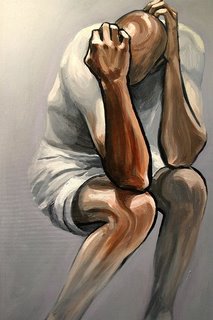
Not only are the mentally ill not getting the help they need, they are as lambs to the slaughter in our crowded and violent prisons. They are being victimized twice over. They’re not the only ones being victimized.
At a time when most state prisons are unlawfully overcrowded, there are better uses for prison beds than as makeshift mental hospitals. As Goin wrote, “treating” mental illness as a criminal justice problem costs “more than treating patients appropriately in their community.”
As part of its ministry to prisoners and their families, Prison Fellowship supports community-based alternatives to incarceration. Not only because it makes “financial sense” but because it’s what Christ would have done. In Matthew 25 he called the ill and the prisoner his “brothers” and he expects us to offer them something more than bedlam.
“There but for the Grace of God go I…”–Bryan
__________________________________
From BreakPoint®, August 6, 2007, Copyright 2007, Prison Fellowship Ministries. Reprinted with the permission of Prison Fellowship Ministries. All rights reserved. “BreakPoint®” and “Prison Fellowship Ministries®” are registered trademarks of Prison Fellowship.
To understand and name something is often half the battle. An understanding of Tourette Syndrome can help us to serve people who painfully struggle with this particular challenge.
What is Tourette syndrome?
Tourette syndrome (TS) is a neurological disorder characterized by repetitive, stereotyped, involuntary movements and vocalizations called tics. The disorder is named for Dr. Georges Gilles de la Tourette, the pioneering French neurologist who in 1885 first described the condition in an 86-year-old French noblewoman.
The early symptoms of TS are almost always noticed first in childhood, with the average onset between the ages of 7 and 10 years. TS occurs in people from all ethnic groups; males are affected about three to four times more often than females.
It is estimated that 200,000 Americans have the most severe form of TS, and as many as one in 100 exhibit milder and less complex symptoms such as chronic motor or vocal tics or transient tics of childhood. Although TS can be a chronic condition with symptoms lasting a lifetime, most people with the condition experience their worst symptoms in their early teens, with improvement occurring in the late teens and continuing into adulthood.
What are the symptoms?
Tics are classified as either simple or complex. Simple motor tics are sudden, brief, repetitive movements that involve a limited number of muscle groups. Some of the more common simple tics include eye blinking and other vision irregularities, facial grimacing, shoulder shrugging, and head or shoulder jerking. Simple vocalizations might include repetitive throat-clearing, sniffing, or grunting sounds.
Complex tics are distinct, coordinated patterns of movements involving several muscle groups. Complex motor tics might include facial grimacing combined with a head twist and a shoulder shrug. Other complex motor tics may actually appear purposeful, including sniffing or touching objects, hopping, jumping, bending, or twisting. Simple vocal tics may include throat-clearing, sniffing/snorting, grunting, or barking. More complex vocal tics include words or phrases.
Perhaps the most dramatic and disabling tics include motor movements that result in self-harm such as punching oneself in the face or vocal tics including coprolalia (uttering swear words) or echolalia (repeating the words or phrases of others). Some tics are preceded by an urge or sensation in the affected muscle group, commonly called a premonitory urge. Some with TS will describe a need to complete a tic in a certain way or a certain number of times in order to relieve the urge or decrease the sensation.
Tics are often worse with excitement or anxiety and better during calm, focused activities. Certain physical experiences can trigger or worsen tics, for example tight collars may trigger neck tics, or hearing another person sniff or throat-clear may trigger similar sounds. Tics do not go away during sleep but are often significantly diminished.
What is the course of TS?
Tics come and go over time, varying in type, frequency, location, and severity. The first symptoms usually occur in the head and neck area and may progress to include muscles of the trunk and extremities. Motor tics generally precede the development of vocal tics and simple tics often precede complex tics. Most patients experience peak tic severity before the mid-teen years with improvement for the majority of patients in the late teen years and early adulthood. Approximately 10 percent of those affected have a progressive or disabling course that lasts into adulthood.
Can people with TS control their tics?
Although the symptoms of TS are involuntary, some people can sometimes suppress, camouflage, or otherwise manage their tics in an effort to minimize their impact on functioning. However, people with TS often report a substantial buildup in tension when suppressing their tics to the point where they feel that the tic must be expressed. Tics in response to an environmental trigger can appear to be voluntary or purposeful but are not.
What causes TS?
Although the cause of TS is unknown, current research points to abnormalities in certain brain regions (including the basal ganglia, frontal lobes, and cortex), the circuits that interconnect these regions, and the neurotransmitters (dopamine, serotonin, and norepinephrine) responsible for communication among nerve cells. Given the often complex presentation of TS, the cause of the disorder is likely to be equally complex.
What disorders are associated with TS?
Many with TS experience additional neurobehavioral problems including inattention; hyperactivity and impulsivity (attention deficit hyperactivity disorder—ADHD) and related problems with reading, writing, and arithmetic; and obsessive-compulsive symptoms such as intrusive thoughts/worries and repetitive behaviors. For example, worries about dirt and germs may be associated with repetitive hand-washing, and concerns about bad things happening may be associated with ritualistic behaviors such as counting, repeating, or ordering and arranging.
People with TS have also reported problems with depression or anxiety disorders, as well as other difficulties with living, that may or may not be directly related to TS. Given the range of potential complications, people with TS are best served by receiving medical care that provides a comprehensive treatment plan.
P.S. I have received some criticism over the contents of this post. The argument is that mental illness is very destructive, and that I’m misleading others by suggesting it isn’t. The thinking is that we dwell on the past and how it effects the present moment. I believe we have a mental illness. But I also believe more strongly so that Christ redeems us completely. “Because he lives,” goes the old hymn, “I can face tomorrow.”
In the “heat of the moment” the situation can seem overwhelming. Our illness can be completely devastating. However the Holy Spirit is yet to fully redeem us, yet we still must view this coming event as something triumphant and total. This life is not the end. What a relief to shed this mortal darkness!
“Behold, the dwelling place of God is with man. He will dwell with them, and they will be his people, and God himself will be with them as their God.4 He will wipe away every tear from their eyes, and death shall be no more, neither shall there be mourning, nor crying, nor pain anymore, for the former things have passed away.”
by Maryann B. Hunsberger | CT, originally posted 8/27/2007
After a long absence from making music, not to mention a series of tragedies—including a divorce and her daughter’s suicide—CCM veteran Kelly Willard is back on the scene.
Since the early days of the Jesus movement, Kelly Willard has been a part of Christian music, recording with many of names associated with the pioneers of CCM before releasing her 1978 debut at the age of 21. With nine albums to her credit, Willard has also been featured on more than two dozen worship projects from Integrity Hosanna!, Vineyard, and Maranatha! Music. Now with the release of her new CD Paga, Willard is finally back on the scene, though she’s never been totally absent. She spoke to us from her Florida home about the things occupying her time for the last 15 years: her family, her recording career, her ministry, and a series of tragedies in 2004.
Your last album was in 1990. What have you been up to all these years?
Kelly Willard It was a priority to be home with my husband and children, since I home-schooled both children. And although I stopped recording my own albums and touring to raise my children, I didn’t stop working in Christian music. I lived in Nashville, so I continued to do session work. I’ve done background vocals for artists, and I’ve done solos on praise-and-worship albums. I’ve always followed what was going on in Christian music, and I’ve continued to do as much music as I could.
It sounds like life has been busy.
Willard Very busy. My mother had Alzheimer’s, so we took her in and cared for her for ten years. I was responsible for her health while my children were growing up. I was home-schooling and doing studio session singing while caring for my mother. I haven’t done much since 2004 because of what life has been like since then.
What happened that year?
Willard It was the worst year of my life. On Valentine’s Day, my father died of pulmonary fibrosis. Later, in March, my 29-year marriage fell apart. I worked so hard on the marriage, even going to counseling. But the marriage fell out from under me because the spiritual foundation of the home fell short. My parents were divorced when I was 13, and I said I’d never divorce. It was so traumatic, because my marriage and family were my life. It’s been hard for me to accept.
Then my 18-year-old daughter Haylie fell through the cracks—on August 29, she committed suicide. She had severe depression and she stopped taking her medication. The divorce was a huge factor in her death. It’s the saddest thing ever. Whenever I sang locally in Nashville, Haylie would sing with me, and mher. And in October, my mother died from Alzheimer’s. So, it really was the worst year ever y son Bryan would play bass. She wrote songs and loved the Lord. Too much sadness just overcame for me.
Did you struggle with feelings of failure during this time?
Willard Totally and completely. For your child to check out of life is just horrific. It’s unthinkable, unspeakable pain.
Does depression run in your family, since it is usually a hereditary illness?
Willard Yes. In 1987, when we had just released Message from a King, my fourth album, I was diagnosed with manic-depressive illness. The medication back then affected me badly, so I stopped taking it. In 2002, the diagnosis was reconfirmed, but with a new name: bipolar disorder. I got on a newer medication and it has worked well. It helped me get through the trauma of the last few years. I believe my mother also had bipolar disorder, but it went undiagnosed.
How did your son handle everything?
Willard Bryan was out of the house already. He had gotten an apartment when he was 18 with his friend Phil LaRue and a couple other guys—he played bass with the group LaRue. Then he began to court his wife Liz and they married. So they now live in Nashville and have a daughter Ariel. He’s 24 now and such a strong Christian—a singer, writer, and worship leader, traveling and playing bass for Jason Upton’s band.
What have the last three years been like for you?
Willard It’s been a time of healing. It’s a slow process and it has taken time, but it is happening. I moved to Jacksonville Beach, Florida for support from Beaches Chapel, a church that took me in and helped me move on after my life fell apart. Haylie and I had sung there in 2002 and they had a real burden for me. When things got bad, Pastor Steve McCoy could see how fragile I was. He would call me in Nashville. He asked me to come down for six months, so I did. I went into weekly grief therapy with a Christian grief counselor for 18 months. I also began taking classes at church. The accountability to my pastor and my grief therapist and Jamie kept me alive, as there were times that I honestly didn’t want to live. But, God hung onto me, even when I felt like I couldn’t hang on.
I read a lot of books about heaven, and I get really excited, because reading them helps me live the reality of what our faith is all about. Also, I met Jamie Wellington at church and he became a friend who stood by me. Eventually, he and I got married and I still live in Florida today. God gave me a brand new start in every way.
Which at last brings you back to recording a new album.
Willard I began working on it seven years ago. I thought I’d never record another solo album, but the Holy Spirit impressed on me to involve my kids in making an album with me. That’s my son Bryan rocking on the bass when he was barely 18. His buddies Miles McPherson and Rob Hawkins also played on it. Haylie, who was 15 at the time, sang a duet with me on “Beautiful Jesus.”
Your daughter had a beautiful voice. Is it hard listening to that song?
Willard I made myself listen to it once, just the other day. I saw her on the other side when I heard that.
Where does the title for Paga come from?
Willard I listened to a teaching tape by Jim Goll called “From Prayer to His Presence.” He explained how the Old Testament priests would take incense behind the curtain and burn it as an atonement. This is called “paga” in Hebrew and it means “to make intercession.” When Jesus became our sacrifice, he made the way for our prayers, praises, and worship to become like that incense to the Lord. I wanted this album to draw people to the Lord and take part in that intercession.
I like your cover of “Charity.”
Willard As far as I know, nobody has recorded that song since Jamie Owens Collins recorded it for her first solo album in the ’70s. Which is bizarre, as it’s a great song.
What changes have you seen in the Christian music world since the Jesus movement music in the ’70s?
Willard The ’70s brought a surge of Christian music with Love Song and all the groups from California. It was a great movement of music. But about 20 years ago, I remember Christian radio changing and sounding just like secular radio with DJs trying to act and talk cool, trying to be hip. A lot of the music seemed to lose something. Then, a little more than ten years ago, I saw a revival begin. Very fresh worship and praise music was coming out. Artists like Delirious, Jars of Clay, and Matt Redman were singing about relationships with the Lord again. It was encouraging to see a turn back to simple relationships with Jesus. That’s what everyone loved about early Christian music when people just sang about what Jesus was doing in their lives and they invited others to come along. It’s gotten back to that in much of Christian music.






 by Maryann B. Hunsberger | CT, originally posted 8/27/2007

