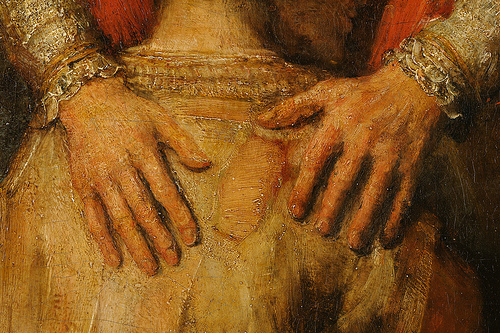
Rembrandt’s Prodigal Son

Rembrandt-The_return_of_the_prodigal_son
Rembrandt, “The Return of the Prodigal Son,” c. 1661

17 “But when he came to himself, he said, ‘How many of my father’s hired servants have more than enough bread, but I perish here with hunger! 18 I will arise and go to my father, and I will say to him, “Father, I have sinned against heaven and before you. 19 I am no longer worthy to be called your son. Treat me as one of your hired servants.”’ 20 And he arose and came to his father. But while he was still a long way off, his father saw him and felt compassion, and ran and embraced him and kissed him. 21 And the son said to him, ‘Father, I have sinned against heaven and before you. I am no longer worthy to be called your son.’ 22 But the father said to his servants, ‘Bring quickly the best robe, and put it on him, and put a ring on his hand, and shoes on his feet. 23 And bring the fattened calf and kill it, and let us eat and celebrate. 24 For this my son was dead, and is alive again; he was lost, and is found.’ And they began to celebrate.

Luke 15:17-24, ESV

Two hundred and eighty-nine words– these describe the life of every man, woman, and child who has ever lived. These 289 words reveal to us a God who loves far too much, way too easy. Perhaps we sort of expect that he will ‘appropriately’ punish his son– at least put him on probation at least. It only makes sense. But we find that is legalism talking.

“Every saint has a past, and every sinner has a future.” 

Many of us have lived as prodigals, and we have spent our inheritance like ‘drunken sailors.’ We really have nothing at all to show for it. The prodigal, completely destitute, takes the only work he can find. (Imagine a good Jewish boy feeding hogs.)

He is so far gone that he starts inspecting the filthy slop buckets for something to eat.

Many of us will understand his despair. Often there comes to us a crystalline moment of simple awareness. The prodigal, sin-crusted and impoverished, still has a lingering memory of the Father’s house.

The servants there had far more than him right now. Sometimes I wonder if in our captivity, we instinctively want to go home, if only in our minds, to be a servant there.

The Father has dreamed of this precise moment.

The parable says, “He saw him–felt compassion–ran out to him–embraced him–and kissed him.” The Father is a whirlwind of agape love. I’ve read the Parable of the Prodigal Son a hundred times or more. It never loses its punch. I simply want to bring some observations: 

  • We see that his father receives him with a tender gesture. His hands seem to suggest mothering and fathering at once; the left appears larger and more masculine, set on the son’s shoulder, while the right is softer and more receptive in gesture.
  • The son’s head is downy, almost like a newborn’s. We must enter the kingdom like little children. 
  • The Prodigal Son seems to be protected by his father. He snuggles near the Father’s breast. It’s love that holds him there.
  • Consider his sandals. It has taken a long time for him to come home. 
  • Standing at the right is the prodigal son’s older brother, who crosses his hands in stoic judgment; we read in the parable that he objects to the father’s compassion for his brother.
  • We see his mother in the background in the painting, and a seated steward or counselor. One stands in profound joy, the other in sits in stunned perplexity.

But Rembrandt had painted the Prodigal once before, when he was considerably younger. And it is a very good painting. The prodigal is happy and gay; there is absolutely no indication of the consequences of sin.

The Prodigal Son in the Brothel, 1635

He’s a charming young man at the height of his popularity, and we see him at a happy party. He is spending the inheritance of his father.

But Rembrandt chooses at the very end of his life to re-paint it to reflect reality.

This is one of the last paintings he will do, and it is the Prodigal Son–destitute and repenting. I can only imagine; the years have taken a toll and he doesn’t really feel his first painting is enough. He wants to paint what is true.

He now is painting our spiritual condition.

We are given a work that some critics call as the greatest painting ever completed. The painting is now in St. Petersburg, Russia. It is seldom seen by visitors. It is a clear echo of the grace of God for fallen men and women. Like the father in the painting, He’s ready to forgive every sin saturated son and daughter.


The Father’s Prodigal

bry-signat (1)


Simply Golden

by Norman Rockwell, 1961

“And as you wish that others would do to you, do so to them.”

Luke 6:31, ESV — The Golden Rule

 “Here is a simple rule of thumb for behavior: Ask yourself what you want people to do for you; then grab the initiative and do it for them! If you only love the lovable, do you expect a pat on the back? Run-of-the-mill sinners do that.” 

Luke 6:31-32, MSG

Sometimes it seems, I hit the switch, and shut it all down. Essentially, I get wrapped up with one of my favorite sins and soon I turn off my faith, unplugging myself from the wall.  I have a desire to escape from what I see as restrictions that I believe faith brings me.  I want to have fun–I don’t want to pray, or read the Bible.

Actually I can do this subtly.  I just raise the volume of my sinful desires, and try to drown out that still small voice.  I can maintain a holy life for my Christian friends, while I enjoy the pleasures of my favorite sins.  Sins or holiness, I want to go for both– but the reality is I just get one.

There is still a voice that is speaking profoundly. And as you wish that others would do to you, do so to them.”  Our particular concepts of Christianity so rarely include this–“the golden rule.”  In my own mind, I diminish this as a little bit antiquated.  I will rarely feel its pinch or pull.  It is never a topic of serious thought or meditation.  It seems that it has become what I call–“an optional truth.”  It is very much real, but it is not connected to me in my daily walk.

Treating others, the very way you want to be treated—do this!  Love other people outrageously and deeply; because you like it when they do this to you.  There is reciprocal action here, a sort of spiritual circle of kindness.  Our vernacular says, “What goes around, comes around.”  And it certainly has a ring of truth in it.

All too often we have a version of Christianity that has had its teeth pulled. We have tamed it, and brought the sharp teeth of the faith under our personal decision-making process.  The wildness of a true faith is domesticated and ‘house-broken.’  And we start the rush to unplug things.  The golden rule gets detached right away.

As I struggle as a mentally ill Christian, it is mandatory that the truth be lifted up in my life.  I can become quite disturbed and manipulated by life’s dealings.  My issues of paranoia and delusion cripple me, or they could become the step-stool for those wonderous things on the shelf of grace.

Dear ones, use your illness to reach for the best, live this and change your world.

%

1brobry-sig4


cropped-christiangraffiti1 (1)

10 Ways to Manage Your Depression

Adapted from New Life Ministries

1. Do not expect too much from yourself too soon, as this will only accentuate feelings of failure. Avoid setting difficult goals or taking on ambitious new responsibilities until you’ve solidly begun a structured treatment process.

2. Break large tasks into small ones, set some priorities, and do what can be done, as it can be done.

3. Recognize patterns in your mood. Like many people with depression, the worst part of the day for you may be the morning. Try to arrange your schedule accordingly so that the demands are the least in the morning. For example, you may want to shift your meetings to midday or the afternoon.

4. Participate in activities that may make you feel better. Try exercising, going to a movie or a ball game, or participating in church or social activities. At a minimum, such activities may distract you from the way you feel and allow the day to pass more quickly.

5. You may feel like spending all day in bed, but do not. While a change in the duration, quality and timing of sleep is a core feature of depression, a reversal in sleep cycle (such as sleeping during daytime hours and staying awake at night) can prolong recovery. Give others permission to wake you up in the morning. Schedule “appointments” that force you to get out of the house before 11 a.m. Do this scheduling the night before; waiting until the morning to decide what you will be doing ensures you will do nothing.

6. Don’t get upset if your mood is not greatly improved right away. Feeling better takes time. Do not feel crushed if after you start getting better, you find yourself backsliding. Sometimes the road to recovery is like a roller coaster ride.

7. People around you may notice improvement in you before you do. You may still feel just as depressed inside, but some of the outward manifestations of depression may be receding.

8. Try not to make major life decisions (such as changing jobs or getting married or divorced) without consulting others who know you well and who have a more objective view of your situation.

9. Do not expect to snap out of your depression on your own by an exercise of will power. This rarely happens. Many churches and communities have depression support groups. Connect with people who understand depression and the recovery process.

10. Remind yourself that your negative thinking is part of the depression and will disappear as the depression responds to treatment.

From New Life Ministries. Used with permission. More from New Life Ministries


bry-signat (1)

cropped-christiangraffiti1.jpg

The Melancholy of Edvard Munch

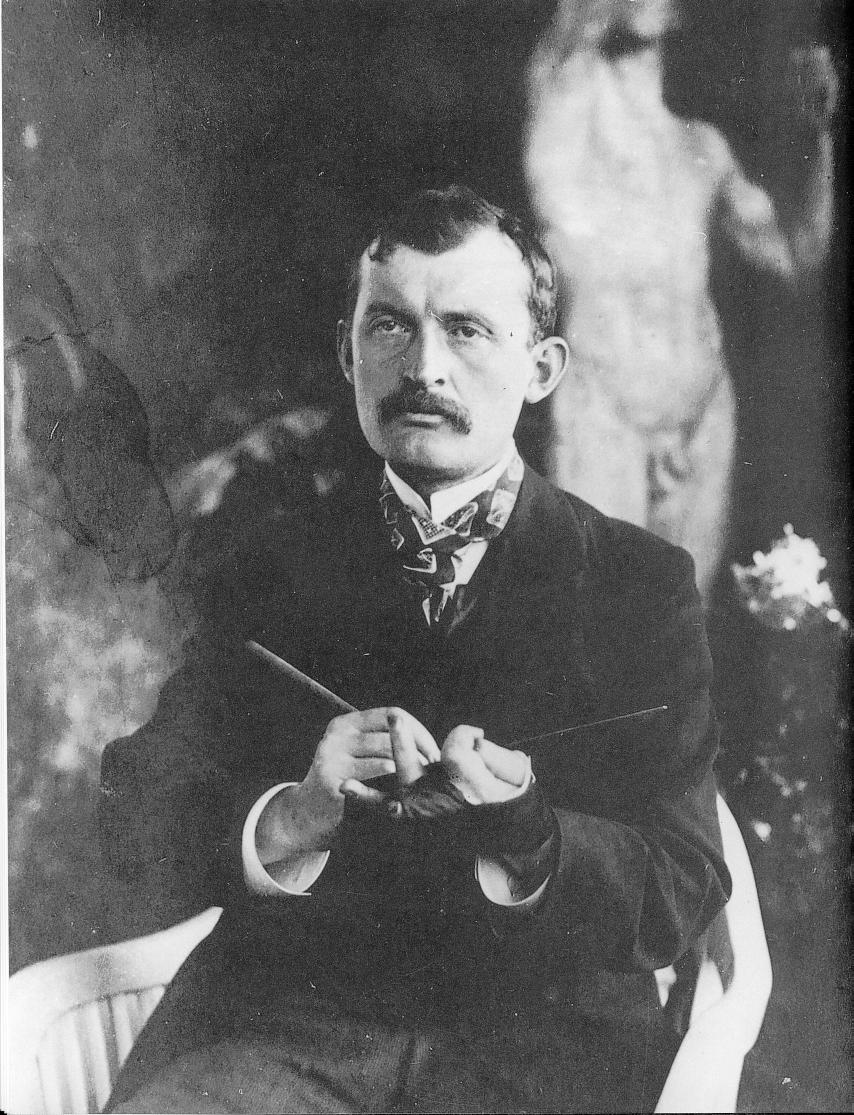
munchDecember 2, 1863 – January 23, 1944, he was a Norwegian painter. He is regarded as a Symbolist and a forerunner of expressionism. He focused on themes of fear, anxiety, melancholy, and death. He did not believe in heaven, or other Christian themes or doctrines, as far as I know.

My intention is to reintroduce you to an artist that I highly esteem.  The challenge I suppose is to understand the issues that Munch discovers in his work. He clearly taps into the ‘angst’ of the modern man, and what he does perpetuates a mindset for our generation.

Obviously these paintings are just an introduction, and I understand that they are selective. I have refrained from any kind of interpretation, other than laying down a general principle–  to Munch, color is everything.

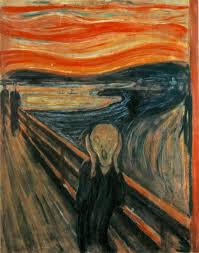
Munch was probably not a cheery person. He essentially was driven by anxiety through his whole life. It seems that he could be very ambitious. His classic work was “The Scream” which he made several versions to sell. He used different mediums to do this– tempera, lithograph and pastel. Interestingly, “The Scream” is a favorite target for art thefts. It captures the minds of every modern thinker.

Within our culture, “The Scream” is iconic. Warhol, Gary Larson, Dr. Who and even “The Simpsons” have cashed in on a parody of it.

Quotes

“I painted the picture, and in the colors the rhythm of the music quivers. I painted the colors I saw.”

“Painting picture by picture, I followed the impressions my eye took in at heightened moments. I painted only memories, adding nothing, no details that I did not see. Hence the simplicity of the paintings, their emptiness.”

“For as long as I can remember I have suffered from a deep feeling of anxiety which I have tried to express in my art.”

“Disease, insanity, and death were the angels that attended my cradle, and since then have followed me throughout my life.”

munch-thescream
The Scream, 1893

Munch’s best known painting ^


The Sick Child (1885)

Melancholy, 1894
Melancholy, 1894

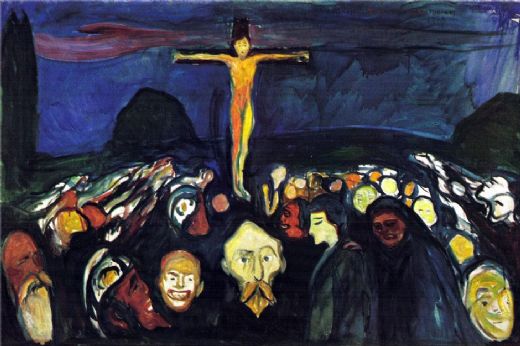
Golgotha, 1900
Golgotha