The Blessings of a Long Battle, part 2

brutal-boxing

 “Do not fear the conflict, and do not flee from it; where there is no struggle, there is no virtue.”   John of Kronstadt

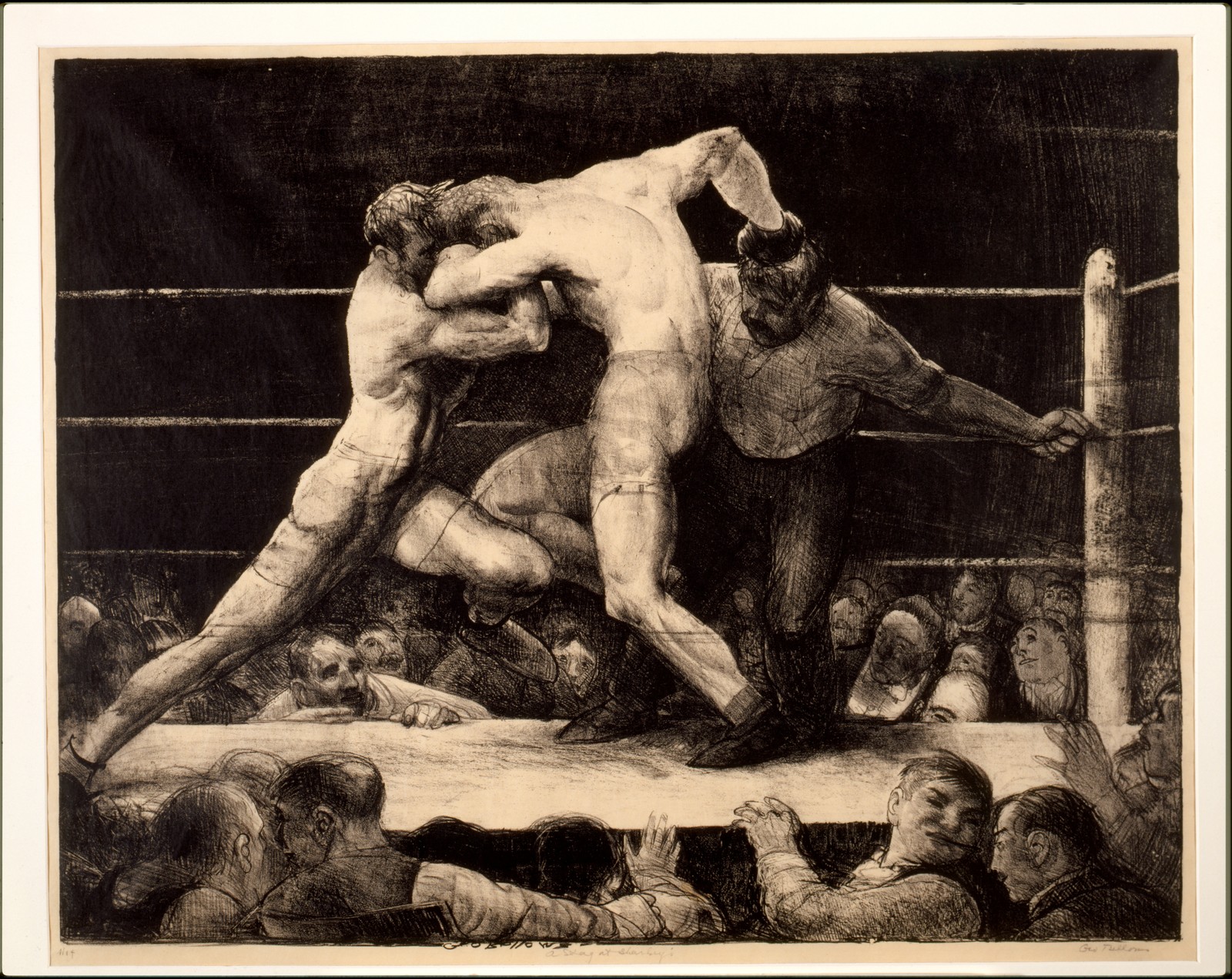
Part 1 of this post highlighted how God can bring good out of a long struggle with a sin, weakness, and/or problem by helping the Christian make the transition from putting their faith in formulas (e.g., “Do these three things and your problem will go away”) to a restful trust in Christ. Again, no sane Christian advocates habitual sin but the benefits of a protracted battle are numerous:

(1)  After a long battle, in making the transition from formulas to faith in God, a new brokenness develops in the believer. They’ve come to the end of themselves, run out of “self–effort fuel”, and are beginning to learn what Christ meant when he said, “…apart from me you can do nothing” (John 15:5).

(2) During a long battle with sin or weakness, there is a pattern of falling down and getting up. Proverbs 24:16 says that a righteous man falls seven times but keeps rising again. In this process many Christians report that a new intimacy has emerged in their relationship to God. They’ve come to know the God of mercy and compassion as never before because they’ve been repeatedly forgiven after their many stumbles.

(3) “He who is forgiven much loves much.” Along with a new intimacy, a greater love for God can also develop, after a long battle, because we’ve been forgiven over and over.

(4) And since God has extended his tender mercies to us over and over, we then can extend his mercy and compassion to others who have a protracted struggle with some issue. If our heart is right, a long battle can inoculate us from self–righteousness and judgmentalism in relation to others who fall over and over. How can we not extend to them the same grace that God extended to us?

In extending this grace to others, we may become a wounded healer to them. The healing we received from Christ during our struggle is graciously passed on those often struggling with similar issues. Healing emerges from your wounds just as resurrection emerges from death.

(5) After a war, the soldier of Christ often emerges battle–tested and wise to the schemes of the enemy. If a person has been pulled down into the dust 27 different ways by the devil, then, if he or she is paying attention, they’ve learned 27 strategies the enemy of our soul uses to try to destroy us.

In Twelve Step programs, one often hears the acronym H.A.L.T. mentioned in discussing relapse back into addiction. These four letters stand for hungry, angry, lonely, and tired and emphasize how these conditions create fertile soil for relapse.

If you frame the issue a different way, these are four strategies the devil uses to bring us back into bondage. How was this acronym learned? By people relapsing over and over when these conditions were present. Recovering people became wise through their failures in their long battle with addiction.

*

Jonathan

posted from http://www.openheavensblog.com/

When Truth Meets Love

mannequin1

“You say, ‘I am rich. I have everything I want. I don’t need a thing!’

And you don’t realize that you are wretched and miserable and poor and blind and naked.”

Rev. 3:17, NLT

__________________________

If you would come to me and speak this boldly, I’d run you off.  “You have no right speaking to me in this way!”  Our personal relationships are essentially based on “boundaries.”  My continuing friendship with you is based to a large degree on your respecting these social rules and restrictions. We look to social protocol to guide us.

God is the only one we would allow to speak to us so boldly and directly (and even then it’s still unwelcome).

Self-sufficiency has become the specific goal of the speaker, it is how he measures a respectable Christian life.  Respectability however, is a disturbing development for simple believers.  “I don’t need a thing.”  Within our hearts there is a hunger to be independent.  Self-sufficiency and pride are disturbing thought processes for simple disciples.

There is a delusion that is quite prevalent– we may feel that we have arrived.  We finally are capable of something important.  We have done all the necessary things, we have jumped through all the hoops, and have “made it.”  It somehow feels like we have accelerated the sanctification process.  Much of this comes from a feeling of being ‘spiritually exceptional.’

Jesus is confrontive.  He will not diminish the truth, to spare our feelings.  I think that that is quite remarkable.  We esteem and value honesty, but when it is focused on us it seems difficult.

“You don’t realize that you are wretched and miserable and poor and blind and naked” (Rev. 3:17).

None of these five words would we use to describe ourselves. Let’s consider them anyway:

  1. wretched– terrible, very bad
  2. miserable– unhappy, depressed
  3. poor– lacking sufficient resources
  4. blind– sightless, without vision
  5. naked– bare, without covering

These five words that describe the “real” position of the believer in pride.  These five words dismantle us, stripping us of our lies.  We have evaluated ourselves and discovered that we must be exceptional believers. (Perhaps my innate specialness is true after all!)

Twenty years ago my wife and I took an evaluation for placement in a language school.  I assumed I was quite exceptional, but two hours later I was told that I failed the test and would be assigned to the lowest level for the rest of the semester.  I was shocked!  And my dear wife, was put into the highest. What a blow to my pride!

“We will speak the truth in love, growing in every way more and more like Christ.”

Eph. 4:15

He reaches out to us because He loves us profoundly.  It is a love that is not based on any kind moral performance.  However, it is quite necessary for us to step into the piercing light, and an intense desire to enter reality.  It is difficult for us to slough off the lies, and to understand what is true.  Trust me, Jesus speaks nothing but the truth, and He loves us while He does it.

bry-signat-1

cropped-christiangraffiti1 (2)

&

Forget Yourself

keep-calm-and-forget-yourself-2

Self absorption is one of the traps that we can become ensnared. Many sociologists and psychiatrists are united at this point. Mental health is improved by thinking about others, instead of yourself. We are healthiest when we put others first.

My biggest issues are a result of my preoccupation with myself.

The times when I focus on the Lord, and on others are a blast of cool relief to my overheated soul. Healthy thinking can be evidence of what our gaze is set upon.

Healthy periods of self-examination are necessary, to a point. But prolonged focus can only be injurious. 

My own flirtations with suicide have caused me to reflect on how I arrived at such a point. Suicide is the inability to construct a future and feel loved. I get ensnared by all of my ponderous issues and can see no light and have no hope. I become hopeless; despair is all I can see and feel.

But we must never trust the seemingly “certainties of despair”. The promises of God and the steady witness of the Holy Spirit are to be our very life. Especially in this matter. Miring yourself in your problems will only damage your heart and mind. You may have a mental illness, but we can reduce the tension that life is giving us.

I have both bipolar disorder and epilepsy. I have experienced the “mega-ton” kind of depression. I know that I stay healthy when my attention is not on me, but on my family, my church, and my community; and my God. I gain nothing when my soul is mesmerized by my issues. (This isn’t humility– it’s the opposite.)

For the disciple of Jesus Christ what is called for is self-denial. A committed self-forgetfulness that energizes the “basin-and-towel” service to all those around us. Healing comes when we give ourselves completely (Isaiah 58). Our mental illness doesn’t nullify our discipleship. If anything at all, it enhances it.

I realized there is a fine line here. But I believe that my despair is “anti-God.” When I feel like giving up that should become my finest hour. God is closest to those who need Him most.

For thus says the high and exalted One
Who lives forever, whose name is Holy,
“I dwell on a high and holy place,
And also with the contrite and lowly of spirit
In order to revive the spirit of the lowly
And to revive the heart of the contrite.”

Isaiah 57:15, NASB

bry-signat (1)

cropped-christiangraffiti1.jpg

Thanksgiving Starts in Our Hearts

The First Thanksgiving

“Let us thank God heartily as often as we pray that we have His Spirit in us to teach us to pray. Thanksgiving will draw our hearts out to God and keep us engaged with Him; it will take our attention from ourselves and give the Spirit room in our hearts.”

–Andrew Murray

“Sing praises to the Lord, O you his saints, and give thanks to his holy name.”

Psalm 30:4