Chasing Down Euphoria

“That’s the difference between me and the rest of the world! Happiness isn’t good enough for me! I demand euphoria!” 

Calvin & Hobbes, comic strip

One of the blessings of turning 55 is I come to a place where I can sit and think about my life. I’m intrigued by how it unfolded the way that it did.  I know I can be a bit of an eccentric. But that’s ok. When the warm ocean current of depression and the cold water current of weird personality meet it will  get very tumultuous.  And being diagnosed with Bipolar Disorder brings even more issues. But I do admit– I have lived life hard. (Perhaps harder then it had to be.)

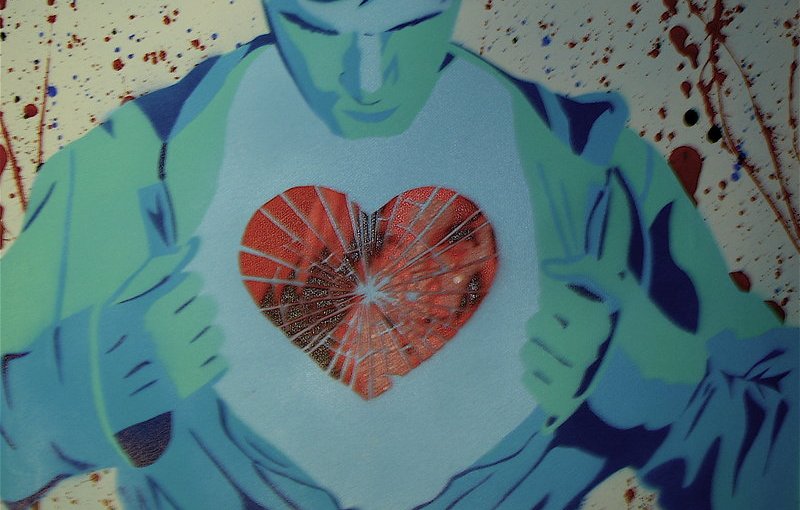
I do have a ‘dark side.’ One of the most disturbing areas I had was an almost insatiable thirst for ‘euphoria.’  Both drugs and alcohol, I discovered would put me in the place of exhilaration and elation.  And I longed for anything that would put me in this mental state.  If you had come to me with two hits of ‘acid,’ I would definitely take them both, and not even blink. That has changed since I accepted Christ. The impulses are tamed by God’s Spirit and Word. (Thank God!)

My quest for euphoria has taken me down some strange paths.  I learned to buy those drugs that would work that special bliss into my being.  But I couldn’t maintain euphoria.  I chased after that idea, without ever achieving it.  LSD, PCP, marijuana, whiskey, cocaine, and  even ‘needles’— all those old standbys have brought me to a false sense of inner freedom.  I tried to stay ‘stoned’ as long as I could. I drank enough vodka to float a battleship.  I was a maniac. Completely out-of-control.

“You will be bruised all over, without even remembering how it all happened. And you will lie awake asking,  “When will morning come, so I can drink some more?” 

Proverbs 23:35, CEV

depressedcomputerThe man who penned this must have knew the back side of getting hammered.  There is a lot of pain in this lifestyle, and not just hangovers and depression. Yet we can’t wait until we can start it all over again.  This love for the high is the precursor to addiction.  Crossing this line is a moment of strange logic for the user, but in reality,  it is a form of mental illness and insanity.

My addictions (which imprinted an ‘addictive personality’) are seldom reasonable.  As I pursue the euphoria (I love to get “high!”) my own ravenous appetite begins to feed off my own personality.  When a dam breaks, it starts at a tiny leak. This can take several years.  But the pressure will slowly continue and then it begins to escalate.  Soon the water pushes through until the dam breaks.  Floods ensue as the lake flows through.  Disaster is just that close.

“You say to each other,  “Let’s drink till we’re drunk!  Tomorrow we’ll do it again.  We’ll really enjoy ourselves.” 

Isa. 56:12, CEV

When we pursue, and then try to purchase our euphoria, we will inevitably end up as drunks and as addicts.  When fixed on the pursuit of carnal pleasure, we end up destroying ourselves, and the lives of those closest to us. When I start hurting others by my actions, I must consider I may have a big problem. Maturity is in part, understanding our desperateness, and then moving beyond it.  But the reality is that we are scarred, and that we continue to escape by “the skin of our teeth” until we die or get sober. Only Christ can save the euphoria-chaser.

Sometimes I’m a piece of work, it’s alright though because I’m His piece of work.

bry-signat (1)

cropped-christiangraffiti1.jpg

*

A Day in the Life of a Mental Hospital Patient

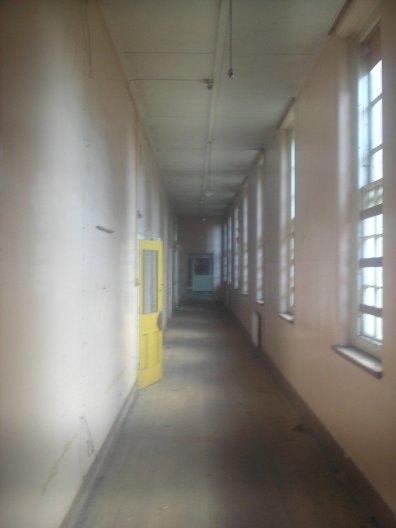
6:30 am. “Rise and shine,” but this is debatable– you simply just breathe and walk, in this kind of a desperate mental fog,  (Simply put, ‘there will be no sunshine for you today.’) But, this only just seems to really matter to us, who have no hope.  You exchange brief greetings with your roommate, which only just seems proper, even at this level.  We are given “ratty” old surgical scrubs to wear through out the day.

We head down ‘en mass’ to the cafeteria.  I see the servers on the line, I notice that they avert their eyes from us as we form a hungry queue.  Sometimes, they will give us choices: “bacon or sausage?”  To a mental patient, this can be a Gordian Knot of complexity.  So the line moves slowly, as we try to sort out this conundrum.

There is no coffee for us, as patients.  It has been two weeks for me, and I dream of a cup of hot coffee, with cream.  Some of the attendants drink Pepsi, although it is done hiddenly, but we all know it.  We resent their liberty, especially when we have none.  There is a question of equity, with us, which has been violated.

8:40 am.  We are all race to be the first in line for our morning meds.  It almost seems we are afraid they are suddenly going to run out.  I get my Seroquil, my lithium, my Zoloft.  Additionally, because I am ‘post-op’ brain tumor, I am given a mild stimulant called Provigil to help me think clearly.  I have no idea if it works, or not. (I rather have a cup of coffee.)

We then gather into a day room full of clunky and ugly furniture.  It is big, and the chairs encircle a grimy tile floor to make a large open space.  This is not an orderly place, as people are wandering about, some stare at the wall or at a fake plant in the corner.  It is noisy, some even shout.  Others just “rock” back and forth to a song that only they can hear.  A few of us lie in “fetal position” of hiddenness, just wanting to disappear.

The thought occurred to me one day, of a ‘giant aquarium.’  It was constantly moving, swirling about.  If you stopped moving, it meant that you were dead.  Everyone was moving, and oblivious to the others who were also moving.  This seems to explain much.  (You will need to accept the ‘aquarium’ idea if you really want to process the moment.)

On one of my stays, weeks went by before I realized that this particular meeting actually existed, but I was very confused and seriously beyond any correction.  I was really struggling with clinical depression, so meals and meds was all I could manage.  When I finally figured this out, I quickly joined the fish bowl.  It was both good and bad.  But mostly good. Finally as bleak as it was, I started accepting reality.

11:00 am.  One thing you do notice is a lot of disjointed conversations.  You would speak to someone and 10 minutes later they would answer.  And for the most part, conversations would be muted, whispered to people.  As if there was a conspiracy involved, and a certain appropriateness must be taken. We were a paranoid bunch.

Sometimes an attendant would turn on the TV.  I can remember watching cartoons and just maybe I would think that they were communicating to me in code.  We did have a VCR for movies, but because one guy urinated into the machine, it shorted it out.  So, alas, no more movies.

During one stay (and there were several) I was suicidal.  The staff watched me like a hawk, sitting at my door out in the hallway. But I was desperate to cut my wrists, so I stood up in a chair.  I took down a clock and wrapped it in a blanket, to muffle the sound of breaking glass.  I managed to slash my wrists deeply and often, before the nurse came in my room.  For a moment, I brought an excitement to the staff.  And perhaps a certain meaning to me.

When you’re in a psych ward your days are beyond tedious.  One day is like the next.  The psychiatrist comes to see you for 10 minutes, and it is a high point of your day.  You discover that any new explanations, or treatment plans are done solely by the doctor.  That is one of the first cardinal rules on the ward.  Ask a nurse or an aide, and they invariably dodge.  But the psychiatrist “rules the roost.” Everyone follows his decision. This is useful to know.

1:00 pm.   Suddenly a young teen girl with schizophrenia, screaming and pounding her head against the wall has now becomes the focus.  Every couple of days this happens, and in a twisted way punctuates the drabness of the day.  She is artfully restrained by the staff and taken to “the padded cell.”  We are all told it is for her own protection,  but we as patients, we all rally behind her fight.  When she makes a break from the nurses we all cheer her effort and want her to escape.

The second cardinal rule of the floor is that you don’t “stick out” in any way. Creating an issue is never tolerated, whatsoever.  Demanding more TV time, or coffee, or a newspaper will hardly ever go over well.  Just before Thanksgiving, 2003, I timed my meeting with the pdoc to raise an issue of a fresh cup of coffee.  There was a nurse present at our meeting, and she had to respond to the doctor’s order that I was to be given coffee on Thanksgiving morning.  The next morning the coffee was delivered, but the nurse insisted that she would set in a chair next to me until I finished.  Nevertheless, it was a glorious moment.

3:00 pm.  I soon developed auditory hallucinations.  First, I kept hearing a CB radio, squawking constantly.  A few days later, I started to hear a telegraph, “dit-dot-dash.”  They both were very loud and insisting that I pay attention.  Also, I would have 3 or 4 moments of seeing black and hairy spiders climbing at me.  They were so real, and even volitionally know they were not real, I still panicked.

4:30 pm.  They’re other issues as well.  I basically hated phone calls from family.  When they did come they always seemed intrusive and seemed to work against the thinking on the ward.  When a few friends did visit, I would be abrasive and rude.  Wishing they hadn’t made the effort.  I imagined their hearts processing me and my need to be there, and it disturbed me.  Since I lived about 300 miles from the hospital, it took effort on their part to try to see me.  Looking back though, I wish I had been nicer.

8:48  pm.  Getting ready for bed.  It seems that is what I have waited for this all day.  These are moments I have started to live for.  Sleep = oblivion.  I fade to black, and life is paused.  There isn’t any issues for me to figure out.  For eight hours, I find peace,  Sleep is a deep mercy, a gift given to us from the Father.  Those of us, who struggle hard against the dark, understand the “gift” of grace in the form of sleep.  Depressives very often crave sleep. We often want to hide into it, as if doing so would solve our problems and issues. For me, sleep was the only time I was free from the ward.

I want to sleep, to close my eyes and to be gone.  I suppose that is true, for all of us who want to “commit suicide by sleep.”  We seek oblivion, and long for the moment when we can “check out.”  We want to be forgotten and overlooked. We deeply want to be erased, and move directly into forgottenness.

When we have been committed to the ward as patients, we will probably be shaken to our core.  Our insertion into a diverse floor of mental illness, will always introduce us to deep desperation. We are jolted that there is a darkness that is pursing us far beyond what seems is right.  We must call out to Him who can save us.

*

kyrie elesion, Bryan

 

cropped-christiangraffiti1 (2)

A Holy Troublemaker

Christians were never meant to be normal. We’ve always been holy troublemakers, we’ve always been creators of uncertainty, agents of dimension that’s incompatible with the status quo; we do not accept the world as it is, but we insist on the world becoming the way that God wants it to be. And the Kingdom of God is different from the patterns of this world.”

Jacques Ellul

I was living in the gritty Mission district in San Francisco, I remember sitting in my favorite coffee shop at the corner of Clarion Alley and Mission reading Ellul’s “Meaning of the City.” I have to admit, I was profoundly undone.  Here I sat with my ‘latte,’ in the presence of a “genius,” reading a man who was describing the city that I was living in.  It was a bit much. It devastated me, but in a very good way.

Jacques Ellul describes the condition of city-darkness.  His contention was that there are people who are actively, (but often passively,) in a rebellious opposition to whatever God is doing.  There is an “organization of unbelief” that always resists the Holy Spirit, and it has become especially embedded into places we call the City.

Ellul recognized that there is an opposition force.  There are now those who have been drastically connected to the radical presence of God. There can’t ever be real normalcy here.  We are saints, (whether we like it or not.)  We are solidly “light.”  And then we start reflecting that into a profound darkness, which cares for nothing at all– even hating the grace of God– things can get vicious.

We stand in an awesome place (whether we understand or not.)  We are in the truest sense revolutionaries.  We stand by grace in this place.  The light is always breaking holy-troublemakersinto the lives of those who are living against Him.  This is most uncomfortable– like falling into a raspberry patch naked, with all its stickers and scratches. Hardly pleasant.

We are “the troublemakers.”  What we believe turns the world upside down (really, upside right.)  We have become obstacles to those in darkness. We are altered, and as believers the change is dramatically authentic.  There is simply nothing outside of His power that can do this.

Jesus answered, “I tell you the truth, unless you are born again, you cannot be in God’s kingdom.”   John 3:3, NCV

This critical thought describes the essential work that must happen before we can enter into it.  God’s kingdom is now our dream and our destiny.  It fuels us, and energizes us far beyond any work we can do.  We are now living people, residing in the “land of the dead.”  We must expect problems, but exult in a real existence.

U

ybic, Bryan


cropped-christiangraffiti1-2

Are You Depressed, Or Just Human?

rainy-day

Depression can be devastating. Its worst form, major depressive disorder, is marked by all-encompassing low mood, thoughts of worthlessness, isolation, and loss of interest or pleasure in most or all activities.

But this clinical description misses the deep, experiential horror of the condition; the suffocating sense of despair that can make life seem too arduous to bear. Here’s something else we can say confidently about depression: it is complex. The cause is often a mix of factors including genetic brain abnormalities, sunlight deprivation, poor nutrition, lack of exercise, and social issues including homelessness and poverty. Also, cause and effect can be hard to tease apart — is social isolation a cause or an effect of depression?

Unfortunately, we can make one more unassailable observation about depression: the disorder — or, more precisely, the diagnosis — has gone stratospheric. An astonishing 10 percent of the U.S. population was prescribed an antidepressant in 2005; up from 6 percent in 1996.

Why has the diagnosis become so popular? There are likely several reasons. It’s possible that more people today are truly depressed than they were a decade ago. Urbanized, sedentary lifestyles; nutrient-poor processed food; synthetic but unsatisfying entertainments and other negative trends, all of which are accelerating, may be driving up the rate of true depression. But I doubt the impact of these trends has nearly doubled in just ten years.

So here’s another possibility. The pharmaceutical industry is cashing in. In 1996, the industry spent $32 million on direct-to-consumer (DTC) antidepressant advertising. By 2005, that nearly quadrupled, to $122 million. It seems to have worked. More than 164 million antidepressant prescriptions were written in 2008, totaling $9.6 billion in U.S. sales. Today, the television commercial is ubiquitous:

  •  A morose person stares out of a darkened room through a rain-streaked window.
  • Quick cut to a cheery logo of an SSRI (selective serotonin reuptake inhibitor, the most common type of antidepressant pharmaceutical).
  • Cross-fade to the same person, medicated and smiling, emerging into sunlight to pick flowers, ride a bicycle or serve birthday cake to laughing children.
  • A voiceover gently suggests, “Ask your doctor if [name of drug] is right for you.”

The message — all sadness is depression, depression is a chemical imbalance in the brain, this pill will make you happy, your doctor will get it for you — could not be clearer. The fact that the ad appears on television, the ultimate mass medium, also implies that depression is extremely common.

Yet a study published in the April, 2007, issue of the Archives of General Psychiatry, based on a survey of more than 8,000 Americans, concluded that estimates of the number who suffer from depression at least once during their lifetimes are about 25 percent too high. The authors noted that the questions clinicians use to determine if a person is depressed don’t account for the possibility that the person may be reacting normally to emotional upheavals such as a lost job or divorce (only bereavement due to death is accounted for in the clinical assessment). And a 15-year study by an Australian psychiatrist found that of 242 teachers, more than three-quarters met the criteria for depression. He wrote that depression has become a “catch-all diagnosis.” What’s going on? It’s clear that depression, a real disorder, is being exploited by consumer marketing and is over-diagnosed in our profit-driven medical system.

Unlike hypertension or high cholesterol — which have specific, numerical diagnostic criteria — a diagnosis of depression is ultimately subjective. Almost any average citizen (particularly one who watches a lot of television) can persuade him or herself that transient, normal sadness is true depression. And far too many doctors are willing to go along. The solution to this situation is, unsurprisingly, complex, cutting across social, medical, political and cultural bounds.

But here are three major changes that are needed immediately: Medically, thousands of studies confirm that depression, particularly mild to moderate forms, can be alleviated by lifestyle changes. These include exercise, lowered caffeine intake, diets high in fruits and vegetables, and certain supplements, particularly omega-3 fatty acids. Physicians need to be trained in these methods, as they are at the Arizona Center for Integrative Medicine at the University of Arizona in Tucson. See Natural Depression Treatment for more about these low-tech methods, or the “Depression” chapter in the excellent professional text, Integrative Medicine by David Rakel, M.D. (Saunders, 2007).

Politically, if Congress — which seems hopelessly addicted to watering down all aspects of health care reform — can’t manage to ban all DTC ads in one stroke, it should start by immediately ending those for antidepressants. Personally, be skeptical of all DTC ads for antidepressants. The drugs may turn out to be no more effective than placebos. Many of them have devastating side effects, and withdrawal, even if done gradually, can be excruciating. While they can be lifesavers for some people, in most cases they should be employed only after less risky and expensive lifestyle changes have been tried.

Finally, recognize that no one feels good all the time. An emotionally healthy person can, and probably should, stare sadly out of a window now and then. Many cultures find the American insistence on constant cheerfulness and pasted-on smiles disturbing and unnatural. Occasional, situational sadness is not pathology — it is part and parcel of the human condition, and may offer an impetus to explore a new, more fulfilling path. Beware of those who attempt to make money by convincing you otherwise.

…………………………..

Weil's-new-book-availableAndrew Weil, M.D., is the founder and director of the Arizona Center for Integrative Medicine and the editorial director of http://www.DrWeil.com. Become a fan on Facebook. Follow Dr. Weil on Twitter. Read more at: http://www.huffingtonpost.com/andrew-weil-md/are-you-depressed-or-just_b_307734.html