There is Death in the Camp

Numbers 21:6-9, ESV

The children of Israel were under attack by thousands of snakes. I remember hearing of Jonestown, where on November 18, 1978 when 918 people drank ‘kool-aid’ mixed with cyanide. The whole thing was based on Jim Jones‘ delusion and rampant paranoia.

Death like this is never easy to deal with. It’s frightening. It boggles our mind.

It’s hear we read of poisonous snakes attacking people in the camp of Israel.  The people had taken umbrage with God and Moses because the way was too hard. They accused God of leading them out of Egypt, just so He could whole-scale destroy them.

I venture to say that the effects of sin have a terrible tendency (and a purpose) to kill people.  Its infection will work through our “blood stream” and be a certain poison that will eventually destroy us.

If we could actually see the snakes we might just take our sin a bit more seriously.  

But our particular viperous horde comes to us on a spiritual level.  We aren’t suddenly falling down, and our sin doesn’t bring us immediate death. (A slow death, which is, maybe harder.) We see it sometimes, but we can’t do anything about it.

Like it or not, there is a savage battle going on in our hearts and minds.  

The cross of Jesus is the only antidote, and through faith the poison is being rendered inert.  But personally I must admit, there are good days, and not-so-good ones. I know it’s the poison that works inside of me. Others may see it sometimes, but it’s pretty obvious to me.

John 3:14-15, ESV

I read the following story somewhere, and it seems to explain exactly what i want to say.  I think it is more than a cute story.  If we should take the time and unzip it, the truth will spill out.

Look  to Jesus, who was lifted up to destroy our sin, and heal our lives.  Fix your eyes on Him, and He will save.

My other teaching site is at alaskabibleteacher.com

For a deeper study in Numbers 21 can be found at: A Place for Truth.

Deeply Flawed–A Jar of Clay

Elijah was suicidal. Job wished he had never been born. David understood deep depression. Moses was anxious. Hannah was barren. Jonah was angry. Paul was all alone in a prison cell.

And actually, this is only a brief list. The Bible is loaded with flawed people who stumbled trying to be faithful. God uses imperfect people, because there really isn’t any other kind to be found.

Noah got spectacularly drunk. Abraham lied. Jacob repeatedly deceived others. Rahab was a whore. Samson lusted. David committed adultery and was a murderer. Peter denied Christ.

And there were others.

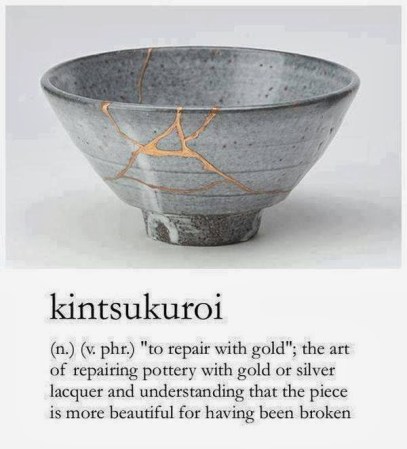
Why does God favor and love people who are so disturbed? Honestly, none of us measure up. It seems He uses the weak to carry out a plan and a purpose of redeeming others, and establishing a Kingdom. He takes messes and gives them His message.

He is Love– 100% of the time, and He loves you, and He loves me, He loves the world. (John 3:16.)

Messed up people of faith become instruments and vessels of grace to other messed up people. We carry a treasure that is not ours. Sometimes it takes years to see this. I hope you can.

And nothing is ever really wasted. Our mistakes (sins) become useful things to Him. For example, David’s sin would be transformed into Psalm 51 and 32. Yes, his disobedience had consequences, I won’t dispute that, but something wonderful also came when he repented.

Yes, you need to repent. But when sin is destroying you, it does seem logical.

The first two verses of Psalm 51 can bring tears when we finally understand their profound beauty, for they came out of David’s darkness:

Psalm 53:1-2, ESV

For thousands of years people of real faith have come and drawn beauty and grace from this song. David knew his sin was real, and incredible pain emerged from that, but the Psalm did also.

Please do not try to hide or excuse your sin, it always has the most awful consequences.

Broken people can be forgiven, redeemed and used. Sometimes I think God gets special enjoyment out of picking the worst and patiently loving us to wholeness. If you really know Him, and know your flaws, you’re well on your way of usefulness in His kingdom.

2 Corinthians 4:7

The Pain of Shattered Dreams

How you handle these fragile moments is key to the remainder of your life. It’s ok to feel abandoned or alone. It’s ok to be depressed.

But let God know about where you’re at. I’m convinced He really wants to teach you to walk in the truth. And dear one, nothing will be as challenging as that.

I really hope that these thoughts might help. There is no question that we’ll face challenges and difficulties. Just maybe this post will strengthen your walk? I chose each thought purposefully and every one contains something helpful (I hope). 

These quotes should speak wisdom as we try to understand what’s happening to us.

A.W. Tozer

“It is doubtful whether God can bless a man greatly until He’s hurt him deeply.” (Roots of Righteousness, Chapter 39)

Calvin Miller

“Hurt is the essential ingredient of ultimate Christ-likeness.” (Quoted in Christianity Today, July 2007, p41)

Larry Crabb

“Brokenness isn’t so much about how bad you’ve been hurt but how you’ve sinned in handling it.” (Christianity Today, A Shrink Gets Stretched, May 1, 2003)

“Shattered dreams are never random. They are always a piece of a piece in a larger story. The Holy Spirit uses the pain of shattered dreams to help us discover our desire for God, to help us begin dreaming the highest dream. They are ordained opportunities for the Spirit to first awaken, then to satisfy our highest dream.” (Shattered Dreams, 2001)

Alan Redpath

“When God wants to do an impossible task, he takes an impossible person and crushes him.” (Quoted by Gary Preston, Character Forged from Conflict: Staying Connected to God During Controversy. The pastor’s soul series, (Minneapolis, MN: Bethany House, 1999)

Bruce Wilkinson

“Are you praying for God’s superabundant blessings and pleading that He will make you more like His Son? If so, then you are asking for the shears.” (Secrets of the Vine, 60.)

Charles Swindoll

“Someone put it this way, ‘Whoever desires to walk with God, walks right into the crucible.’ All who choose godliness live in a crucible. The tests will come.” (Moses, Great Lives from God’s Word, 285.)

“Being stripped of all substitutes is the most painful experience on earth.” (David, p70)

Elisabeth Elliot

“The surrender of our heart’s deepest longing is perhaps as close as we come to an understanding of the cross… our own experience of crucifixion, though immeasurably less than our Saviour’s nonetheless furnishes us with a chance to begin to know Him in the fellowship of His suffering. In every form of our own suffering, He calls us into that fellowship.” (Elisabeth Elliot, Quest For Love, (Grand Rapids, MI: Fleming H. Revell, 1996), 182.)

George MacDonald

“No words can express how much our world ‘owes’ to sorrow. Most of the Psalms were conceived in a wilderness. Most of the New Testament was written in a prison. The greatest words of God’s Scriptures have all passed through great trials. The greatest prophets have “learned in suffering what they wrote in their books.” So take comfort afflicted Christian! When our God is about to make use of a person, He allows them to go through a crucible of fire.”

Helen Keller

“Character cannot be developed in ease and quiet. Only through the experience of trial and suffering can the soul be strengthened, vision cleared, ambition inspired, and success achieved.” (Quoted in Leadership, Vol. 17, no. 4.)

Oswald Chambers

“God can never make us wine if we object to the fingers He uses to crush us with. If God would only use His own fingers, and make me broken bread and poured-out wine in a special way! But when He uses someone whom we dislike, or some set of circumstances to which we said we would never submit, and makes those the crushers, we object. We must never choose the scene of our own martyrdom. If ever we are going to be made into wine, we will have to be crushed; you cannot drink grapes. Grapes become wine only when they have been squeezed.” (Chambers, O. (1993, c1935). My utmost for his highest : Selections for the year (September 30). Grand Rapids, MI: Discovery House Publishers.)

“No-one enters into the experience of entire sanctification without going through a ‘white funeral’ — the burial of the old life. If there has never been this crisis of death, sanctification is nothing more than a vision… Have you come to your last days really? You have come to them often in sentiment, but have you come to them really?… We skirt around the cemetery and all the time refuse to go to death… Have you had your ‘white funeral’, or are you sacredly playing the fool with your soul? Is there a place in your life marked as the last day, a place to which the memory goes back with a chastened and extraordinary grateful remembrance–’yes, it was then, at that ‘white funeral’ that I made an agreement with God.” (Oswald Chambers, My Utmost for His Highest, January 15, (Uhrichsville, OH: Barbour and Company, Inc., 1963).)

Jesus Christ had no tenderness whatsoever toward anything that was ultimately going to ruin a person in his service to God…. If the Spirit of God brings to your mind a word of the Lord that hurts you, you can be sure that there is something in you that He wants to hurt to the point of its death.” (Oswald Chambers, My Utmost for His Highest, September 27, (Uhrichsville, OH: Barbour and Company, Inc., 1963.)

Charles Stanley

Does God purposefully allow suffering? “The comfortable, but theologically incorrect, answer is no. You will find many people preaching and teaching that God never sends an ill wind into a person’s life, but that position can’t be justified by Scripture. The Bible teaches that God does send adversity – but within certain parameters and always for a reason that relates to our growth, perfection, and eternal good.” (*Stanley, C. F. 1997, c1996. Advancing through adversity (electronic ed.). Thomas Nelson: Nashville, TN.)

Are You Stuck in a Particular Sin?

Galatians 5:1

There are certain people who are just stuck in this seemingly endless cycle of sin. Oh, I feel conviction. Oh, I confess and repent and I receive forgiveness. And then the next day it happens all over again, and they are in this seemingly endless cycle. There are two truths that we have to embrace here. They are not mutually exclusive; they are perfectly compatible.

It is a good thing for you to see your sin.

You need to feel the conviction of the Spirit on the one hand, but God doesn’t want you to stay in that mindset. He says “When I awaken your heart to the reality of how you’ve fallen short, come quickly to the throne of grace and look at the many ways in which I have dealt with that sin. I have put it behind my back. I’ve buried it in the depths of the sea. I’ve blotted it out. I’ve trampled it underfoot. I turned my face away from it. I won’t gaze upon it.”

And it’s the power of that truth that will enable us to break out of this cycle in which so many people find themselves. It’s a cycle in which they just live in constant fear and trepidation. Oh, maybe I’ve done it one too many times, and God’s just so fed up with me that I’m going to be cast aside forever.

Live now in the freedom and the joy of knowing that you are forgiven fully and finally.

Sam Storms

I’ve actually heard people say, I envisioned myself coming to the Lord once again and him saying, ‘Oh no, not you again. The umpteenth time and are you just expecting me to forgive you over and over and over again?’ And they live in fear that God’s just going to run dry and not have mercy, that he’s going to run out of grace.

And God has said, “Look, it’s good that you recognize the ways you have failed. I don’t want you to live oblivious to the fact that you have disobeyed in an unrepentant and high-handed way. But know this: I have dealt with that sin. The punishment that deserves has been exhausted in Jesus.

Live now in the freedom and the joy of knowing that you are forgiven fully and finally, and let that be the power to break the cycle of the constant repetitive falling back into these old ways and these old patterns of the past.”

Live in the fullness of your freedom in Jesus.”

Sam Storms (PhD, University of Texas at Dallas) has spent more than four decades in ministry as a pastor, professor, and author. He is currently the senior pastor at Bridgeway Church in Oklahoma City, Oklahoma, and was previously a visiting associate professor of theology at Wheaton College from 2000 to 2004. He is the founder of Enjoying God Ministries and blogs regularly at SamStorms.org.

Sam Storms is the author of A Dozen Things God Did with Your Sin (And Three Things He’ll Never Do).

brokenbelievers.com