Sunshine and Mercy

sunshine2

“The Lord passed in front of Moses, calling out, “Yahweh! The Lord! The God of compassion and mercy! I am slow to anger and filled with unfailing love and faithfulness.”

Exodus 34:6, NLT

“I’m in a desperate situation!” David replied to Gad. “But let us fall into the hands of the Lord, for his mercy is great. Do not let me fall into human hands.”

2 Samuel 24:14

Sitting on the deck, it’s a cold morning, but the sun is bright. It’s a typical winter day here in Alaska, which means the sun is pushing back the winter for all it’s worth. Up here we have a ‘the love affair’ with the sun; it hides herself in the gloominess of winter— only to show herself off big time during our summers.

Soaking up the sun got me thinking about the mercy of God. I find I am of two minds. For the most part I love His mercy. It is probably the attribute I love most about Him. Mercy defined by my dictionary:

  • compassionate or kindly forbearance shown toward an offender, an enemy, or other person in one’s power; compassion, pity, or benevolence: “Have mercy on the poor sinner.”

Who could not like this in ones deity? Most of us would agree that we are thrilled that God is this compassionate— especially when we’re such rascals ourselves. We will ground ourselves in His mercy, even when our minds give up.

But this is the hard part. I must be as merciful as He is. Mercy comes with the caveat that I become a compassionate person, even to those who are undeserving.

“Shouldn’t you have mercy on your fellow servant, just as I had mercy on you?’

Matthew 18:33

If you want mercy, you must be prepared to give it. Perhaps this is how God changes the world?

See what the Alaskan winter sunshine can do?

1brobry-sig4


“When a Christian shows mercy, he experiences liberation.”   ~Warren Wiersbe


cropped-christiangraffiti1 (1)

Change is Mandatory, [Transformation]

coal-diamond

6 “The Lord your God will change your heart and the hearts of all your descendants, so that you will love him with all your heart and soul and so you may live!”

Deuteronomy 30:6, NLT


8 “So all of us who have had that veil removed can see and reflect the glory of the Lord. And the Lord—who is the Spirit—makes us more and more like him as we are changed into his glorious image.”

2 Corinthian 3:18, NLT

Geologists tell us that a lump of coal can be transformed into a diamond.  It is not an easy process, and there is little economic value. But it can be done, but with much effort and time. This involves tremendous heat, and incredible pressure.

Something is happening to us and we are being transformed. This is part of God’s plan for us. This takes action on His part, it is a special work of His Holy Spirit.  Slowly, but very surely, “we are becoming.”

Becoming is not an easy process. It is not a skill to be mastered but a new life to be lived. We are called to deny ourselves and bear our cross and follow Him every day. His Spirit comes along side and encourages us to believe God is changing us. We are slowly becoming like Jesus. We are growing “more and more like him.”

“And I am certain that God, who began the good work within you, will continue his work until it is finally finished on the day when Christ Jesus returns.”

Philippians 1:6

We should conclude that God is surely working on us until Jesus returns, or we die. If you are a believer, you can have faith that His work is ongoing. It may seem delayed, or stalled but be assured that you’re His special project and He is not going to give up on you.

He is making ‘diamonds’ out of lumps of coal.

1brobry-sig4

cropped-christiangraffiti1 (1)

OCD: Rituals and Obsession

“I couldn’t do anything without rituals. They invaded every aspect of my life. Counting really bogged me down. I would wash my hair three times as opposed to once because three was a good luck number and one wasn’t. It took me longer to read because I’d count the lines in a paragraph. When I set my alarm at night, I had to set it to a number that wouldn’t add up to a ’bad’ number.”

“I knew the rituals didn’t make sense, and I was deeply ashamed of them, but I couldn’t seem to overcome them until I had therapy.”

“Getting dressed in the morning was tough, because I had a routine, and if I didn’t follow the routine, I’d get anxious and would have to get dressed again. I always worried that if I didn’t do something, my parents were going to die. I’d have these terrible thoughts of harming my parents. That was completely irrational, but the thoughts triggered more anxiety and more senseless behavior. Because of the time I spent on rituals, I was unable to do a lot of things that were important to me.”

People with obsessive-compulsive disorder (OCD) have persistent, upsetting thoughts (obsessions) and use rituals (compulsions) to control the anxiety these thoughts produce. Most of the time, the rituals end up controlling them.

For example, if people are obsessed with germs or dirt, they may develop a compulsion to wash their hands over and over again. If they develop an obsession with intruders, they may lock and relock their doors many times before going to bed. Being afraid of social embarrassment may prompt people with OCD to comb their hair compulsively in front of a mirror-sometimes they get “caught” in the mirror and can’t move away from it. Performing such rituals is not pleasurable. At best, it produces temporary relief from the anxiety created by obsessive thoughts.

Other common rituals are a need to repeatedly check things, touch things (especially in a particular sequence), or count things. Some common obsessions include having frequent thoughts of violence and harming loved ones, persistently thinking about performing sexual acts the person dislikes, or having thoughts that are prohibited by religious beliefs. People with OCD may also be preoccupied with order and symmetry, have difficulty throwing things out (so they accumulate), or hoard unneeded items.

Healthy people also have rituals, such as checking to see if the stove is off several times before leaving the house. The difference is that people with OCD perform their rituals even though doing so interferes with daily life and they find the repetition distressing. Although most adults with OCD recognize that what they are doing is senseless, some adults and most children may not realize that their behavior is out of the ordinary.

OCD affects about 2.2 million American adults, and the problem can be accompanied by eating disorders, other anxiety disorders, or depression.  It strikes men and women in roughly equal numbers and usually appears in childhood, adolescence, or early adulthood. One-third of adults with OCD develop symptoms as children, and research indicates that OCD might run in families.

The course of the disease is quite varied. Symptoms may come and go, ease over time, or get worse. If OCD becomes severe, it can keep a person from working or carrying out normal responsibilities at home. People with OCD may try to help themselves by avoiding situations that trigger their obsessions, or they may use alcohol or drugs to calm themselves.

OCD usually responds well to treatment with certain medications and/or exposure-based psychotherapy, in which people face situations that cause fear or anxiety and become less sensitive (desensitized) to them.

Source: http://www.nimh.nih.gov/index.shtml

cropped-christiangraffiti1 (1)

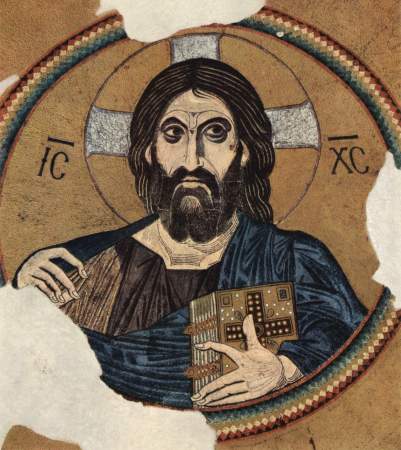
The Word Made Flesh, by Brennan Manning

meister_von_daphni_002
Christ Pantocrator, God incarnate in the Christian faith, shown in a mosaic from Daphni, Greece, ca. 1080-1100.

One night a dear friend of Roslyn’s named Joe McGill was praying over this passage in John: “In the beginning was the Word, and the Word was with God, and the Word was God…And the Word became flesh and dwelt among us, and we have seen his glory, glory as of the only Son from the Father, full of grace and truth” (John 1:1, 14).

In the bright darkness of faith, he heard Jesus say: “Yes, the Word was made flesh. I chose to enter your broken world and limp through life with you.”

On the last day, when we arrive at the Great Mansion in the Sky, many of us will be bloodied, battered, bruised and limping. But by Christ, there will be a light in the window and a “welcome home” sign on the door.

“Blessed are those who wash their robes, so that they may have the right to the tree of life and that they may enter the city by the gates.”

Revelation 22:14

From The Ragamuffin Gospel, by Brennan Manning. Copyright 1990 by Brennan Manning. Used by permission of Multnomah Publishers, Inc.


cropped-christiangraffiti1-3-1