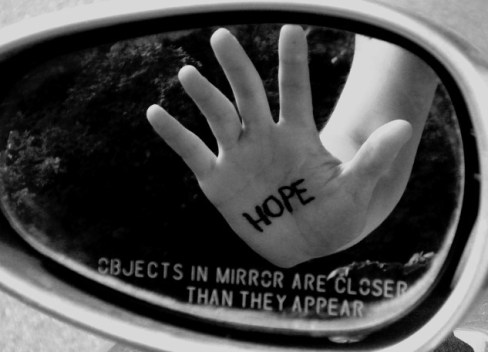
Becoming Manic: What You Can Do

http://joemacgown.deviantart.com/

Top tips for coping

These are a list of things that people who have difficulties when they become high or manic have found helpful:

  • Try to get some sleep. Going without sleep has been shown to cause manic states and make them last longer.
  • Eat well. Don’t go without food or eat high energy food. Eat slowly.
  • Use relaxation techniques.  Quiet prayer works well right now.
  • Stay in bed even though you feel compelled to do lots of things.
  • Don’t act on your ideas. In a few days time you may see things completely differently.  Emailing friends now is dangerous. (I know).
  • Don’t buy anything expensive. Some people have found it helpful to give their credit cards/check book to friends.  (I tried to buy a 7 foot potted tree in London, UK once, because it was lonely.)
  • Use medication, herbal remedies, or other things that slow you down and/or help you sleep.  Think “speed bumps”.
  • Take relaxing (rather than high energy) exercise e.g. walking, swimming.  This is a must-do.
  • Make a plan for each day and keep to it. Don’t plan to do too much.
  • Try to do things slowly rather than quickly. Talk and walk consciously slower than you feel driven to.
  • Challenge any grandiose ideas you might have about yourself.  You must do this!
  • Reduce any pressures or stresses on you.
  • Cut out stimulants e.g. coffee, sugar, chocolate, fizzy drinks, alcohol. Some anti-depressants (e.g. the SSRIs like Prozac) can have stimulant-like effects – discuss this with your doctor and consider stopping them.

It may be helpful for you to make a plan about what to do before you get really elevated. You know yourself best, so build as many things into the plan that you feel will help you not do things you may later regret. It may be helpful to draw up a plan, and a list of ‘warning signs’, with a trusted friend or mental health professional at a time when you are not ‘high’, but that can be put into place as you or others notice your warning signs.

Some people believe that ‘getting manic’ is a response to not thinking about or facing things that might be quite frightening or depressing. It might be helpful to ‘get connected’ to such things, by talking and thinking about your life and some of the root causes of some unhappiness in your life. You could do this with a trusted friend or mental health professional.


cropped-christiangraffiti1 (3)

Give Us This Day, Our Daily Meds

My particular issue is with Bipolar 1, with psychotic features.  I have social anxiety which factors in as well as weird delusions.  The anxiety and delusions are pretty much one and the same.  They are often the things that will touch other people, while the rest is less obtrusive and can be hidden.

I have a tendency to hatch ‘mini-conspiracies’ almost daily.  They can be really paranoid as I think the worse about people, and life as it enfolds around me.  Facebook with its social networking helps, but it has also intensified my issues.  I am very much a recluse, and only get out and about twice a week. There are some who can see through my issues and really help. They are worth more then gold to me.

Depression, which is part of the Bipolar, has been more of a factor just in the last few months.  Suicide, that dark word, will deepen if the depression goes too long without lifting. It is an awful and brutal thing. My last bout was just two months ago and I quit functioning. I really did pray for death. Debilitated, I laid in bed powerless to do anything but sleep, and hide. I didn’t take a shower or bath for almost a month. Just the thought of being pelted by water seemed too violent.

Being a believer gives me a reason to live.  The Holy Spirit is so patient with me.  His companionship is far more helpful than any anti-depressant.  He doesn’t require that I become symptom free to fellowship with Him.  Instead, He weaves with the materials He has, and my discipleship is really no different than other Christian believers. This gives me a constant hope.

Overall, in spite of a very tumultuous, and ‘see-saw life’, I find that life with Jesus (discipleship) is truly grand.  He understands me, and is guiding me.  He is the Shepherd who is good, and I am His sheep who needs kindness and forgiveness always. He bruises no reed, nor does He quench the smoking candle (Matthew 12:20.)

One more thing.  Having a mental illness has, I believe, made me more compassionate and tender toward others.  When I meet a difficult person, I will be the last one to give up on him.  Others will bail out, but I stick.  I guess this can be a bad trait, but I can’t help it.  I love people, esp. those who hurt.

Here’s a list of my daily meds.  I hope this helps someone navigate the wild seas of psychiatry safely.

AM– lithium, 600 mg/Zoloft 200mg/Seroquel 400 mg/Provigil 200mg

NOON-Seroquel 200 mg

PM-lithium 600 mg/Seroquel 400 mg/Lunesta 2 mg

The lithium works mostly on mania, but does help depressive states.  The Zoloft is an anti-depressant (similar to Paxil)  The Provigil is for alertness, I have had issues with daytime sleepiness, esp. since my brain tumor.  Finally the Lunesta is a sleeping pill. This may seem a lot, but it has taken 2-3 years to get it figured out.  If I can help explain any of this, please let me know.  I aim to please!

What Do I Really Need?

“The depressed don’t simply need to feel better. They need a Redeemer who says, “Take heart, my son, my daughter; what you really need has been supplied. Life no longer need be about your goodness, success, righteousness, or failure. I’ve given you something infinitely more valuable than good feelings: your sins are forgiven.” 

Elyse M. Fitzpatrick

 “And this same God who takes care of me will supply all your needs from his glorious riches, which have been given to us in Christ Jesus.”

Philippians 4:19

It really does come down to “needs” after all.  I don’t need to feel better, and I don’t need a to take another Zoloft.  Do I believe in psych drugs? Yes, most definitely.  I do need to control my moods. But when we talk about need (its really an emphatic word, it needs to be drawn out) I have discovered I really have very few needs.

I’ll tell you what I need.  I need to follow Jesus with my cross.  I need to pray and worship in His presence.  I need to love my wife and children.  I need to love my neighbor.  I need the Word, both ‘rhema’ and ‘logos.’  I need a good pastor, and I need to fellowship with other believers more than I do.

Its good to go through this sifting process.  I do not need to feel happy, healthy, wealthy, content, strong, moral or helpful.  I do need God however. Yes, I am “mentally” ill.  I do take meds to keep me from burning down our house and shooting our dog.  I’ve been listening to music in my head that others can’t hear.  I see things, astonishing things.  I sometimes have to deal with paranoid feelings that would curl your hair.

But what do I really need?  I desperately need God.

I need his love.  I need to know all my sins are forgiven.  I need to know that I will be with him forever and ever.  I guess the challenge is now yours, sort out these issues.  It doesn’t matter what flavor of mental illness you have.  You need Him.  Everything else is mostly froth and scum.

“I will answer them before they even call to me. While they are still talking about their needs, I will go ahead and answer their prayers!”

Isaiah 65:24

bry-signat

flourish18


The Fighting Caregiver

towardthefight


0If you know someone who has bipolar disorder, it affects you too. The first and most important thing you can do is help him or her get the right diagnosis and treatment. You may need to make the appointment and go with him or her to see the doctor. Encourageyour loved one to stay in treatment.

caregivers
Your touch can make a big difference

To help a friend or relative, you can:

  • Offer emotional support, understanding, patience, and encouragement
  • Learn about bipolar disorder so you can understand what your friend or relative is experiencing
  • Talk to your friend or relative and listen carefully
  • Listen to feelings your friend or relative expresses-be understanding about situations that may trigger bipolar symptoms
  • Invite your friend or relative out for positive distractions, such as walks, outings, and other activities
  • Remind your friend or relative that, with time and treatment, he or she can get better.

Never ignore comments about your friend or relative harming himself or herself. Always report such comments to his or her therapist or doctor.

Support for caregivers

Like other serious illnesses, bipolar disorder can be difficult for spouses, family members, friends, and other caregivers. Relatives and friends often have to cope with the person’s serious behavioral problems, such as wild spending sprees during mania, extreme withdrawal during depression, poor work or school performance. These behaviors can have lasting consequences.

Caregivers usually take care of the medical needs of their loved ones. The caregivers have to deal with how this affects their own health. The stress that caregivers are under may lead to missed work or lost free time, strained relationships with people who may not understand the situation, and physical and mental exhaustion.

Stress from caregiving can make it hard to cope with a loved one’s bipolar symptoms. One study shows that if a caregiver is under a lot of stress, his or her loved one has more trouble following the treatment plan, which increases the chance for a major bipolar episode. It is important that people caring for those with bipolar disorder also take care of themselves.

Recommended help for Caregivers: http://www.healthyplace.com/bipolar-disorder/support/member-of-family-is-mentally-ill-what-now/menu-id-67/

This post is dedicated to Lynnie, who is both amazing and aware of me and my issues. She covers me through depression and delusions. She has bandaged cut wrists, and helped me through the blackest of despair. She has been the best caregiver ever. Thank you my love. –B