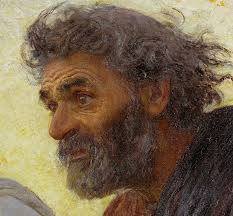
Make the Decision to Be Weak


Our society has pretty much embraced the American cultural icon of the cowboy.  We revere those who ride alone and hard. We are rugged individualists and hardened men making our own way.  Our society reflects this in subdued ways.  No matter what happens, we are fiercely free and independent.  We are ‘desperadoes’–we do whatever we think is best.

John Wayne, the ‘Alamo,’ and the biker with his Harley-Davidson on Route 66 have been our inspiration.  Each are distinctly heroic and carry our hopes and dreams.

We must understand that the Bible is not an American book.

It belongs to every tribe, race, and nation. 

A cowboy did not die for our sins (which are countless).  The way of discipleship does not take us through Luckenbach, Texas. We’re not desperados. We are Jesus’ disciples.

His Words to us are bold and entirely challenging in an amazingly fresh and different direction.  We are told to wash feet, to repeatedly turn the other cheek, to surrender all our rights, and then take the lowest place there is in every situation.

Our lives truly begin when we come under the Lordship of Jesus Christ.

Humility is to become the way we think and how we act, we have become slaves to righteousness.  Our vaunted independence has been toppled. This selfish crown has slipped. My willfulness still wants to stand instead of kneeling. We discover this has been the truth all along.  We have never ever been in control. 

He has been the King since before time, and will always be, for an eternity.

“Many Christians have what we might call a “cultural holiness”. They adapt to the character and behavior pattern of Christians around them. As the Christian culture around them is more or less holy, so these Christians are more or less holy. But God has not called us to be like those around us.

He has called us to be like Himself. Holiness is nothing less than conformity to the character of God”.

Jerry Bridges

Our churches often struggle over our personal issues of pride and stubbornness. 

I pose the following questions.  Are we honestly in a condition of being weak?  Can you serve with a basin and towel?  Is your heart that of a child? Do we see the world through the ‘lens’ of a soft and broken spirit?

I write these things surveying my own life. 

Self will and my hard heart fit ‘hand-and-glove’ with being that desperado.  I ride alone, making my own way, and I don’t make any disciples. I jettison my cross— my cross of discipleship.  I serve no one, unless it suits me.  Am I His disciple, or am I a man of my own?  Is He my Lord, or have I decided to claim that right for myself?

I only hope I have spoken the truth today. Forgive me if I offended.

“Lord, I am willing to receive what You give, to lack what You withhold, to relinquish what You take, to suffer what You inflict, to be what You require.”  Amen.


“Darkness is My Only Companion”

Ambrose of Milan (340-397)

Our theology makes all the difference in fighting depression, writes Kathryn Greene-McCreight, Author of “Darkness, Is My Only Companion” and Episcopal priest.

In his Problem of Pain, C. S. Lewis says that suffering is uniquely difficult for the Christian, for the one who believes in a good God. If there were no good God to factor into the equation, suffering would still be painful, and  ultimately meaningless.

For the Christian, who believes in the crucified and risen Messiah, suffering is always meaningful. It is meaningful because of the one in whose suffering we participate, Jesus. This is neither to say, of course, that suffering will be pleasant, nor that it should be sought. Rather, in the personal suffering of the Christian, one finds a correlate in Christ’s suffering, which gathers up our tears and calms our sorrows and points us toward his resurrection.

In the midst of a major mental illness, we are often unable to sense the presence of God at all. Sometimes all we can feel is the complete absence of God, utter abandonment by God, the sheer ridiculousness of the very notion of a loving and merciful God. This cuts to the very heart of the Christian and challenges everything we believe about the world and ourselves.

I have a chronic mental illness, a brain disorder that used to be called manic depression, but now is less offensively called bipolar disorder. I have sought help from psychiatrists, social workers, and mental health professionals; one is a Christian, but most of my helpers are not. I have been in active therapy with a succession of therapists over many years, and have been prescribed many psychiatric medications, most of which brought quite unpleasant side effects, and only a few of which relieved my symptoms. I have been hospitalized during the worst times and given electroconvulsive therapy treatments.

All of this has helped, I must say, despite my disinclination toward medicine and hospitals. They have helped me to rebuild some of “myself,” so that I can continue to be the kind of mother, priest, and writer I believe God wants me to be.

During these bouts of illness, I would often ask myself: How could I, as a faithful Christian, be undergoing such torture of the soul? And how could I say that such torture has nothing to do with God? This is, of course, the assumption of the psychiatric guild in general, where faith in God is often viewed at best as a crutch, and at worst as a symptom of disease.

How could I, as a Christian, indeed as a theologian of the church, understand anything in my life as though it were separate from God? This is clearly impossible. And yet how could I confess my faith in that God who was “an ever-present help in trouble” (Ps. 46:1) when I felt entirely abandoned by that God? And if this torture did have something to do with God, was it punishment, wrath, or chastisement? Was I, to use a phrase of Jonathan Edwards’s, simply a “sinner in the hands of an angry God”?

I started my journey into the world of mental illness with a postpartum depression after the birth of our second child. News outlets are rife with stories of women who destroy their own children soon after giving birth. It is absolutely tragic. Usually every instinct in the mother pushes toward preserving the life of the infant. Most mothers would give their own lives to protect their babies. But in postpartum depression, reality is so bent that that instinct is blocked. Women who would otherwise be loving mothers have their confidence shaken by painful thoughts and feelings.

Depression is not just sadness or sorrow.

When I am depressed, every thought, every breath, every conscious moment hurts.

And often the opposite is the case when I am hypomanic: I am scintillating both to myself, and, in my imagination, to the whole world. But mania is more than speeding mentally, more than euphoria, more than creative genius at work. Sometimes, when it tips into full-blown psychosis, it can be terrifying. The sick individual cannot simply shrug it off or pull out of it: there is no pulling oneself “up by the bootstraps.”

And yet the Christian faith has a word of real hope, especially for those who suffer mentally. Hope is found in the risen Christ. Suffering is not eliminated by his resurrection, but transformed by it. Christ’s resurrection kills even the power of death, and promises that God will wipe away every tear on that final day.

But we still have tears in the present.

We still die. In God’s future, however, death itself will die. The tree from which Adam and Eve took the fruit of their sin and death becomes the cross that gives us life.

The hope of the Resurrection is not just optimism, but keeps the Christian facing ever toward the future, not merely dwelling in the present. But the Christian hope is not only for the individual Christian, nor for the church itself, but for all of Creation, bound in decay by that first sin: Cursed is the ground because of you … It will produce thorns and thistles for you …” (Gen. 3:17-18).

This curse of the very ground and its increase will be turned around at the Resurrection. All Creation will be redeemed from pain and woe. In my bouts with mental illness, this understanding of Christian hope gives comfort and encouragement, even if no relief from symptoms. Sorrowing and sighing will be no more. Tears will be wiped away. Even fractious [unruly, irritable] brains will be restored.

“Darkness: My Only Companion”

Kathryn Greene-McCreight is assistant priest at St. John’s Episcopal Church in New Haven, Connecticut, and author of Darkness Is My Only Copanion: A Christian Response to Mental Illness (Brazos Press, 2006).

Click to read Psalm 88

My Dear Child – A Letter from God

Hold Hands

My Dear Child,

I see that you are trying to be
just as good as you can be
but what you clearly do not see
is you can’t do this without Me

I know that you are wondering why
I do not stop what makes you cry
but if on Me you will rely
every tear that falls I’ll dry

I love you more than you’ll ever know
in your holiness, I want to grow
and though your progress may seem slow
the path you walk in the way you must go

I will comfort you when times are tough
I will watch over you when life is rough
I will rescue you when you’ve had enough
What’s too big for you, to Me is small stuff

May the Father’s  grace and peace be yours, now and forever,

Linda

 Linda L. Kruschke’s Blog

Assurance of Salvation for Desperate People

 For all who are led by the Spirit of God are sons of God. 15 For you did not receive the spirit of slavery to fall back into fear, but you have received the Spirit of adoption as sons, by whom we cry, “Abba! Father!

Romans 8:14-15

Abba! Father!

That’s a title of intimacy. You belong in His family. You’re His son, His daughter. But as broken believers we can struggle a lot. Many in the Church don’t understand us, and we hardly understand ourselves. But we know we’re His own. We’re the shaky ones it seems.

We’re often aware that there’s a mixture of good and bad things regarding our faith. Because of this, we often see what others can’t.

  • The Good: we don’t have to be convinced of our sin.  We live in a broken world, and we’re pretty sure that we have formidable issues. We’re needy. We’ve tried lots of things, and we just might be a little wary (but that can be good too).
  • The Bad: our consistency fluctuates from day-to-day. We never know what our state of mind will be. Some of us have problems socially that hinders us. Attendance at our local church can be hard. We struggle in our relationships with others. We seem to make excuses for everything.

From day to day many of us struggle terribly.

The existence of this ‘flightiness’ is painfully evident. And as strugglers it’s hard to maintain anything, much less a spiritual life. But experience has taught me that the Holy Spirit not only makes an allowance, but even pours out extra grace on the troubled believer. The Lord loves His misfits.

But no matter what, we can’t put any confidence in our flesh. We do bounce around, but salvation is not of our own doing. What stabilizes us is a serious dedication to the promises we have in the Word of God. He gives us His Words to strengthen.

faith-train

Obviously, the engine must pull the other cars. We must look to the promises of God to stay on track. And both faith and feelings must follow the engine. Some struggle a great deal because they are led by their feelings. Confusion will follow if we get the proper order mixed up.

  1. First facts, (the Bible, God’s word to you)
  2. then comes faith,
  3. and finally feelings, (these cannot come first!)

The Word of God is our only safety.

Our faith is to be connected to the promises of God. For those of us with a disability, we realize that we deal with issues that others seem to skate through. (But hey, aren’t used to that now?) And yet the Father makes some things easier for us too. 

Please, read the Word. The Psalms or the Gospels are always good for us.

Focus on God’s promises to you. If you collect up His words, in your mind and heart, the Holy Spirit will bring to your mind these verses when you really need them. (I draw much strength from the Psalms. These keep me on track.)

We’ve been adopted by the Holy Spirit as sons and daughters.

We are deeply loved by God Himself. He has gone and made us ‘heirs’ without any of our own effort (Romans 8:14-17). We are a people in need of stability. What God gives us is His own constancy. Read the Word, fresh just for you. The promises applied lavishly will enable you to be like Jesus.

 “And because of his glory and excellence, he has given us great and precious promises. These are the promises that enable you to share his divine nature and escape the world’s corruption caused by human desires.”

2 Peter 1:4, NLT

“In the darkest of nights cling to the assurance that God loves you, that He always has advice for you, a path that you can tread and a solution to your problem–and you will experience that which you believe.”

“God never disappoints anyone who places his trust in Him.”

 Basilea Schlink

Bryan Lowe