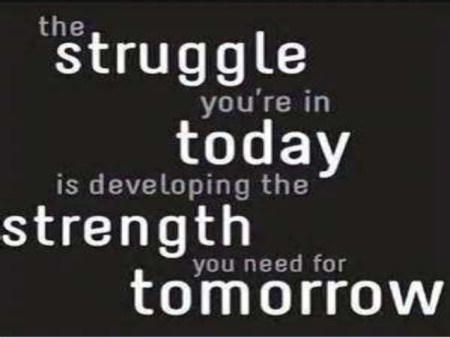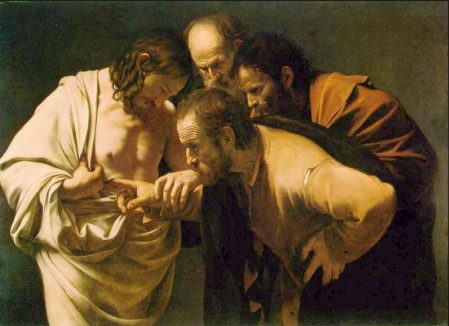
“Count it all joy, my brothers, when you meet trials of various kinds, 3 for you know that the testing of your faith produces steadfastness.”
James 1:2-3, ESV
“There is no circumstance, no trouble, no testing, that can ever touch me until, first of all, it has gone past God and past Christ, right through to me. If it has come that far, it has come with a great purpose.”
“All joy,” (verse 2) is a fantastic thought. It stresses a joy that becomes militant, something powerful and significant. “All joy,” surpasses “some joy” or even “occasional joy.” Instead it’s a joy that remains joy even when tired and weak. It will only shine brighter in the darkness.
Jewels, diamonds, and pearls are typically displayed on a black background.
This reveals their brilliance and value. In the same way darkness should only encourage us to be deliberately brighter than our surroundings. We must understand that we shine only because He makes us shine. There is a divine incandescence that awaits every believer who feels the need or desire for more of God.
God’s special nearness is available to each believer, especially those in the heat of the furnace. He is close to those who want Him, and there is nothing will stand in His way. The Lord cherishes and treasures the seeking heart. There is nothing that can detour the believer’s yearning after their Father. Your faith must be purified, and this is never optional.
Name your trial, then turn it to God in prayer.
Leave it alone and refuse to carry it no further. It’s now the Lord’s concern. Simply watch for the deliverance to come. When God sees your heart, He will lavish Himself out on you. He delights to see your faith becoming solid and real.
Trust Him.
“God, who foresaw your tribulation, has specially armed you to go through it, not without pain but without stain.”
“I am the good shepherd. I know my own and my own know me.”
John 10:14
Who can understand this tremendous scriptural truth? To be shepherded by him is the ultimate evidence that we are truly loved. To say that he cares for me is a mystery and an astonishment.
Good Shepherd, be patient
And I know you will
There is much confusion
And honestly, there is no peace
W
Bear me up, hold me close
I’m your wandering lamb
And an obstinate sheep
Good Shepherd, be patient
W
There are intricacies in my heart
Which never cease to surprise me
As I twist myself to the light
Good Shepherd, be patient
w
Encountering a resistance, a well
That bubbles up within
Ashamed, and yet brazen
Good Shepherd, be patient with me
w
An immense glory is waiting
Given freely by one who knows (me)
Golden is my name, secure and safe
Good Shepherd, you are patient
Let him shepherd you. Jesus earnestly wishes that you embrace his care, he stays available 24/7, 365 days a year. When things get really hard, he will come and carry you to green pastures.
It’s easy to romanticize physical suffering — especially when you’re not the one experiencing it.
Saints like Amy Carmichael, who spent over twenty years bedridden, and Joni Eareckson Tada, a quadriplegic who lives in constant pain, can evoke peaceful images of unbroken communion with God. We may imagine that it’s easier for them to endure pain and weakness than it is for the rest of us.
Yet the reality of physical suffering is that it’s insistent and intrusive. No one gets used to it. Pain demands our attention. Time slows to a crawl, particularly in the middle of the night, when we’re begging God for the relief of sleep. We feel alone and isolated. No one else can enter the prison that our bodies have become.
Pain Accumulates
If that weren’t enough, physical pain rarely exists in isolation — it’s usually accompanied by loss, weakness, and dependence. Often, we require help with basic daily needs, and we worry about the burden we’re putting on others. We second-guess every request, not wanting to bother someone one more time. Will people get tired and think we’re “too much”? Do they resent their lack of freedom?
We longingly remember the carefree days before our physical struggles altered our lives, when we could do what we wanted. Now we measure our energy in teaspoons rather than buckets. We weigh every decision, every action. Saying yes to one activity means saying no to many others. It is hard not to envy those with fit bodies, who seem to have no cares.
Pain, loneliness, and longing can give way to depression and despair. We cry out to the Lord for relief, but relief doesn’t come. The cancer spreads. Sleep eludes us. The pain intensifies. The medicine stops working. The side effects multiply. Our caregivers grow weary. Our friends stop checking in. Our resources run dry.
Doubt Advances
The vibrant faith we once had begins to fade — which is exactly what Satan wants to happen as we suffer. He wants us to doubt and fall away from God, convinced that he is indifferent to our cries. Satan knows that we’re susceptible to discouragement when we’re physically depleted, so that’s when he attacks. As physical needs scream for attention, Satan whispers to us, “Does God even hear you, let alone really care for you? If he does, why isn’t he delivering you?”
“If God’s greatest blessing is himself, then perhaps sustenance is a more precious gift than deliverance.”
Insidious doubts slip in, making us question beliefs we once held rock-solid: Are we deeply loved by an all-powerful Father? As soon as we recognize the mental shift, we need to stop and cry out to God, asking him to meet us in our sorrow, to deliver us from our pain, and to show us evidence of his goodness and love. Are we fixating on all that we’ve lost, on how God hasn’t delivered us, on how hopeless we feel? Or do we recognize that God is with us, working for our good, and caring for us each moment?
What we think about in the moments of our deepest pain is critical. Our mindset will determine how we approach the questions that bombard us. Here are three common questions I’ve asked:
How can God be “for me” if I’m still suffering?
How can God use my weakness for good?
What good can come in moments of overwhelming pain?
How can God be ‘for me’ if I’m still suffering?
Sometimes God miraculously delivers us when we plead for relief, like at the parting of the Red Sea. Other times he sustains us, as he did with manna in the wilderness. The Red Sea deliverance freed the Israelites, but their need for manna kept them dependent on God. In gathering manna, they had a harder time forgetting their reliance on God. And if God’s greatest blessing is himself, then perhaps sustenance is a more precious gift than deliverance, since it can keep us in constant communion with him.
Take the apostle Paul. He begged God for deliverance from his thorn in the flesh, but instead he received grace — grace to bear the thorn, grace to be content with weakness, grace that would carry him through other trials as well (2 Corinthians 12:7–10).
When we realize that we can depend on God in our weakness, we learn to trust him in everything. Anyone can thank God for quick deliverance from physical suffering, but we often forget him until the next crisis. Yet when he sustains us in our pain, we’re confident that he is with us always.
How can God use my physical weakness for good?
We may think our physical weakness is keeping us from maximum fruitfulness, but that’s impossible. Our weaknesses are a part of God’s plan for our lives; they are intertwined with our calling. Paul thought his thorn was hampering his ministry, but God knew that it was the key to his strength: it forced Paul to be wholly dependent on God. When we are depleted and exhausted, lacking any resources of our own — it is then that we fully rely on God.
And in that reliance, we discover the power of God flowing through us — the same power that raised Jesus from the dead (Ephesians 1:19–20). This power keeps us enduring when we want to give up; it showcases God’s glory and brings lasting change. Because Paul relied on God’s provision, he accomplished more for the kingdom with his thorn than he could have without it. His greatest strength lay in his submission to Christ.
Even Jesus’s greatest strength appeared in his greatest physical weakness.
Throughout his ministry, Jesus impacted others by his actions. He calmed the storm with a word. He fed five thousand with a few loaves and fish. He cast out demons, healed the sick, and raised the dead. He turned the world upside down.
But at the end of his ministry, from the Last Supper on, Jesus allowed others to act upon him: he was led away, he was whipped and mocked, he was beaten and crucified. When he submitted to his captors, the crowds saw weakness rather than what was really there: Jesus’s strength and power.
Just before these horrific events, Jesus begged God to take the cup of suffering from him. But it was through Christ’s submission to the will of the Father — to torture and humiliation, to physical abuse and carrying his own cross — that God brought about the most astonishing display of his power and grace.
“The church is not a select circle of the immaculate, but a home where the outcast may come in.”
“It is not a palace with gate attendants and challenging sentinels along the entrance ways holding off at arm’s length the stranger, but rather a hospital where the brokenhearted may be healed, and where all the weary and troubled may find rest and take counsel together.”
—James H. Aughey
We live in challenging times. As people of faith, we’re slowly learning what Jesus really wants us to recognize. It seems every generation must understand all over again. Sometimes it seems we are taking two steps forward, and one step back. Oh well.
The Church must reacquaint itself with the total love of God for all people once again.
The Father hasn’t given up on us. Repeatedly, over and over, (and then over again) we learn about His unreal faithfulness to the Church and His love for all people. But sometimes we have a hard time believing these things. Honestly, we’re not what we should be, but thank God we’re not like we were. We’re learning this as well.
He’s more faithful than the most loyal person who has ever lived!
And we also must understand this. He is always seeking those who are on the margins: the lame, blind, sick and crippled. But thank God He’s still in the business of ‘collecting’ people who are desperate. (And if you can’t really see this, perhaps you should.)
The Church, and the churches we attend, are meant for those who are sick–the outcasts. It’s primarily a hospital, and the “sentinels” (pastors and elders, and others) must understand this. We must know and believe this. And we must know for ourselves the love “that passes all understanding.”
Jesus loves everyone, but if you must know, He’s specifically looking for the outcasts.
A really good study is those persons in scripture, who in their neediness, scream out “Son of God, have mercy on me.” There are 4-5 in the Gospels who said that. Although they modify this plea/prayer in slightly different ways, all of them are terribly desperate.
I encourage you to study this out, and get a deep handle on it.
Our churches mustn’t lose sight of this kind of love, and if your fellowship isn’t doing this, just maybe you’re the one called to implement it. And if this isn’t possible, you might consider moving on. (I loathe to advise this.)
But please reject ‘the country club’ version of the Church.
It isn’t right and it’s not the heart of God. It’s religion that comes to us in its gradient forms of foolishness. It doesn’t really reflect the intense seeking of God. Somehow, along the way, churches got lost in the routine efforts of a religious routine.
The challenge is not just getting seekers to renounce the pigpen like the prodigal did. Most understand and are ready to do this. But sometimes the issue is within us, the Church– we dare not become the older brother– (Luke 15:1-2 and vv. 30-32). Usually we will be one or the other.
The question facing the Church is this:
Do we want to see face lifts, or a heart transplant?
One is for looking better, the other describes an entire overhaul. One is cosmetic, the other is a matter of life and death and reaches the heart. One is relatively minor, the other is definitely not. What kind does your Church have?